As Reality Show contestants say, it’s been a roller-coaster of emotions. An incredible journey. Living the dream. Nine months ago I knew little about blogs; less about computer techniques and problem-solving; and nothing whatsoever about hutias, murex shells, tecoma stans, or hurricane technicalities. Thanks for the many contributions, advice, helpful criticism**, encouragement and general enthusiasm for the project. Thanks to Peter Mantle for permitting & promoting this rather ill-disciplined sibling of Delphi. And thanks to everyone who has contributed to an accumulation of nearly 25,000 site hits – or perhaps to the one strange person somewhere out there with repetitive strain injury from 24,588 repeat visits. **Mrs rh scores highly here for her kind but firm restraints: “No! You can’t put that!”
FORTHE RH CHRISTMASMESSAGE CLICKDELPHI
Special thanks to Sandy Estabrook of the estimable ABACO ESCAPEandPETER GEHRIG(for the snow) for permission to use the above festive link
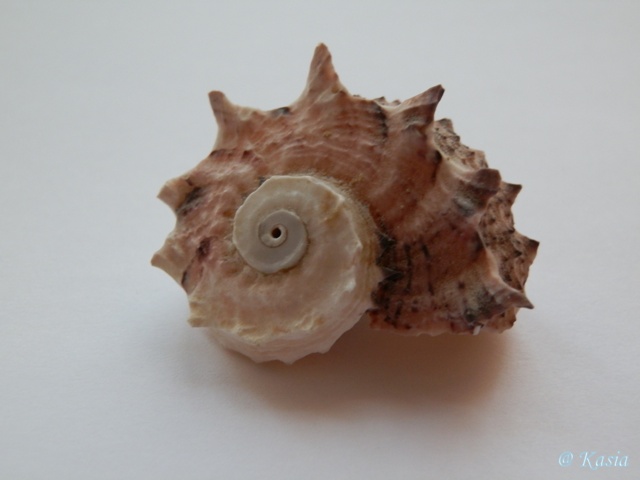
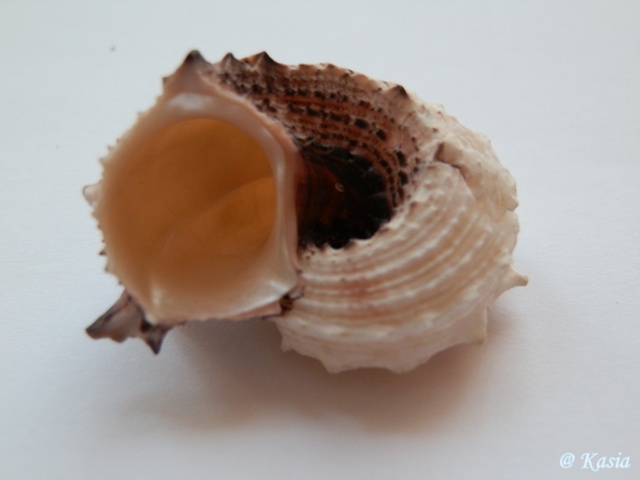
Kasia’s beachcombing exploits have produced some lovely seashells that have already featured here. Precise identification has sometimes been difficult for an amateur, because of the many varieties of a particular type of shell or close resemblance to other shell families. This one has got me stumped. I have trawled the internet. I have studied field guides. I’m still baffled. It hasn’t quite matched any other shell…
XMASPRIZE the first person to ID this shell correctly will enjoy a bottle of ice-cold Kalik being drunk on the Delphi balcony swing in February 2012. By me. Suggestions to rollingharbour.delphi@gmail.com welcome
STOP PRESS: NOW SOLVED – SEE UNDER IMAGES
Helpful thoughts: I’ve considered a form of King’s Crown (but I’ve not found a close enough match) or a Ram’s Horn Snail (but they don’t seem to have spines)
First entry by Kasia (potentially disqualified as the shell’s owner):Angaria, a form of Turban shell. However these seem to be confined to Pacific areas…
The Solution: And the winner (within 24 hours) is… Kasia!
I sent the link to the post to Bahamian seashell expert Colin Redfern at http://www.bahamianseashells.com, author of ‘Bahamian Seashells: 1000 Species from Abaco, Bahamas’. He confirms Kasia’s ID as anANGARIA SHELL, one of a large number of species of turban shells TURBINIDAEfound throughout the world. It is indeed a Pacific shell, probably from the Philippines. So what on earth was it doing on a beach on the east coast of Abaco? Colin has encountered this sort of anomaly before, and gives various possible explanations:
1. Homeowners’ shell collections come from areas other than the Bahamas & are sometimes thrown out onto a beach. They may be washed up along the coast
2. Shops sell packets of shells, including Pacific shells, which may become dispersed
3. In Fl. it is not unknown for resorts to “seed the beach” with Pacific shells, which are cheaper & more easily bulk-bought than Atlantic shells
4. Rare Pacific & Indian Ocean shells washed up on a beach were once traced to the owner, whose beach house had been lost in a hurricane some years before
Many thanks, Colin, for your help with this puzzle; and congratulations Kasia – I’ll claim my Kalik in February please. Oh I see, I’ve got to buy you one, have I?
RECIPE: Take one incompetent swimmer who hasn’t snorkelled in, oh, nearly 40 years. Place him over a coral reef for his first time ever. Add a small underwater camera totally alien to him. Immerse for 30 minutes in warm briny water.
Lessons have been learnt for next time. Mainly, don’t keep waving the camera about; let the fish move round you rather than vice versa; and most important of all, remember to keep breathing or else…
Here for the first time on public release is BLUE TANG: THE MOVIE (music by Adrian Legg), 45 secs of advanced camera-shake with some beautiful fish more or less in shot for most of the time. If you are prone to sea-sickness, do not enlarge the video. If you are allergic to poor photography… well, thanks for visiting.
PETERSON CONCISE GUIDE TO THE SHELLS OF NORTH AMERICA
This pocket guide is part of the well-known Peterson series of natural history guides. It’s called a ‘First Guide’ to denote its ‘beginner’ / condensed status, and to distinguish it from the serious business of the excellent and comprehensive Peterson Field Guides (I shall review 2 of these in due course. When I have read them. In 2012). rh rating **
SUMMARY: this 128pp ‘concise field guide to 224 common shells of North America’ is a simple pocket guide, with quite basic descriptions, and colour drawings rather than photos. All the main gastropod and bivalve species are represented, each with a few variants. The vast majority of these will be found on Abaco and more generally in the northern Bahamas. For the used price I paid for a 1989 edition with a creased front cover (1 pence + P&P on Amazon UK!) I have actually found it quite useful for comparing or confirming IDs, or for snippets of additional information. However, it’s not the one to rely on entirely to identify your beachcombing finds or to get species details. Apart from anything else the illustration colouring is often somewhat approximate. At best, I’d say it’s a useful preliminary tool for ID on the beach if you don’t want to lug a much larger field guide around with you. Don’t use it for your doctoral thesis. Overall, some use, but not a great deal. There are better books: see FISH & SHELL BOOKS
CORNELL LABORATORY OF ORNITHOLOGY ANNUAL REPORT 2011
The Annual Report 2011 contains a huge variety of reports, project news, images, and references. The direct link to the specific Bahamas Birding page can be found under BLOGROLL links on theSIDEBAR. The Report is far wider-ranging. I post it in pdf form because anyone with an interest in birdlife is bound to find something worth following up, and you should be able to download it (if you try & it doesn’t work, can you let me know – comment box or email – and I’ll change the format)
The rollingharbour wildlife enterprise doesn’t normally mix with the technical side the bonefishing on Abaco in general or at the Delphi Club in particular. rh is personally adept at failing to boat fish even where he is lucky enough to hook up; and in turning genial, amiable guides into scowling cursing wrecks in a day.
This is an exception: an excellent 4.5 minute video from Dr Aaron Adams (marine biologist and Bonefish & Tarpon Trust Operations Director) on how to maximise your chances on the mangrove flats by not spending hours flogging the water pointlessly in obviously unproductive areas. Clearly if you have a guide, this is unlikely to happen – but what if you are wading or otherwise going solo?
The reason to post this informative video here is for the insight into the structure of mangrove swamps, with clear underwater photography and commentary as a skiff glides the flats over ‘dead’, & productive, areas. What is a mangrove swamp? Where do the fish favour? Why? This video will help your understanding.
Well-known artist Richard Bramble already features in his own page here under the CONTRIBUTIONS drop-down menu. For the previous post of RB hard at work on new designs at the Delphi Club CLICK EXAMPLE PHOTO BELOW
RB and Crawfish model posing (both)
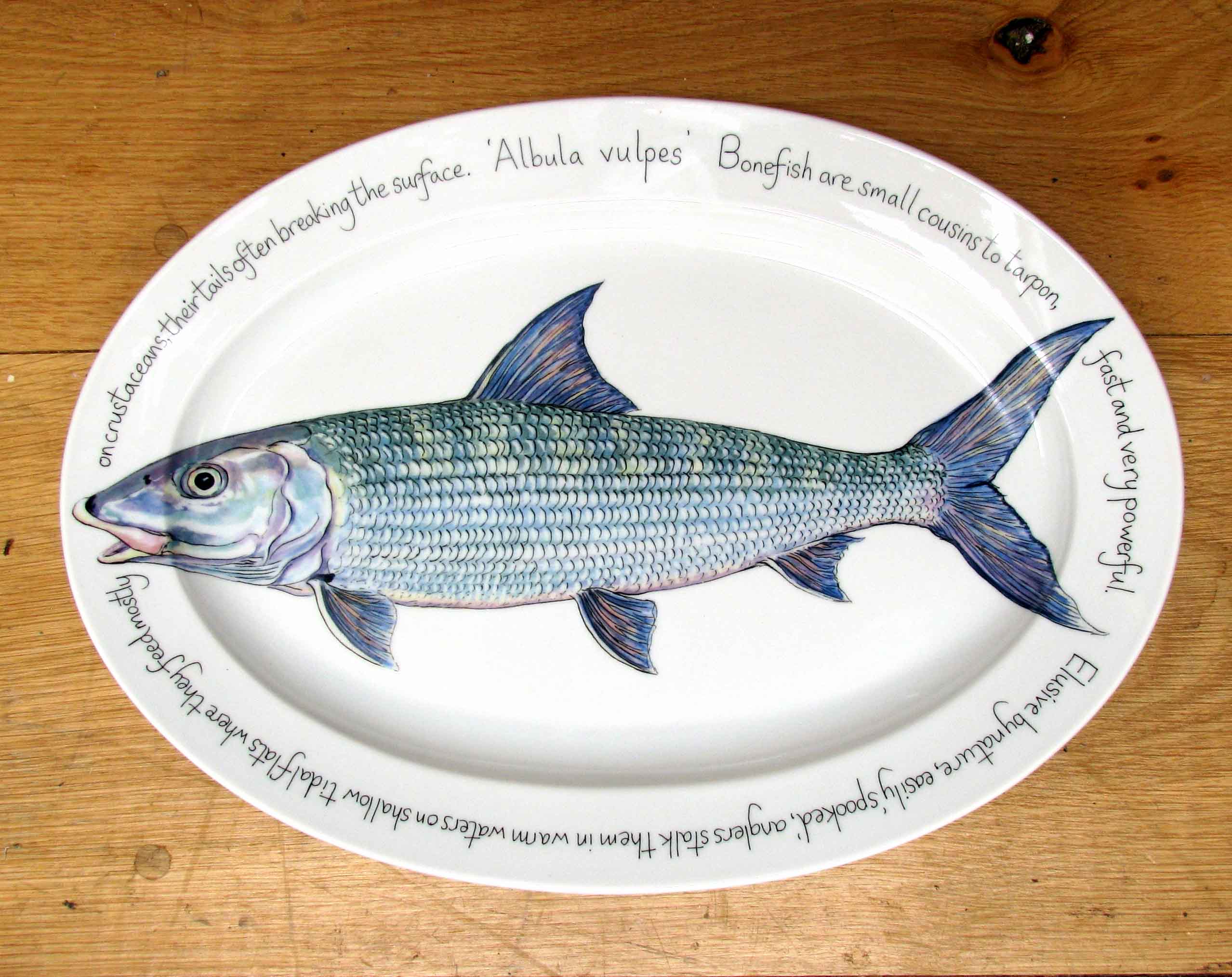
Richard has broadened his already considerable range of paintings and ceramics to include the Abaco marine life he painted while at Delphi. In addition to his very elegant Bonefish, there are now Permit and Crawfish plates (with the original ‘life model’ pictured above). Some weeks later I was at Richard’s studio in Dorset as he prepared to transfer these designs to ceramics, with crawfish cut-outs artfully strewn around the floor. Here are his new items, with his characteristic captions:
(I have an oval bonefish plate to remind me of the ones I… I…’let go’ by mistake)
Richard’s comprehensive website featuring his entire oeuvre is to be found at thesign of the Crawfish together with an elementary purchase method to take advantage of the excellent online shopping opportunities (he might be too modest to say). I write this with Christmas-tide a mere 2 weeks away. You’ll find sea water and fresh water fish / creatures, shells, all manner of game birds and farmyards animals, on every conceivable type of ceramic platter, utensil and kitchen gizmo.
(With apologies that this site seems t0 be turning into a cross between an online Mall and an advertising agency… Nature Tours. Boat Expeditions. Arts & Crafts. Kitchenware. Books. Cameras. Yup, ticked them all. But there’s plenty of other stuff to look at in these pages)
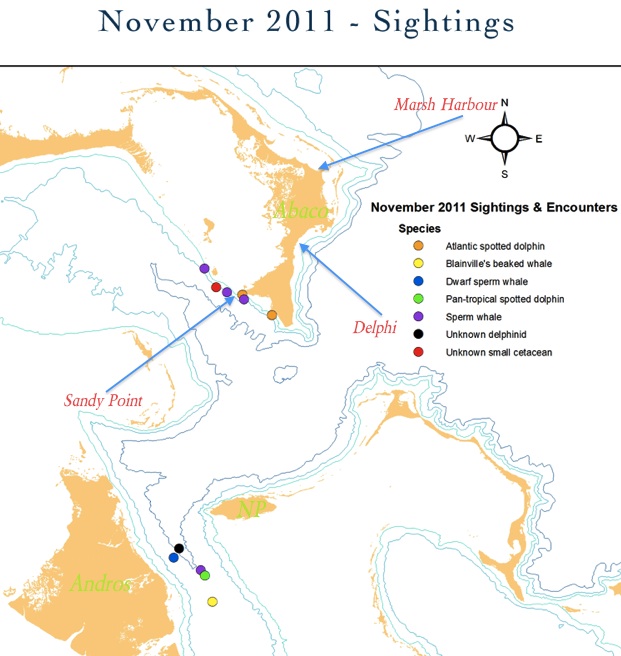
ABACO DOLPHIN & WHALE SIGHTINGS NOVEMBER 2011 ‘VERY DIFFERENT FROM OCTOBER’
October was a good month for bottlenose dolphins, with sightings both north and south of Marsh harbour – however, no reported whales off Abaco at all. In complete contrast, in November no bottlenose dolphins were reported, nor any other cetaceans on the east side of Abaco. Instead, the observed activity was all around Sandy Point, with sperm whales in particular returning to the area. Increased sightings off Andros were also reported
STRANDED FALSE KILLER WHALE
Charlotte Dunn also reports that on December 2nd 2011, BMMRO was alerted that a whale had live-stranded on Guana Cay. After attempts to re-float it, it was seen heading north past Dolphin Beach. The animal had numerous lacerations and fresh scars, and appeared “very weak with labored breathing”The whale was later found beached at No Name Cay (north of Green Turtle Cay). At that time it was reportedly “still alive but just barely”. Unsuccessful attempts were made to get the animal back in the water. Sadly, by evening it was dead. Photo ID confirmed it to be a FALSE KILLER WHALE Pseudorca
For the full report on the BMMRO Facebook page CLICKSTRANDED WHALE
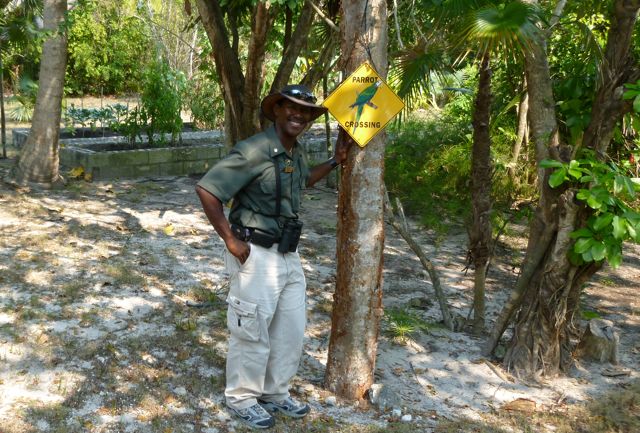
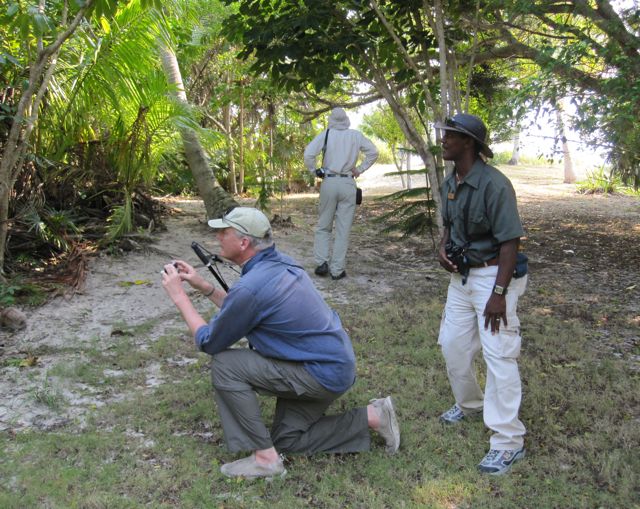
Reluctant as I am to give Ricky even more publicity that he gets already – including passim in this blog – his Nature Tours are seriously good, and his knowledge and enthusiasm for the flora, fauna, geology and history of Abaco are unrivalled. If you want to see a parrot close-up, understand a blue hole or learn which trees and shrubs are poisonous (and which are the antidotes) he is undoubtedly your man. He will even show you birds where you have completely failed to see any & believe there are none
ABACO, BAHAMAS & HURRICANE IRENE A SCIENTIFIC RETROSPECTIVE
The contents of this post must be credited at the outset to the excellent website UNIVERSE TODAY and NASA where you can easily get Lost in Space for an eon or two.
For 1o days at the end of August / in early September, the rh wildlife focus was supplanted by intensive weather blogging about Hurricane Irene from an Abaco perspective – the approach, direct journey north over the island, real-time reports and images of the storm and its aftermath, communication links and so forth. All from a safe distance of 4250 miles. On 26 August alone, this small blog – average daily hits 20 – had over 5000 hits…
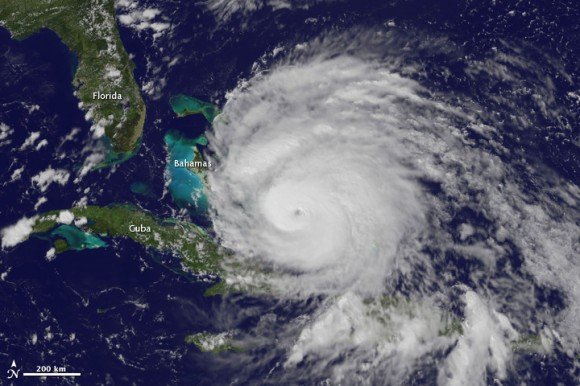
3 months on, I have decided to revisit Hurricane Irene and the Bahamas because there is still a great deal of interest out there – I still get plenty of hits for the ‘storm posts’ – and much more available information. Some of these UNIVERSE TODAY / NASA images & videos are truly spectacular. The focus is on the 3 days August 24 – 26: before, during and after Abaco was struck by the storm
HURRICANE IRENE – ABACO / BAHAMAS SPACE PHOTOGRAPHS (VIDEOS BELOW)
August 24, 2011 14.55 EDTIrene (taken by the GOES satellite) approaching the Bahamas. It now has a distinct eye and the clouds spiraling around the center are becoming more compact. The image also shows how large Irene has become, measuring several hundred kilometers across
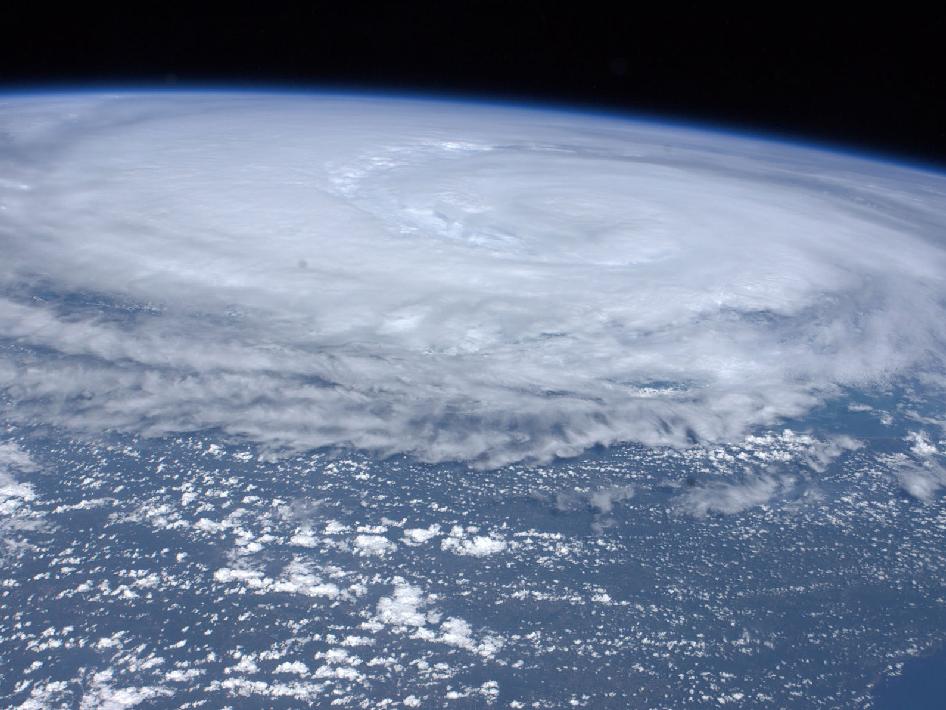
August 24, 2011 15:10 p.m. EDTView of Hurricane Irene from the International Space Station 230 miles above the Bahamas, moving northwest as a Category 3 hurricane with winds of 120 mph, expected to strengthen to a Category 4 storm imminently
August 25 2011 8.00 EDT Hurricane Irene 65 miles east-southeast of Nassau, Bahamas. Irene’s top sustained winds remain at 115 mph, moving to the northwest at 13 mph
August 25 2011 16.30 EDTHurricane Irene from the International Space Station, clearing the Bahamas and heading north towards the US coast
HURRICANE IRENE VIDEOS – BAHAMAS REGION
1.HOW DOES A HURRICANE FORM?Insight into the process can be gleaned by watching a rapid time lapse movie of the formation of Hurricane Irene as it sweeps northwards across the Caribbean region
2. HURRICANE IRENE FROM CARIBBEAN TO CANADAThis astounding NASA video tracks the path of Hurricane Irene from August 23 to August 29, showing the formation in the Caribbean region, the path over Puerto Rico, Hispaniola, the Bahamas and the US East Coast northwards to Canada
3. HURRICANE IRENE IN 20 SECONDS (NOAA/ GOES) A psychedelic trip
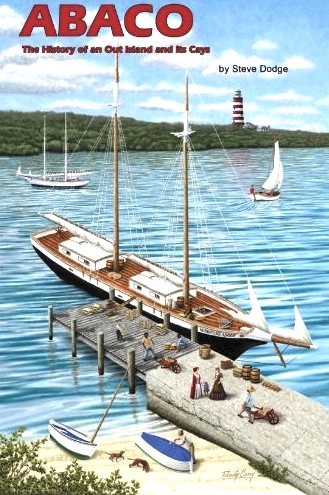
STEVE DODGE, illus. Laurie Jones – White Sound Press
• Original Edition 1983 (170pp), reprinted rollingharbour rating **** • Revised and expanded edition 2005 (270pp) [I don’t have it!]
These are the 2 covers, to help distinguish them if you search online. Beware, the covers are often used interchangeably… so check the edition date
The cover image, colourfully made over for the new century, shows the Albertine ‘Adoue’ – the last Abaconian sailing mailboat (giving way to diesel power in 1923)
1st EDITION REVIEW: The first 5 chapters cover the more distant history of the Bahamas in general & Abaco in particular. Starting promisingly “Two hundred million year ago…”, the early chapters briefly cover the formation & geology of the islands and the demographic & social history, with plenty to interest and not too much detail – very informative for a non-Abaconian like me. I personally am uninterested in the boatbuilding chapter (I like the illustrations) but it will surely appeal to people who feel comfortable out of their depth. The history of gradual expansion, increased trading importance, & the less attractive sides – e.g. wrecking – are well-covered.
The final 3 chapters form the second half of the book – the 20th Century when Abaco moved from relative isolation to greater significance. Here the detail becomes denser as Abaco rapidly develops. There are parts that I skimmed, but there’s much of interest and many factual nuggets about the political developments in the later 20th century. Overall the book is an excellent primer for an Abaco novice for an overview up to the 1980s. I guess residents will also get plenty from it as well.
I haven’t seen the new edition, but I am sure it is the one to get. The Am*z*n blurb for it, which I recklessly copy, says “This expanded and updated second edition has completely new sections on Lucayan Indians, Wilson City, and contemporary Abaco, and many revisions. This is the only general, comprehensive history of Abaco, Bahamas available; it covers from the geologic formation of the Bahama Banks to the middle 1990s. Cover painting by Phil Capen,; illustrations by Laurie Jones. 112 illustrations, photographs, and maps. Appendix on boat building in Abaco” There are plainly many more illustrations and photos than in my copy; and I notice boatbuilding has been moved to an Appendix…
CURRENT COST: Unlike most of the books I have reviewed, this book is not cheap at the moment. The new edition can be bought for $25 on Amazon.com / £33 on Amazon.co.uk – none on Abe. The original edition is a mere $4 on Amazon.com, unfeasibly expensive on Amazon.co.uk, but reasonable on Abe
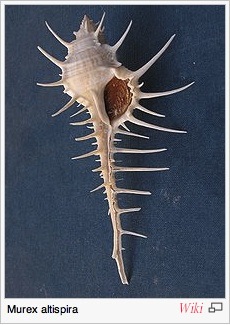
This is a vast family of shells worldwide, with many subspecies, each of which has many regional variations. Or even variations of the same subspecies on the same beach. Many have beautiful delicate spines or intricate shapes and elaborate patterns, like the pacific one shown
These molluscs are described as ‘voracious rock scavengers’ and exhibit uninhibited psychopathic tendencies. If you have a nervous disposition, stop reading here; Sam Peckinpah missed a great film collaboration with Jacques Cousteau with these vicious little creatures
10 ESSENTIAL YET GRISLY MUREX FACTS
Murex are highly carnivorous with rasping teeth, and drilling equipment for boring into the shells of their prey
A determined Murex may take up to 5 days to drill into its prey
Murex also use their foot to smother prey, or to crush it by using suction power
They eat clams by hoovering them up with their foot and smashing them on rocks to get at the occupant
They happily eat sea-floor carrion and sea-kill
Murex act in packs to carry out raids on unsuspecting beds of clams, which they feast on avidly
They are sexually wanton. Females store sperm from different males for many months, eventually producing embryos with different dads (I’m not making this up. I would like to have done so)
Cannibalism occurs. The kids are equally prone to extreme delinquency and are happy to eat each other when peckish
Some species of murex secrete a fluid that is believed to be used to drug their prey into paralysis
That same fluid (Murex / Mucus) is also used as a dye, ‘Tyrian’ or ‘Royal’ Purple, which can be ‘milked’ from a living murex (the Aztecs & Phoenicians did this). I’ll pass on that
NEW: VIDEO of how to obtain dye from a Murex
KASIA’S BEACHCOMBED ABACO MUREX SKELETON
TWO MUREX SHELLS OF MINE (NOT FROM ABACO) FOR COMPARISONDETAIL OF COLOUR & SHINE
2. TRITON SHELLS (RANELLIDAE)
KASIA’S TRITON TROPHY FROM CASUARINA, ABACO
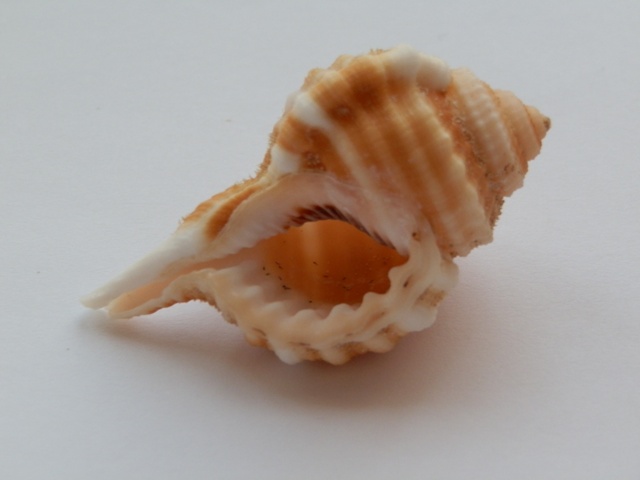
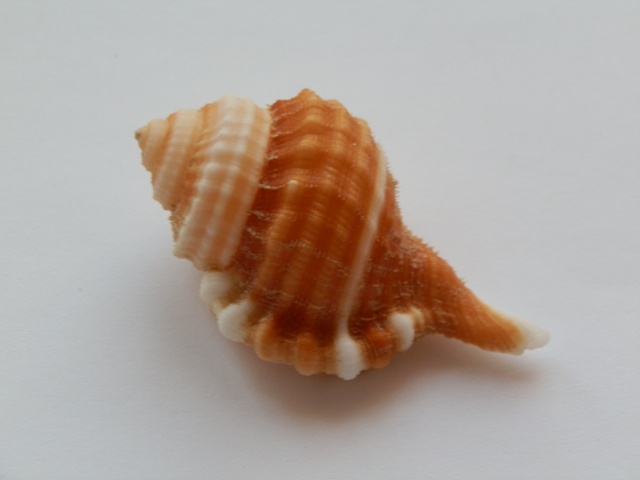
Here is another shell from Kasia’s beachcombing in the Casuarina Point area on Abaco. I’ve never seen one like this. I thought it was a TROPHON, a variety of the huge MUREX family. As I wrote, there are more than 30 types of trophon world-wide, many with a similar configuration, though I hadn’t managed to find one with a similar colouring and shell growth-pattern yet. I invited confirmation or correction, which Colin Redfern kindly provided. It is in fact a fine example of a…
DOG-HEAD TRITON Cymatium cynocephalum
ANGULAR TRITON Cymatium femorale A different sort of triton found by Kasia
Here’s a report I’ve turned up, which may well be of interest from a crawfish conservation viewpoint. And it’s also an excuse to post the excellent campaign song, which needs no added comment from me – see video below. The campaign slogan is… a delight. The Rare Planet website is well worth a rootle round – click the link below
Campaign manager: D’Shan Maycock Partner: Friends of the Environment
“When D’Shan Maycock launched a Pride campaign to rally her community around protecting marine life off of Abaco Island, she didn’t necessarily imagine her slogan becoming part of the daily lexicon for fishers, students, international conservation organizations, and even the Prime Minister. But thanks to a catchy phrase – Size Matters – and the idea of the locally-treasured crawfish shrinking due to overfishing, her campaign has caught on everywhere.
Crawfish are an important species for the biodiversity of Abaco Island, providing 60% of the total commercial fish catch and sustenance for other marine life in the region. However, due to unsustainable fishing practices and lack of local awareness, each year’s crawfish yield declines in numbers, total poundage, and average size. D’Shan discovered a heavy incidence of illegal fishing of juvenile crawfish, as well as a dearth of the formerly large crawfish that lay many times more eggs. There are 5 national land and sea parks around the island, yet it is a challenge for law enforcement to manage every landing dock. Community support is critical. So D’Shan has gotten creative.
Progress on the campaign…
• Secured pledges from local fishers not to catch juvenile crawfish under 5.5 inches – their yield monitored through a new certification process
• Built awareness among key influencers and the general public about the importance of protecting juvenile crawfish
• Garnered the attention and support of high profile players in the region, including The Nature Conservancy, which is interested in taking the certification process to other islands in the Bahamas, and the Bahamian Prime Minister, who at a recent All-Abaco Expo on Food Security, called out the slogan of the campaign and pledged ongoing support for fisheries protection
(To whom thanks for this… but, hey guys, your ‘CONTACT’ page only gives long-distance phone numbers (wot no email?) Are you ok with me using this? If not please ring +44 763549390 between 19.00 and 21.00 and ask for ‘Tarquin’)
STOP PRESS: here is a news clip about the new campaign mural in M H, posted by campaign manager d”Shan on The Abaco Scientist
BEACHCOMBING AT CASUARINA WITH KASIA COWRIE / PHALIUM & CONCH
I recently posted some photos of starfish taken by Kasia at low tide near Casuarina point – seeKASIAS’S STARFISH.Now it’s time for some beachcombing news from there. The sandbanks and bars in the Casuarina / Cherokee Sound area are a rich source of conchs, sand dollar tests and shells of many varieties when the tide is out. The sandy areas revealed as the water slowly recedes are extensive, and it is a great place to hunt for specimens (and for a lunchtime break from bonefishing…)
COWRIES / PHALIUM
1. RETICULATED COWRIE-HELMET Cypraecassis testiculus Here is a pretty example of this shell, a relative of the large phalium family and originally misidentified by me as a Phalium granulatum
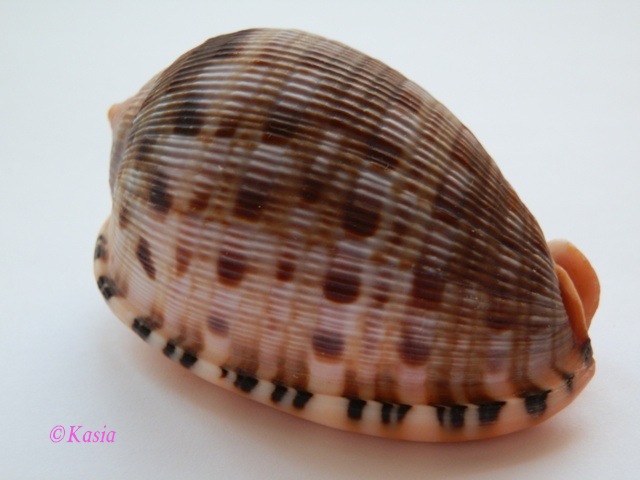
2. MEASLED COWRIE Macrocypraea zebra / Cypraea zebra Colin Redfern says of this example “Immature shells have transverse stripes that are later covered by a spotted layer (hence “measled”). It looks as if it’s beachworn rather than immature, so the outer layer has probably been worn away. You can see remnants of the spotted layer adjacent to the aperture.”
STOP PRESS: by coincidence, while looking for a completely different type of shell online I have just happened upon this early 1800s engraving of a Cypraea Vespa, which is very similar to Kasia’s one
CONCH I’m trying not to overdo Conchs, which are probably everyone’s favourite shell to collect. But this one is a wonderful pink, and came with a surprise inhabitant… Is anyone at home?
Oh! A hermit crab seems to have moved in…
It’s shyer than this one (from an unnamed online source)
Finally, a useful method to transport one’s shell collection, maybe?
Jane Mantle has emailed me about the plight of dogs and puppies on Abaco, her involvement in their rescue, and the urgent need for funding for care and medicine:
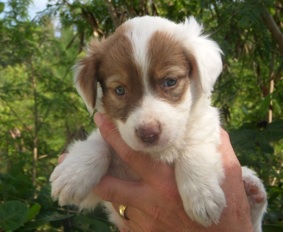
“Since living here for the past couple of months I have been helping to rescue the rescue dogs. Abaco Animal Rescuerecently rescued 9 pups (see attached picture of Delphi) from the roadside”
DELPHI
Found with 8 other puppies by the roadside next to the body of their mother
“They were sitting next to the body of their decomposing mother with traffic and people passing by. Unfortunately even when rescued some of the pups have died due to lack of medication for them. There is a shelter of sorts built on the old municipal dump outside Marsh Harbour. It is OK but alive with rats that are as big as the pups! Abaco Animal Rescue consists of one english lady who basically funds everything herself”
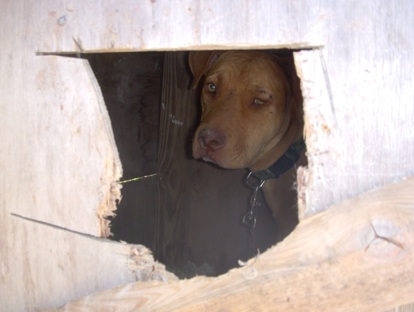
BORIS
Found chained in a box, exposed to the hot sun without any water, and beaten daily to make him become an aggressive fighting dog
“Is there anything that can be put up on your site? (RH: yes indeed!) The enclosed is a flyer that I have put up in the Great Room next to an empty glass collection jar. There is no money at all for food or basic medication, I have asked both Millie and Lucy to do some fund raising at school etc but that won’t happen until next term. I will also see if I can get hold of medication from vet friends that I have but would be grateful for any publicity that you can give it”
STOP PRESSAn up-to-date (as at spring 2014) list of contacts and links can now be found at “A DOG’S LIFE”. Scroll to the end of the post. If you have time, maybe read a bit on the way…
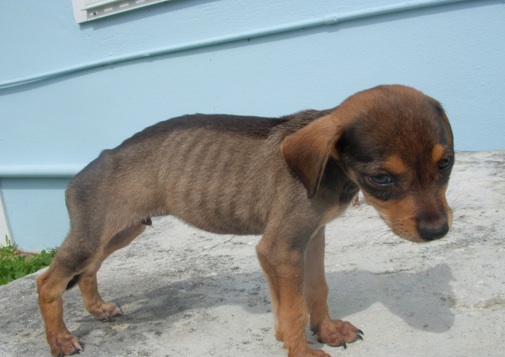
HARVEYfound abandoned by the side of the road
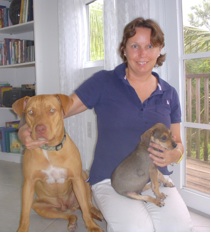
APPEAL by Jane Mantle, Boris & Delphi
POTTY ABOUT POTCAKES? Please support Abaco Animal Rescue by donating your unwanted Bahamian currency – notes or coins. All contributions go directly to buy food and veterinary supplies for the many abandoned and mistreated potcake dogs of Abaco
MARINE BROCHURE, ABACO, BAHAMAS A basic blueprint for environmental protection on Abaco
The various interested organisations have produced a simple 2-page brochure designed to promote responsible preservation of the island’s natural resources. If you click on a page below it will enlarge. If you want to go to the webpage to download the pdf for yourself (or pass it on) CLICK==>MARINE BROCHURE
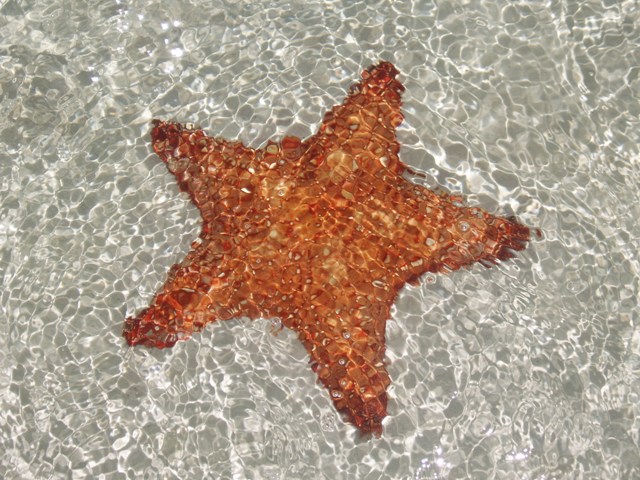
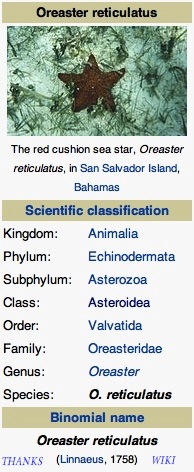
Kasia, a vital contributor to this blog, has supplied a number of images taken at low tide in the Casuarina Point / Cherokee Sound area on Abaco, including these excellent starfish. I’m posting them right away because starfish haven’t so far featured at all in this enterprise. Whenever I have seen them from a skiff I have been otherwise (and mostly ineffectually) engaged at the sharp end of the boat…
Macmillan Natural History Series Alick Jones & Nancy Sefton – 2nd Ed 2002 rollingharbour rating ****
Another excellent volume in this series of slim books – see other book reviews for Birds, Reef Fish etc. The book is carefully structured. Opening with an overview of the region, it moves gradually from shoreline to open sea via mangrove swamps, sandy areas, seagrass beds, rocky areas, and coral reefs. The sections are informative without being overwhelmed by detail, and the many illustrations are useful. It’s possible to skim-read and still feel you have learnt something worthwhile. It is definitely a help with identification queries.
The marine life covered includes plants, fish, starfish etc, shell-dwellers of all makes, crabs etc, and corals – all sufficiently to be educational without being dull. Towards the end there’s an equally handy chapter on turtles, birds and marine mammals. Finally, there’s a good section on ecology and conservation (depressingly, the problems are now worse 10 years later)
A 6-page glossary, a bibliography and index round off a very helpful tome. Definitely worth getting if you want a working grasp of the subject in an easily assimilable format.
I got my copy for £5 on Amazon, but check out ABE as well, which is also very good for this sort of book – but watch the postage rates there…
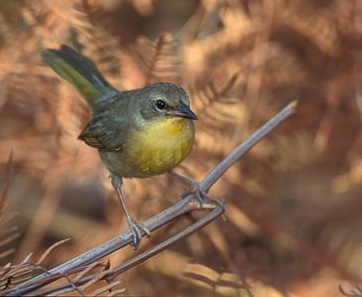
The Bahama Yellowthroat (Geothlypis rostrata) is a resident breeder species of warbler endemic to the Bahamas, closely related to the migratory Common Yellowthroat. The other birds endemic to Abaco / Bahamas are the Bahama Swallow, BAHAMA WOODSTAR and ABACO PARROT
HABITAT Dense low scrub, usually in drier areas than used by wintering Common Yellowthroats. It builds a cup nest low in dense vegetation and lays two eggs. Like other yellowthroats it feeds on insects and other small invertebrates in low vegetation
THE 3 VARIETIES The adult Bahama Yellowthroat is 15 cm long with a large bill. There are 3 subspecies: G. r. rostrata on Andros and New Providence islands (uncommon to rare); G. r. tanneri on Grand Bahama, Great Abaco and associated islands (common); and G. r. coryi on Eleuthera and Cat islands (common). The noticeable distinction between these 3 types seems to be in the forecrown colour (not one I myself would readily spot…)
DIFFERENCES FROM COMMON YELLOWTHROAT The Bahama Yellowthroat is slightly larger than wintering Common Yellowthroat and has a heavier bill and ‘slower, more deliberate movements’. Males have ‘more extensively yellow underparts, a larger facemask extending onto the nape, and in the case of coryi the distinctive yellow forecrown. Females have a grey wash to the head not shown by Common Yellowthroat’.
SONG Described as a loud wichety wichety wichety wich, similar to that of Common Yellowthroat, with the call a softer jip than that of Common Yellowthroat. This is meaningless to me – lots of warblery birds sound like that as far as I can make out. Here is a very short recording of a BY on Abaco courtesy of Xeno-Canto, but it’s not saying wichety to me – more like whee-hew
Below is a short self-crediting video to illustrate the song of a Bahama Yellowthroat on Grand Cayman. There’s a hint of wichety there.
CONSERVATION The Bahama Yellowthroat population overall is quite small and is outnumbered in winter by migrant Common Yellowthroats. It appears not to be endangered. Its conservation is currently listed as ‘Least Concern’ (see Wiki-Box above). The population may be decreasing slightly due to habitat destruction, but not yet sufficiently to bring the species within the ‘vulnerable’ classification.
Here is an excellent clear image of an adult male by Craig Nash who has taken many wonderful photos around Delphi and further afield – see the 4 ‘Peregrine’s Blog’ links under the Blogroll in the SIDEBAR Highly recommended. [I am also clearing copyright permission to add a few other photos – I haven’t taken my own BY photo yet…]Photo credit: Craig Nash
Sources: various, including relevant books (see reviews inBOOKS) BirdLife International and good old Wiki
Here is a clip from a report taken from the Guardian (UK) website, which lists threatened species world-wide. These include rhinos, various types of tuna, and (of particular interest to Abaco and the Bahamas generally) Manta Rays. Click on the image to enlarge it and make the caption legible… You’ll find the full article and species slideshow at
Here is an excellent short video showing a large Bahamas manta making its majestic way through the ocean
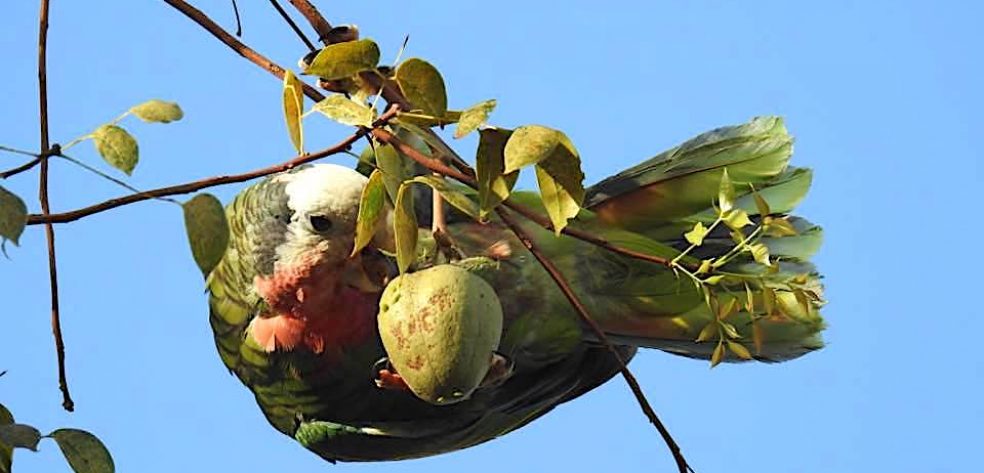


 As Reality Show contestants say, it’s been a roller-coaster of emotions. An incredible journey. Living the dream. Nine months ago I knew little about blogs; less about computer techniques and problem-solving; and nothing whatsoever about hutias, murex shells, tecoma stans, or hurricane technicalities. Thanks for the many contributions, advice, helpful criticism**, encouragement and general enthusiasm for the project. Thanks to Peter Mantle for permitting & promoting this rather ill-disciplined sibling of Delphi. And thanks to everyone who has contributed to an accumulation of nearly 25,000 site hits – or perhaps to the one strange person somewhere out there with repetitive strain injury from 24,588 repeat visits. **Mrs rh scores highly here for her kind but firm restraints: “No! You can’t put that!”
 and PETER GEHRIG (for the snow) for permission to use the above festive link




























 ROLLING HARBOUR ABACO
You must be logged in to post a comment.