Unknown's avatar

“GIVE PEEPS A CHANCE”: THREATENED PIPING PLOVERS, ABACO BAHAMAS


“GIVE PEEPS A CHANCE”: THREATENED PIPING PLOVERS

Not the feeblest punning title on this blog, but going hard for the avian-related booby prize. As it were. And you might with reason point out that, strictly speaking, ‘peeps’ are not plovers at all, but small squeaky sandpiper species. Many months ago I did a short post about these tiny plovers, and had begun to update it. Then I found that both the BNT and the ABACO SCIENTIST are onto them too. Thanks to them, I have some excellent added material further down the page… But first, here’s a quick cut out ‘n’ keep summary

SIZE               Charadrius melodus is a Very Small Shorebird

HABITAT     Rocky shores / sandy beaches; nesting in higher, drier areas of the shoreline where there is cover 

Photo courtesy of Caribbean Birds SCSCB

RANGE          From Canada (summer) down to the Gulf of Mexico (winter). They head south in August and return in March 

Credit: Xeno-Canto / Google

CALL              A thin whistled peep peeping, whether standing or flying, and a two-note alarm call [There are surprisingly few Piping Plover call samples online. Many sites – Audubon, eNature, Birdwatchers Digest – all seem to have the same one. So I’ll credit them all and the originator Lang Elliot and hope I’ve covered my back…]

BREEDING   The male digs out several scrapes on the high shoreline. The female contemplates these efforts, and (if any meet her ideal domestic criteria) chooses her preferred one, which she then decorates (grass, weed, shells etc). Meanwhile, Mr Peep tries to impress her by chucking pebbles around, dive-bombing her, and strutting around her importantly and “fluffed up” [none of these tactics work in human courtship, in my experience]. If Mrs Peep (a) likes the home she has chosen and furnished and (b) has recovered from her fit of the giggles at all that performance, she permits mating to proceed

NESTING     First nests normally have 4 eggs; later ones fewer. Both share incubation and subsequent parental ‘brooding’ duties

DEFENCE    Plovers have a defensive “broken wing display” used to distract predators and draw attention away from the nest

THREATS    Larger birds, cats, raccoons etc. Human disturbance. Plovers and chicks are vulnerable to storms & abnormal high tides 

ZOOM…!     Capable of running at astonishing speed over short distances. When they stop, they often snap the head back and forward.

STATUS       Depending on area, treated either as Threatened or Endangered; IUCN listing NT

CONSERVATION Historically PP feathers were used as decoration in wealthy women’s hats – no longer a problem. Shoreline development and alterations to natural coastline are now the leading cause of population decline. This has been reversed through field and legislative protection programs, especially at nesting sites; public education; anti-predation measures; and restricting human access in vulnerable areas – including off-roading…

STOP PRESS Nov 18 Sean has just posted a professional / scientific article about piping plovers, with some very useful information specific to Abaco and some helpful links, over at the ABACO SCIENTIST. Clicking through is highly recommended if you want to know more about these little birds

This is the characteristic ‘pigeon-toed’ stance – they run that way too…

RICARDO JOHNSON’S 6 MINUTE VIDEO ‘PIPING PLOVERS’ 

Ricky is a well-known, infectiously enthusiastic, and compendiously knowledgeable Abaco nature guide  (this guy gets way too much free publicity in this blog…). As I wrote when I originally posted  it “In this video he focusses his binoculars on piping plovers, a threatened species of tiny plover which annually makes a long migration to the Bahamas, including Abaco – and then heads all the way north again.”

If this video doesn’t make you smile at some stage, I suspect a SOH bypass and / or your ‘anti-cute’ setting is jammed on. Even so you’ll see the differences between the piping plover and the more familiar Wilson’s plover.

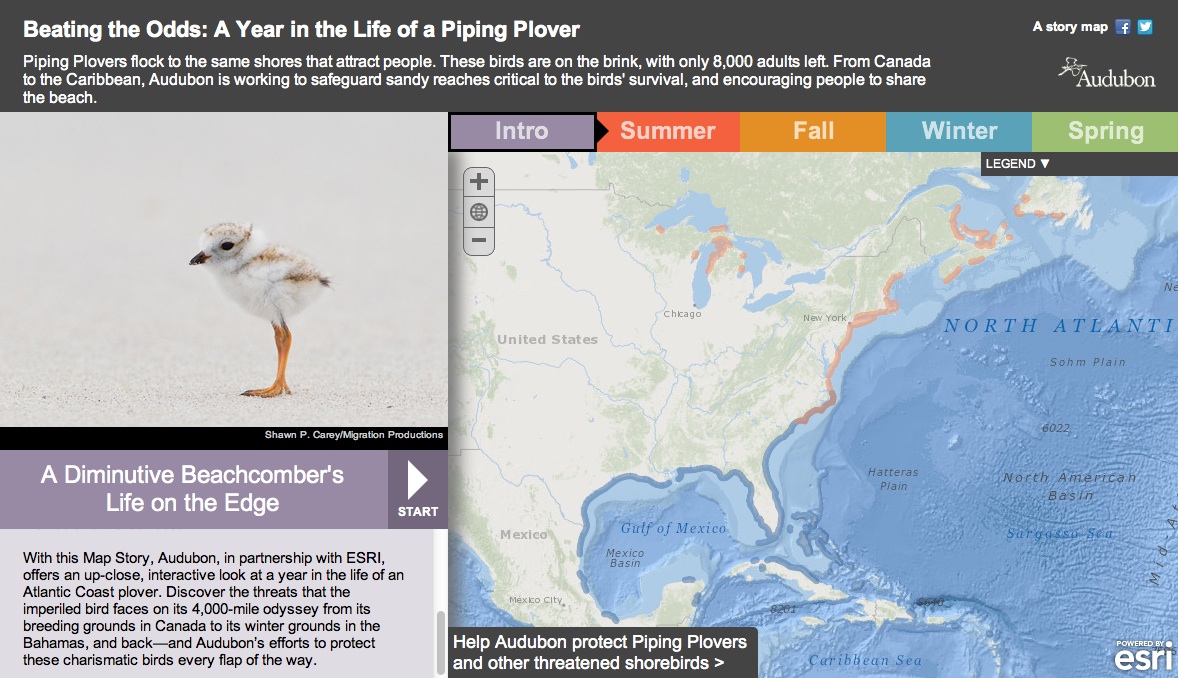
The BNT / ABSCI material originates from the Audubon Society. If you want to know about the annual journeys of these little birds and where they are in each season, it’s all here. The item was made in conjunction with the ESRI mapping project. I’ve put a screenshot below to give a general idea of what’s involved [click to enlarge] and you can reach the interactive Audubon page if you CLICK PIPING PLOVER
Credits:Wiki (images), Audubon Soc, Xeno-Canto, Lang Elliot & partners, Ricky Johnson

Unknown's avatar

FISHES OF THE GREATER CARIBBEAN: IMPRESSIVE FREE APP FOR YOUR iGADGET


FISHES OF THE GREATER CARIBBEAN: AN IMPRESSIVE FREE APP FOR YOUR iGADGET

In these parts we are seriously tech-savvy. Occasionally I test and review relevant apps – see RH APP TEST BENCH. Thanks to a heads-up from Friends of the Environment  via The Abaco Scientist, here’s a new way to wean yourself off Angry Birds…

   FREE      RH provisional rating ****

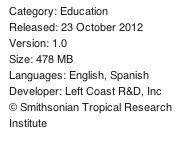
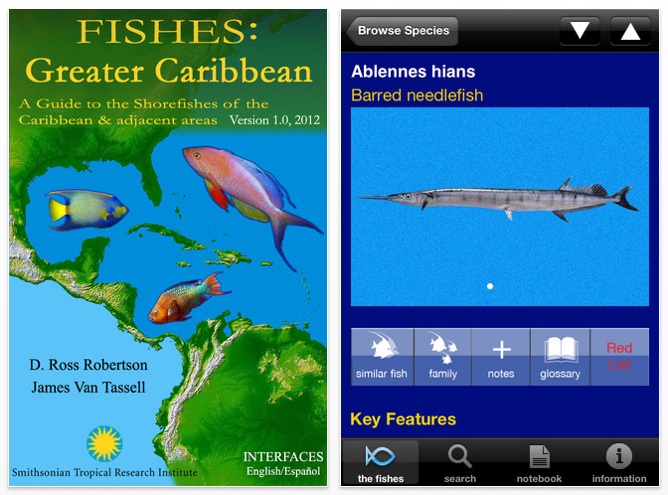
I’ve just put this on my iTimewaster, and first impressions are that this is a seriously useful app from the Smithsonian, certainly from a layman’s point of view. Be warned that it is extremely comprehensive and therefore takes up 0.5 gb of space, so on an iPhone you may have to remove Angry Birds completely to make space, plus your most recent impulsive and misguided music downloads.

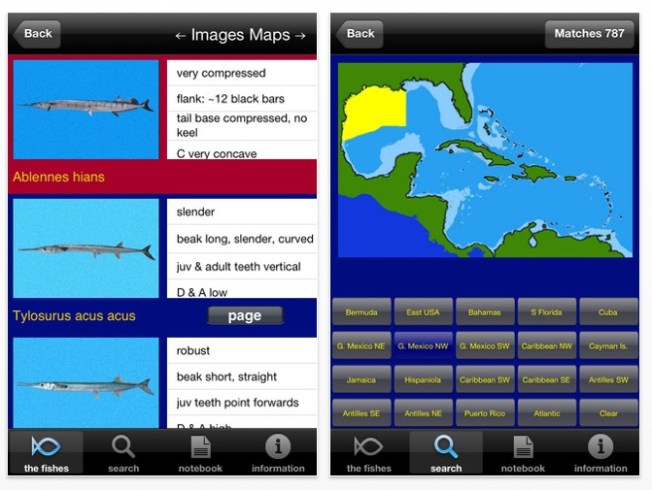
The first option is to browse fish by species or family. Either will take you to first-class photos (some drawings) that really look like what you see underwater (not every app is so good). You are offered a helpful ‘similar fish’ option; there’s a notebook to enter your data; a glossary;and the IUCN status for each fish. The descriptions are clear, as are the range maps for particular species.

There’s also a very good search feature for when someone tells you to look out for the ‘Lucifer’s Gonadfish’ at Fowl Cay and you have no idea what one looks like. (If they exist. Which they don’t). This is subdivided into name / location/ shape/ colour pattern and colours options to help pinpoint the fish. Later you can even recall ‘recently visited species’.

I have only had a quick flick around on my phone. I guess it will be more impressive still on an iPad. It’s hard to believe that this is free, when similar ID apps cost several dollars. I’ll play with it a bit more, and use it for a couple of IDs I am struggling with. NB There is a risk that I might find myself upgrading the rating to the rare and coveted Rolling Harbour 5*****

SCREENSHOT 1
SCREENSHOT 2

Interested? Direct link to the iTunes page is HERE

Unknown's avatar

BLACK-FACED GRASSQUITS ON ABACO – PRETTY FAMILIAR BIRDS


BLACK-FACED GRASSQUITS ON ABACO – PRETTY FAMILIAR BIRDS

Both pretty and familiar, in fact. Birds of the pine-woods, coppice, garden… and feeder. They are an unremarkable species, they don’t have off-beat avian habits, they aren’t scarce… but if they weren’t there, you’d probably miss them. Males and females have notably different colouring, with the female having a bright eye-ring. They tend to hang out in pairs or small groups. These little birds are abundant in the north Bahamas, but like many species found there, they are only very rarely found in south Florida.

MALE BFG IN THE COPPICE NEAR THE DELPHI CLUB

A MALE BFG DEEP IN THE PINE FOREST NEAR THE SAWMILL SINK BLUE HOLE

No two books describe their call in the same way. I’m not venturing into the vexed field of avian phonetics of the ‘chip chip chip kerrrrr–ching’ variety… so here’s a very clear recording of the song of Tiaris bicolor from the excellent Xeno-Canto (Paul Driver)

FEMALE BFGs EAGERLY SNACKING ON THE FEEDERS AT THE DELPHI CLUBTHESE TWO PHOTOS SHOW THE DISTINCTIVE EYE RING OF THE FEMALE BFG

Unknown's avatar

HOLE-IN-THE WALL ABACO: “MIND THE GAP” – A NEW ISLET IS BORN


HOLE-IN-THE WALL ABACO: “MIND THE GAP” – A NEW ISLET IS BORN

17th October 2012

Jack Bowers and friends visited Hole-in-the-Wall and took what are probably the last photos of Hole-in-the-Wall before Hurricane Sandy struck, and the central arch was smashed into the sea – this one below, and others HERE

6th November 2012

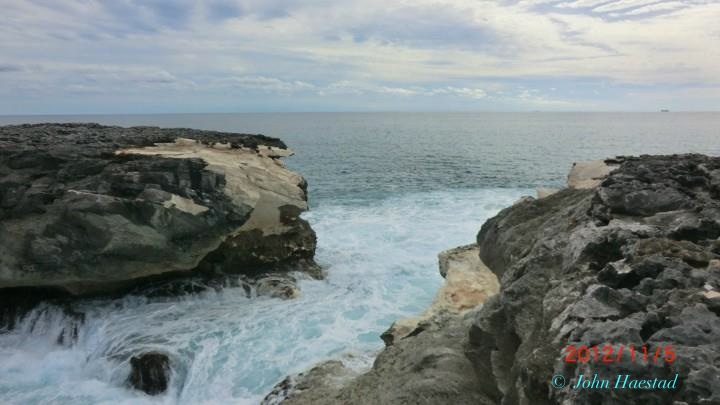
Less than 3 weeks later, John Haestad made the same trip towards the end of the promontory. This time, it was different. The arch was gone. Beyond the breach, a new islet, separated from the mainland by a foaming channel. John has kindly given use permission, and you are now looking at what may be the first image of Abaco’s new geography. A feature that had appeared on maps since at least the early c18, been a landmark for marine navigation for centuries, and lent its name to the lighthouse station, has gone forever. A very small island at the southeastern tip of Abaco has been born…

HOLE-IN-THE-WALL PROMONTORY, ABACO
(Since posting this, Jack Bowers has come up with ‘Holy Isle’, which has a certain ring to it…)

ADDITION I have now found a photo by Jennifer Arrington (to whom thanks for use permission) which shows from a helpful angle both the intact Hole and the small tip of land beyond, now an island. Many photographers are understandably drawn to the Hole itself by the time they have trekked across the sharp uneven rocks to get to it. This is one of the few I have found that gives a wider perspective.

HOLE-IN-THE-WALL: THE ‘ISLAND’ BEFORE IT BECAME ONE…

AFTERWORD FROM ROLLING HARBOUR

For an interesting philosophical and metaphysical discussion on whether the collapse of the arch made any sound if there was no one (and / or no living creature) there to hear it, check out IF A TREE FALLS IN A FOREST… but please don’t if that sort of arcane  and /or pointless argument drives you mad with irritation 

Unknown's avatar

FLAMINGO TONGUE SNAILS & SHELLS: COLOURFUL GASTROPODS OF THE CARIBBEAN


FLAMINGO TONGUE SNAILS & SHELLS: COLOURFUL GASTROPODS OF THE CARIBBEAN

AN UPDATED VERSION OF THIS POST WITH NEW IMAGES AND MATERIAL (AS WELL AS A RETREAD OF SOME OF THIS POST) WAS POSTED IN NOVEMBER 2014 AND CAN BE FOUND HERE

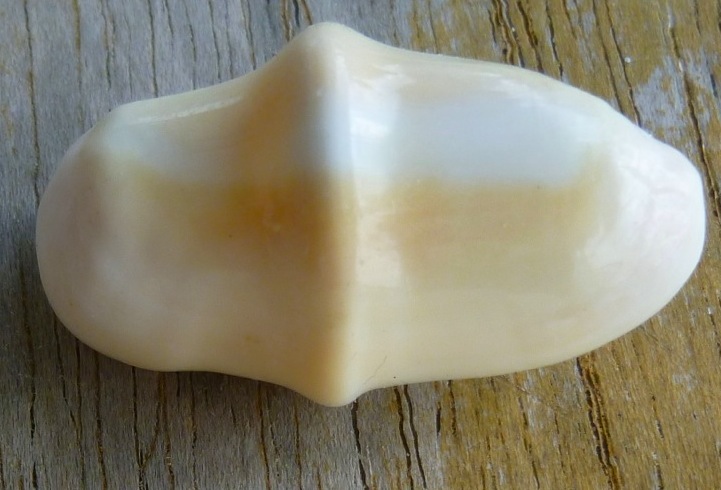
The FLAMINGO TONGUE SNAIL Cyphoma gibbosum is a small sea snail (marine gastropod mollusc), related to cowries. The live animal is brightly coloured and strikingly patterned, but that colour is only in the ‘live’ parts – the shell itself is pale and characterised by  a thick ridge round the middle. These snails live in the tropical waters of the Caribbean and wider western Atlantic. Whether alive or dead, they are easy to identify.

This snail on the left (thanks, Wiki) is snacking on a coral stem, leaving a feeding track behind it. The structural shell ridge is clearly visible beneath the distinctively marked live tissue.

The flamingo tongue feeds by browsing on soft corals. Adult females attach eggs to coral which they have recently fed upon. About 10 days later, the larvae hatch. They eventually settle onto other gorgonian corals such as Sea Fans. Juveniles tend to live on the underside of coral branches, while adults are far more visible and mobile. Where the snail leaves a feeding scar, the corals can regrow the polyps, and therefore predation by C. gibbosum is generally not harmful to the coral.

The principal purpose of the mantle of  tissue over the shell is as the creature’s breathing apparatus.  The tissue absorbs oxygen and releases carbon dioxide. As I have seen it described (unkindly?) “it’s basically their lungs, stretched out over their rather boring-looking shell”. 

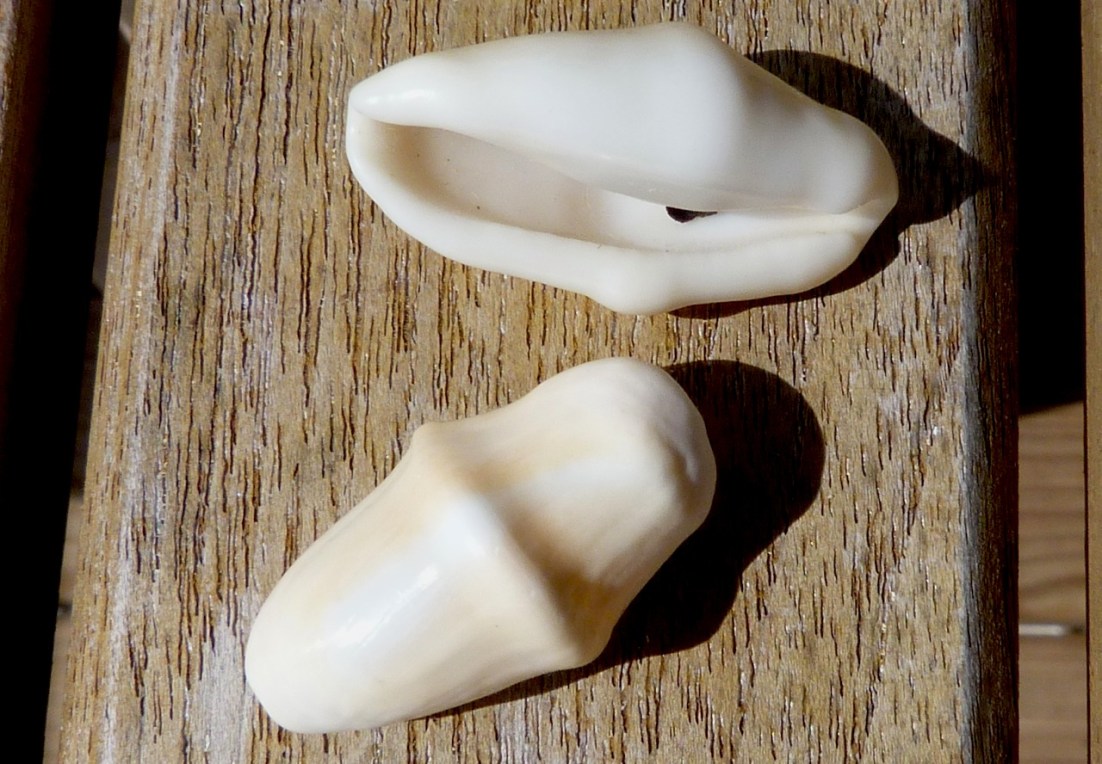
This species was once common but is becoming rarer. One significant threat comes from snorkelers and divers who mistakenly think that the colour is the shell of the animal, collect up a whole bunch, and in due course are left with… (see photos below)

These photos are of flamingo tongue shells from the Delphi Club Collection. Until I read the ‘boring-looking shell’ comment, I thought everyone thought they were rather lovely… you decide!

Finally, a couple of videos. The first is rather charmingly titled ‘FLAMINGO TONGUES DOING…. SOMETHING’. Any (printable but amusing) suggestions via the Comment box are welcome (Hi Trish!). The second punchily summarises this post. Maybe that’s all that was needed!

Unknown's avatar

ABACO’S ‘HOLE-IN-THE-WALL’ BEFORE SANDY DEMOLITION: FIRST & LAST EVER IMAGES


ABACO’S HOLE-IN-THE-WALL BEFORE HURRICANE SANDY DESTRUCTION

THE FIRST & LAST EVER IMAGES OF A GEOGRAPHICAL LANDMARK

This post follows on directly from my PREVIOUS POST about Hurricane Sandy’s destruction of Abaco’s Hole-in-the -Wall rock ‘bridge’. Thanks to Abaco resident Jack Bowers, his camera and his kind permission, I am able to show what are almost certainly the very first and the very last pictures of Abaco’s Hole in the Wall aka ‘Hole in the Rock’, the landmark rock formation at the southeastern tip of the island.

THE EARLIEST KNOWN PICTURE OF HOLE-IN-THE-WALL

The earliest picture that I have been able to trace is a fine nautical aquatint dated 1803 by J.Wells based on a shipman’s sketch. There’s more detail about it in the previous post, but for the full details of this picture, its origin, and a very early description of  one of Abaco’s best-known features CLICK HOLE-IN-THE-WALL AQUATINT 

THE LAST PICTURES EVER TAKEN OF THE HOLE IN THE WALL, ABACO

Jack Bowers and some friends visited Hole-in-the-Wall a week before Hurricane Sandy swept in from the south. He writes “I hiked all around (and foolishly IN) the Hole on 10/17/12, a week before its demise. I may have the last photos taken of various aspects of it, if needed. I noticed some serious cracks (mostly on the proximal side of the arch) and placed my feet carefully away from them, but the collapse did not seem this imminent. I also shot some nice shots of the lighthouse from the distal point of the rocks (a shot not easily obtainable now). Trying to find a positive, the new “Window” should provide some spectacular new splashes that the arch used to largely contain”. Please note that the very fine photos below are all ©Jack Bowers

The ‘Land’s End’ promontory of Abaco, taken from the lighthouse station. The Hole is (was) near the tip.

Looking back to the lighthouse on the hike south

Rough seas ahead…  foreshadowing the later rock destruction                

A last view of ‘Hole in the Wall’ as it used to look….     

The dramatic view from below the arch – it will never be seen like this again…

ABACO’S CHANGED GEOGRAPHY AS FROM 10.24.12 FOR ALL ETERNITY

HOLE-IN-THE-WALL: LATE PLEISTOCENE EPOCH to LATE OCTOBER 2012

Very soon after these photos were taken, the history of the Hole and the geography of Abaco abruptly changed. The weather worsened, Tropical Storm Sandy gathered strength north of Cuba to reach hurricane force, and a week later the rock arch had been simply smashed into the boiling sea by the combined power of wind and the water. It seems unlikely that in the intervening week, with a major storm approaching, anyone else will have made the long rough drive 15 miles along the track to the lighthouse, traversed the difficult terrain of the promontory, risked the increasing winds and swelling seas, and calmly toted a camera at the underside of the arch. So unless and until I hear otherwise, I shall consider Jack’s pictures to be the final record of an Abaco landmark known to sailors for many centuries, mapped by name since 1738 (or earlier), first depicted in 1803 and probably in existence since the last ice-age. R.I.P. (Rest in Pieces)

AFTERWORD: DOES THIS SORT OF THING HAPPEN OFTEN ON ABACO?

Yes. As elsewhere in the Bahamas or indeed any hurricane zone. Here’s an example from last year demonstrating the power of Hurricane Irene, which also scored a direct hit on Abaco. The top photo is a shot of the Delphi Club beach at Rolling Harbour looking south, taken by me in early 2011. I have cropped it to enlarge the view of the large rock in the sea beyond the small bay on the middle left. It’s a substantial, solid, slab visible at all tides.

Hurricane Irene passed directly overhead on August 26 / 27 2011. Here’s my photo taken this year, showing the rock with the centre blasted out during the storm. Impressive damage! (That little piece of foreshore needs a clean-up… most of that stuff looks like plastic junk / nylon rope etc, the sort of detritus that takes a mere century or three to degrade…)

Unknown's avatar

HOLE-IN-THE-WALL TO GAP-IN-THE-WALL: HURRICANE SANDY SMASHES ABACO LANDMARK


HOLE-IN-THE-WALL TO GAP-IN-THE-WALL

HURRICANE SANDY SMASHES ABACO LANDMARK

A ‘heads-up’ from the excellent ABACO SCIENTIST shows the devastating power of a hurricane-force wind, even at Cat 1 level. After centuries, the eponymous Hole-in-the-Wall has been blasted by Sandy into a Gap-in-the-Wall. Abaco has acquired a new islet, as yet to be named (I propose ‘Sandy Isle’… Or maybe ‘Storm Rock’). The photo below is by Justin Sands, and shows the new view of the southeastern extremity of Abaco. There was until recent times a very similar rock formation on Eleuthera, the Glass Window. It, too, was smashed by a storm and a new road bridge had to be built to link the separated parts (see end of post for image).

This is what the same view looked like until last week, with the ‘bridge’ still standing

Here is a very good close shot by well-known and all-knowing Abaco nature guide Ricky Johnson. There won’t be any more photos like this now… You can see what a large amount of combined wind and wave force it must have taken to blow the bridge apart.

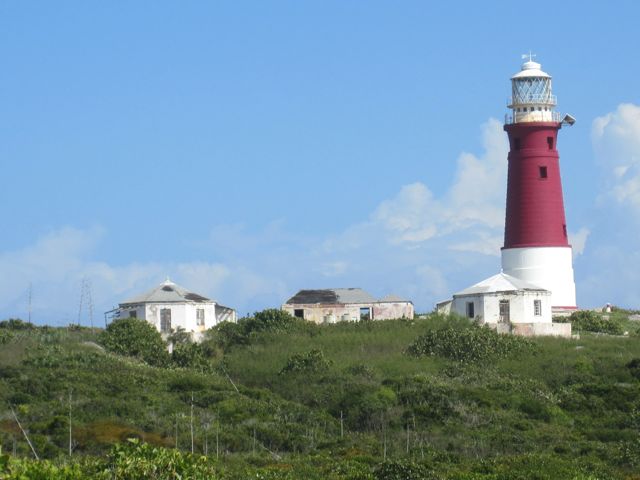
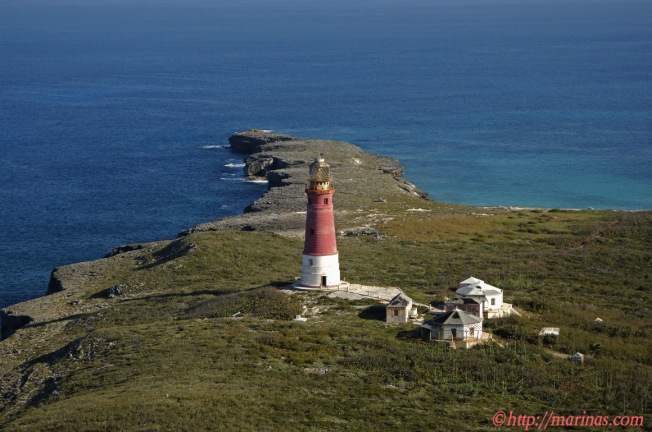
The landmark lighthouse and defunct outbuildings at Hole-in-the-Wall sit just north of a promontory, a sort of Land’s End jutting into the ocean between Abaco and New Providence. The road to it is 15 miles of deteriorating surface through the pine forest of the National Park, and is not for the faint-hearted… see TO THE LIGHTHOUSE

A while ago I traced the history of Abaco, and in particular Hole-in-the-Wall, in maps. I got back as far as 1584 for Abaco itself, a map by Ortelius where Abaco appears as ‘Haraco’ and the geographical relationships are… vague. See A HISTORY OF ABACO IN MAPS

The first mention of Hole-in-the-Wall that I managed to trace was on a map by Couvens in 1737. The name is shown as ‘Hole in the Rock’, and that name alternated with the present one in both English and French, with variations, until settling on ‘Hole-in-the-Wall’ in the c20.

To see the full cartographical post see HISTORY OF ABACO / HOLE IN THE WALL IN MAPS

I also researched the pictorial history of Hole-in-the-Wall. Eventually I came across what may be the first pictorial representation of the Hole in the Wall. It is a fascinating aquatint from 1803 by J. Wells, published in The Naval Review and based on a sketch by a ship’s officer that accompanied a description of the southern end of Abaco for the Review. To put the picture’s age into perspective, it was completed 2 years before Nelson’s decisive victory against the combined French and Spanish navies at Trafalgar.

If you are still awake & would like to see the full post, click HOLE IN THE WALL: 1803 DESCRIPTION & AQUATINT

AN ARTISTIC PUZZLE OF LOCATION ATTRIBUTION – A WORK IN PROGRESS

The other notable depiction of Abaco is a print made by (or in conjunction with) the famous artist Winslow Homer, at the time that he was commissioned to produce work in the Bahamas in the 1880s. This print is the subject of ongoing research by myself and others. It is called ‘On Abaco Island’ and clearly shows the Hole in the Wall as we knew it until last week.

Winslow Homer also produced a well-known painting, the original of which is in the Brooklyn Museum, entitled ‘Glass Windows’. It doesn’t take a great leap of imagination to conclude that the painting is based almost exactly on the view in the print. Even if one ignores the geological evidence (eg the structural detail of the rock at the apex of the arch), note the cloud formations that match perfectly. The print predates and was the template for the painting. If the print was the result of Homer’s time in the Bahamas and an undocumented (?) visit ‘On Abaco Island’, so must the painting be…

However, the Homer / Brooklyn painting ‘Glass Windows’ is generally identified with the similar ‘rock hole’ formation on Eleuthera that is actually known as the Glass Window. As I mentioned earlier, the Eleuthera formation suffered the same fate in a storm, and a new road bridge now connects the two sides.Picture credit http://www.eleuthera-map.com (see also http://www.abacomapbahamas.com)

It isn’t easy to tell whether there is any geological similarity between rock structure in the painting and the Glass Window on Eleuthera. However the contention (mine, anyway) is that the Winslow Homer painting ‘Glass Windows’ is of the Hole in the Wall, Abaco and should be recognised as such. The poignancy of last week’s events at HitW – the loss of a well-loved island feature that can never be replaced – arguably makes the thesis more significant.

One further nugget in support of the case is that I have very recently discovered contemporary written evidence that in the second half of the c19, around the time that Homer was working in the Bahamas, the Hole in the Wall, Abaco was known locally as the ‘glass window’. That would explain Homer’s naming of the painting based on the Abaco print, and strengthens (concludes?) the argument that it is, indeed, of Abaco and not Eleuthera. QED. Repatriate Winslow!

RELATED LATER POSTS

“MIND THE GAP”: A NEW ISLET IS BORN

HITW: A UNIQUE PERSPECTIVE – PAST (close-up look from the sea)

HITW: A UNIQUE PERSPECTIVE – PRESENT & FUTURE (close-up look from the sea)

HOLE-IN-THE-WALL ABACO post Sandy 1

Unknown's avatar

FLAMINGOS & PELICANS: BIRDS OF ABACO… YET NOT IN ABACO


PINK FLAMINGOS & WHITE PELICANS

BIRDS OF ABACO… YET NOT IN ABACO

This post is a slight, alright huge, cheat. It’s been a Hurricane Sandy-dominated week. I have been posting / updating daily about the storm: the before, during and after for Abaco. Weather predictions. Trackers. Pics. Views from space. Several thousand hits later, and I realise that, as for Irene last year, the world is thirsty for information about cyclones and the communities affected by extreme weather. The power and communication problems faced by Abaco (as elsewhere) at these times increases the global concern. There have been emails asking for information about damage at Green Turtle Cay; if I know how uncle Fred on Elbow Cay is faring; and what of Saucy Sue in Marsh Harbour (the boat, not the person)…

Now that the storm has passed, power and comms are mostly restored, and the clean-up underway on Abaco it’s thankfully back to wildlife. Some interesting birds are called for to spread some cheer.These two species will be familiar but not in the setting shown…

PINK FLAMINGOS (Phoenicopterus)

Cheat 1: These birds were photographed… in captivity. Not quite the same as the real wild thing, I agree. To see wild ones on Inagua during the past breeding season, check out my earlier post with wonderful photographs by Melissa Maura CLICK HERE

Cheat 2: They are not in fact the Bahamas / Caribbean species, now I come to think of it. But they are undeniably pretty and cheering.

WHITE PELICANS (Pelicanus)

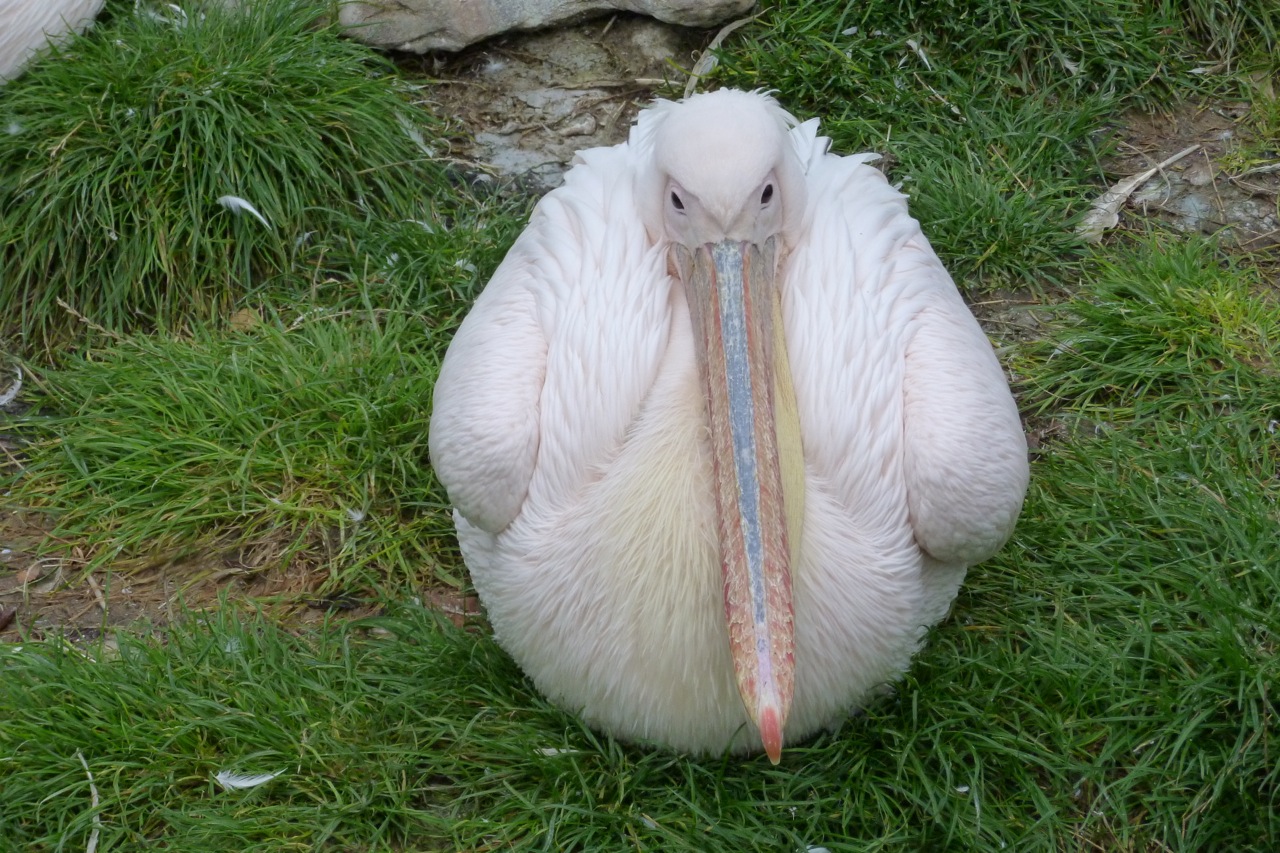
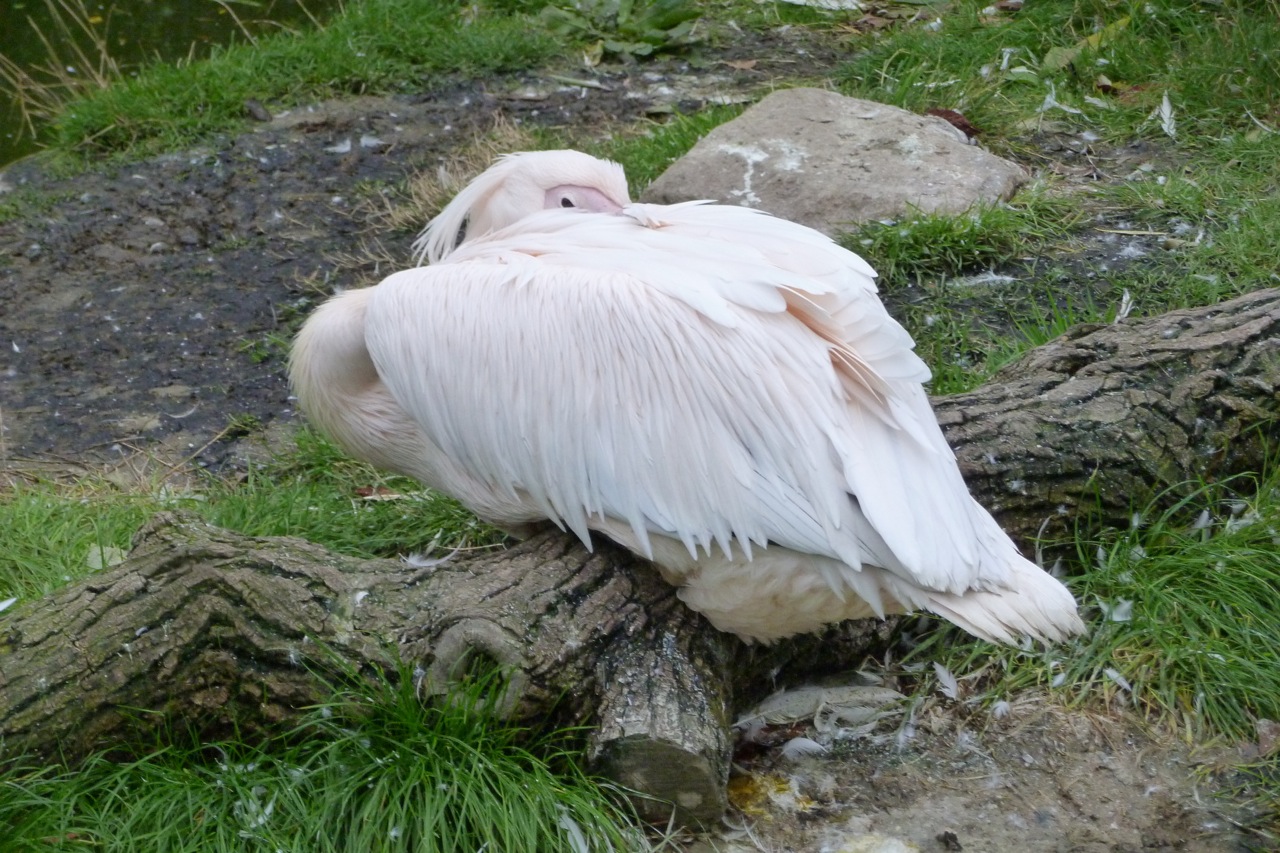
The birds below are American White Pelicans, not the Brown Caribbean Pelican familiar in the Bahamas. This isn’t a real cheat, however, since these birds are listed (in some sources at least) as ‘accidentals’ in the Bahamas. These’s always the chance that you might see a stray one. And if anyone has – especially if they have a photo – I’d be most interested to know.

Unknown's avatar

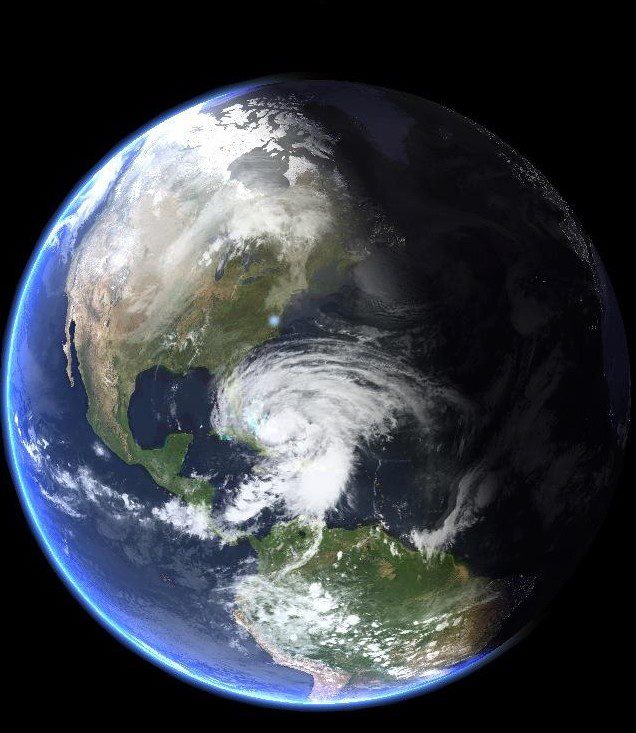
HURRICANE SANDY: VIEWS FROM SPACE, STORM SURGES & THE THREAT TO NEW YORK…


INTERACTIVE HURRICANE SANDY STORM TRACKER

Type in your location for current path prediction

Click Pic!

<<<<<<<<<<<<<<<<>>>>>>>>>>>>>>>>>>

1. SCARY BEAUTY

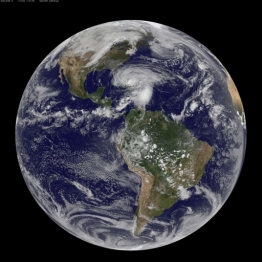
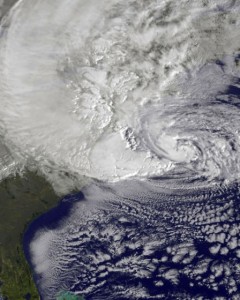
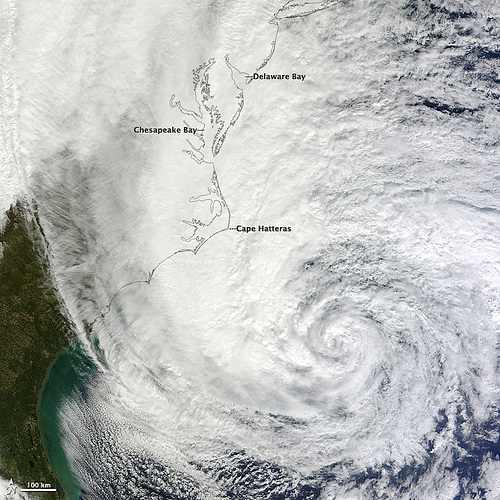
HURRICANE SANDY: VIEWS FROM SPACE

LATEST NASA-GOES IMAGE 29 OCTOBER


Photo credits NASA-GOES, NOAA, BBC & honourable tips of the hat to sundry Sandy magpies

2. STORM SURGE

HURRICANE SANDY’S THREAT TO NEW YORK

US EAST COAST FLOOD PROJECTION MAP

“12 FEET” The biggest fear from this storm in the New York City area is the storm surge. Right now anything from 6 to 12 feet seems quite possible. The greatest storm surge in modern history at Battery Park was 10.5 feet in 1960. Irene’s storm surge was a little over four feet in New York. That’s why you’re seeing evacuations in New York (extract, Guardian UK)

sandy storm surge

Photo credit: Noaa.gov

FOR 9 MORE REASONS THAT MAKE SANDY AN EXCEPTIONAL STORM, CLICK HERE

Unknown's avatar

HURRICANE SANDY AFTERMATH: ABACO PICTURES, NEWS FROM DELPHI CLUB, BAHAMAS & MANATEE UPDATE


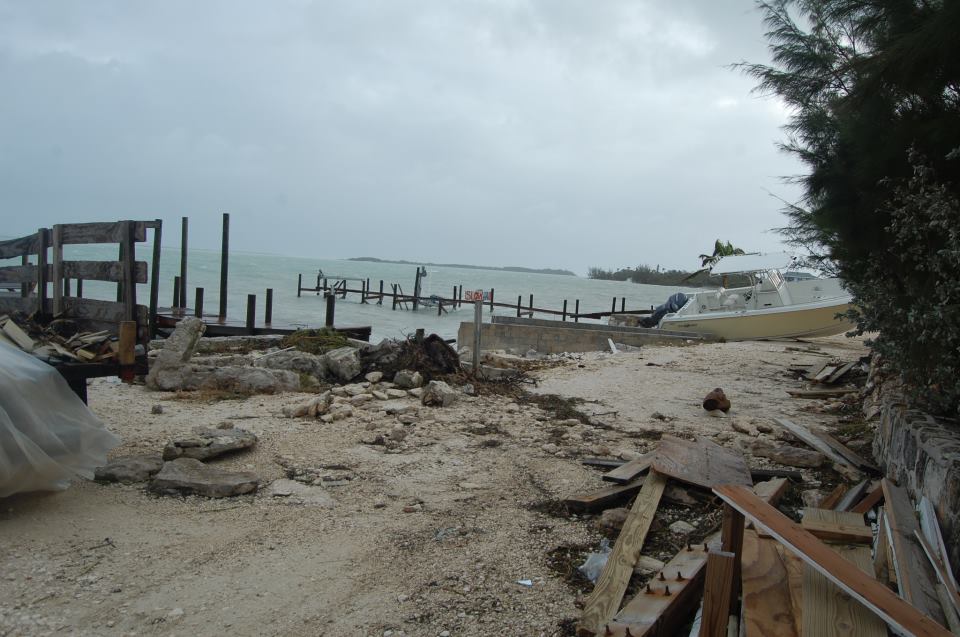
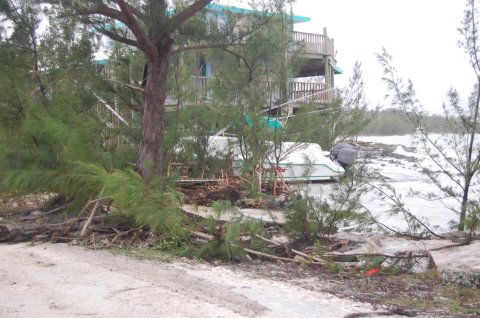
DAMAGE FROM HURRICANE SANDY AT THE DELPHI CLUB, ABACO

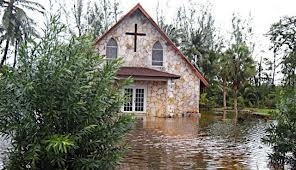
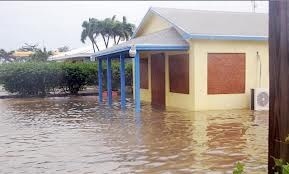
The storm has passed from the Bahamas and the clear-up is underway – but further north communities are bracing themselves for the onslaught. The news today  from contacts, from Facebook and the web generally, is of thankfully little lasting damage, with power and comms restored in many places. There’s been plenty of flooding – eg Sandy Point – and tree / plant mayhem.

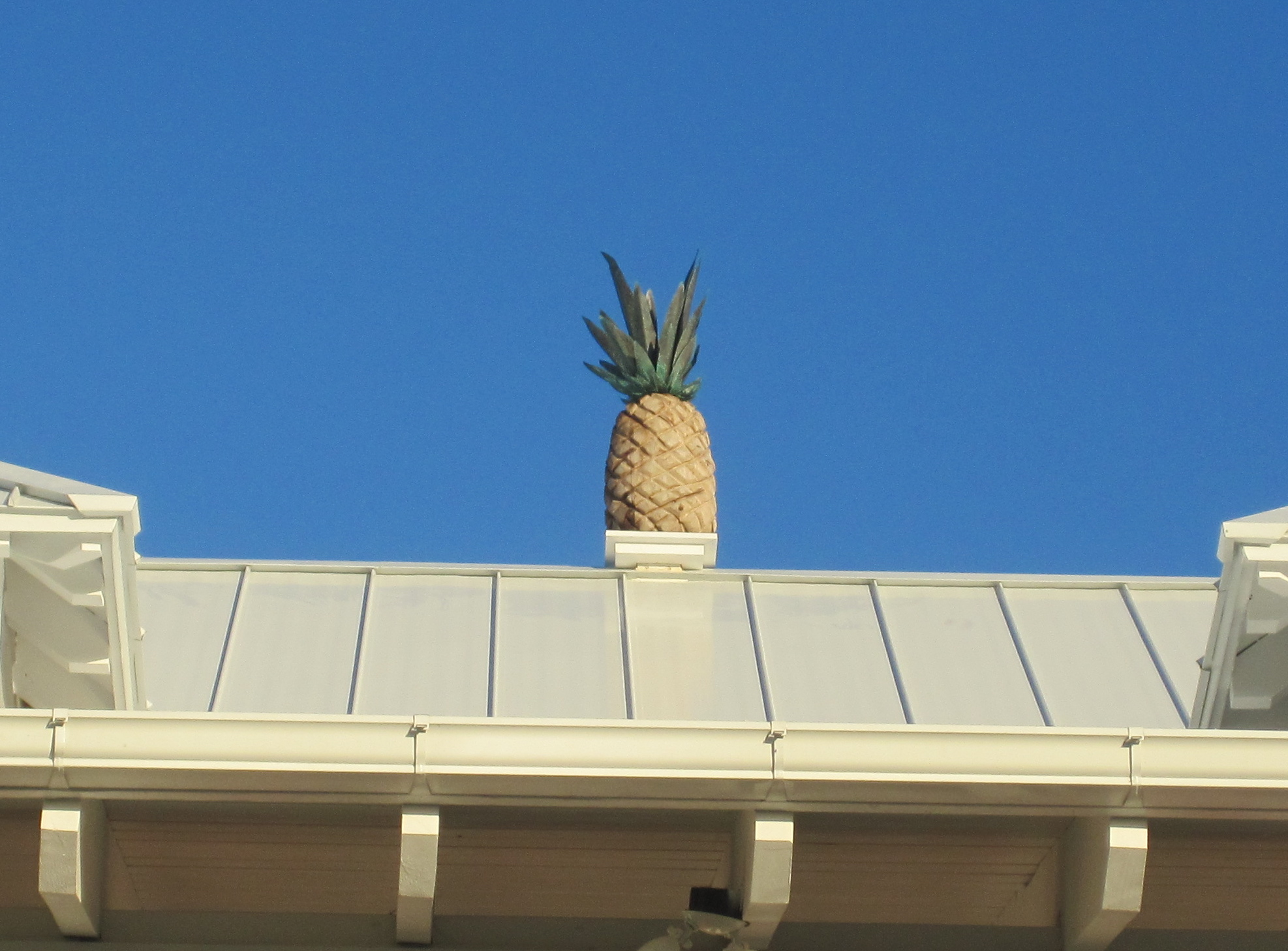
The Delphi Club was again, as with Irene last year, almost directly beneath the eye of the storm. Then, a couple of leaves were lost from the pineapple crown (above), a few fittings were smashed, and the gardens were unceremoniously rearranged. Peter Mantle, Delphi Club supremo, has posted his record of the last few days at the club – the approach of Sandy, the storm, and the aftermath. I am posting extracts below, to be read (chronologically) from the bottom entry to the top of the page. For those who haven’t experienced a storm of this violence, Peter’s account gives a vivid picture of the before, the during and the after…

Apologies for having posted about Sandy in detail with maps etc, and at the crucial time tailing off  while I was away and had only an iPhone™  and a sporadic connection…

STOP PRESS: AMERICAN OYSTERCATCHERS – BRAVE OR FOOLISH? 29 October

Peter Mantle has just sent me a ‘Sandy’ photo from the Delphi Club beach, showing a group of oystercatchers on the rocks at one end of Rolling Harbour. Storm detritus already festoons the rocks. Have the birds seen what’s about to hit them? Are they waterproof? 

STOP PRESS: BMMRO MANATEE UPDATE 29 October

The BMMRO has posted news from Sandy Point and for those who have been asking after manatee Georgie’s welfare, an update:

“Hi Everyone, everything is ok here at the research center! We are working on getting information on Georgie’s whereabouts and we will happily update everyone as soon as we hear anything. There’s still a bit of damage here in Abaco that is preventing travel but hopefully we will be able to get up to Georgie soon”.

STOP PRESS: SOME ABACO IMAGES 28 October

(credits to Timothy Roberts & Cindy James Pinder and their facebook posts)

SANDY TAKES BONEFISH; DARK HUMOUR ON DARK DAYS

OCTOBER 27th Among the many bits of minor damage caused by Hurricane Sandy was the destruction of our bonefish weather vane. This had been hand-made by the other Sandy, our general manager, and stood atop his lodgings. Snapped off, the copper creation was found nearby, bruised and dented, rather like ourselves.

Yet again, we have been very fortunate – staff and guests are all well. And most of the damage caused by the 100mph winds was minor. The storm had its moments, but the worst bits were at nighttime when many people were huddled safe in bed. Lots of bumps and bangs provided a spooky soundtrack, but it was more of a B movie than a full-blown Hollywood epic. That said, I hate to think what a really big Category 3, 4 or 5 hurricane would be like.

We still have no mains electricity; thank God for the gennie. We have no phones or mobile connection, so we have little idea of what is going on elsewhere on the island. We hope for the best but fear not all will have escaped as lightly as we did. Some of the staff from Crossing Rocks are stranded here by flooding. But the wireless internet is back so all will soon be revealed.

Yet again, the gardens have been shredded. The banana trees have been snapped off mid-fruiting. My favorite banyan tree has broken in half again, having nearly bounced back from Irene. The big Bismark ferns are banjaxed, the bougainvillea is blasted leafless and the pool is a mess. But who cares. We are fine. Dunkirk spirit? Well, very black humour and spirits of a different kind have seen us through.

“I survived Sandy” T-shirts are now in preparation, but that’s a staff joke about their hyperactive and heroic boss…..

A BAD HAIR DAY…

OCTOBER 25th It is getting distinctly breezy here, with winds as bad as any Irish gale. But Hurricane Sandy, now upgraded to a Category 2 hurricane, is still some 18 hours away and currently features average winds of 105mph with higher gusts. It may get even worse, they say. So no fishing today. More guests have made it in. Bahamasair even ran a plane out of Nassau at first light this morning.

While we still have power and phones, the lines are buzzing and we are glued to the internet. It seems odd to see that Sandy is the lead news story on the BBC. Non-technical guests have adjourned to the library (where “A Perfect Storm” and “Winnie the Poo and the Blustery Day” are current favourites). The air of gloom is more attributable to the fact that Arsenal lost at home last night than to any fears for personal safety.

We may go quiet for a while.

NOTHING VERY FEMININE ABOUT THIS SANDY

OCTOBER 24th, noon Tropical storms are now given boys’ and girls’ names alternately; in the old days they were all girls. The one that currently threatens us is Sandy, a name that is more commonly applied to females in this part of the world. But there is nothing too feminine about this storm; as the forecast deteriorates and Sandy intensifies into a hurricane over Jamaica, we are becoming more and more concerned by its macho capabilities.

The National Hurricane Centre now predicts that Sandy will pass very close to Abaco – the predicted path having shifted overnight. As it now looks, the eye may pass just 25 miles from us, which would basically be a direct hit since damaging winds spread far out from the centre. We are going to have to keep a very close on on this little girl over the next 48 hours.

ALL EYES ON SANDY

OCTOBER 23rd No sooner has the Club reopened for the new season than a tropical storm appears on the horizon. And, in a twist of divine humour, it’s been christened after our general manager, Sandy.

Sandy (the mostly human version) is tracking Sandy (the swirling tempest) on an hourly basis. As it now stands, we are in the “cone” of the likely track of the storm over coming days. Currently south of Jamaica, TS Sandy is turning north and could yet morph into a hurricane. It’s expected to be over or near us by Friday night, with “average” winds of nearly 60mph and gusts of up to 90mph.

Hatches will therefore be battened, outdoor furniture put back indoors and supplies of grog reinforced. The lucky fishers in residence will have to take a breather, while the new chef, John, will receive a special form of baptism.

Tropical storms this late in the year are a great rarity. Somehow that is not very reassuring just now. But the forecast for the following week is rather better… 

Click image to visit the Delphi Club

Unknown's avatar

HURRICANE SANDY AFTERMATH: ABACO, BAHAMAS (+ TRACKING / RADAR MAPS 14.00 EDT 27 OCTOBER)


HURRICANE SANDY AFTERMATH: UPDATE FOR ABACO 27 0CTOBER 1400 EDT

There’s little to add to the earlier comment today. Messages I have received are of the brief “it’s all ok” sort. I’ve heard that some have got power back – but I have also seen warnings that in some places it will take longer to rectify. Here are some images from Marsh Harbour yesterday.
20121027-192723.jpg

20121027-192240.jpg

20121027-192213.jpg

HURRICANE SANDY AFTERMATH: UPDATE FOR ABACO 27 OCTOBER 0400 EDT

A quick scan of emails and online reports for Abaco & the Cays indicates widespread flooding and tree damage, a few boat problems, outages and comms loss – 20 out of 22 cellphone towers are down. I’ve seen no reports of significant injury or property damage. More later.

SANDY NOW CLEAR OF ABACO 1900 EDT
20121027-005719.jpg

20121027-005700.jpg

SANDY STORMS NORTH
20121026-174649.jpg

20121026-174543.jpg

HURRICANE SANDY LATEST UPDATES 26 OCTOBER 11.00 EDT ABACO BAHAMAS via iPhone and a dodgy network link…

Back to Cat 1 but right on target… Dune at White Sound holds, but plenty of water…! HT & Seaspray report 10″ water above docks… beach erosions reported elsewhere… Flooding & tree damage but no reports yet of injury or heavy damage to houses

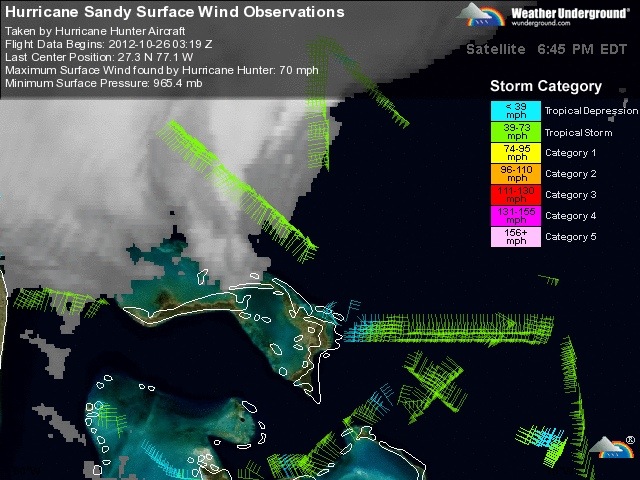
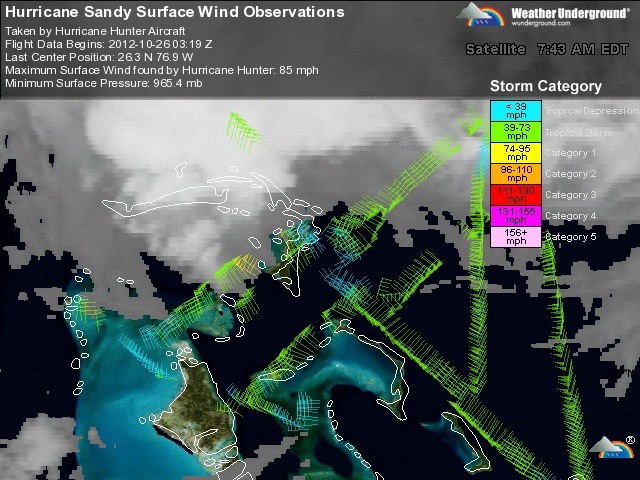
NEW IMAGES including hurricane hunter cloudscape – eye of the storm passing over east Abaco… GOOD LUCK TODAY

20121026-142603.jpg

20121026-142613.jpg20121026-010616.jpg

HURRICANE SANDY HEADING NORTH FOR BAHAMAS

INTERACTIVE STORM TRACKER

Type in your location for current path predictionClick Pic!

UPDATE 25 OCT 05.00 EDT HURRICANE SANDY CLEARING CUBA AS CAT. 2

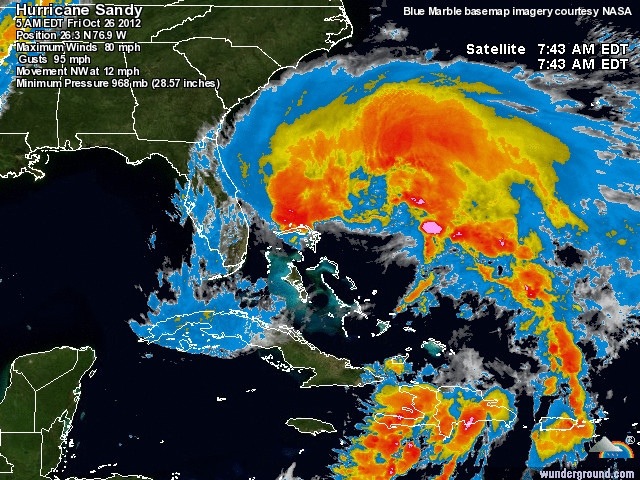
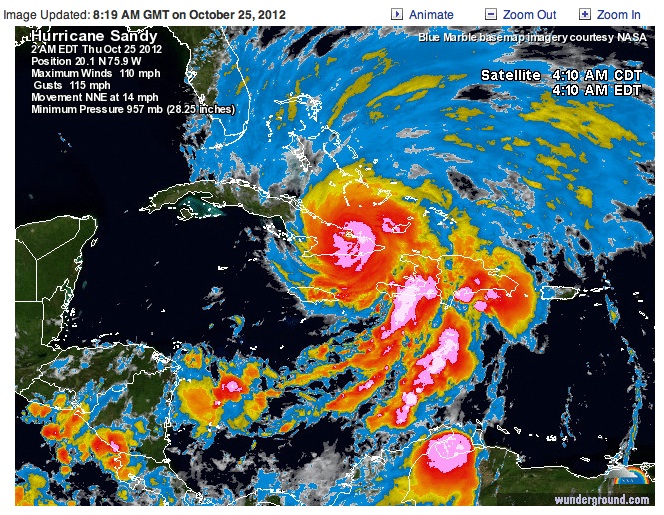
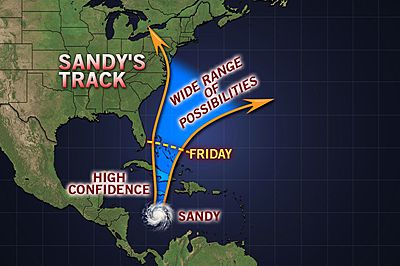
Three hours passing has made a further difference, and not for the better. The landmass of Cuba, far from slowing the storm, has seen it intensify to Cat 2 – though so far that is predicted only as far as the south Bahamas… (Map 1). However the eastward drift into the Atlantic is still detectable – see Abaco detail, Map 2

UPDATE 25 OCT 02.00 EDT HURRICANE SANDY MAKES CUBA LANDFALL

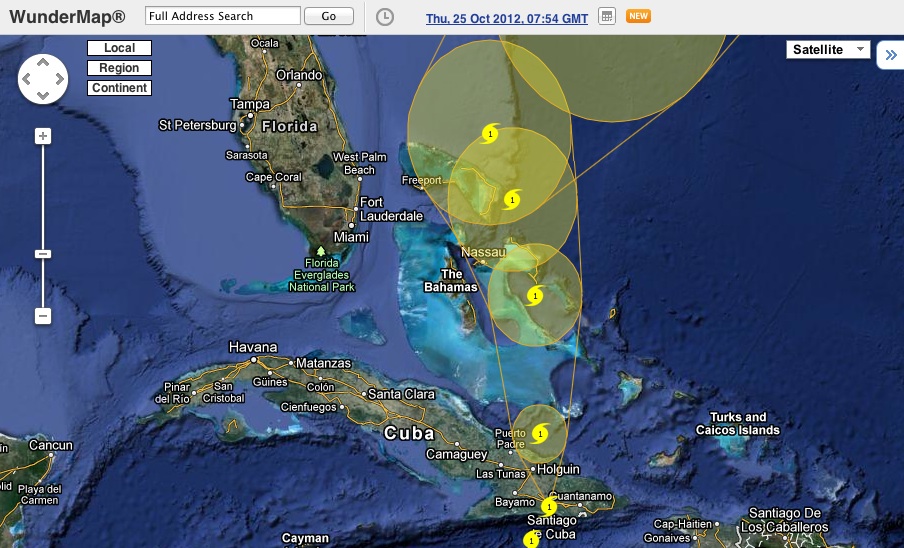
As Sandy reaches the south coast of Cuba, two things have become clear overnight. First, the storm’s strength is now predicted at Cat 1 until it clears into the Atlantic north of the Bahamas – there will be no reduction to TS status in the south Bahamas (Map 1) Secondly, the news for Abaco is that a slight drift of the spine of the storm to the east can be detected (see Abaco Detail, Map 2). Yesterday, the eye was due to pass pretty much directly over MH and indeed (like Irene last year) the Delphi Club and Rolling Harbour. The shift may of course have no significant effect on the storm’s power, but if the eye’s path could continue to drift further east… Map 3 is the ‘hot’ map from 04.00 EDT today

FLIGHT ADVISORY As many on Abaco may already have found, there are flight disruptions from Nassau – I know of one person who couldn’t get to MH last night. So visitors following this blog and planning an imminent flight need to keep a careful eye on the situation, which given the path of the storm is likely to worsen.
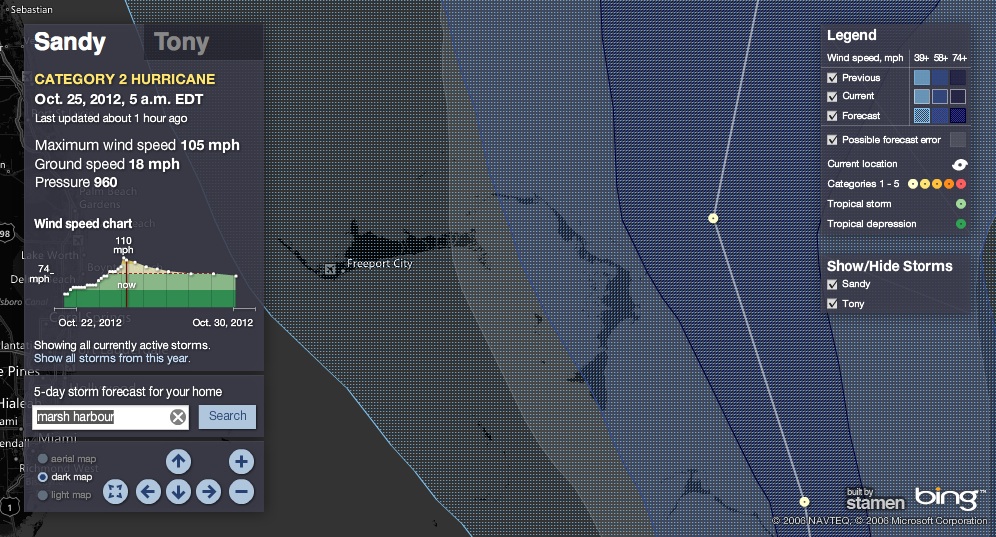
I will not be in a position to post much in the way of updates between now and Monday – by which time Sandy should have cleared to the north of the Bahamas. The interactive tracker link at the top of this page is an excellent resource, especially as you can input a precise location. There is luckily a wealth of information out there on the internet – far more than for Irene last year. I notice too that Abaco residents are busy exchanging information on Facebook. While we are away, we’ll be thinking of all those in the path of the storm…

UPDATE 24 OCT 18.00 EDT HURRICANE SANDY CROSSING JAMAICA

Sandy is now a Cat 1 hurricane as it crosses Jamaica and heads for eastern Cuba. As the latest projections show, the prospects for the Bahamas have worsened: hurricane force is expected over central and northern islands (see map below for Abaco detail)

DETAILED TRACKING PATH FOR THE BAHAMAS 24 OCTOBER 18.00 EDT

NATIONAL HURRICANE CENTER UPDATE EXTRACT 24 OCT 16.00 EDT

THE EYE OF HURRICANE SANDY MADE LANDFALL ON THE SOUTHEASTERN COAST
OF JAMAICA NEAR KINGSTON AT APPROXIMATELY 3.00 PM EDT / 19.00 UTC
MAXIMUM SUSTAINED WINDS AT LANDFALL WERE ESTIMATED TO BE 80 MPH / 130 KM/H
======================================
HURRICANE SANDY ADVISORY NUMBER 9 NWS NATIONAL HURRICANE CENTER MIAMI FL 1100 AM EDT WED OCT 24 2012 
SANDY REACHES HURRICANE STRENGTH... CONDITIONS DETERIORATING IN JAMAICA... 

CHANGES WITH THIS ADVISORY 
THE GOVERNMENT OF THE BAHAMAS HAS ISSUED A HURRICANE WATCH FOR CENTRAL AND NORTHWESTERN BAHAMAS 

SUMMARY OF WATCHES AND WARNINGS IN EFFECT

A HURRICANE WARNING IS IN EFFECT FOR JAMAICA and [SPECIFIED] REGIONS OF CUBA 
A TROPICAL STORM WARNING IS IN EFFECT FOR HAITI, THE CENTRAL BAHAMAS, THE NORTHWESTERN BAHAMAS 
A HURRICANE WATCH IS IN EFFECT FOR THE CENTRAL BAHAMAS, THE NORTHWESTERN BAHAMAS 
A TROPICAL STORM WATCH IS IN EFFECT FOR THE SOUTHEASTERN BAHAMAS, FLORIDA EAST COAST FROM THE VOLUSIA/BREVARD
COUNTY LINE TO OCEAN REEF, FLORIDA UPPER KEYS FROM OCEAN REEF TO CRAIG KEY, FLORIDA BAY

UPDATE 24 OCT 05.00 EDT TS SANDY MARCHES NORTH OVER JAMAICA

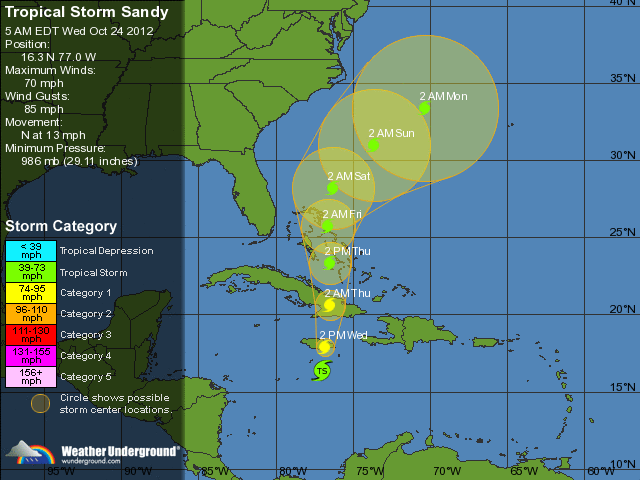
The latest maps below show TS / Hurricane Sandy at 5 am EDT today. Map 3 is the most useful for the current detailed Abaco prediction. Meanwhile, the US news indicates increasing concerns further north (much as happened with Irene last year)

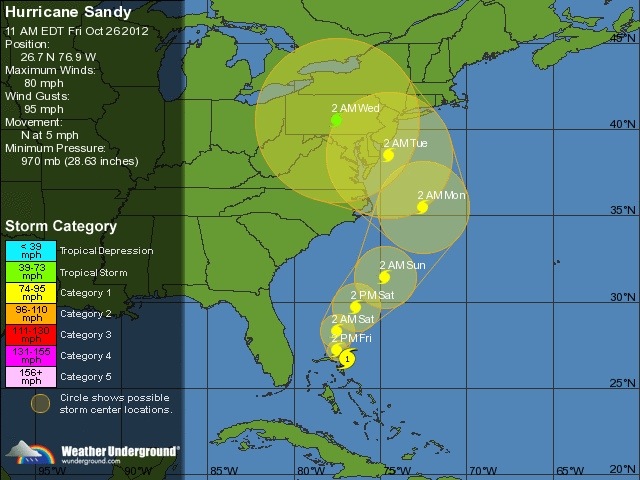
TS SANDY POSITION & PROJECTED PATH 24 OCT 5.00 am EDTTS SANDY 5-DAY FORECAST 24 OCT 05.00 am EDT

TS SANDY DETAILED TRACKER 24 OCT 5.00 am EDT

TS SANDY POSITION & PROJECTED PATH 24 OCT 5.00 am EDT

CONCERN IS INCREASING FOR TS SANDY’S PATH UP THE US EAST COAST…

UPDATE 23 OCT 23.00 EDT TS Sandy is now approaching Jamaica.

Continue reading

Unknown's avatar

HURRICANE SANDY: CUBA, BAHAMAS (TRACKING / PATH MAPS, LATEST ABACO UPDATES 25 OCTOBER)


20121027-192522.jpg

HURRICANE SANDY HEADING NORTH FOR BAHAMAS

INTERACTIVE STORM TRACKER

Type in your location for current path predictionClick Pic!

UPDATE 25 OCT 05.00 EDT HURRICANE SANDY CLEARING CUBA AS CAT. 2

Three hours passing has made a further difference, and not for the better. The landmass of Cuba, far from slowing the storm, has seen it intensify to Cat 2 – though so far that is predicted only as far as the south Bahamas… (Map 1). However the eastward drift into the Atlantic is still detectable – see Abaco detail, Map 2

UPDATE 25 OCT 02.00 EDT HURRICANE SANDY MAKES CUBA LANDFALL

As Sandy reaches the south coast of Cuba, two things have become clear overnight. First, the storm’s strength is now predicted at Cat 1 until it clears into the Atlantic north of the Bahamas – there will be no reduction to TS status in the south Bahamas (Map 1) Secondly, the news for Abaco is that a slight drift of the spine of the storm to the east can be detected (see Abaco Detail, Map 2). Yesterday, the eye was due to pass pretty much directly over MH and indeed (like Irene last year) the Delphi Club and Rolling Harbour. The shift may of course have no significant effect on the storm’s power, but if the eye’s path could continue to drift further east… Map 3 is the ‘hot’ map from 04.00 EDT today

FLIGHT ADVISORY As many on Abaco may already have found, there are flight disruptions from Nassau – I know of one person who couldn’t get to MH last night. So visitors following this blog and planning an imminent flight need to keep a careful eye on the situation, which given the path of the storm is likely to worsen.

I will not be in a position to post much in the way of updates between now and Monday – by which time Sandy should have cleared to the north of the Bahamas. The interactive tracker link at the top of this page is an excellent resource, especially as you can input a precise location. There is luckily a wealth of information out there on the internet – far more than for Irene last year. I notice too that Abaco residents are busy exchanging information on Facebook. While we are away, we’ll be thinking of all those in the path of the storm…

UPDATE 24 OCT 18.00 EDT HURRICANE SANDY CROSSING JAMAICA

Sandy is now a Cat 1 hurricane as it crosses Jamaica and heads for eastern Cuba. As the latest projections show, the prospects for the Bahamas have worsened: hurricane force is expected over central and northern islands (see map below for Abaco detail)

DETAILED TRACKING PATH FOR THE BAHAMAS 24 OCTOBER 18.00 EDT

NATIONAL HURRICANE CENTER UPDATE EXTRACT 24 OCT 16.00 EDT

THE EYE OF HURRICANE SANDY MADE LANDFALL ON THE SOUTHEASTERN COAST
OF JAMAICA NEAR KINGSTON AT APPROXIMATELY 3.00 PM EDT / 19.00 UTC
MAXIMUM SUSTAINED WINDS AT LANDFALL WERE ESTIMATED TO BE 80 MPH / 130 KM/H
======================================
HURRICANE SANDY ADVISORY NUMBER 9 NWS NATIONAL HURRICANE CENTER MIAMI FL 1100 AM EDT WED OCT 24 2012 
SANDY REACHES HURRICANE STRENGTH... CONDITIONS DETERIORATING IN JAMAICA... 

CHANGES WITH THIS ADVISORY 
THE GOVERNMENT OF THE BAHAMAS HAS ISSUED A HURRICANE WATCH FOR CENTRAL AND NORTHWESTERN BAHAMAS 

SUMMARY OF WATCHES AND WARNINGS IN EFFECT

A HURRICANE WARNING IS IN EFFECT FOR JAMAICA and [SPECIFIED] REGIONS OF CUBA 
A TROPICAL STORM WARNING IS IN EFFECT FOR HAITI, THE CENTRAL BAHAMAS, THE NORTHWESTERN BAHAMAS 
A HURRICANE WATCH IS IN EFFECT FOR THE CENTRAL BAHAMAS, THE NORTHWESTERN BAHAMAS 
A TROPICAL STORM WATCH IS IN EFFECT FOR THE SOUTHEASTERN BAHAMAS, FLORIDA EAST COAST FROM THE VOLUSIA/BREVARD
COUNTY LINE TO OCEAN REEF, FLORIDA UPPER KEYS FROM OCEAN REEF TO CRAIG KEY, FLORIDA BAY

UPDATE 24 OCT 05.00 EDT TS SANDY MARCHES NORTH OVER JAMAICA

The latest maps below show TS / Hurricane Sandy at 5 am EDT today. Map 3 is the most useful for the current detailed Abaco prediction. Meanwhile, the US news indicates increasing concerns further north (much as happened with Irene last year)

TS SANDY POSITION & PROJECTED PATH 24 OCT 5.00 am EDTTS SANDY 5-DAY FORECAST 24 OCT 05.00 am EDT

TS SANDY DETAILED TRACKER 24 OCT 5.00 am EDT

TS SANDY POSITION & PROJECTED PATH 24 OCT 5.00 am EDT

CONCERN IS INCREASING FOR TS SANDY’S PATH UP THE US EAST COAST…

UPDATE 23 OCT 23.00 EDT TS Sandy is now approaching Jamaica.

Continue reading

Unknown's avatar

“MANATEE MANIA IN THE ABACOS” BMMRO FALL 2012 NEWSLETTER


“MANATEE MANIA IN THE ABACOS” – BMMRO FALL 2012 NEWSLETTER

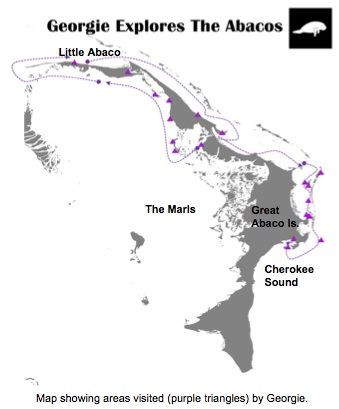
The BMMRO has just published the Fall 2012 newsletter, and it’s no surprise to find that the front page news is the arrival of young manatee Georgie on Abaco. After nosing and indeed grazing her way around Abaco and the Cays, she still appears to be contentedly moored in Cherokee after the best part of a month. Here’s the official map of her wanderings 

Besides the manatee there’s plenty more to read and look at including 

  • Charlotte Dunn’s ‘President’s Update’
  • Articles on whales, and a friendly bottlenose dolphin’s visit to Hope Town
  • Fall ‘cetacean sightings’ map
  • Students at ‘Whale Camp’
  • A quiz to make sure you have taken it all in…

To read the four-page document –  and admire the photos – CLICK BMMRO FALL 2012 NEWSLETTER

Unknown's avatar

TROPICAL STORM SANDY: HEADING FOR BAHAMAS (TRACKING / PATH MAPS, LATEST ABACO UPDATES 24 OCTOBER)


HURRICANE SANDY HEADING NORTH FOR BAHAMAS

INTERACTIVE REAL-TIME STORM TRACKER

Type in your location for current path predictionClick Pic!

UPDATE 24 OCT 18.00 EDT HURRICANE SANDY CROSSING JAMAICA

Sandy is now a Cat 1 hurricane as it crosses Jamaica and heads for eastern Cuba. As the latest projections show, the prospects for the Bahamas have worsened: hurricane force is expected over central and northern islands (see map below for Abaco detail).

I will not be in a position to post much in the way of updates between now and Monday – by which time Sandy should have cleared to the north of the Bahamas. The interactive tracker link at the top of this page is an excellent resource, especially as you can input a precise location. There is luckily a wealth of information out there on the internet – far more than for Irene last year. I notice too that Abaco residents are busy exchanging information on Facebook. While we are away, we’ll be thinking of all those in the path of the storm… 

DETAILED TRACKING PATH FOR THE BAHAMAS 24 OCTOBER 18.00 EDT

NATIONAL HURRICANE CENTER UPDATE EXTRACT 24 OCT 16.00 EDT

THE EYE OF HURRICANE SANDY MADE LANDFALL ON THE SOUTHEASTERN COAST
OF JAMAICA NEAR KINGSTON AT APPROXIMATELY 3.00 PM EDT / 19.00 UTC
MAXIMUM SUSTAINED WINDS AT LANDFALL WERE ESTIMATED TO BE 80 MPH / 130 KM/H
======================================
HURRICANE SANDY ADVISORY NUMBER 9 NWS NATIONAL HURRICANE CENTER MIAMI FL 1100 AM EDT WED OCT 24 2012 
SANDY REACHES HURRICANE STRENGTH... CONDITIONS DETERIORATING IN JAMAICA... 

CHANGES WITH THIS ADVISORY 
THE GOVERNMENT OF THE BAHAMAS HAS ISSUED A HURRICANE WATCH FOR CENTRAL AND NORTHWESTERN BAHAMAS 

SUMMARY OF WATCHES AND WARNINGS IN EFFECT

A HURRICANE WARNING IS IN EFFECT FOR JAMAICA and [SPECIFIED] REGIONS OF CUBA 
A TROPICAL STORM WARNING IS IN EFFECT FOR HAITI, THE CENTRAL BAHAMAS, THE NORTHWESTERN BAHAMAS 
A HURRICANE WATCH IS IN EFFECT FOR THE CENTRAL BAHAMAS, THE NORTHWESTERN BAHAMAS 
A TROPICAL STORM WATCH IS IN EFFECT FOR THE SOUTHEASTERN BAHAMAS, FLORIDA EAST COAST FROM THE VOLUSIA/BREVARD
COUNTY LINE TO OCEAN REEF, FLORIDA UPPER KEYS FROM OCEAN REEF TO CRAIG KEY, FLORIDA BAY

UPDATE 24 OCT 05.00 EDT TS SANDY MARCHES NORTH OVER JAMAICA 

The latest maps below show TS / Hurricane Sandy at 5 am EDT today. Map 3 is the most useful for the current detailed Abaco prediction. Meanwhile, the US news indicates increasing concerns further north (much as happened with Irene last year) Continue reading

Unknown's avatar

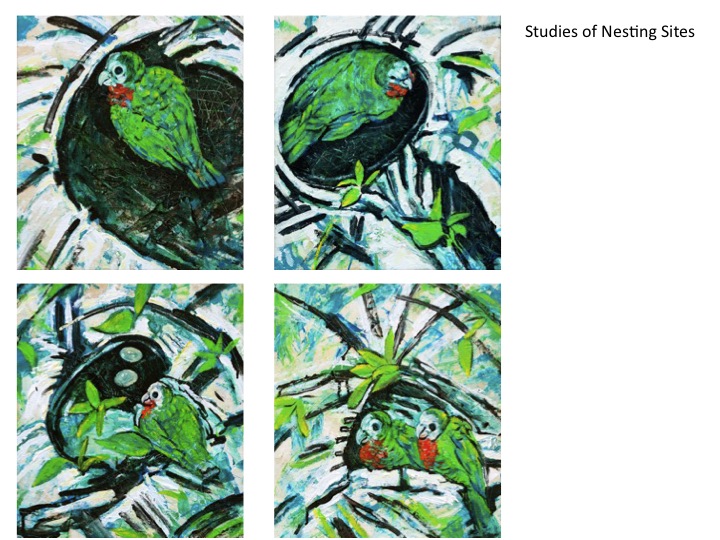
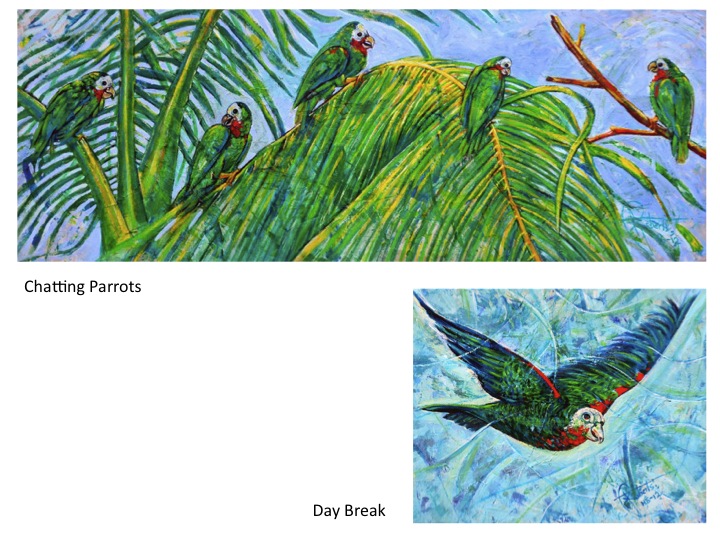
‘PARROTS OF THE BAHAMAS’: ABACO PARROT PAINTINGS BY ANTONIUS ROBERTS


‘PARROTS OF THE BAHAMAS’

A SERIES OF ABACO PARROT PAINTINGS BY ANTONIUS ROBERTS

The wonderful parrots of Abaco are often featured hereabouts, and with good reason. They are the only subspecies of cuban parrot to nest underground, a unique species adaptation that protects them from fires in the pine forest of the ABACO NATIONAL PARK where they breed. However this in turn makes them vulnerable to predation. An intensive long-term conservation and predation-reduction program headed by scientist Caroline Stahala has reversed the decline of this iconic bird. Numbers have increased from fewer than 2500 some years ago to an estimated 4000. 

There are places on Abaco – south Abaco in particular – where the parrots congregate in noisy groups during the day. Many people manage to take photographs of them. Good photographers with a decent lens can get outstanding results. Even the camera-incompetent (I hear my name!) can manage the occasional first-class photo, given time and plenty of spare space on the camera card… But very few can do justice to these colourful birds in paint.

The spectacular series of paintings below are by well-known Bahamian artist and sculptor Antonius Roberts. Caroline has already posted about these on the ABACO PARROT RESEARCH F/B page. The originals of these paintings have (unsurprisingly) been sold, but they are available as limited-edition prints. Antonius will generously be donating proceeds of sale from the series to support the on-going parrot research. The images are ©Antonius Roberts – thanks to him and to Caroline for use permission

A recent reception was held in Nassau to showcase this series of paintings. You will find more about them by clicking the link to open a pdf of the reception brochure ABACO PARROT PAINTINGS Caroline Stahala contributed an excellent one-page article about the Abaco Parrots and their conservation – click on it to enlarge to legible size

Contact Antonius via email to hillsidehousebs@gmail.com or check out his website by clicking the parrot

Unknown's avatar

GEORGIE THE ABACO MANATEE – CHEROKEE’S SIRENIAN VISITOR STAYS ON…


GEORGIE THE ABACO MANATEE – CHEROKEE’S SIRENIAN VISITOR  STAYS ON…

There must be something special about Cherokee on Abaco. Georgie the Manatee, having travelled over from the Berry Is. early last month, spent 4 weeks or so on the move. She was tracked on the west side of Abaco in the Marls, moving north and rounding Little Abaco, then travelling south visiting various Cays along the way, ending up in Hope Town harbour. After a few days she moved across from Elbow Cay to the Little Harbour area, before settling down in Cherokee. That was nearly 3 weeks ago. She’s still there, by far the longest she has stayed in one place

Maybe the sea grass is especially good there. Or maybe she has found a tasty freshwater spring. Or it could be that she is enjoying the company there, and the welcome from the community – though she of course has been a very popular visitor in all her ports of call. Whatever the reason, she seems to be happy and in good health. Kendria Ferguson (BMMRO) has just sent me 3 photos from her visit to Cherokee today. Georgie has managed to shed her tag – again – but since everyone knows where she is, it doesn’t matter for now…

The image below is also posted on the BMMRO’s FACEBOOK PAGE and maybe gives a clue to why Georgie is so content – calm, friendly interest and attention. The next one is of a young boy inspecting Georgie, also in Cherokee. Equally peaceful.

Let’s compare and contrast those serene pictures with another taken recently – the woman below who was detained in Florida for her ‘manatee riding’ antics…

Unknown's avatar

HAIRY WOODPECKERS IN THE ABACO COPPICE


HAIRY WOODPECKERS IN THE ABACO COPPICE

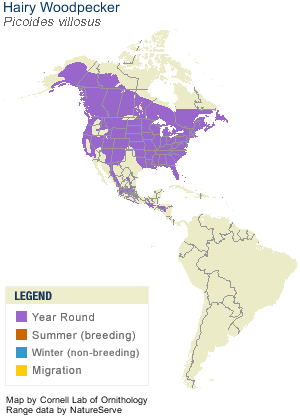
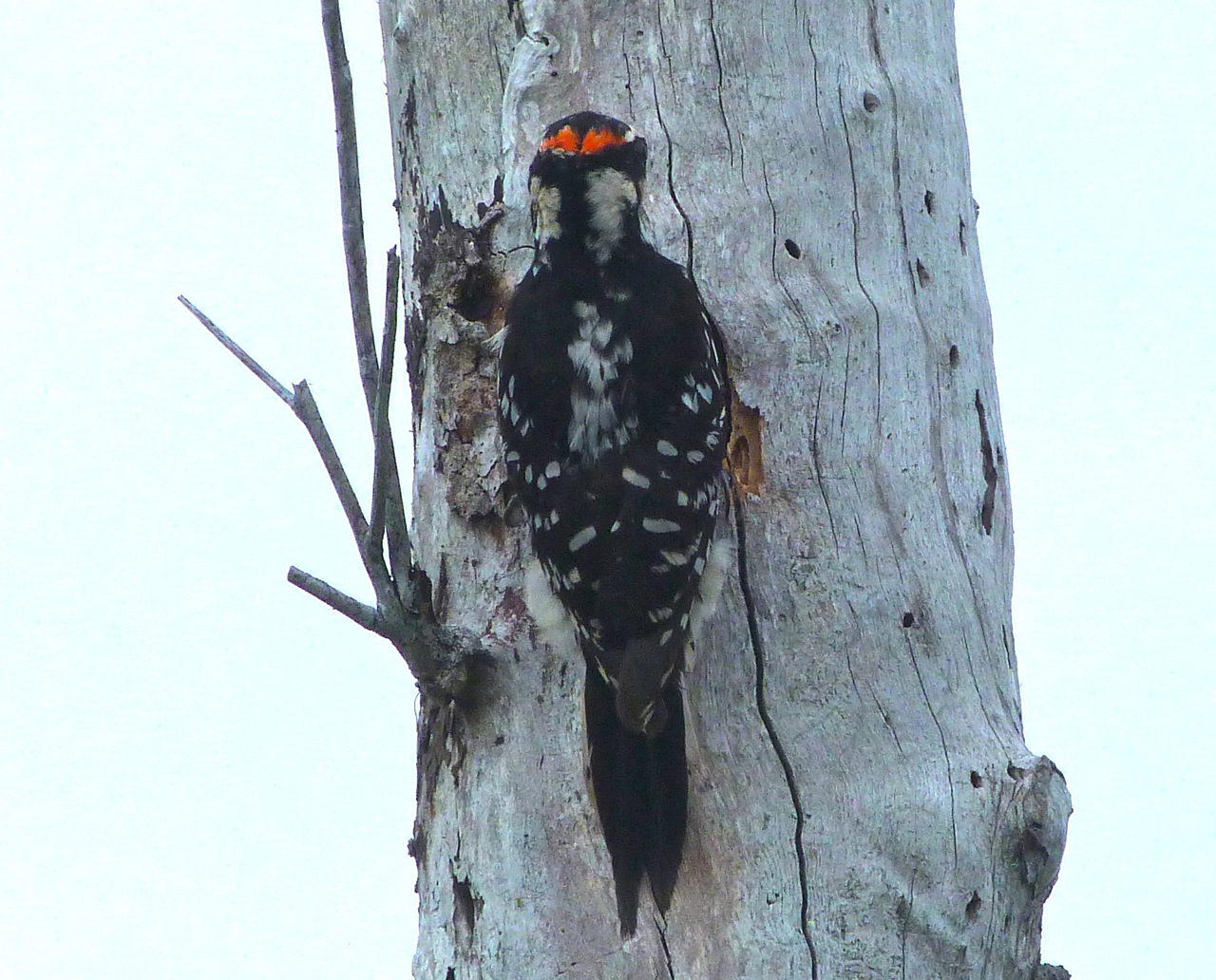
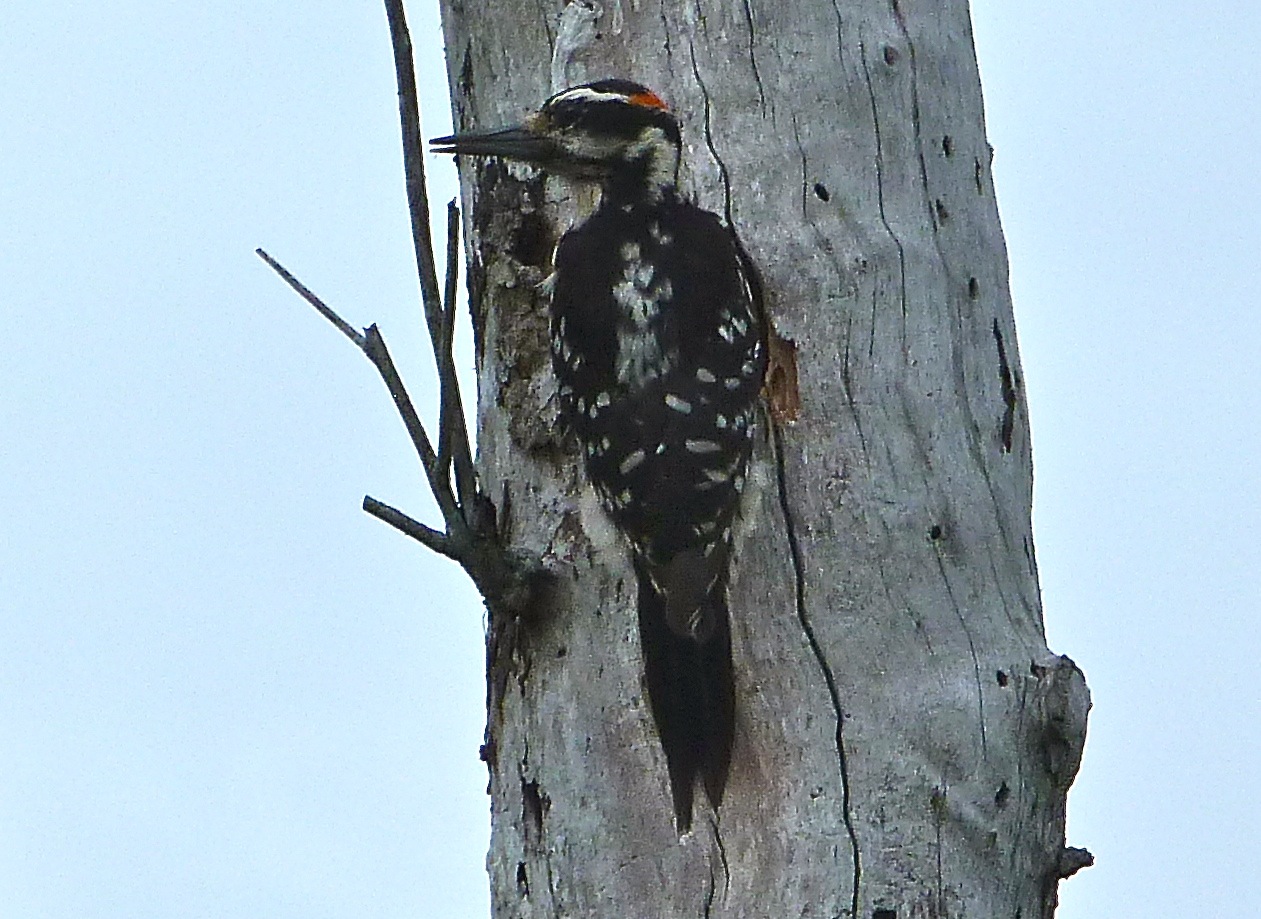
The hairy woodpecker (Picoides villosus) inhabits forest, woodland or coppice over a wide area of the North American continent and the islands to the east, including the Bahamas. They are mostly permanent residents, though there is a degree of migration within their territorial area.

They are a very familiar sight on Abaco, along with their larger cousins the West Indian Woodpecker. These birds forage on trees for insects, turning over bark or excavating deeper. They also feed on fruits, berries and nuts. It’s not unusual for them  to attack the woodwork on houses in a search for bugs…

This male hairy woodpecker is prospecting a promising hole near the Delphi Club guest driveThe marks at the bottom of the hole suggest this may be a nesting hole – past, present or futureIt’s certainly deemed worth further investigation… if only he had someone to share it with

He may be in luck! This female hairy woodpecker was in the coppice not far away… A female HW is smaller than the male and lacks the male’s distinctive red head marking. They nest in a tree hole like the one above, where the female usually produces four white eggs. 

Unknown's avatar

CHILLIN’ ON ABACO VS CHILLY IN ENGLAND


CHILLIN’ ON ABACO VS CHILLY IN ENGLAND

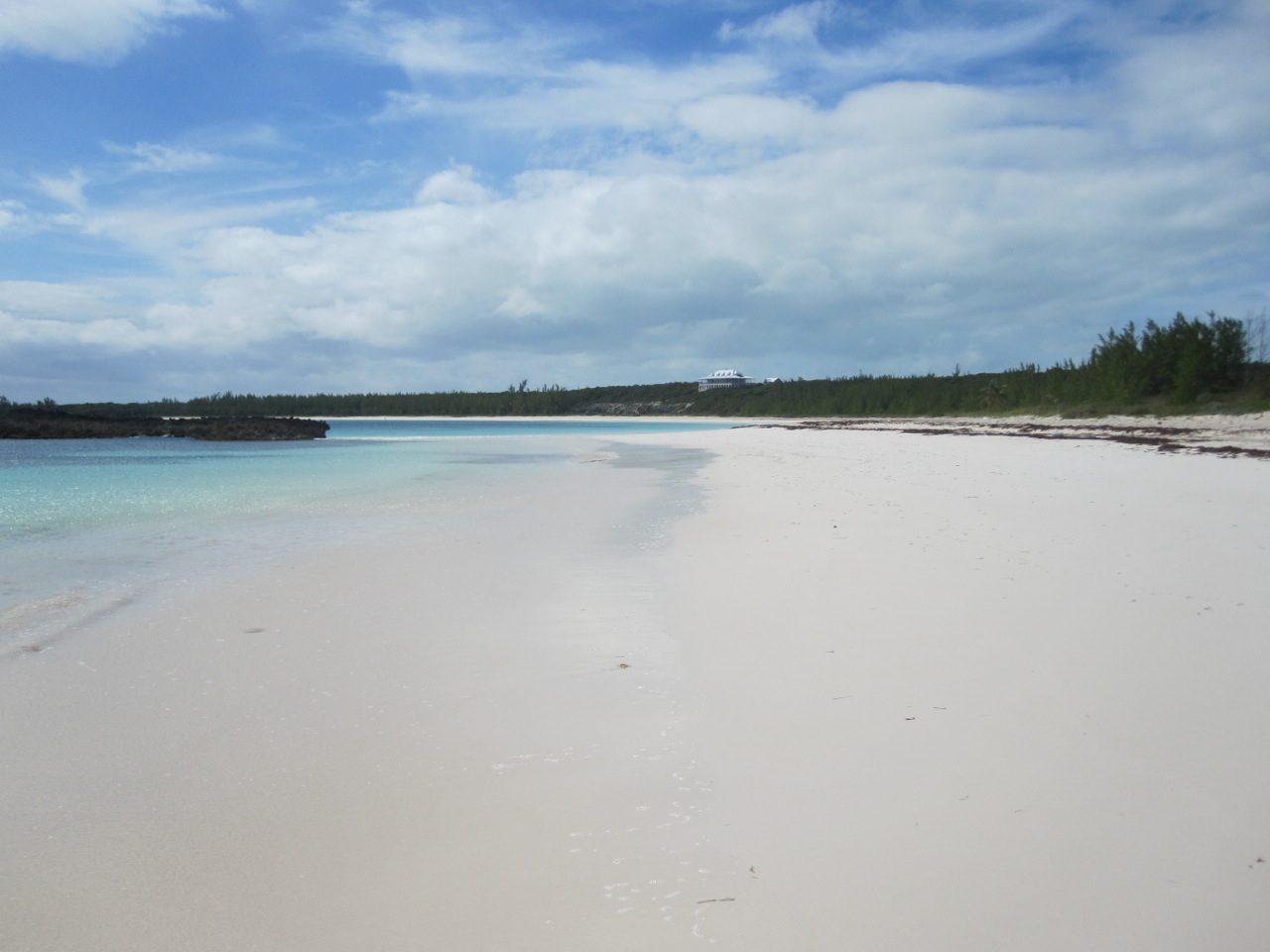
“Life’s a beach”, it is said. On Abaco, a new season is starting at the Delphi Club, and the first guests will be sorting out their fishing tackle, reaching for the sun cream and abandoning pre-Delphi diet boot-camp. If they have been eating Marmite™ sandwiches for a week before their arrival, they won’t need  to waste energy slapping no-see-ums. The day-dreaming becomes reality, perhaps involving his ‘n’ hers rods near the rocks at one end of the beach

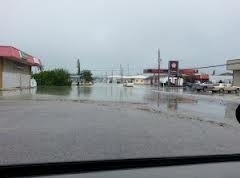
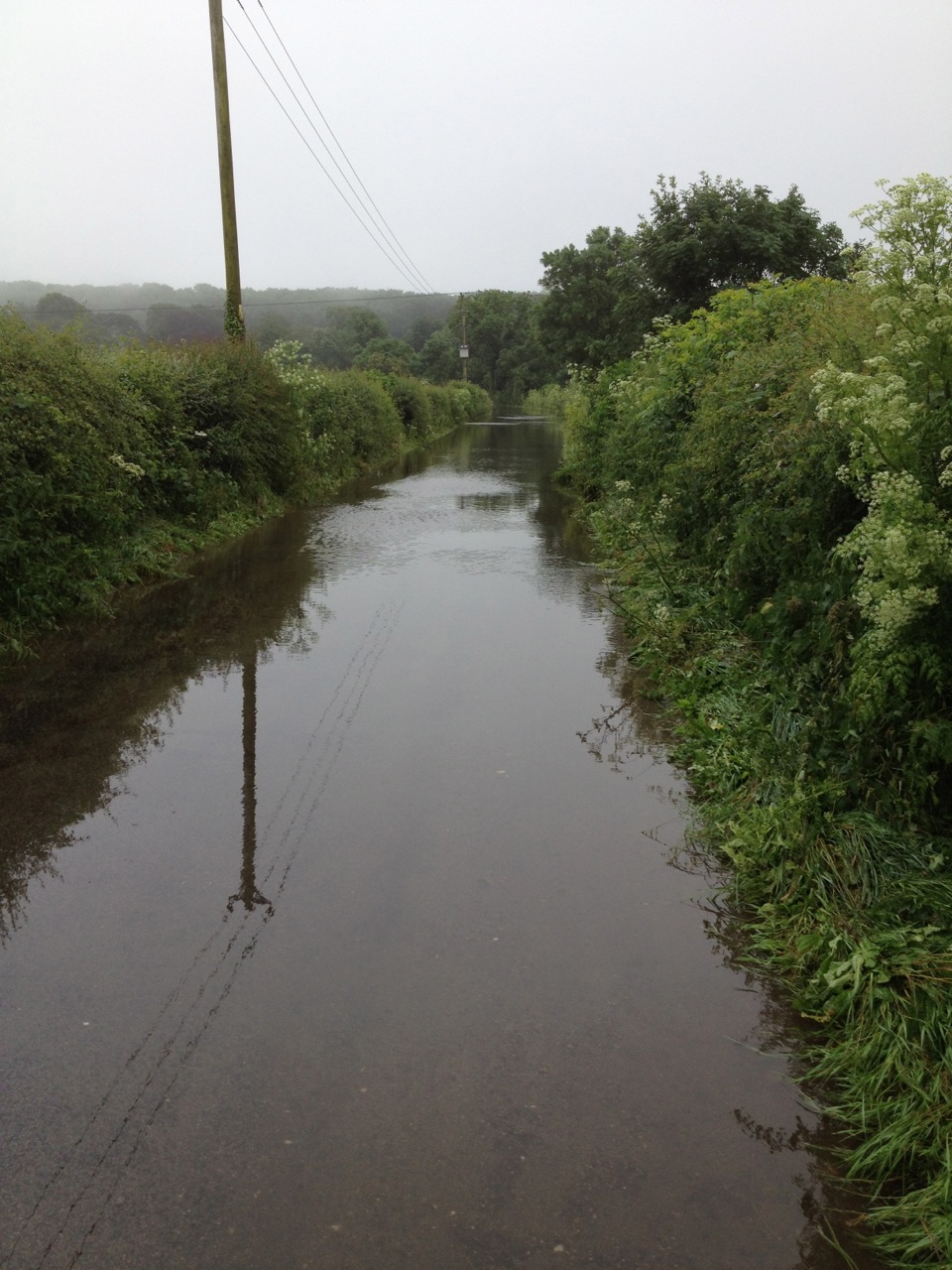
That’s all well and good. But in more northern latitudes the slide from summer via autumn to winter is accelerating. The trout fishing season has just ended, with my final efforts washed away by heavy rain and flooding – this photo is the road leading to one of the beats, a sure meteorological sign that a visit to the local pub would be sensible… 

A pint of beer in front of a log fire soon puts things into perspective, and the mind can wander to warmer climates, the bonefishing prospects for the season, and the calm beauty of Rolling Harbour…

Two days ago, the UK temperature dropped sharply, the skies began to clear and the sun came back. Ah! Autumn – season of tum-ti-tum and mellow wotsit… 

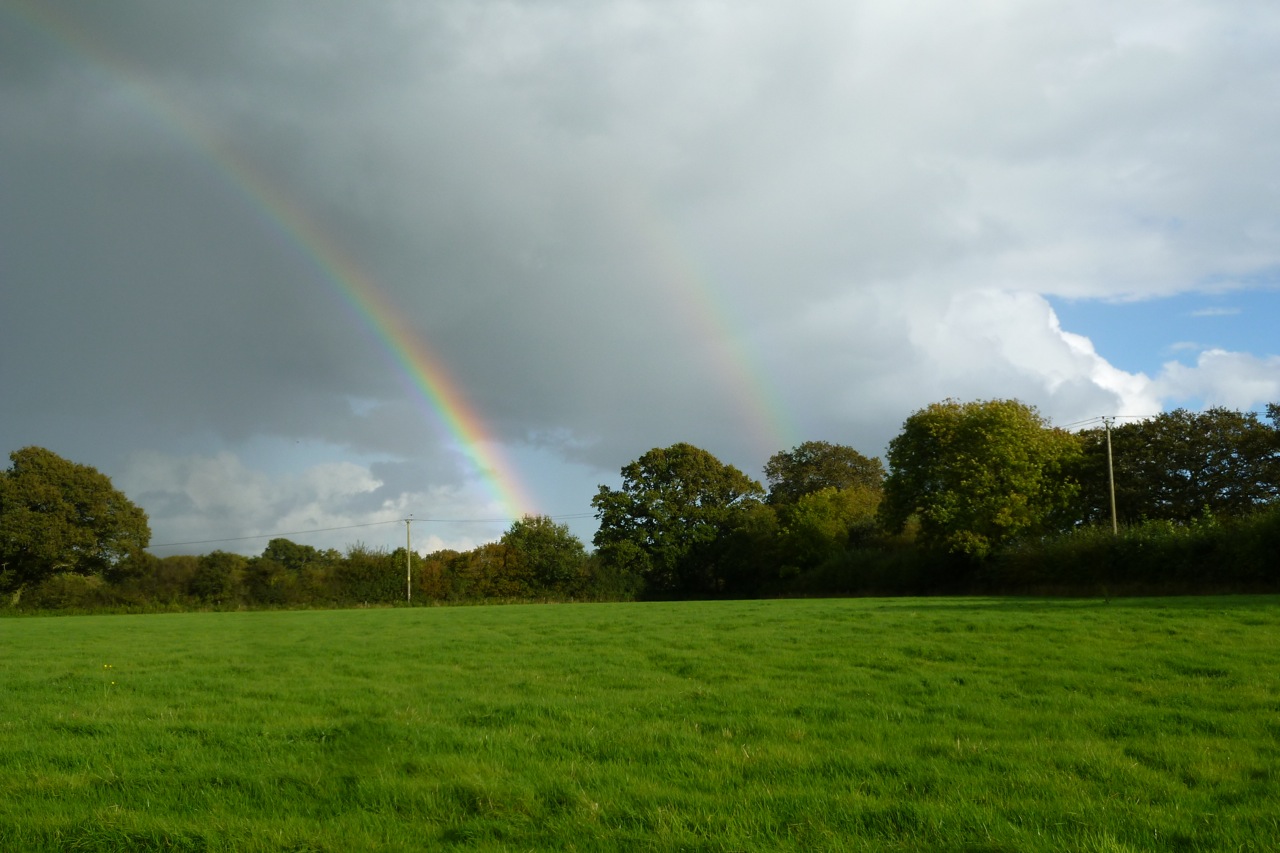
At one moment there was a wonderful double rainbow across the fields

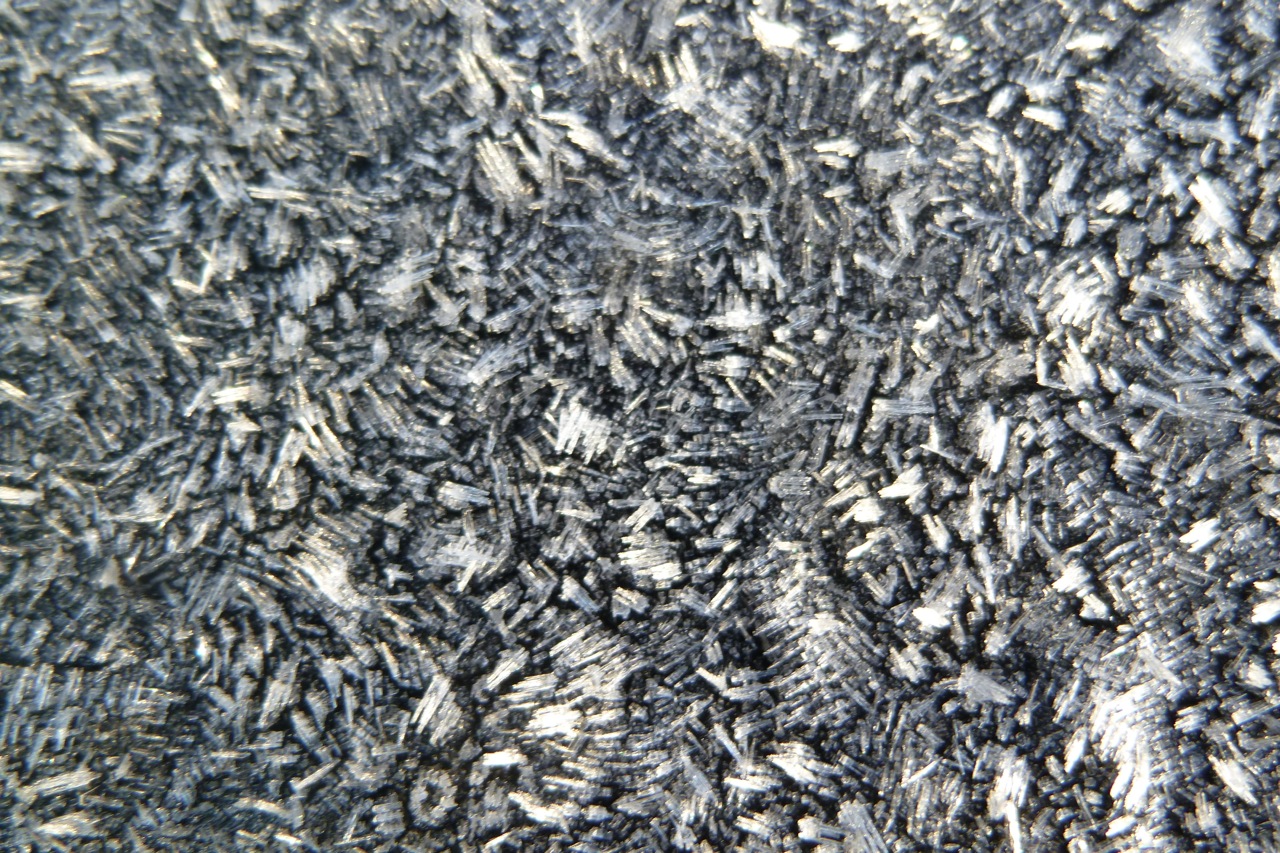
This was followed by a bright starry night & the thermometer dropping abruptly to -6˚F. And then this – the first frost of the year…

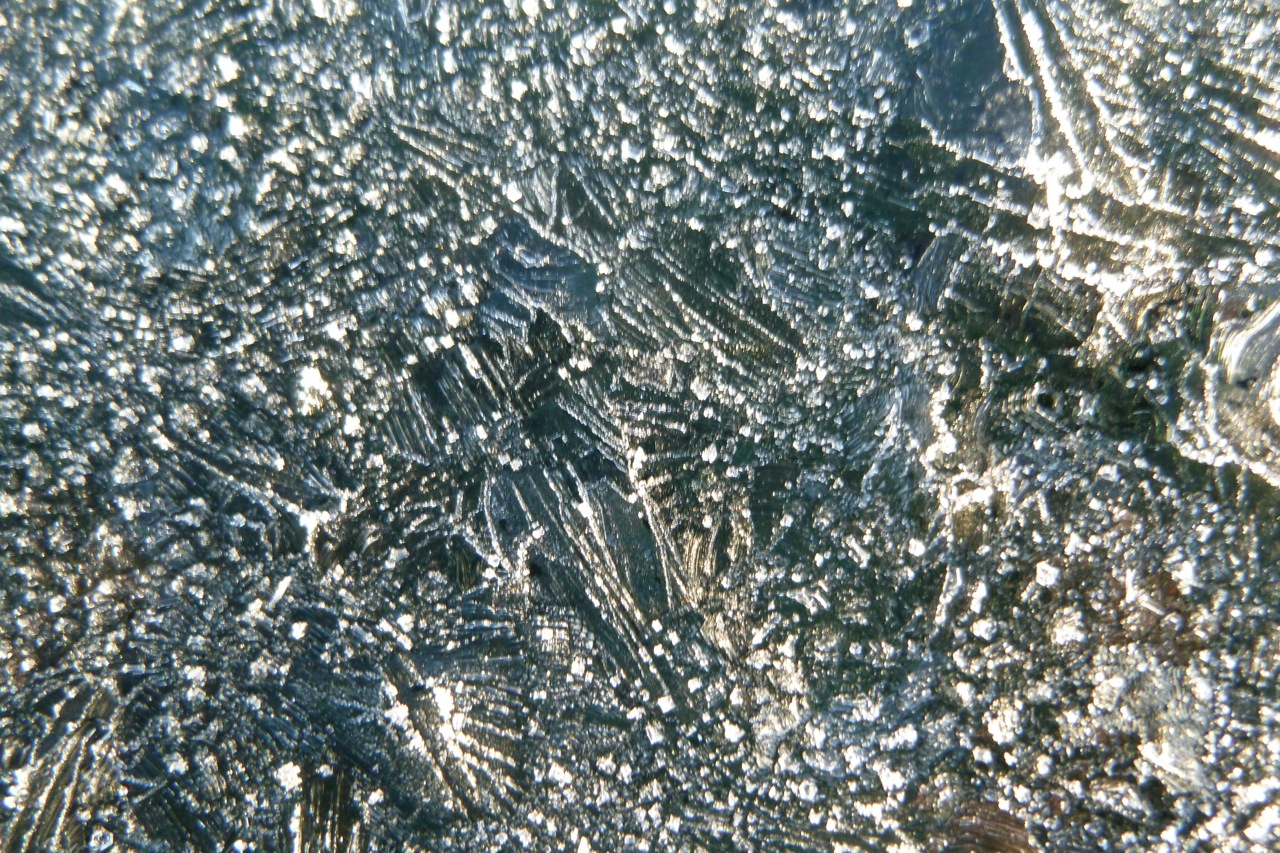
  These photos are of patterns on the car roof & windscreen, before the sun thawed the ice


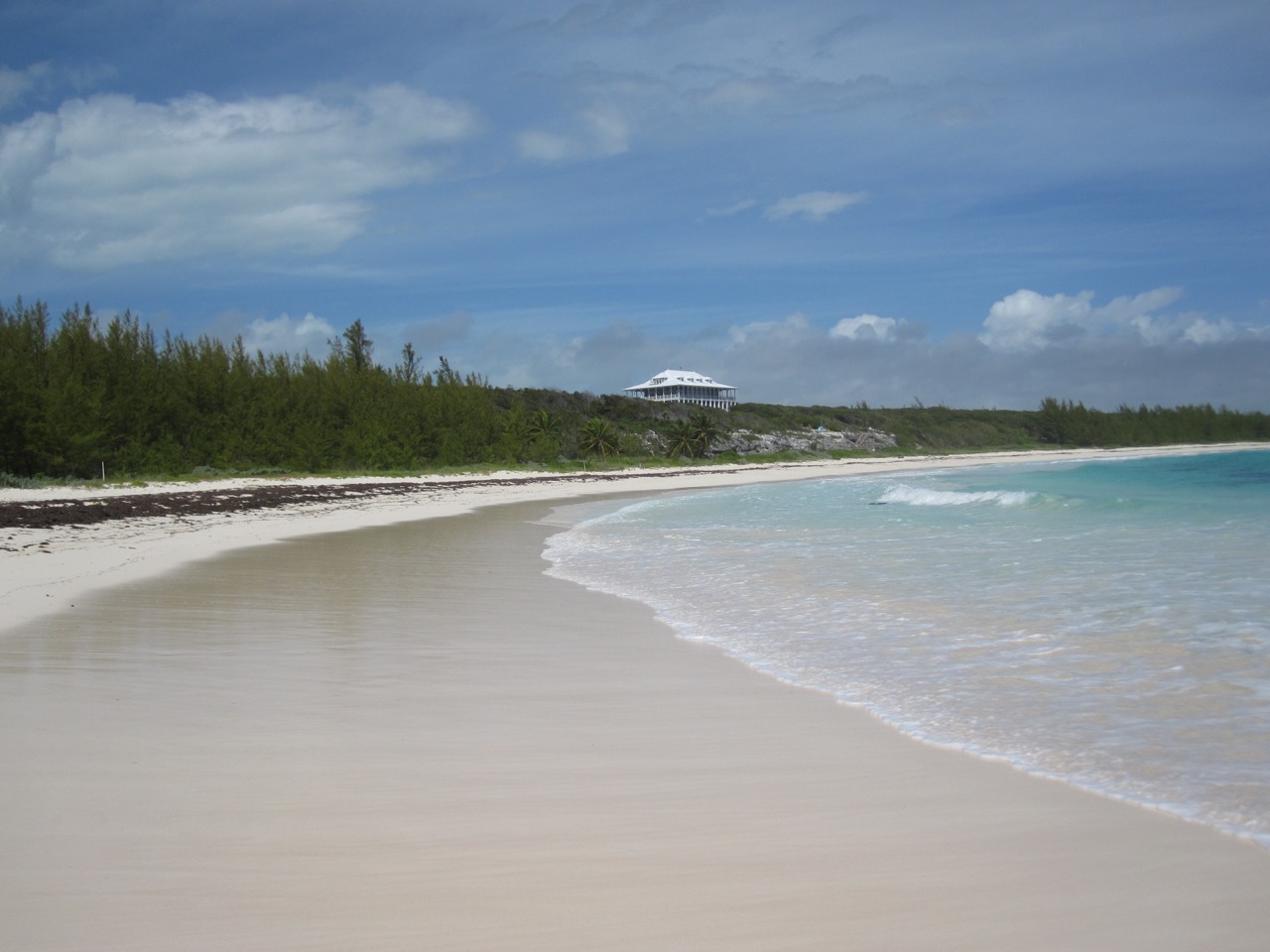
Brrrrrrrrr. Best not to end on a freezing note. Back to Rolling Harbour for some warmth

Unknown's avatar

BEDRAGGLED ABACO PARROTS, & AN AMERICAN KESTREL TAKES OFF…


BEDRAGGLED ABACO PARROTS, & AN AMERICAN KESTREL TAKES OFF…

It’s a fine June day. Perfect for a morning out with Ricky Johnson, the omniscient leader of  ABACO NATURE TOURS. Want parrots? He’ll take you to them. Want a Bahama Woodstar ‘pished’ from its deep cover into the open? He’s your man. And as for wrassling land crabs – see LANDCRAB and LANDCRAB: THE SEQUEL We set off from the Delphi Club in sunshine and hope…

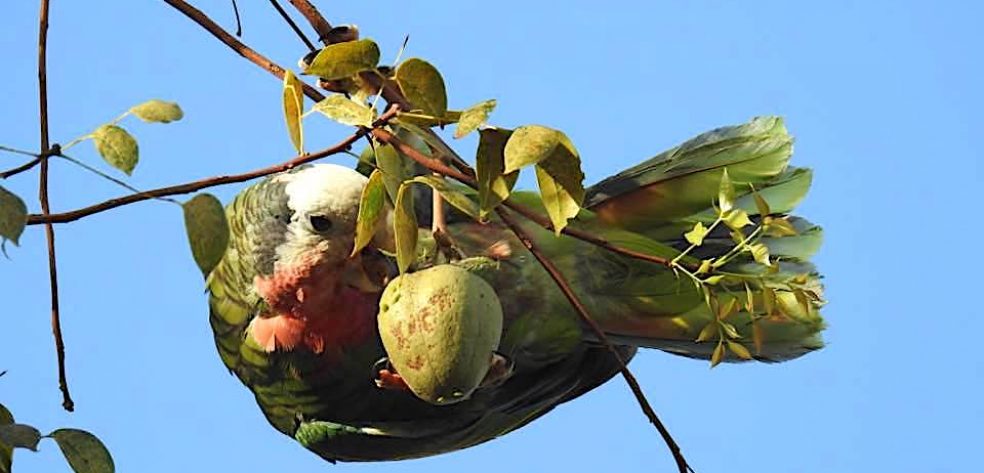
Sure enough, we found the parrots at Bahama Palm Shores, so often a good bet. This was (Ricky said) a non-breeding flock, the breeders all being otherwise detained in the National Park with their nests and eggs. Out of nowhere, a sudden short, sharp downpour arrived, and 5 minutes later, everything – everyone – was soaked. And so, of course, were the parrots. At first I discounted the resulting photos for use. These lovely, rare birds are made to be seen in their bright cheerful livery of green, red and blue. These wet ones looked… black. I usually try to avoid doing much (or any) ‘work’ on my photos, but for these I tried changing the contrast a bit and realised that they looked rather appealing with their dark, damp feathers and unkempt appearance. So I’ve decided to use a few images. Here they are, then: some sodden parrots!

While we were damply watching the parrots, Ricky spotted an American Kestrel near the top of a tree. Heads swivelled. It was some way away, but we could see it looking a bit dejected, huddled in the palm fronds. Then suddenly, just as I pressed the camera button, the kestrel stretched itself upright, raised its wings, and launched itself into the sky. The two photos below are frankly of marginal quality (on a high “blur setting”, as you might say) but the second one has caught the rain-drenched kestrel’s take-off about as well as a point ‘n’ shoot at that distance could… 

Unknown's avatar

ABACO BIRDWALK WITH THE BAHAMAS NATIONAL TRUST – OCTOBER 20th


ABACO BIRDWALK WITH THE BAHAMAS NATIONAL TRUST – OCTOBER 20th

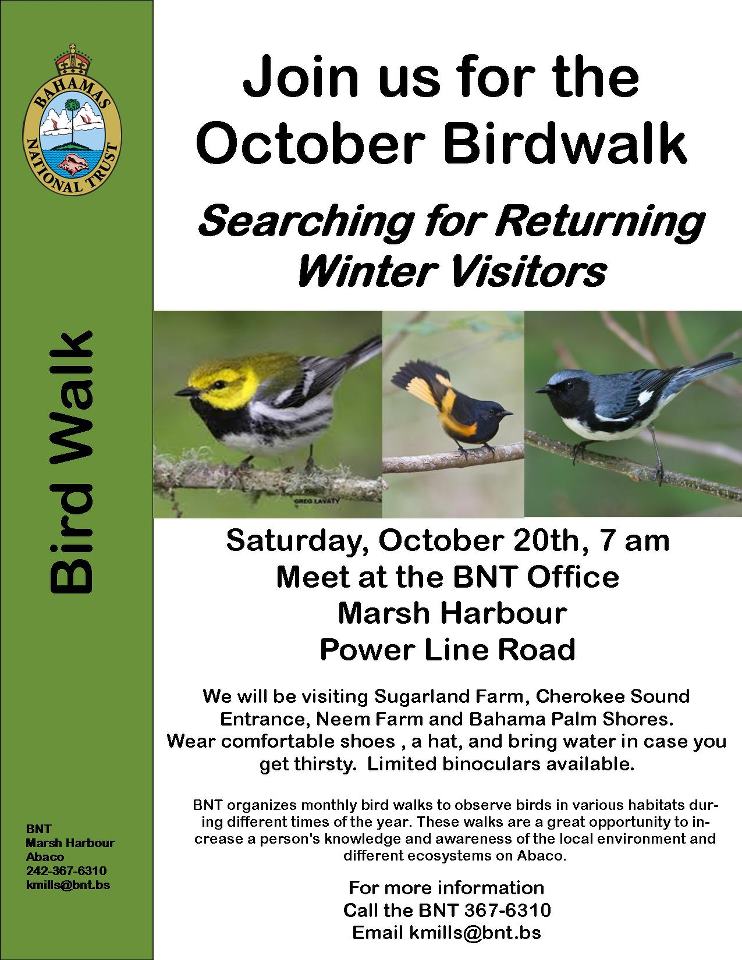
This sounds a lot of fun, and I wish I could be taking part. I’ve never been on Abaco in the autumn when the winter migrants start to arrive as the weather cools in their summer breeding grounds. It must be exciting to see the various species gradually reappear after their summer break, presumably with all the young birds born this year that will see Abaco (and the feeders!) for the first time. If any blog-follower goes on the expedition and happens to keeps a birding record, I would love to know which species you have seen . And if anyone gets some good pics, likewise…