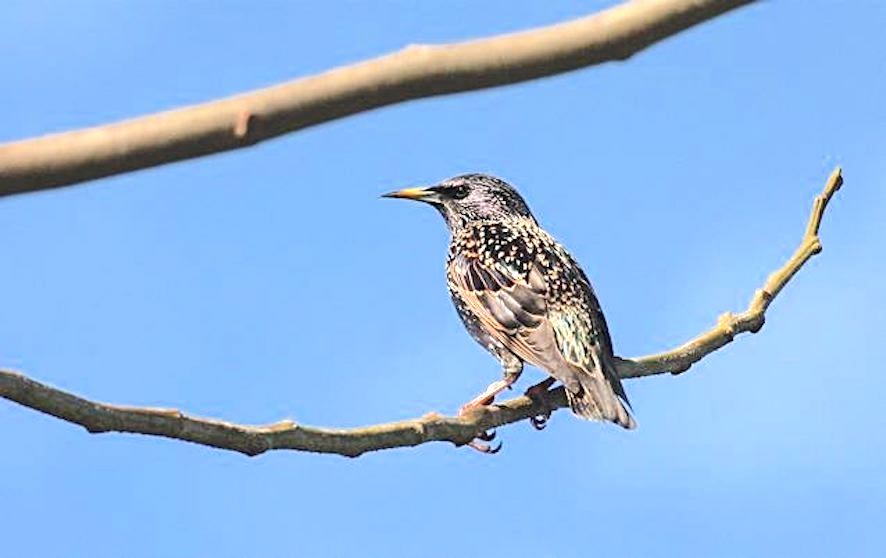
European Starling Sturnus vulgaris – High Line NYC – RH
We are all familiar with some of the collective nouns for birds – flocks, flights, broods, maybe companies (parrots) and so on. There are plenty of lesser known terms for specific birds, of which quite a few seem rather remarkable: a wisdom of owls, a murder of crows, a lamentation of swans, an unkindness of ravens, an exaltation of larks. Most of these refer to perceived characteristics of a particular species (the swan pining for a lost mate – they pair for life). Some date from medieval times.
MURMURATIONS OF STARLINGS
In the UK in late autumn, starlings start to gather in huge flocks in trees and open fields. Twitchers begin to gather too, in their all-weather plumage, ready to watch the sensational avian displays of thousands and thousands of starlings as they take to the air almost simultaneously. They swirl in densely packed random formation, drawing complex patterns across the sky. The group will constantly change direction and height, sometimes splitting into subgroups and reforming. They may suddenly drop to the ground in a teeming raucous mass, before taking off again to continue the display.
It is sometimes possible to sense when the flight is about to begin, In a huge packed group on the ground, there is a hint of restlessness. There is movement. A few birds seem to jump slightly. Then in a flash they are away into the sky.
A brief encounter with a small murmuration last week
Murmuration, early evening, Maiden Castle, Dorset (an iron-age hill fort) – iPhone
Starlings Sturnus vulgaris are a European species. They are now common in North America, less so in the Bahamas. The non-European distribution happened this way: All the European Starlings in North America are descended from 100 birds set loose in New York’s Central Park in the early 1890s. The birds were intentionally released by a group who wanted America to have all the birds that Shakespeare ever mentioned.* In return, gray squirrels were introduced into Europe at about the same time, with the population increasing exponentially and displacing the indigenous red squirrel..
* All About Birds – Cornell Lab
Photos: Keith Salvesen, Bruce Hallett, Wiki Commons; Video Clip Keith Salvesen; Cartoon by the very excellent Birdorable
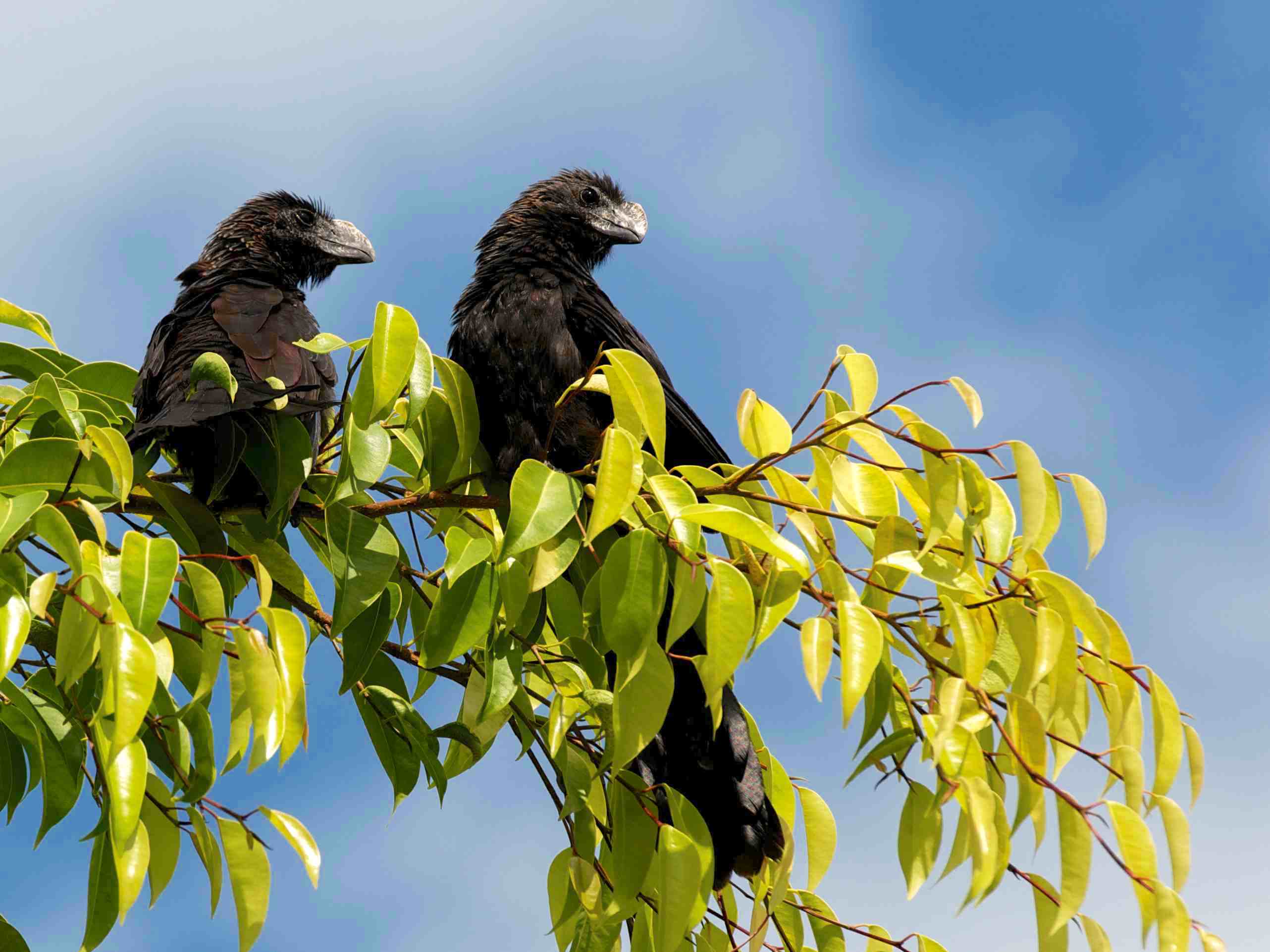
There are 3 cuckoo species recorded for Abaco, all permanent residents. Two are relatively scarce; the third is the much-loved gregarious and raucous Ani. Recently I was contacted about a cuckoo seen on Man-O-War Cay. The photo revealed more of a glimpse than a sighting… but it clearly was not an all-black Ani. So here are the 3 species to admire in all their glory – and in the case of the first 2, to highlight the differences between them.
YELLOW-BILLED CUCKOO (and header image)
MANGROVE CUCKOO
SMOOTH-BILLED ANI
Photo Credits: Tom Sheley, Tony Hepburn, Alex Hughes, Gerlinde Taurer, Nina Henry
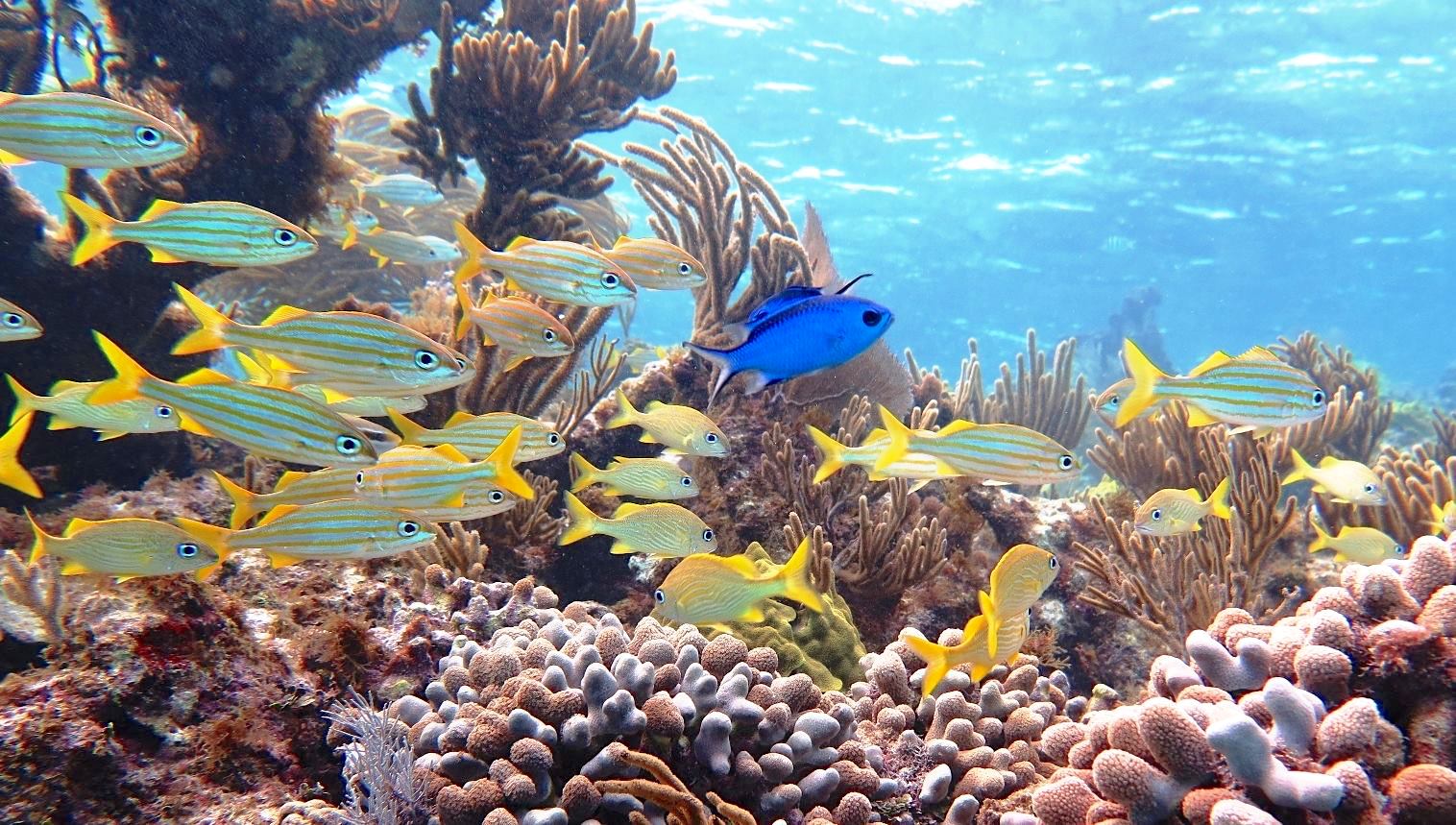
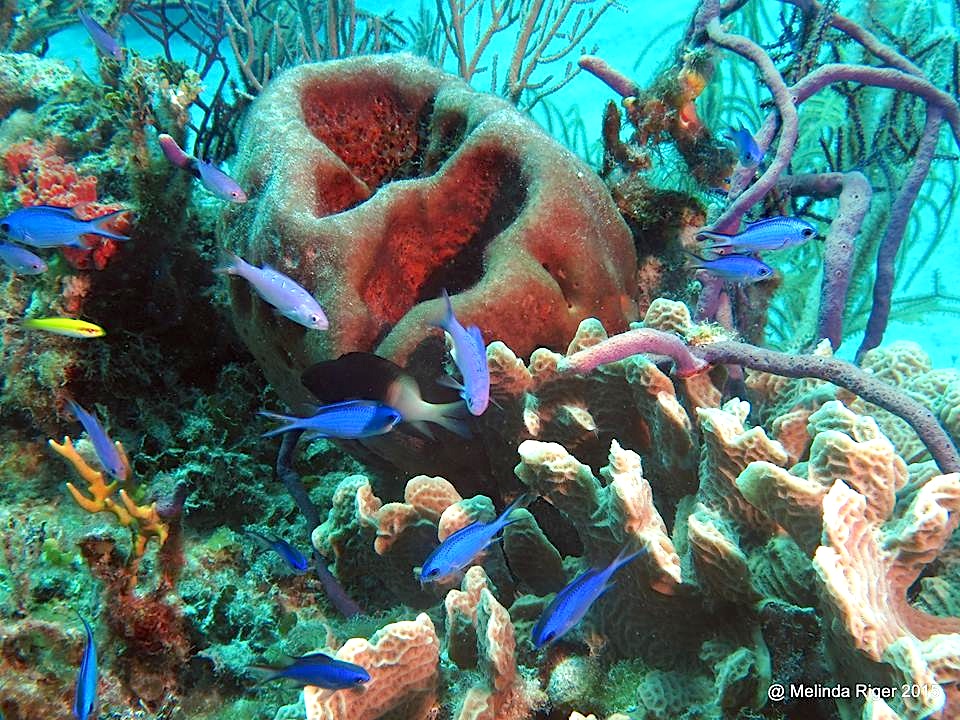
Larger reef fish tend to get more attention than the tiddlers, for obvious reasons. Yet a reef would not properly exist without the small fish that drift and wriggle round the corals. Blue chromis (Chromis cyaneus) are among the first reef fish species I ever met when snorkelling at Fowl Cays.*
Blue chromis belong to the same group as damselfishes. These unmistakeable, bright reef denizens are very visible despite their tiny size. These fish are shoalers, so out on the reef you can enjoy them flickering around you as you swim along or hang in the water to admire the corals.
Like many a pretty and easily captured small fish that can be monetised once removed from its natural home environment, the blue chromis is popular for aquariums. Humans like to keep them in their own home environments safely away from oceans and reefs, unselfishly feeding the little things concocted food to keep their little lives going till the cat gets them. [Sorry, I don’t know what came over me there]
Blue chromis are adaptable and sociable, and will happily swim with other small reef fishes (as above). My own favourite combo is chromis mixed in with sergeant majors. But a shoal of them (mostly) alone is pretty special too….
I cynically mentioned ‘concocted’ food earlier. Here is one online care instruction for looking after them: “They are omnivores, meaning that they eat both meaty and plant based foods. They are not difficult to feed and will eat a variety of regular aquarium fare, frozen, live, and sometimes even dry food. Feeding them a variety of foods will help them retain their color in captivity. They sometimes feed on the algae in the tank”. So I think it’s ok to suggest that leaving the fish out on the reef might suit them better.
If tempted to ‘rescue’ some from their reef habitat, rest assured that they have been known to spawn in captivity. Blue chromis can usually be obtained for about $10-15. And don’t hold back on the frozen food (though maybe warm it up a bit before feeding time). I rest my case.
*I say ‘snorkelling’ rather than anything more impressive because I am a pathetic swimmer and I know my limitations…
Credits: Melinda Rodgers / Dive Abaco; Melinda Riger / G B Scuba
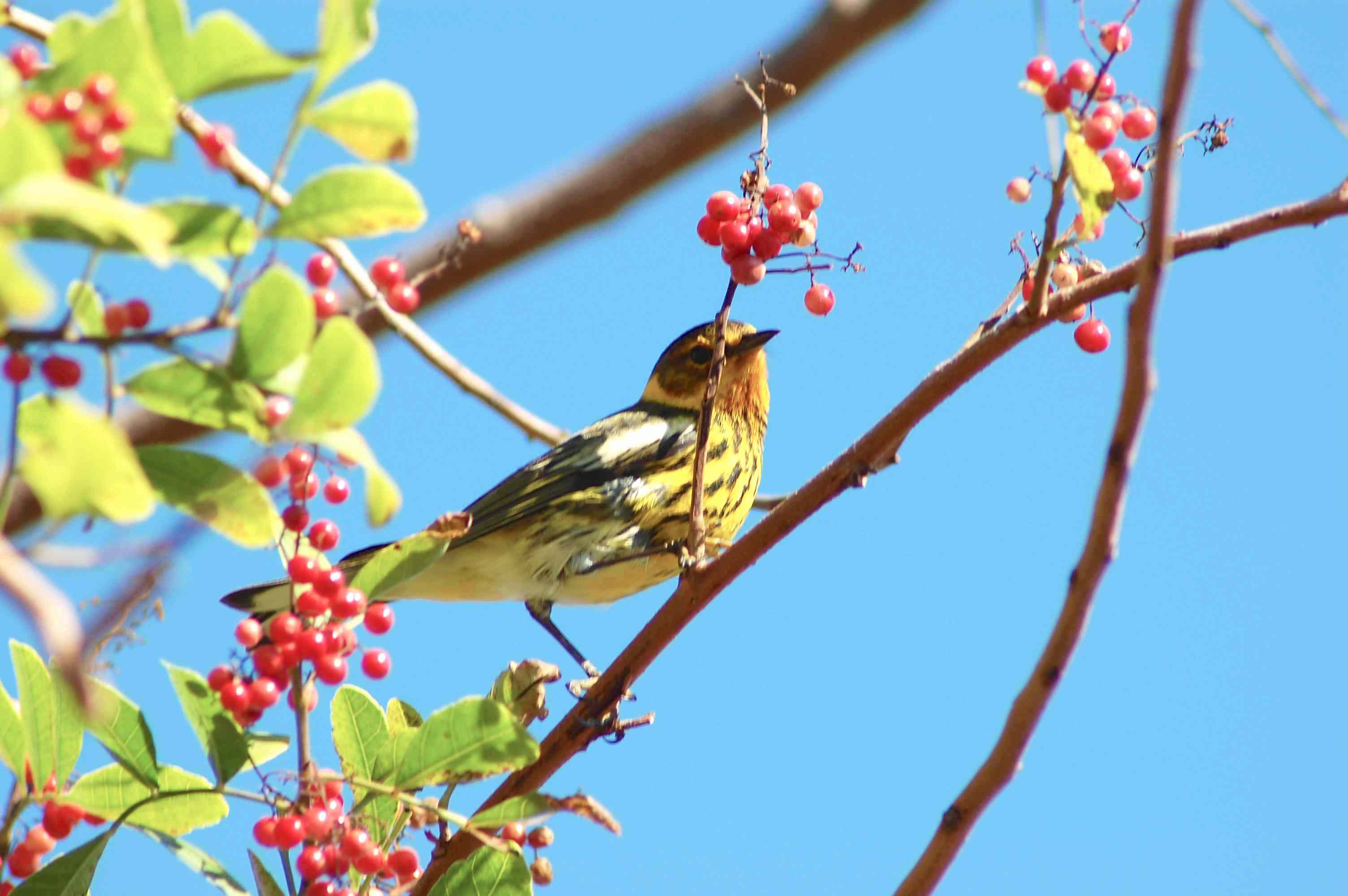
The history of ornithological classification and nomenclature is littered with peculiarities. The attractive migratory Cape May Warbler Setophaga tigrina is a very good example of premature evaluation.
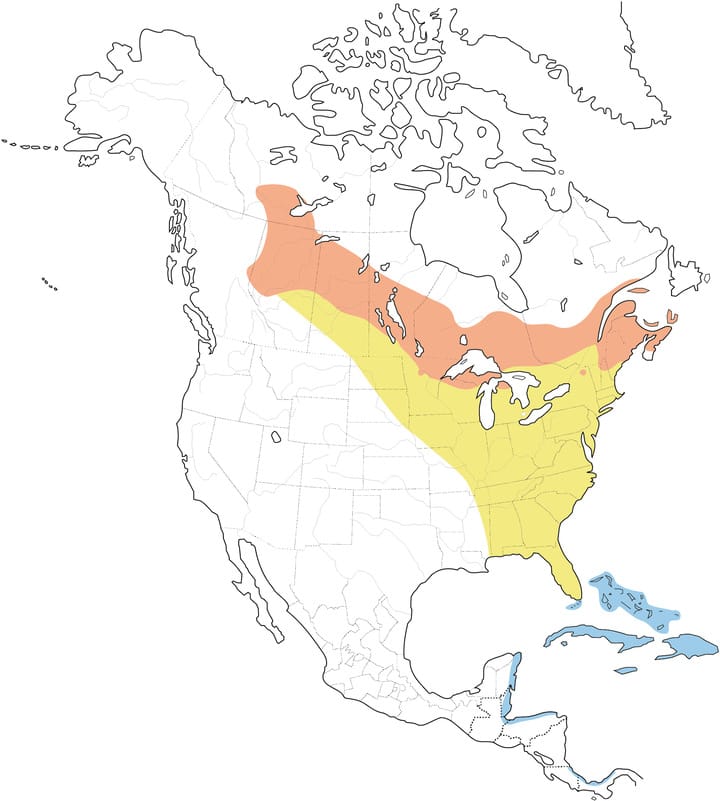
The range of the species is well defined. In the summer the birds live within a broad band that straddles northern USA and Canada. In the winter they head south with all their migratory warbler cousins across the yellow band to (mainly) the Bahamas.
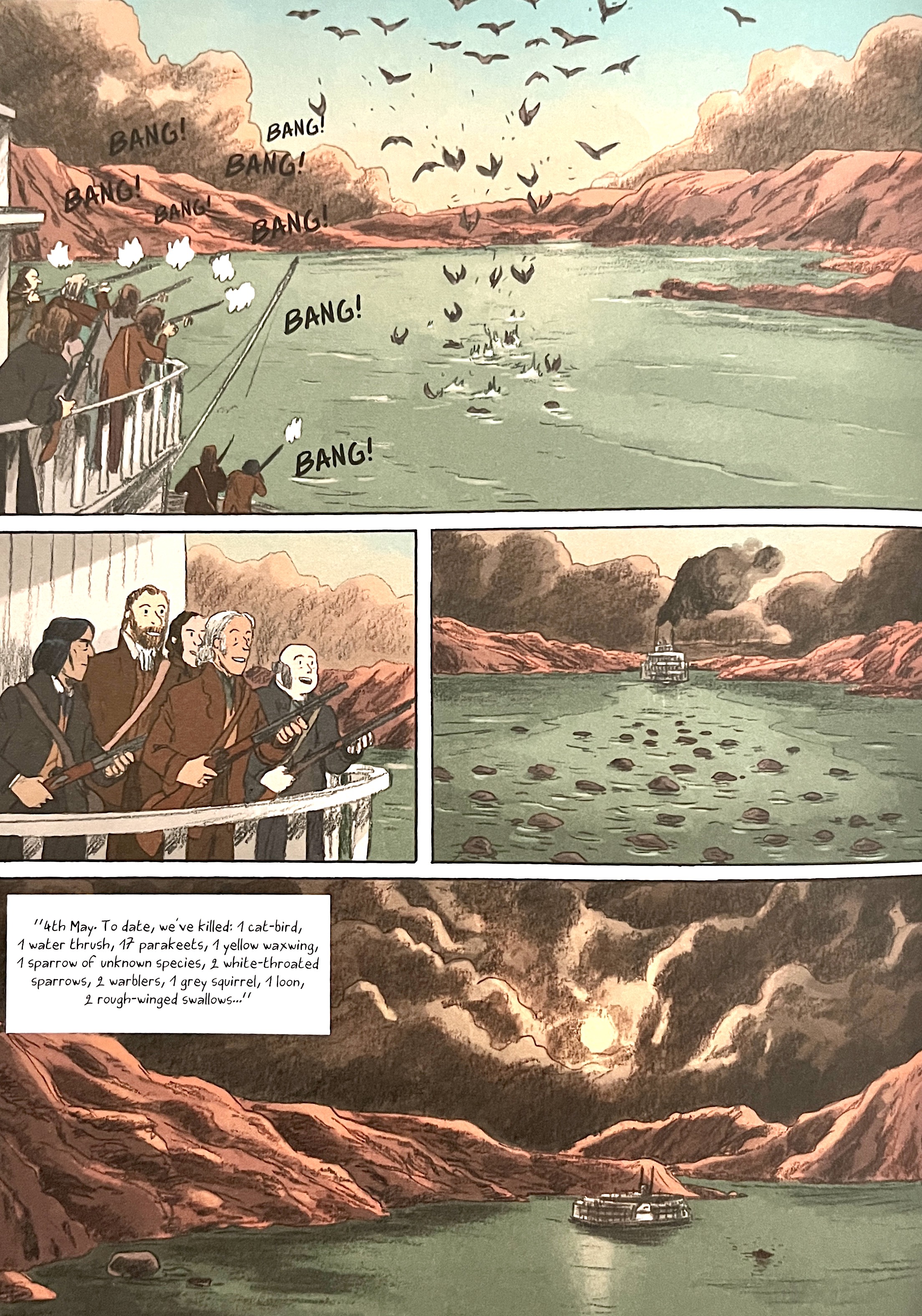
As with all migratory species, some birds each year will wander or be blown off-course; or will take a rest stop en route and decide to stick around. And so it was that in May 1812, a month before the Battle of Waterloo, the first ever specimen of the species was collected on Cape May NJ by George Ord during an exploratory trip with naturalistALEXANDER WILSON(he of plover & snipe fame). To be specific, they had gone to shoot the birds they wanted to collect. The bodies, from large down to tiny, were after all the only irrefutable evidence of a new ‘find’ at that time. Detailed drawings could be made and descriptions composed. The later display of the specimens enabled the expansion of ornithological knowledge and methodology, and brought consequent renown. The great Audubon took the research method *treading very carefully here* rather further than one might be comfortable with today, with somewhat indiscriminate use of lead shot.
As Wilson later wrote (note the words ‘beautiful little species, ‘shooting excursion’ and ‘ransacked’):
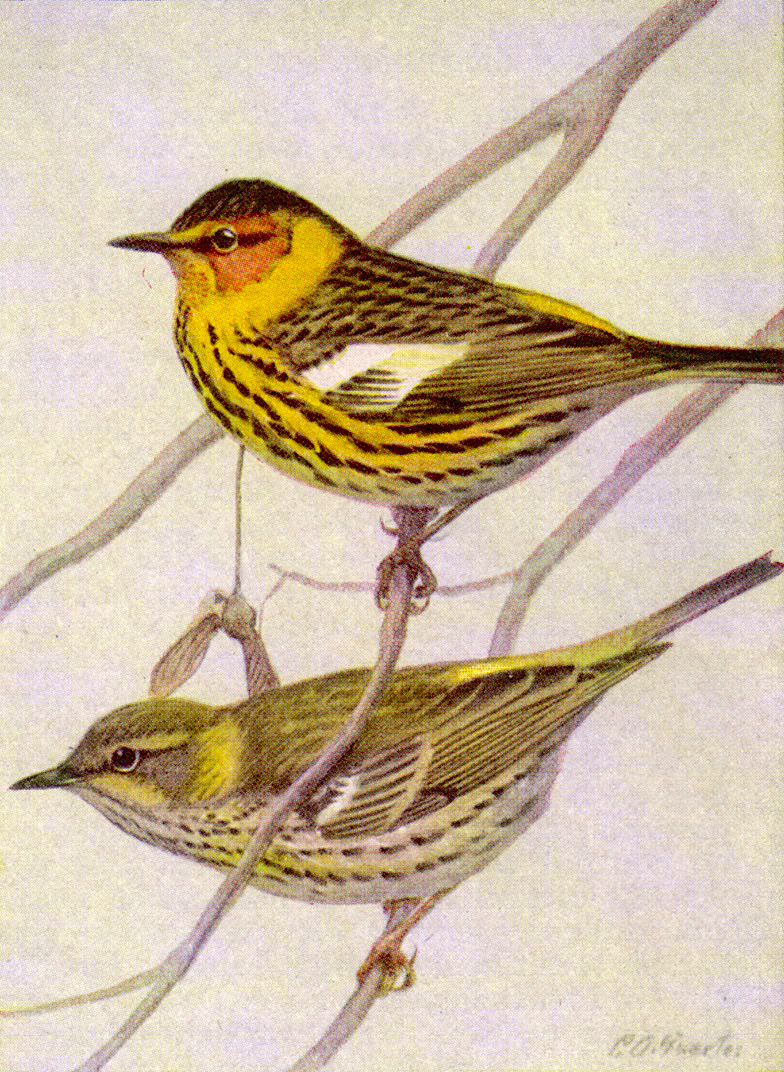
THIS new and beautiful little species was discovered in a maple swamp, in Cape May county, not far from the coast, by Mr. George Ord of this city, who accompanied me on a shooting excursion to that quarter in the month of May last…The same swamp that furnished us with this elegant little stranger, and indeed several miles around it, were ransacked by us both for another specimen of the same; but without success. Fortunately it proved to be a male, and being in excellent plumage, enabled me to preserve a faithful portrait of the original.
The odd (indeed ‘Ord’) thing was that the first-ever specimen was a complete one-off in that location at that time. Not a single sighting of the species (named Sylvia maritima by Wilson) was reported on Cape May or in that area for more than a century. Then at last in 1920, another example was found. Nowadays the CMW is not in the least unusual in the location that gave it its name.
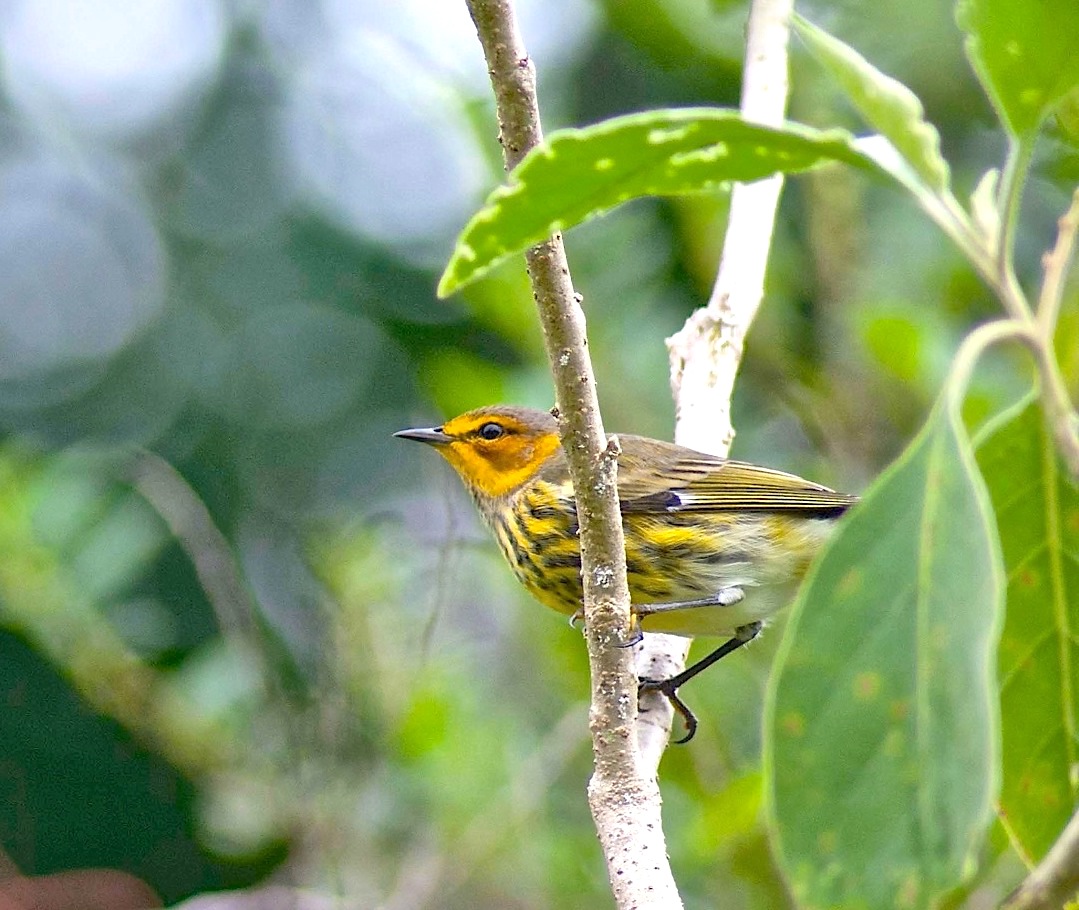
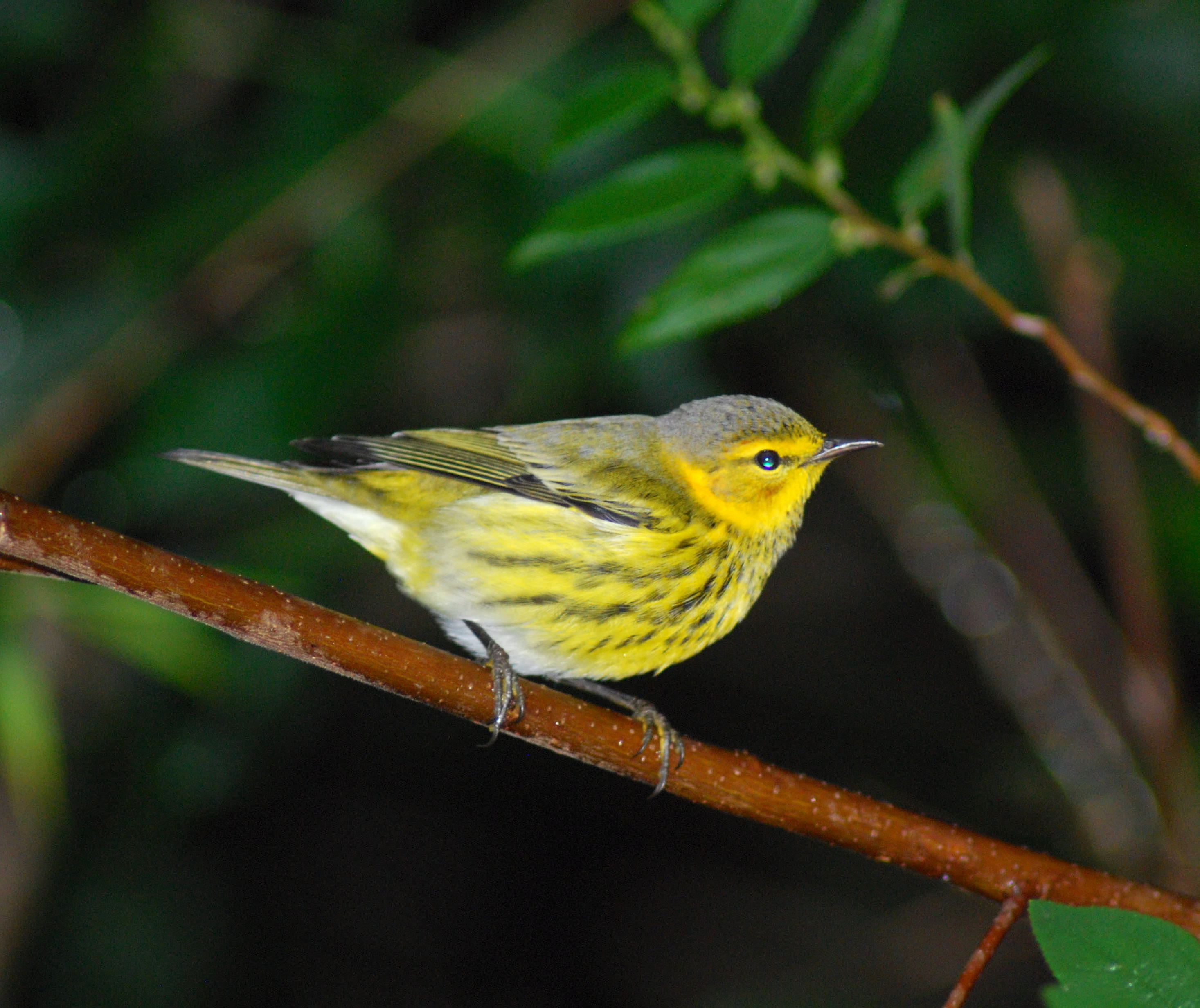
On Abaco, CMWs are classified as WR1, which is to say common winter residents. Males have striking chestnut cheeks in the breeding season, with strong streaking on the underside. Note also the black eyestripe. Females and juveniles are paler and the marking is less prominent. These warblers are insectivorous; in winter they may also feed on nectar and fruit. Behaviour-wise, they have aggressive tendencies in defence of their territory and of their food sources.
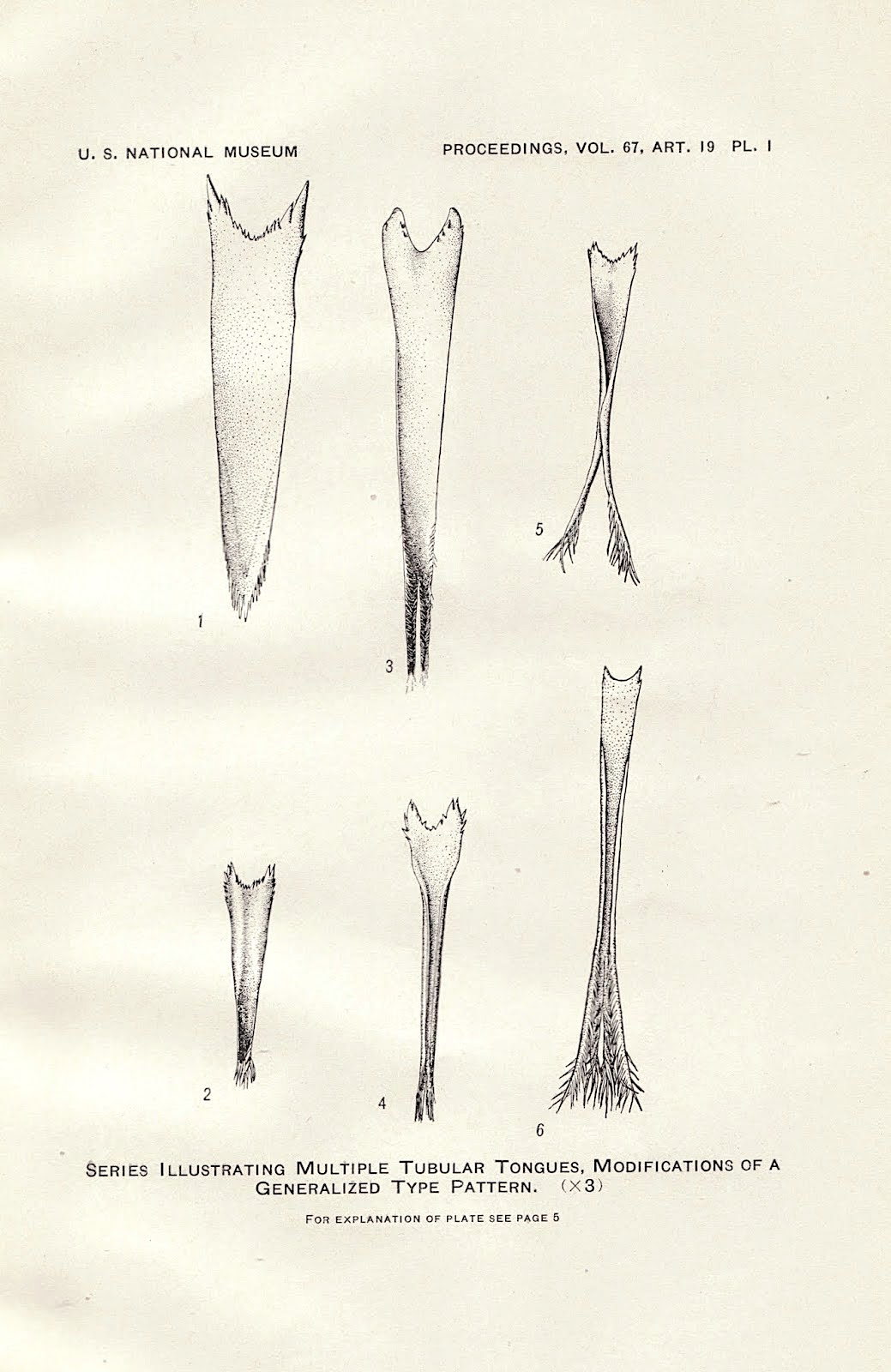
In researching this post, I discovered a strange (but slightly dull) fact. The CMW is unique among warblers in having a tubular tongue to enable nectar feeding (as with hummingbirds). This random fact hardly has the makings of lively conversation (though you might want to try it out) but considering the multitude of warbler species in existence, the CMW has the benefit of a rather special adaptation.
Tongue 2 (bottom left) is the CMW; No.5 is a bananaquit’s feathery tongue
WHAT SHOULD I LISTEN OUT FOR?
Unhelpfully, even the authorities have a tough time describing the song and call of a CMW. As with so many song-birds, variations on the theme “the song is a simple repetition of high tsi notes; the call is a thin sip” are the best you can hope for. However, it’s worth noting that the species generally prefers to sing from high perches, which might help with ID. But then so do other warblers I’m afraid. Here’s something more practical – the tsi and the sip:
ALL BIRDS, EXCEPT THE LAST, PHOTOGRAPHED ON ABACO, BAHAMAS
Photo Credits: Charmaine Albury [from The Birds of Abaco] (1); Bruce Hallett (2, 6); Sandy Walker (3, 4, 7); Becky Marvil (5); Danny Sauvageau (8).
Audubon Cartoon: On the Wings of the World; Grolleau & Royer / Nobrow (highly recommended)
Drawing, Nat Geo
Range map, Allaboutbirds / Cornell
Audio clips Martin St-Michel / Xeno-Canto;
Research refs include, with thanks, American Ornithological Society / Bob Montgomerie (Queen’s University); Camino Travel Costa Rica; OS
The northern curly-tailed lizard Leiocephalus carinatus, to give it its full name, resembles a tiny dragon with a twist in the tail. These little critters bask in the sun, or scuttle away into holes and crevices as you approach them. I suspect that even a confirmed herpophobic would find some charm in them. They are, of course, completely harmless to humans.
Surprisingly, the Bahamas is home not just to one but five different curly-tail species, and nine sub-species. Broadly-speaking, the variants are found on different and specific islands and have discrete local markings. Mostly they are brownish, but they may also be grey or with a greenish tinge like this one I recently photographed.
Curly-tail males, being territorial, turn somewhat aggressive around breeding time, which is basically most the the year, from February to October. Behaviours indicative of their territorial claims include tail curling / uncurling (of course), head-bobbing, strutting about in an agitated way and inflating the sides of their necks in a threatening kind of way. The tiny-tails, 2″ long when born, are known as ‘hatchlings’.
An impressive poolside ‘double curly’
THREATS TO CURLY TAILS
According to the Bahamas National Trust BNT, the main dangers to the curly-tails of the Bahamas are:
Dogs, cats, rats and introduced predators such as raccoons
Collection for the pet trade – curly tails are unprotected by CITES listing (also cute)
Collection of the rarer endemics by reptile enthusiasts seeking ‘exotics’
Development and habitat destruction (though it is noted that curly tails seem to adjust quite well in developed areas)
A curly tails sloughs its skin as it grows, as with snakes and other reptiles
WHY THE CURLY TAIL?
As mentioned above, for use in territorial posturing
In courtship displays by males to attract females (luckily a method not available to humans)
As a response to predators, confusing an attacker with movement at both ends
As a last resort, to detach to aid escape (the tail re-grows)
For fun and just because they can grow one and you cannot
Credits: all photos, Keith Salvesen except #2 & #6, Charles Skinner; BNT
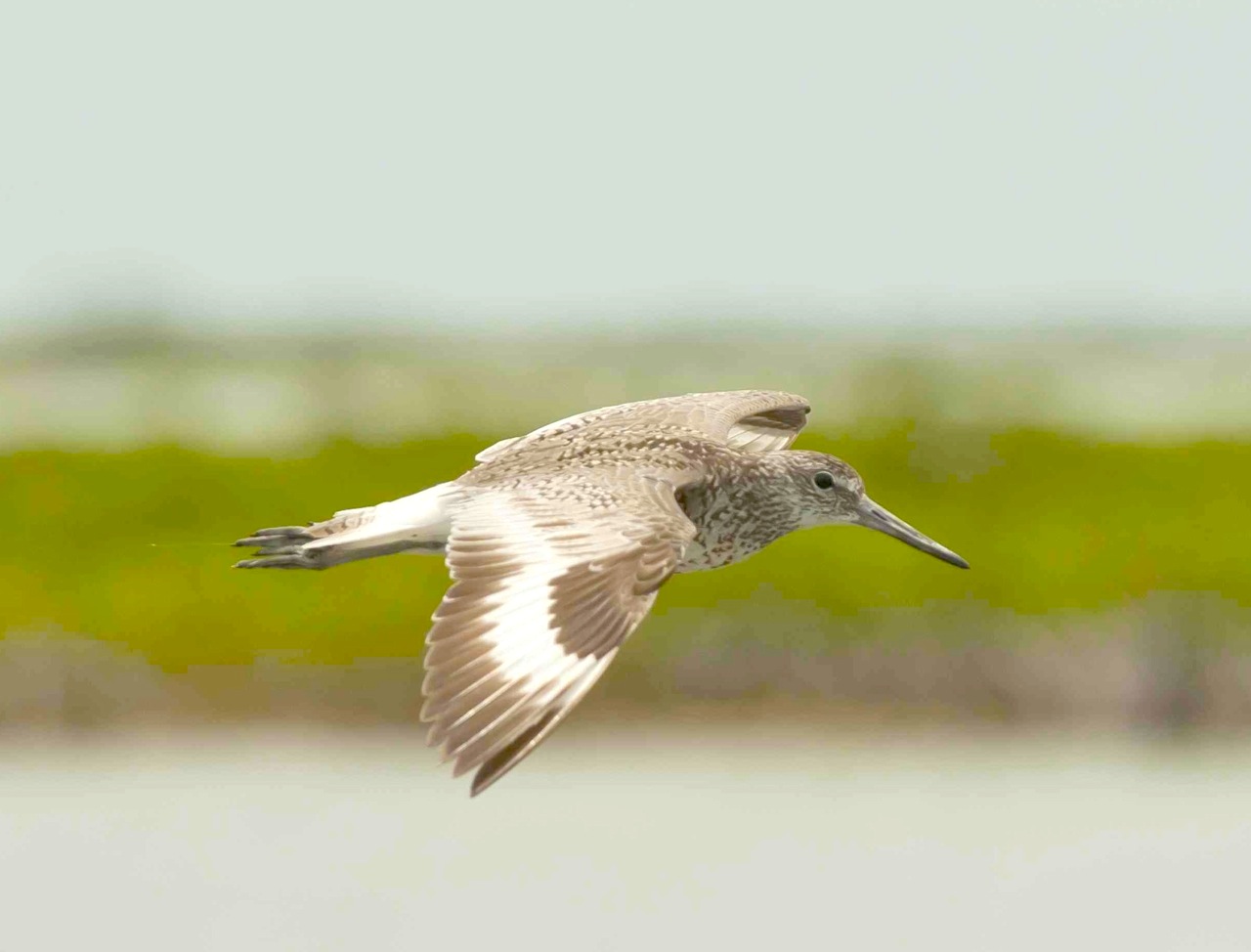
Abaco’s birding records compiled for over 20 years include 33 shorebird species. For a few, the islands and cays are a permanent residence; for many others they are winter quarters; some species are visitors transient in their migrations; a few are rare vagrants. The complete checklist of Abaco’s shorebirds is below, along with 3 links to specific posts.
I have divided the species into 3 categories: sandpipers & kin; plovers; and a catch-all ‘large shorebird’ group that includes one or two sandpipers. Of the 26 birds featured and shown in the main checklist below, 23 are ones you might reasonably hope or expect to encounter on Abaco, though some only if you are lucky or your field-craft is excellent. The others are the long-billed dowitcher, American avocet and Wilson’s phalarope (of which only one has ever been seen on Abaco, with a photo to prove it). Many of these are showcased in my book The Birds of Abaco.
The codes tell you, for any particular bird, when you may see it (P = permanent, WR = winter resident, TR = transient, V = vagrant); whether it breeds (B) on Abaco; and your chance of seeing it, graded from easy (1) to vanishingly unlikely (5).
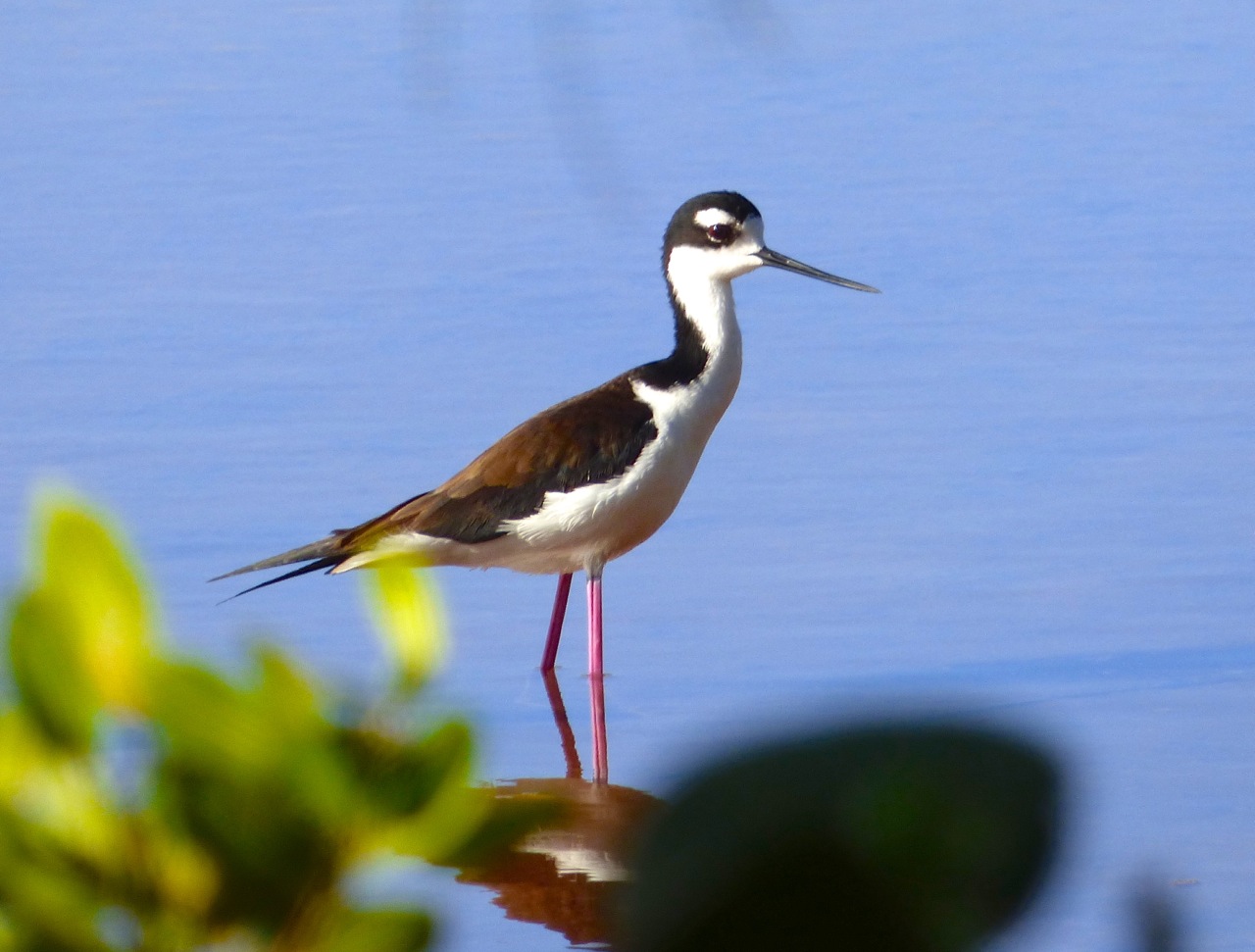
Black-necked Stilt Himantopus mexicanus PR B 3
American Avocet Recurvirostra americana WR 4
American Oystercatcher Haematopus palliatus PR B 2
And not just the tail*. Other parts of a bird. Sometimes most of a bird. More rarely, an entire bird. Whichever, a bird affected by leucism stands out from the crowd – out of the ordinary and therefore startling to the eye. I’d be very surprised if the fine turkey vulture in the header image didn’t make you look twice – maybe even to check if some devious photoshop trickery had been at work. Yet it’s just a normal TUVU in the Florida Keys, living a normal vulturine life.
LEUCISTIC DISCOVERY ON ABACO
A leucistic Western Spindalis discovered on Abaco by birder Keith Kemp
For comparison – the real deal
LEUCISM? EXCUSE ME, AND THAT IS?
First, what it is not. It is not albinism, which results from diminished or lost melanin production that affects pigmentation. One characteristic of the condition is the tendency to pink eyes, which of course is seen in humans as well as animals and birds. Meet the perfect example…
WELL, WHAT IS IT THEN?
Put simply, melanin is only one of many ingredients of pigmentation. Leucism is caused through pigment loss involving many types of pigment, not just melanin. In birds this results in unnaturally light or white colouring of feathers that may be partial or entire. The eyes of a bird with leucism are unaffected. At one extreme, if all pigment cells fail, a white bird will result; at the other extreme, pigment defects cause patches and blotches of pale or white on the bird, often called a ‘pied’ effect. The condition can be inherited.
A mallard on Abaco. The species is known for its wide colour variations in both sexes. Sometimes the variations go beyond the usual range: this is a leucistic bird
A leucistic common gallinule (moorhen) on Abaco
Leucistic rock pigeon
BAHAMA (WHITE-CHEEKED) PINTAIL: A PIGMENT PUZZLE
I have found more examples of leucism in the ‘Bahama Duck’ than any other local species on Abaco. But there is also scope for confusion. First, here’s a pintail that is undoubtedly leucistic – note that the eyes and beak are unaffected by pigmentation deficiency:
But not all pale variants can be so confidently labelled. In the first picture, bottom right, there is an obviously an ‘odd’ pintail, silvery rather than ruddy brown like the rest of them (and yes, I do see the coot in the pack as well…). The second photo shows the same bird on dry land.
This is known as a ‘silver pintail’. These are said to be a leuchistic variant, and they are stocked by poultry dealers as ornamental ducks at a higher price than the much-loved standard brown version. However this bird clearly retains the essential markings of a normal pintail that you might expect to be absent (at least in patches) in the ‘true’ leucistic bird. I’ve seen it described as a ‘gray morph’. I wonder where the line is drawn between a noticeable colour variant or morph in a bird; and an obviously pigment-abnormal, leucistic bird where the incidence and extent of the condition seems to be random.
A fine example of a ‘pied’ American Robin, an occasional visiting species on Abaco
Leucistic American Robin (Amy Evenstad, PoweredByBirds.com)
PIPING PLOVERS CAN BE LEUCISTIC TOO
PIPL are one of my bird species preoccupations, but until I checked them out I hadn’t imagined what a leucistic one would look like, or whether they had ever been recorded. I now have the answer…
These photos of a leucistic female were featured by Audubon Alliance for Coastal Waterbirds, Audubon Connecticut. They were taken by Jim Panaccione, a Biological Science Technician at Parker River National Wildlife Refuge, Newburyport, Massachusetts. I hope he won’t mind their illustrative use here… Despite the theory that leucistic birds may find it hard to find a mate – and might even be attacked by its own species – this pair successfully nested.
OPTIONAL MUSICAL & CULTURAL DIGRESSION
A WHITER SHADE OF PALE
*Obviously, it had to be ‘tail’ in the title to justify one of my clunky ‘jokes’ and an accompanying musical diversion. That’s just the way it is, I’m afraid. Bach’s well-known descending chord sequence of was of course shamelessly ripped off by ingeniously adapted by Procol Harum for ‘A Whiter Shade of Pale’, their first single in 1967. Relive a Summer of Love right here and now.
Any fret-tweakers might like to see the sheet music of Bach’s Air for guitar – you could even play it on Air Guitar – which is relatively easy, being in C major.
‘BACH IN A MINUET’
The best known commercial use of the tune was in the famed series of adverts that equated a mild cigar called Hamlet with happiness, accompanied by an excerpt from a jazzy version of Bach’s ‘Air on the G String’. Here is one of the best – and possibly the only advert to my knowledge to feature not one, but two excellent Sir Walter Raleigh jokes.
Credits: thanks to Amy Evenstad (PoweredByBirds.com) for use permission for her wonderful TUVU & AMRO photos; other photos by Keith Kemp & Bruce Hallett (Spindalis); Pinterest (rabbit); Nina Henry (mallard); Tony Hepburn (moorhen); Wiki (pigeon); Jim Edmonson (leucistic pintail); Keith Salvesen (silver pintail); Jim Panaccione / Audubon (piping plovers); Procol Harum, esp. Robin Trower for building a great career round being ‘reminiscent of Jimi Hendrix’; J.S. Bach for a nagging tune; Hamlet cigars for ingenuity & making me laugh
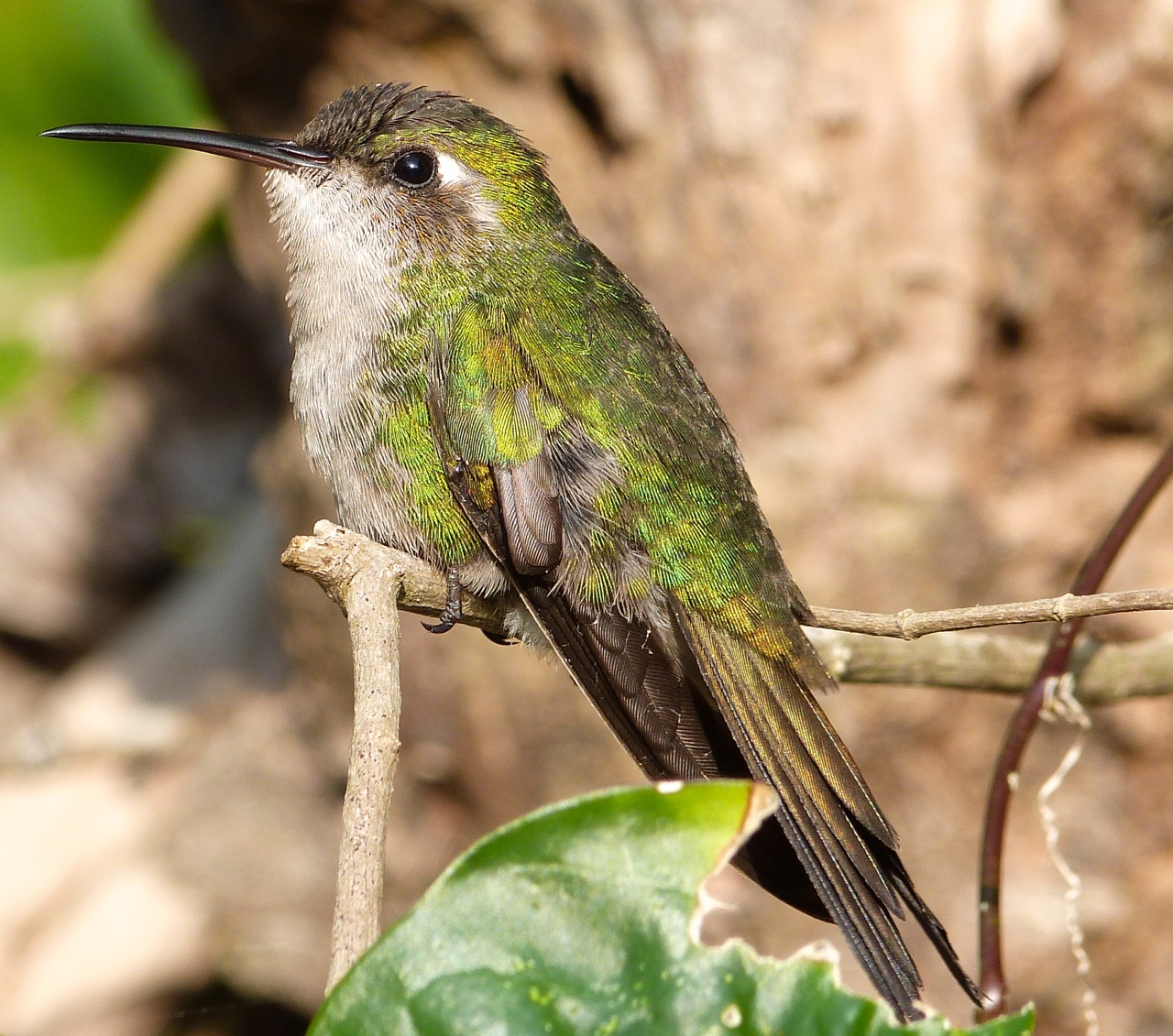
Cuban Emerald (f) . Abaco . Bahamas – Keith Salvesen
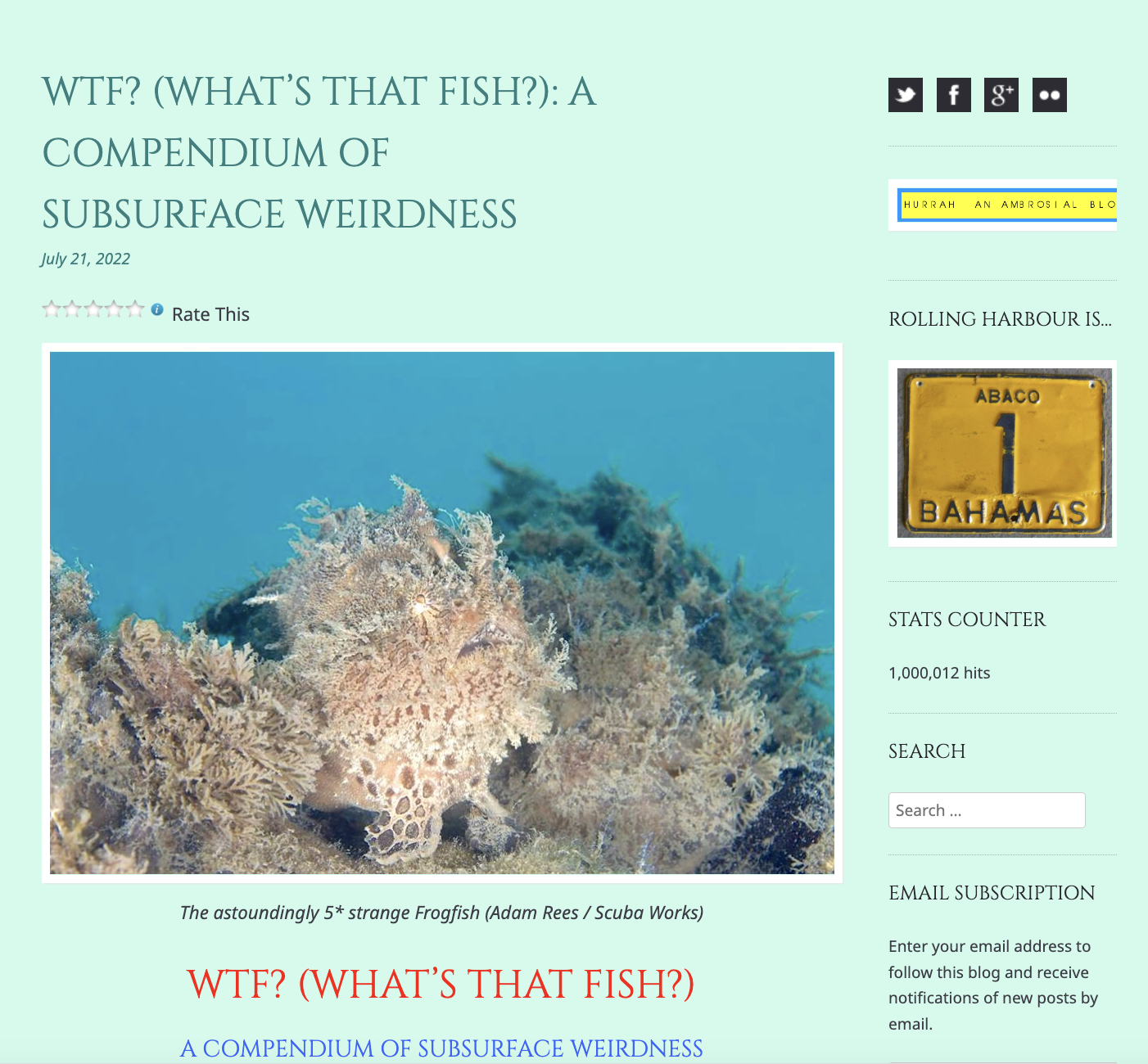
ONE MILLION HITS ON THE STATS COUNTER (+ BONUS FROGFISH)
HAPPY DAYS AND HAPPY YEARS
A decade has passed since I sat down and tried to find out how on earth WordPress worked. The plan was to start a simple blog about Abaco, based on our very limited experiences as UK members of the Delphi Club fishing lodge perched on the cliff above a wonderful white sand bay known as Rolling Harbour.
Delphi Club Abaco
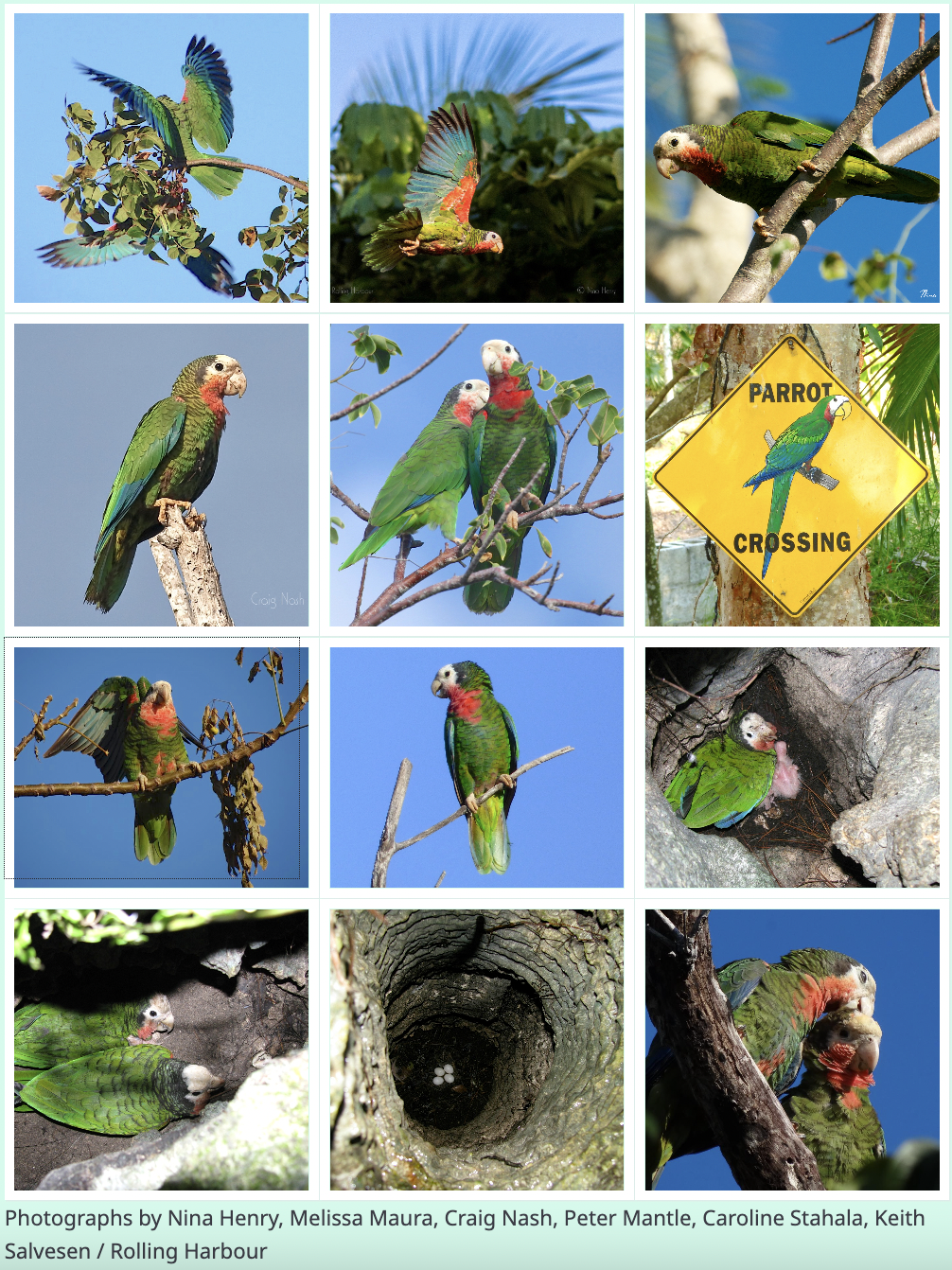
By then, I’d become fascinated with the wildlife of the island, and in particular the birds. Most were species that I had never seen before, nor in many cases heard of. I only had a tiny pocket camera back then, but I was quite proud of my rubbish photos of distant birds that only I could identify. I fell for the cheerful call of the Thick-billed Vireos, the flash of the Hummingbirds, and the charm of the Bananaquits. Then I encountered the unique underground-nestingParrots, found only on Abaco.
A FESTIVAL OF ABACO PARROTS
Having to some extent conquered the complexities of blog set-up, I started unpromisingly with a few practice posts and no clear development plan. THE FIRST POSTwas… see what we are dealing with here in terms of sophistication?
Gradually the site expanded: I learned more, the ideas formed, the content improved, and I upgraded the camera. Background research became easier as online information on related topics gradually improved. Hits started to come in, then people I knew began to sign up. Then people I didn’t know joined in. Then word got around. Within a year, there was something worthwhile that people seemed to like, even beyond the Bahamas.
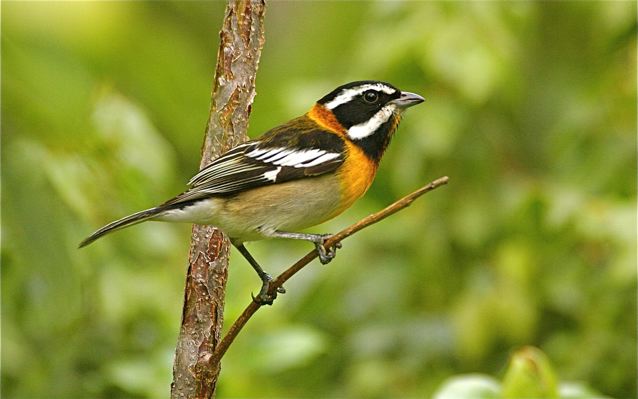
Western Spindalis . Abaco . Bahamas – Keith Salvesen
At that time, social media activity on Abaco (and beyond) was far less. Fewer communication methods mainly confined to Facebook & Twitter: basic / unreliable wifi: simpler iphones (model #3); generally far less interest in all the stuff we now wade through. The daily traffic for Abaco on Facebook tended to be local and brief. Meanwhile the blog happily coasted along, gradually expanding, heedless of hashtags and the like that I was too idle to learn to use.
Atala Hairstreak Eumaeus atala . Abaco . Bahamas – Keith Salvesen
HURRICANE SANDY
Then in October 2012, the awesome power ofHurricane Sandy began to curve towards the northern Bahamas. I started to post Hurricane information using NOAA and similar resources. Trackers (static and interactive), path and intensity predictions, NASA satellite hotspot maps, advisories and so on. I watched, amazed, as my hits changed from a handful daily to every few seconds. The counter clicked over continuously. On one day there were 2,200+ hits. Comms were mostly down and island information was hard to come by. I started to get emails and messages from beyond Abaco with concerns about families, locations (eg Little Harbour), properties, boats etc. In some cases I was able to make contact directly or indirectly with someone who could help. Overall, there were 15,000+ hits over 10 days or so. From such scary and sad circumstances, I simply note that the blog’s following grew rapidly.
Cuban Pewee . Abaco . Bahamas – Keith Salvesen
THE BIRDS OF ABACO
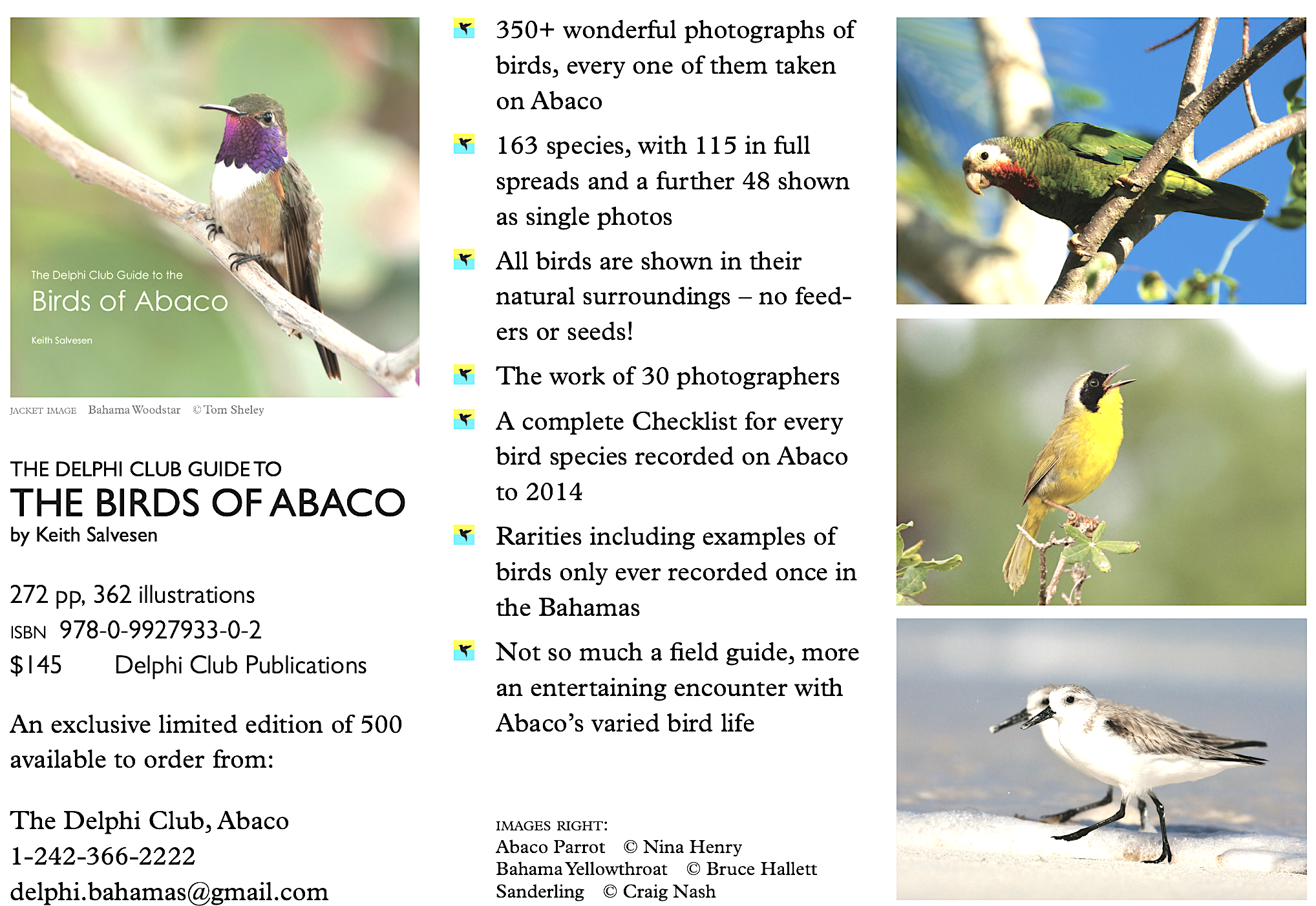
In 2013, Peter Mantle began to contemplate a new project, besides having recently masterminded the Delphi Club. He suggested producing a spectacular book showcasing the wonderful bird life of Abaco (and by extension other parts of the Bahamas). My wife Sally, a publisher, would carry out the professional work as production manager, designer, and editor. Research, picture-sourcing and writing were to be my pigeon. 16 months laterTHE DELPHI CLUB GUIDE TO THE BIRDS OF ABACO had been printed in Florence and shipped to Nassau.
This is a good time to recall the extraordinarily positive response from all those who became involved in the project. The professionals guiding an amateur throughout the process; the 30 photographers whose pictures light up the book; and many others on Abaco and beyond who assisted with advice and encouragement. And the people who bought the book. And the people who didn’t but saw a copy and enjoyed it anyway.
A FLYER!
Over the years ROLLING HARBOUR ABACO increased massively in scope, for example with Marine Mammals (BMMRO), Reef Fish, Corals, and so on. Also bonefishing, history, maps, lighthouses, museums and a whole lot else besides. As I learned more, the more rewarding the research and writing became. Here are a few themed highlights from the last decade.
From 2014 on, I became involved in the research of the migration of PIPING PLOVERSfrom their breeding grounds in North America to overwinter in the Bahamas. These enchanting 2oz little birds make the journey of over 1000 miles from late July… and then back again in Spring. Many are banded in the breeding grounds, enabling individual birds to be identified and data recorded. This Citizen Scientist project involved people reporting sightings, collecting winter data for the summer Specialists.
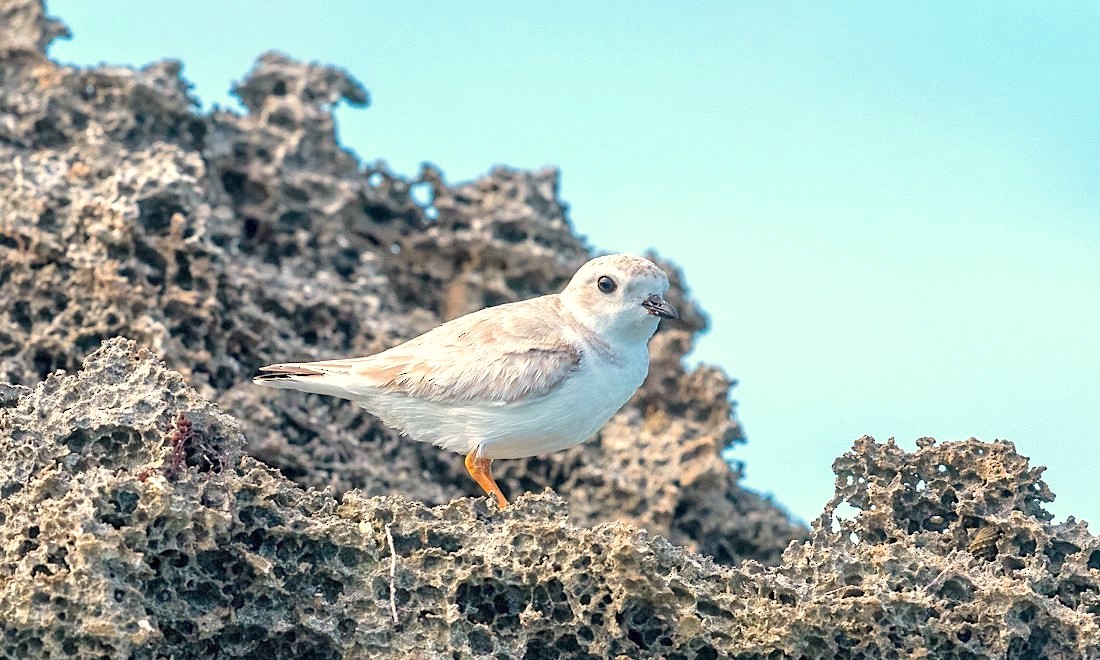
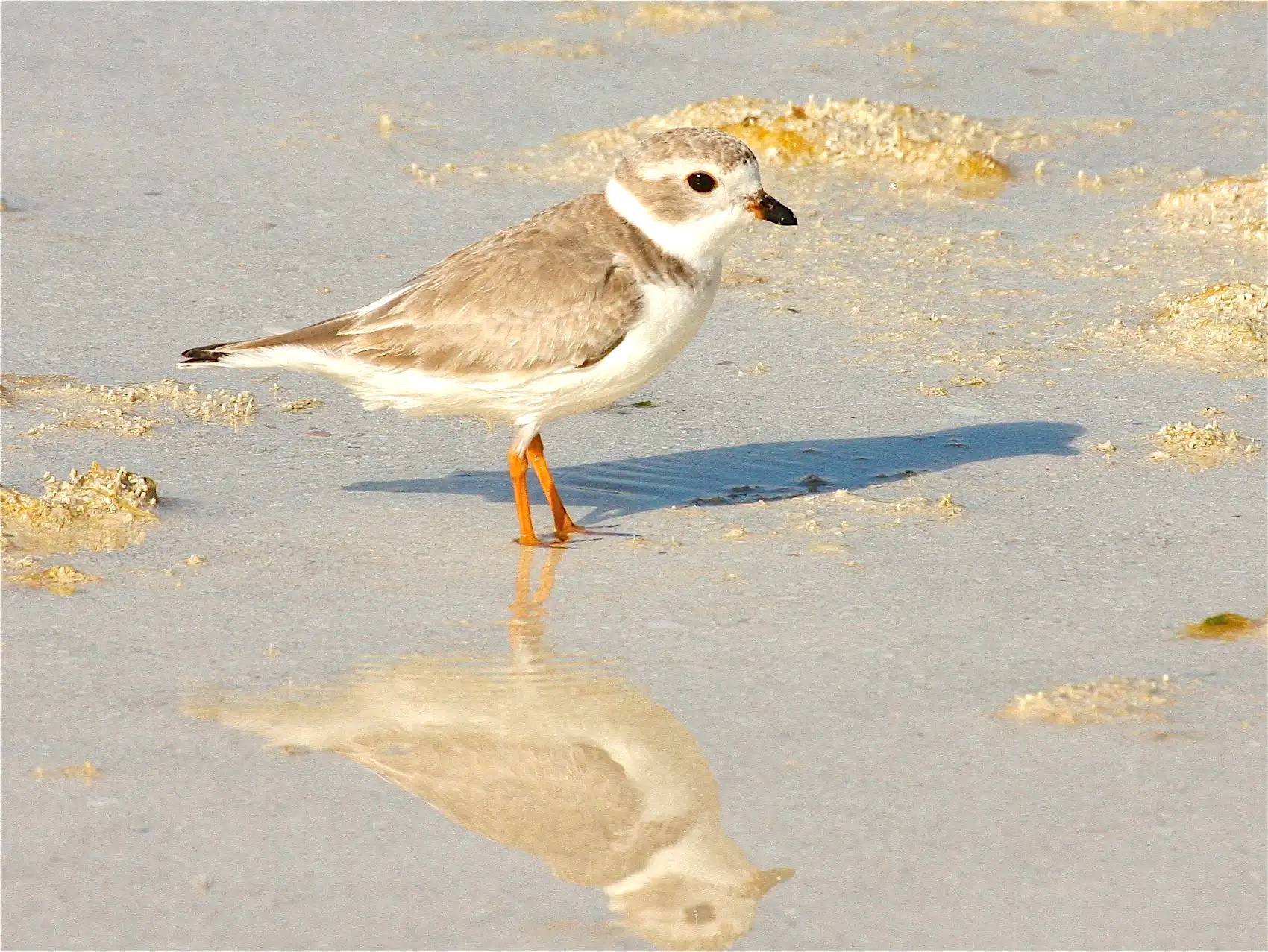
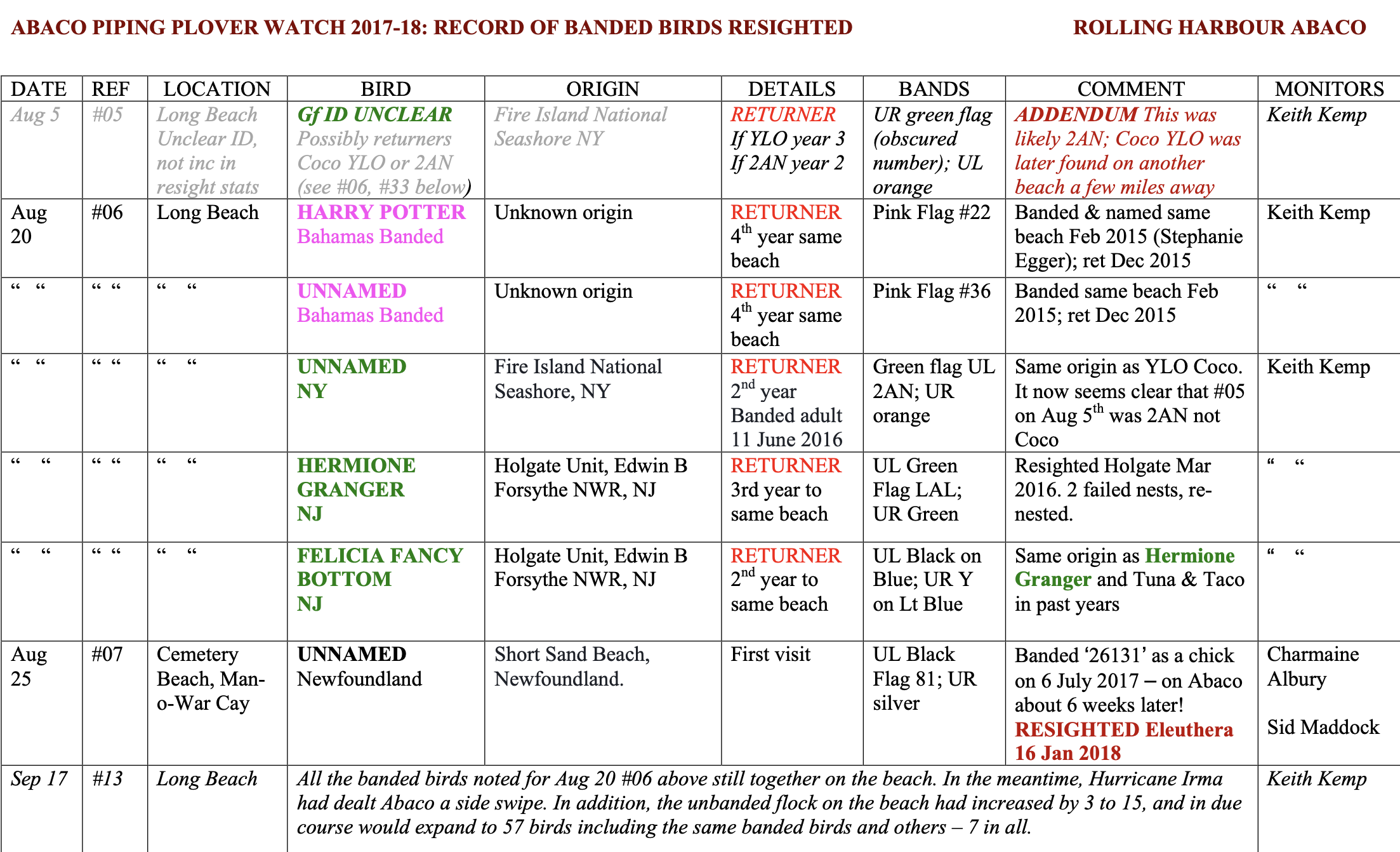
The project spanned almost 5 years, cut short by the devastation of Abaco by Hurricane Dorian in 2019. Here are a few enchanting PIPL; and an example page from the record.
Keith the piping plover
APPRECIATION
Over the decade, there have been 100s of people who have contributed to this little enterprise in some way: looking at posts; liking them; signing up for updates; providing information, ideas and encouragement; generously giving use permission for fantastic photos; commenting thoughtfully; correcting kindly; allowing me to join and even contribute to conservation, research and general natural history organisations; making the book a success; supporting and enabling APPW to provide valuable data; scores of people being friendly even though we never met. Thanks to everyone who has kept Rolling Harbour rolling along for so long, and – between you all – for 1m hits.
ODDEST SEARCH TERM: How to dispose of dead bodies?
The astoundingly 5* strange Frogfish (Adam Rees / Scuba Works)
WTF? (WHAT’S THAT FISH?)
A COMPENDIUM OF SUBSURFACE WEIRDNESS
15 OF THE STRANGEST SEA CREATURES IN BAHAMAS WATERS
WTF? stands for ‘What’s That Fish’? But it might also be your exclamation when you come across one of these creatures. The WTF? series highlights some of the unusual, curious, weird and downright extraordinary fishes that inhabit the waters of Abaco and the northern Bahamas. Some represent local forms of a species found elsewhere in the world; others are in their own evolutionary cul-de-sac. Just as I think I have seen it all, so another oddity crops up somewhere that demands inclusion.
This page is intended to be the most direct route to an underwater menagerie of the piscine strangeness, with example photographs to whet your appetite to learn more about these fascinating denizens of the ocean. This series has been put together over several years, and clicking on any creature header will start you on a long dive into that fish’s environment and secrets.
To see a collection of the excellent WEIRD CREATURES “MONSTERS OF THE DEEP” trading cards click HERE
Credits are all given in the individual articles. Thanks to all those that have provide the photos, without which this type of illustrated, unscientifically scientific poke around in the ocean would not be possible.
BLACK WITCH MOTHS: HARBINGERS OF DEATH OR LOTTERY BANKERS?
Black Witch moths Ascalapha odorata are seriously bad news. Or wonderfully good news, depending where you are and who you talk to. First, let’s look at some of the local names for the creature, from which you will get a pretty clear idea of its somewhat negative folklore status, as well as its area of distribution. I do this not to demonstrate how effortlessly I can ‘borrow’ from Wiki, but rather to show how a simple moth can give rise to widespread superstition and even fear.
12 SCARY NAMES FOR ONE MOTH
Mariposa de la muerte (butterfly of death) – Mexico / Costa Rica
Pirpinto de la Yeta (something like ‘jinxing butterfly’) – Argentina
Tara Bruja (witch moth) – Venezuela)
Miquipapalotl (black death moth) – Mexico
Taparaco (something like ‘messenger in black’) – Peru
Money Moth, Money Bat – Jamaica, Caribbean (including Bahamas)
Other names include Papillion-devil, La Sorcière Noire, Mourning moth, Sorrow moth.
WHICH MOTH?
These very large moths (wingspan up to 7″) are nocturnal, with females larger than the males. The diagnostic markings are a spot on each forewing shaped like a number nine or a comma. This spot is often green with orange highlights (seen in the header image). The hind wings are decorated with distinctive ‘eyes’. The overall effect is an example of aposematism – coloration or markings that act as signals to warn or repel predators. The link above will take you to an excellent Wiki article on the topic, including the debate on the topic between Alfred Russel Wallace and Charles Darwin
The stripy larval caterpillar can grow up to 7 cm in length.
‘BAD LUCK & TROUBLE’
The moth is a migratory species, flying from (roughly speaking) South America as far north as Florida and Texas. The worst luck is believed to come from having one flutter into your house. Once inside, it will either bring bad luck to the house – or if there is already misfortune there, it will make it even worse. There are variations on this belief – e.g. that the more corners of a room the moth visits, the more doomed the household.
ANY GOOD NEWS ABOUT THIS CREATURE, OR ALL GLOOM & DOOM?
Fortunately yes, and it’s high time to dispel the gloom hereabouts. In some places (e.g. Hawaii), it is believed that when a loved one has died and an Ascalapha odorata is seen soon after, it is the person’s soul returning to say farewell.
More promisingly still, in the Bahamas and wider Caribbean a far more positive and practical attitude is shown. If a Money Moth (or Money Bat) lands on you, you will receive some money. Or so it is said. I have never heard of this happening, but at least it is an optimistic approach to the moth. And Texas, thinking big, takes this several steps further to the prediction that you will win the lottery (I have a feeling this is a very modern theory).
WHY ARE YOU SCARING US WITH THIS THING?
Because at one time I had never heard of these moths, let alone seen one. Then one balmy Bahamian evening, at dusk, someone pointed out a large dark smudge on the door-frame. I only had a phone, and I had to use the flash. Here is the moth, with its evil little eyes shining in the bright light. Luckily, it was outside and not inside the building, which I hope diluted the malevolence radiation level. I didn’t realise the significance of the moth and the implications at the time of course, until I’d looked it up in Sibley’s indispensable ‘Compendium of Evil Moths‘**). It’s a poor photo, but it was useful for ID and I feel that taking a quick shot helped to ward off the worst of any unpleasantness. Though I remember that I fished very badly (even by my low standards and expectations) the following day…
CULTURAL SIGNIFICANCE IN LITERATURE
Remember Silence of the Lambs? Well in the book, pupae of the Black Witch moth were placed in the mouths of victims by serial killer ‘Buffalo Bill’ as his calling card – though for the film, the moth species was changed to a Death’s-head Hawkmoth, as featured on the poster.
You can read about Hannibal Lecter’s link to moths, and learn how for the film the pupae were made from sweets (Gummi Bears ™) so as to be harmless if swallowed, HERE
SO – BE HONEST – ARE THEY HARMFUL IN ANY WAY AND / OR WILL ONE MAKE ME RICH?
No
Taking one’s life in one’s hands…?
Photo credits: Charles J Sharp (1, 5) OS; Wiki (2); Julia Gotz (‘juliatrees’) (3)*; Keith Salvesen (4) Sources: Julia Gotz (‘juliatrees’), Terry Sovil, , Texasbutterflyranch.com, Wiki, Sibley’s ‘Compendium of Evil Moths‘**
*Julie closed her blog, from which photo 3 comes, in 2010. I’m hoping she won’t mind my resurrection of her image to illustrate the species… Black Witch moth photos are quite rare online
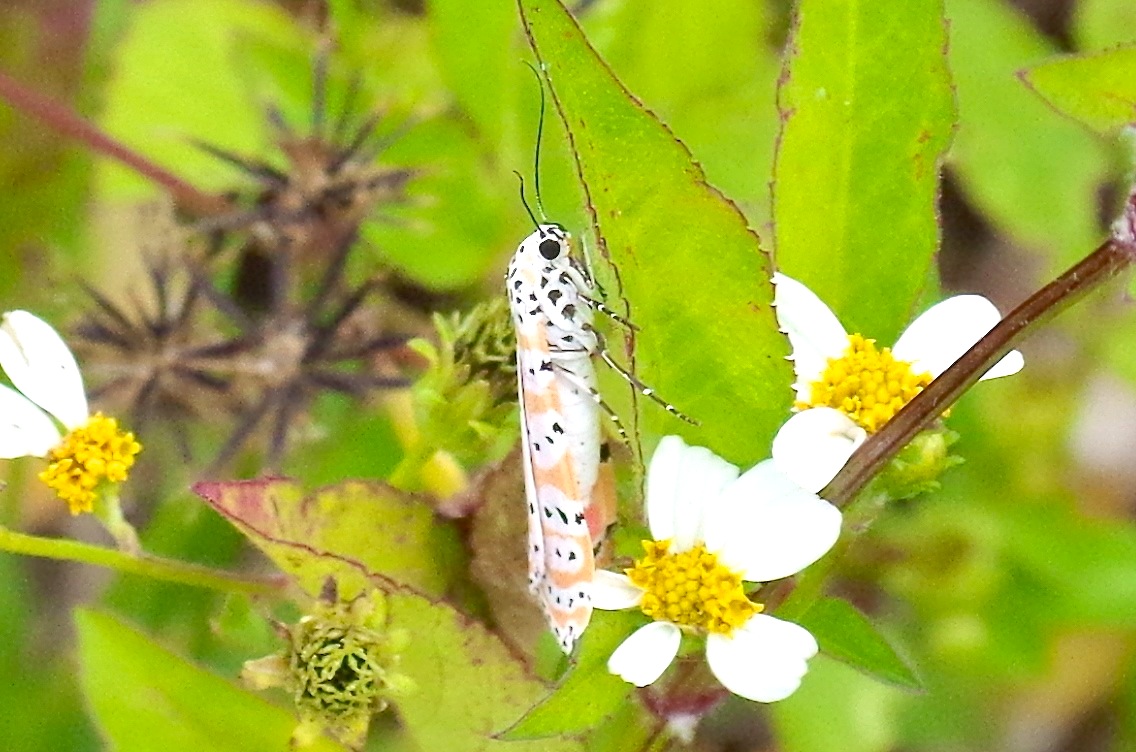
The BELLA MOTH Utetheisa ornatrix is also known as the ‘ornate moth’ or ‘rattlebox moth’ (a tall spiky plant of the species Crotalaria). The italianate ‘bella’ signifies beauty and all the many synonyms for it. These moths come in colours ranging from pink to red or orange, and yellow to white. Some have vivid coloration, others are less bright. Their black dot markings are broadly similar. Moths are often thought of as creatures of the night, so daytime would not be an auspicious time for moth-hunting. In fact there are many moth species that are active during the day (‘diurnal’), and the Bella Moth is one of them.
DEFENSIVE WARNINGS
The bright coloration is (as in many species) nature’s way of saying ‘leave me alone’ and in particular, ‘I am very unpleasant to eat’. It is called APOSEMATISM. The unpleasantness derives from toxins of the plants they feed on. This starts at the larval stage. The larvae feed on plants that contain poisonous alkaloids – in particular the yellow rattlebox plant – rendering them extremely unpalatable. both as larvae and adults. Bella adults in need of an alkaloid boost may cannibalise moth eggs, pupae or larvae to counter a deficiency.
BELLA MOTH SEX LIVES: ‘IT’S COMPLICATED’
Sexual encounters are dictated by females, who compete with other females for males
Females seeking to mate always outnumber available males
A female bella will release powerful pheromones at dusk to lure males
Related females uniquely engage in collective pheromone release
This is termed “female pheromonal chorusing”, an irresistible draw for the males
Several males will give the female chemical ‘nuptial gifts’ of both poison and sperm
The female chooses the best of her various suitors and copulates with 4 or 5 of them
The whole process of multiple copulation may take up to 12 hours
In some way I don’t understand, she is then able to select her preferred sperm provider
The sperm of the other males is rejected and they go away disappointed
Humans: do not try any of this, whether at home, in the office, in public, or when driving
Credits: Bob Peterson (1, 6); Keith Salvesen (2, 3); Charles J Sharp (4); open wings by Dumi (5)
I featured the extraordinary, colour-transforming PEACOCK FLOUNDER Bothus lunatus a while back as part of a Bahamas Reef Fish series. These really are remarkable creatures, and I have decided to return to them mainly because of the wonderful illustrative photos I was able to incorporate. There are plenty of flounder facts too, but if you just enjoy the pictures and skip the blurb I’ll understand.
ROVING EYES
In the fish shown here, you’ll see that – surprisingly – both eyes are on the upper-side of the fish, above the rather grumpy mouth, whereas the head is horizontal to the ocean floor. Oddest of all, juveniles are constructed conventionally with bilateral eyes, and look like ‘normal’ fish rather than flatfish.
As the fish matures, in some magic way the mechanics of which I can only guess at**, the right eye grows round to the topside and the flounder transforms from a ‘vertical’ fish to a flatfish. For this reason, the PF is known as a ‘left-eye’ flounder. Maybe in other flounder species in the world – the southern hemisphere maybe? – the eye that moves round to the upper-side is the left eye.
The eyes of this fish have another special trick up their sleeves (so to speak). They operate completely independently. Thus the creature can look left and right, or forwards and backwards, simultaneously. It’s an excellent system for detecting predators coming from any angle. It’s a superpower we might all benefit from.
DO THEY HAVE ANY OTHER TRICKS WE SHOULD KNOW ABOUT?
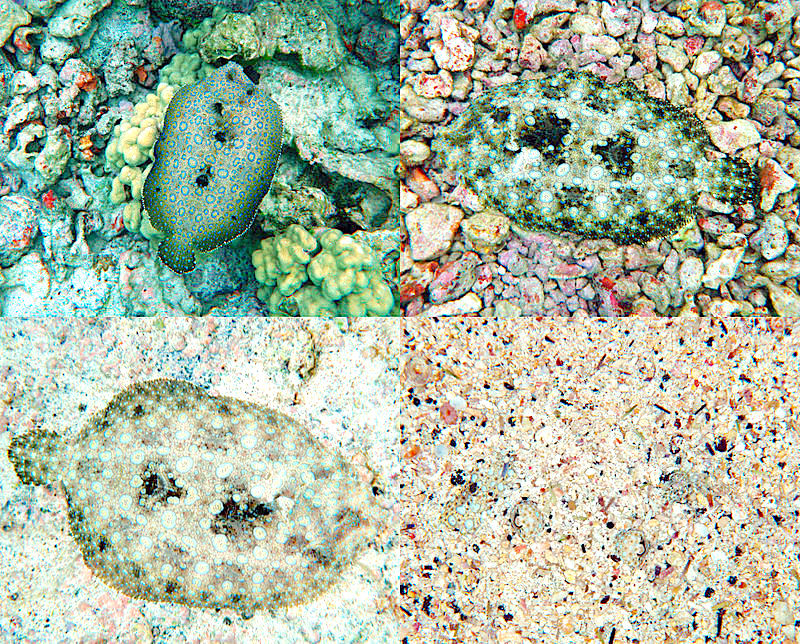
Yes they do indeed. If you have been admiring the fish shown so far, you’ll have noticed that the colour of each one differs from the others. In addition to the predator-protection that the eyes provide, the peacock flounder can make itself (near) invisible. They can rapidly change colour to match their surroundings. There are 3 reasons for this: to avoid / confuse predators; to conceal themselves on the sea-floor to catch passing prey; and, as dive expert Fred Riger has pointed out, “the male peacock flounder can, and does greatly intensify his colours to declare territory and attract females. When doing this the males will also signal with the left pectoral fin, sticking it straight up and waving it around.”
The same fish, photographed over several minutes as it moves over the ocean floor
Matching the background happens as the fish swims, and in a few seconds. When they rest on the sea-floor, the camouflage may even become total. In #4 above you can just about make out the eyes. The whole effect is known as ‘cryptic coloration’ or CRYPSIS. In contrast, the image below shows just how adaptable the transformation can be. Note how the fish can even mimic the pinkish tinge of the sand perfectly. If threatened, the fish will bury itself in the sand, with just its eyes showing.
HOW DO THEY MANAGE TO CHANGE COLOUR IN SECONDS?
It’s complicated! A simple answer is: a mix of hormones, pigment-cells and vision, all coordinating rapidly. The colour change works in two ways: pigments are selectively released to the skin cells; and other pigments can be selectively suppressed. An analogy might be image manipulation using variations in brightness, saturation etc. Not convinced? Then watch this short video and prepare to be impressed. Astonished, even.
WHAT IF A FLOUNDER CAN’T SEE CLEARLY FOR SOME REASON?
As with many (all?) superpowers, there is usually some kryptonite-style flaw. A flounder with a damaged eye, or one temporarily covered (by sand, for example) will have difficulty in changing colour – possibly at all, or at any rate with the swiftness it needs to have.
THESE SIDEWAYS FISH – HOW DO THEY… YOU KNOW…?
Take a look at the fish above with its top fin raised. It’s a ‘ready’ signal in a harem. Male flounders have a defined and defended territory within which live up to 6 females – a so-called ‘harem.’ I can do no better than borrow the description of the rituals from an article derived from scientific papers byKonstantinou, 1994; Miller, et al., 1991in the websiteanimaldiversity.org/…ounts/Bothus_lunatusTo which I can only add, ’15 seconds, eh?’
“Mating activities usually begin just before dusk. At this time, a male and a female approach each other with the ocular pectoral fin erect. The two fish arch their backs and touch snouts. After this interaction the female swims away, and the male sometimes follows, approaching the female again from the left side. At this point the male pectoral fin is erect and the female pectoral fin moves up and down, possibly signalling willingness to mate. The male then positions himself underneath the female and mating begins. This process consists of a mating rise, during which the female and male rise in the water column together. On average, these rises last about 15 seconds. At the highest point of this rise, usually around 2 m above the substrate, gametes from both fish are simultaneously released, producing a cloud of sperm and eggs. Once the couple returns from the rise, the male “checks” to make sure mating was successful, and the pair separates quickly, swimming away from each other in opposite directions. Not all mating rises are successful, and the process of “checking” is thus important. The exact purpose of the mating rise in these flounders unknown; possible reasons for rising include better dispersal of gametes and predator avoidance.”
Peacock Flounder – Kim Rody Art
**This may in fact have been through sheer laziness
Credits: Melinda Riger & Virginia Cooper / Grand Bahama Scuba; Melinda Rogers / Dive Abaco; Adam Rees / Scuba Works; Kim Rody; animaldiversity.org; magpie pickings and other credits in the text
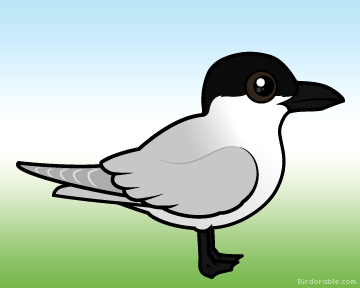
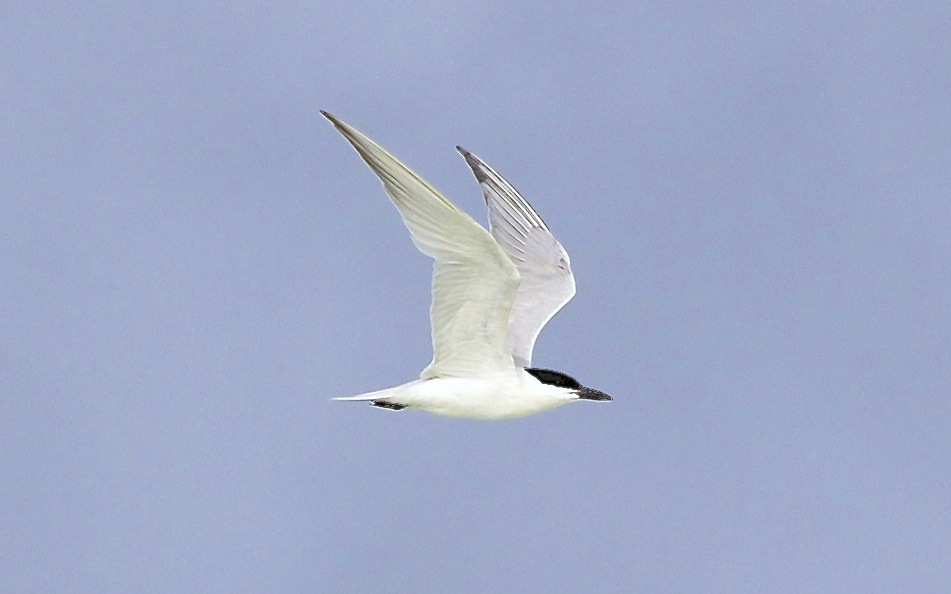
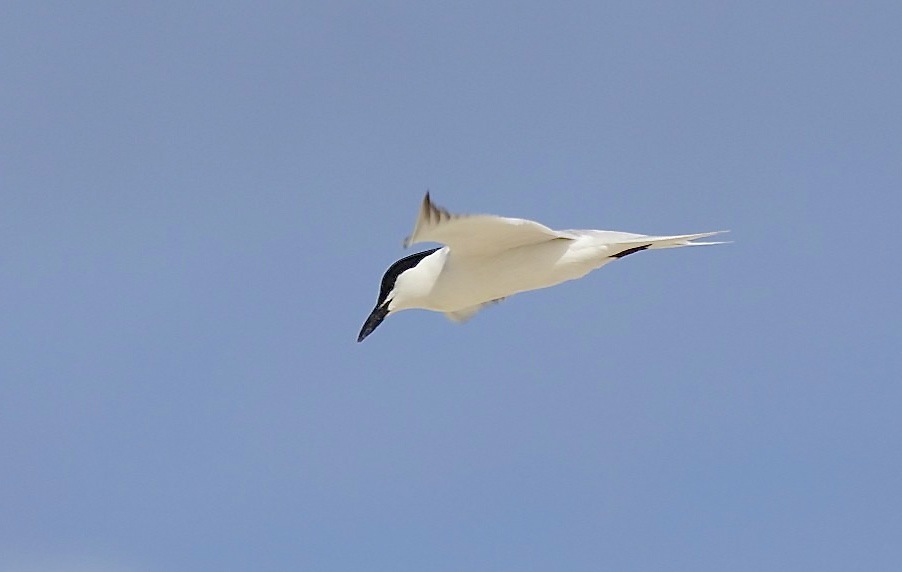
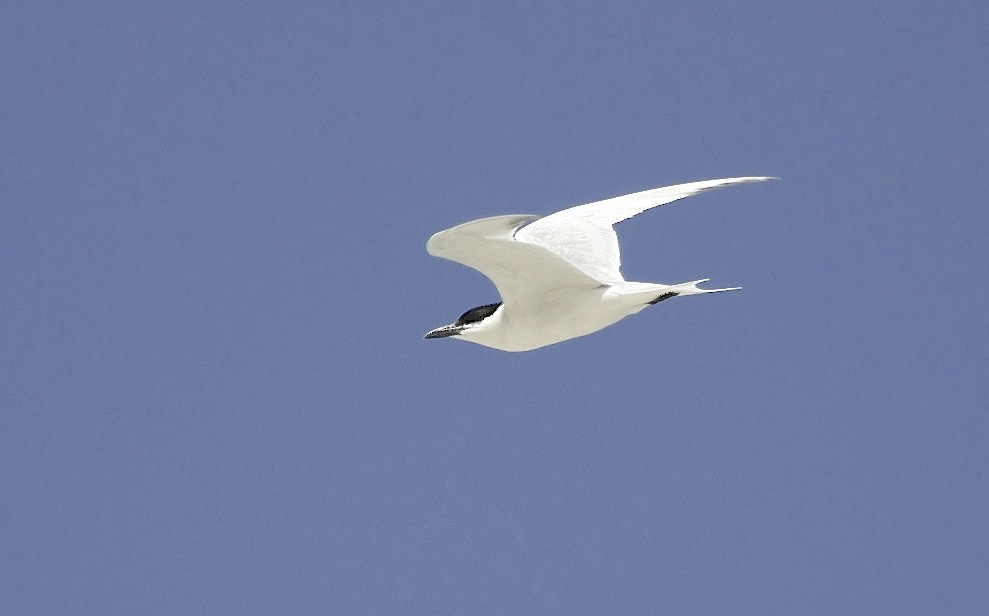
The gull-billed tern Gelochelidon nilotica had a name upgrade from Sterna nilotica some years ago, and was awarded the honour of its own genus.
Let’s be clear at the outset: there’s no such thing as a tern-billed gull. Which fortunately lessens the scope for species confusion.
There are 12 species of tern recorded for Abaco. Only one, the royal tern, is a permanent resident. There is one winter resident, the Forster’s tern and there a 6 summer resident terns of varying degrees of commonness. The other 4 are transient or vagrant, and probably definitely not worth making a special trip to Abaco to find. The G-BT is designated SB3, a summer breeding resident that is generally uncommon, though may be more common in particular areas.
TERN TABLE****I know! Too tempting…
The bird gets its name from it short, thick gull-like bill. It’s quite large in tern terms, with a wingspan that may reach 3 foot. They lose their smart black caps in winter.
There are 6 species of G-BT worldwide, and it is found in every continent. While many terns plunge-dive for fish, the G-BT mostly feeds on insects in flight, and will also go after birds eggs and chicks. Small mammals and amphibians are also on the menu. The header image shows a G-BT with a small crab. I always imagined that they must eat fish. Surely they do?But I have looked at dozens of images online to find one noshing on a fish, with no success.
All photos were taken by Alex Hughes, a contributor to THE BIRDS OF ABACO, when he spent some time on Abaco some years ago in connection with the conservation of the Abaco Parrot and the preservation of the habitat integrity of their nesting area in the Abaco National Park
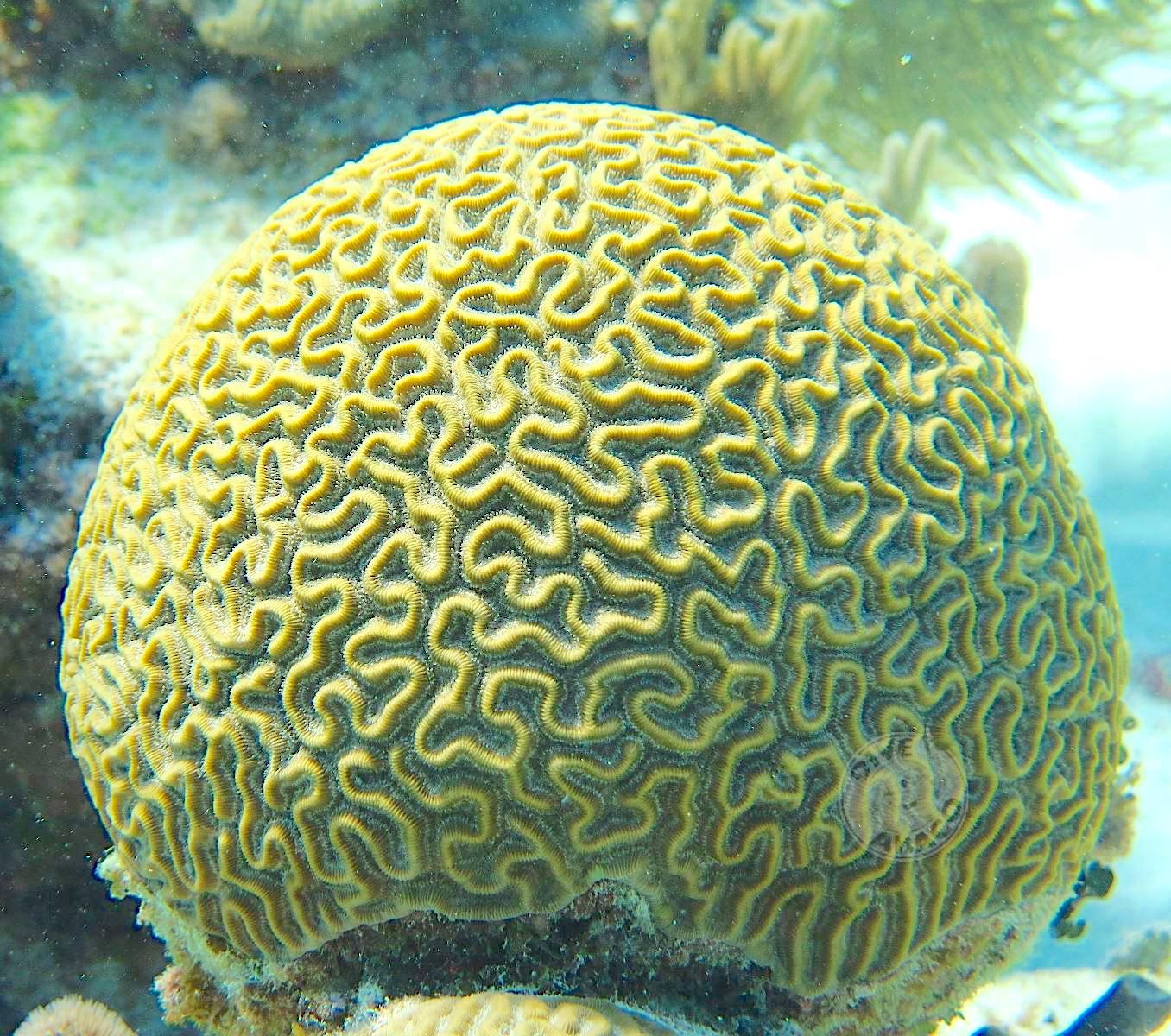
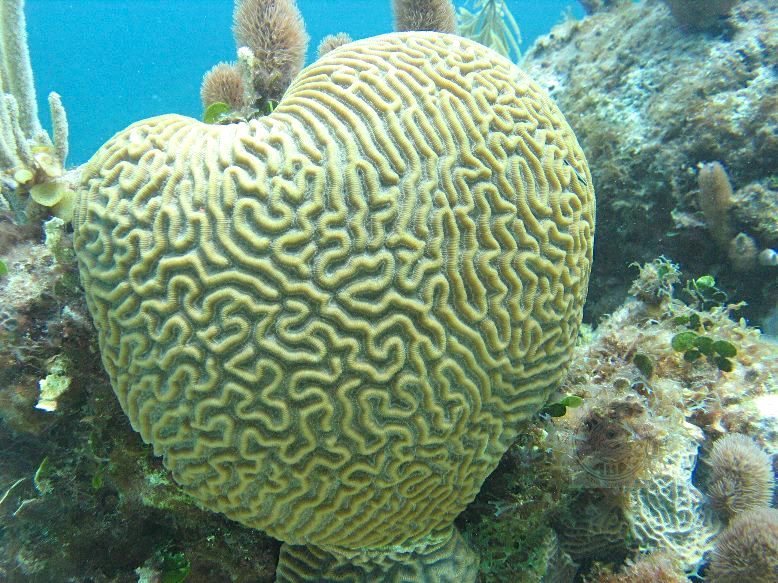
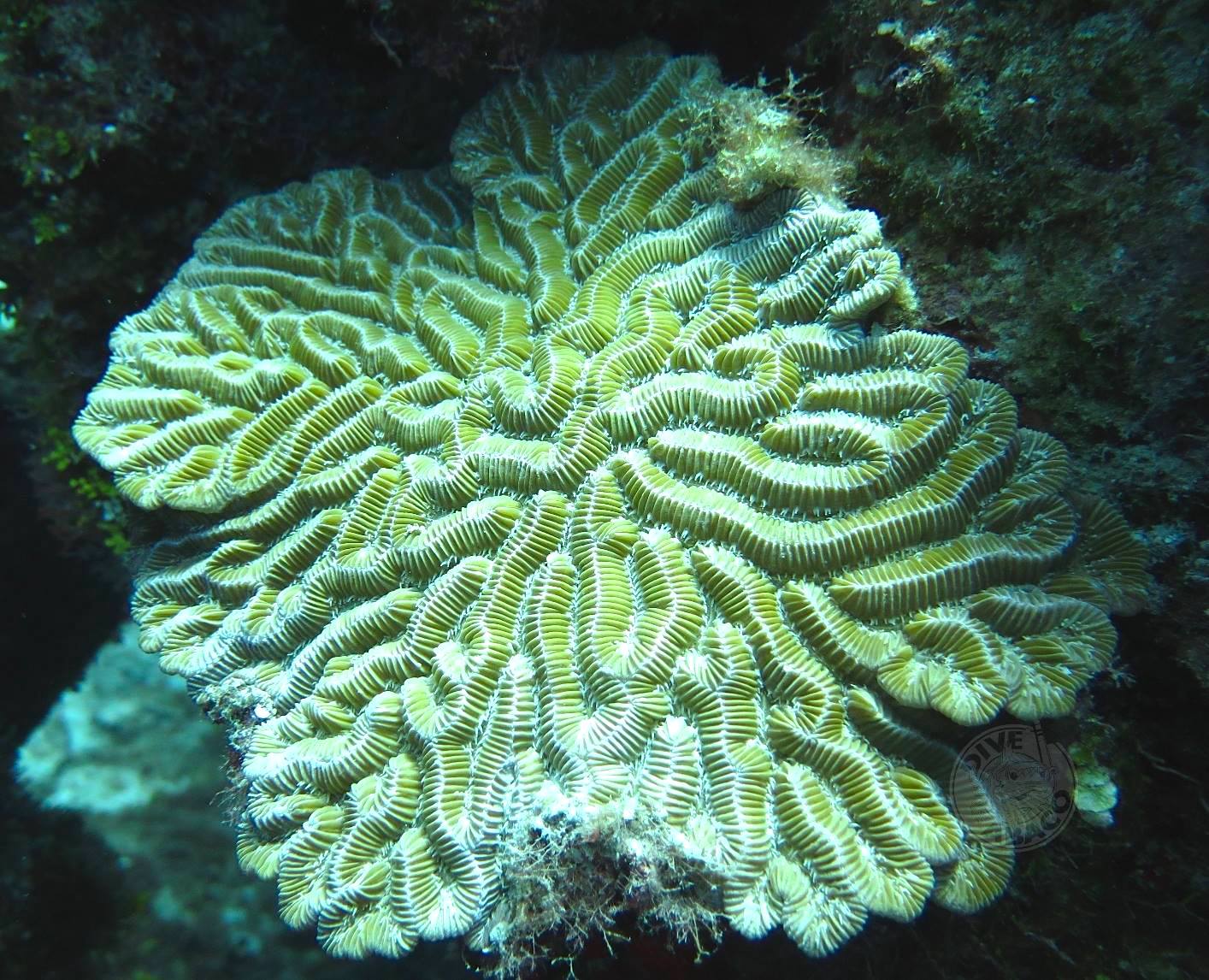
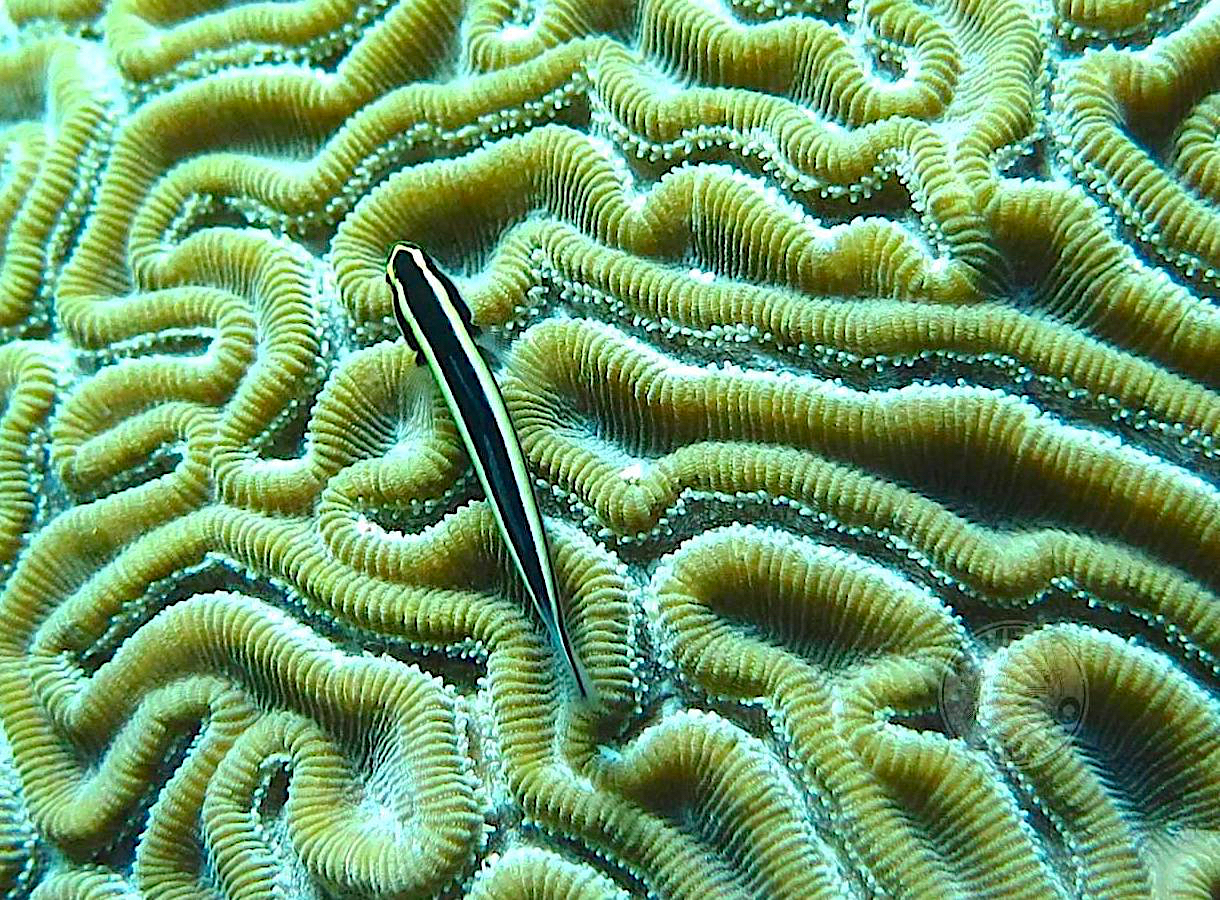
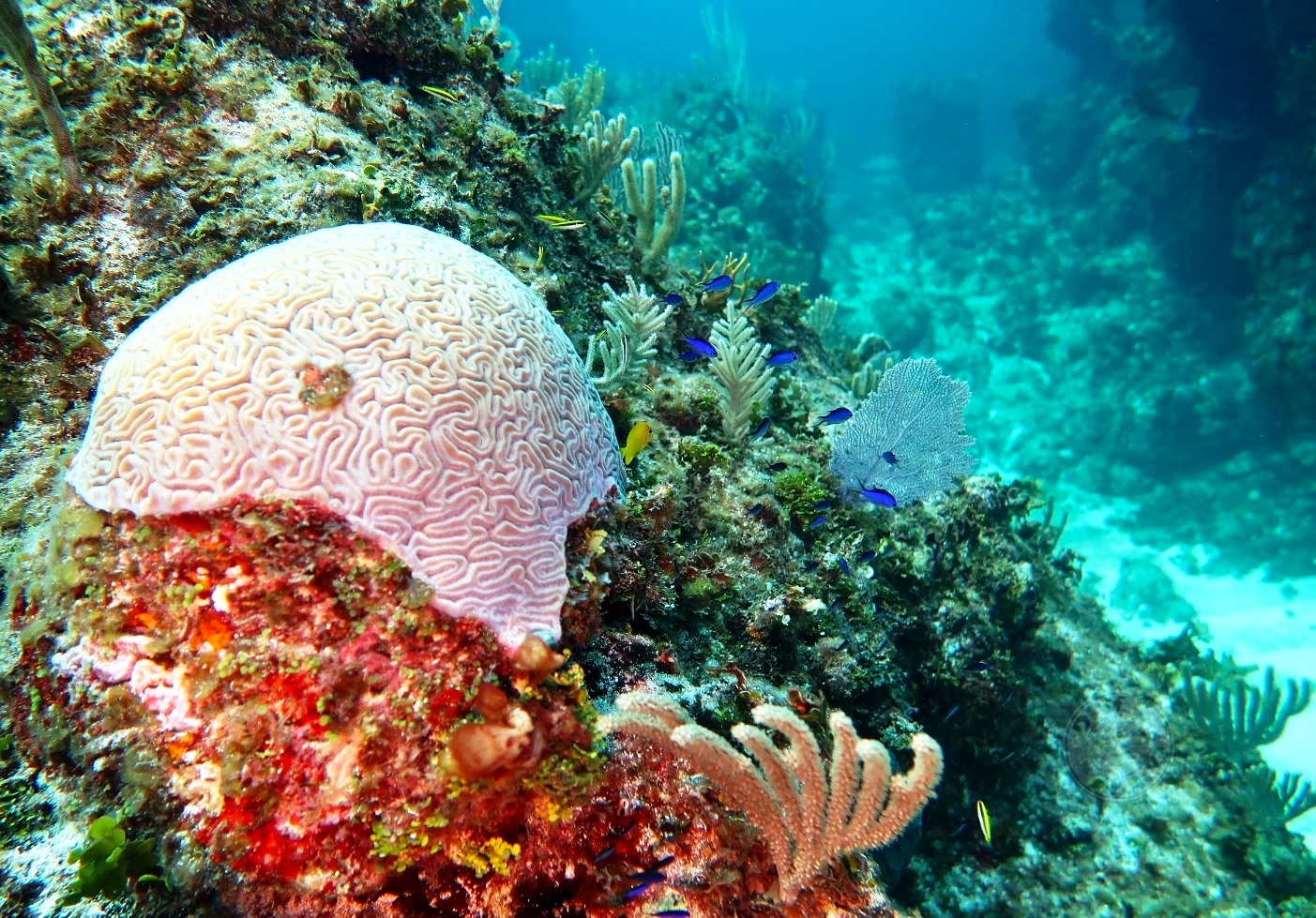
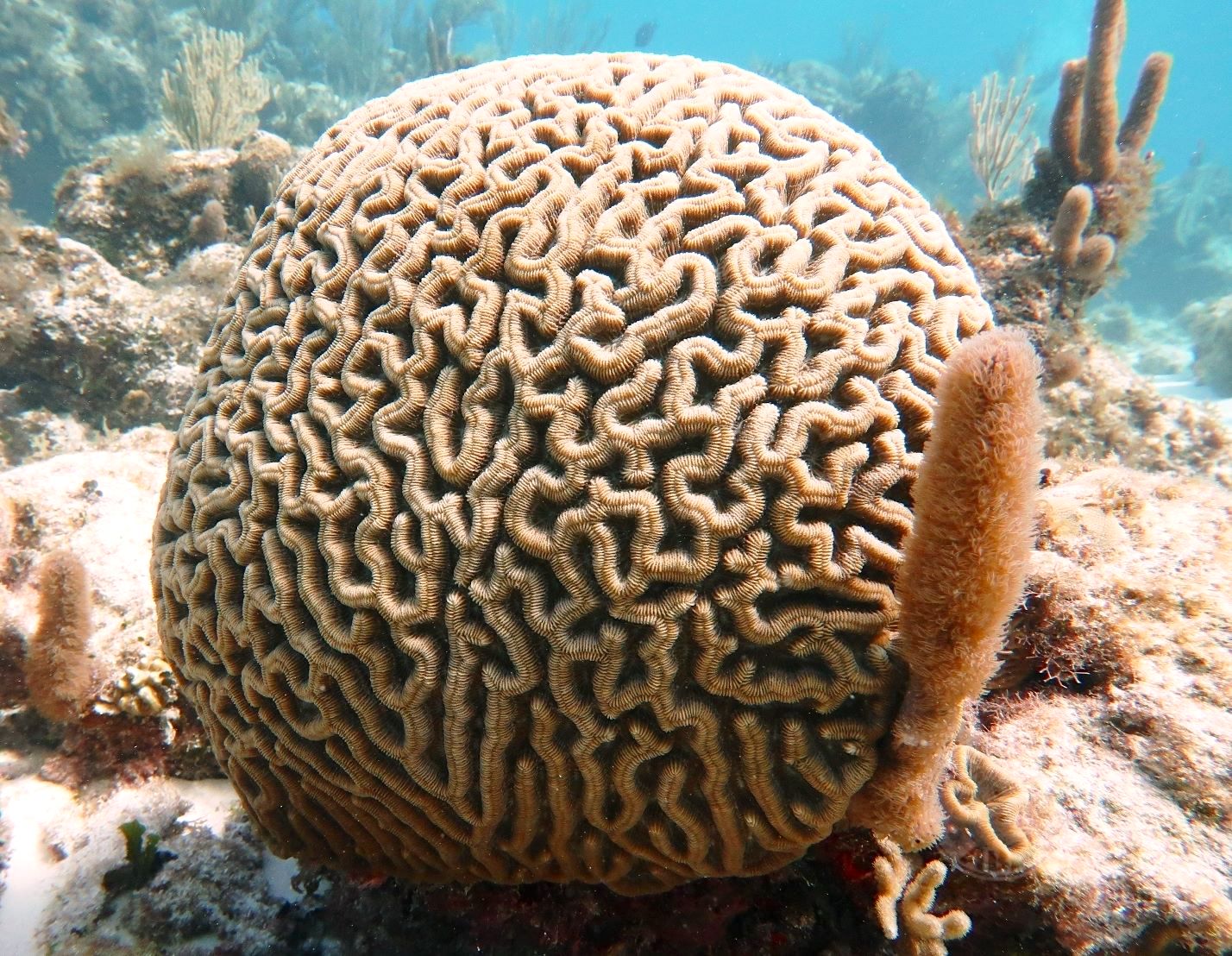
The most apposite description of brain coral Diploria labyrinthiformisis is essentially a no-brainer. How could you not call the creatures on this page anything else**. These corals come in wide varieties of shape and colour, and 4 types are found in Caribbean waters. They date from the Jurassic period.
Each ‘brain’ is in fact a complex colony consisting of genetically similar polyps. These secrete CALCIUM CARBONATE which forms a hard carapace. This chemical compound is found in minerals, the shells of sea creatures, eggs, and even pearls. In human terms it has many industrial applications and widespread medicinal use, most familiarly in the treatment of gastric problems.
The hardness of this type of coral makes it an important component of reefs throughout warm water zones world-wide. The dense protection also guarantees (or did until our generation began systematically to dismantle the earth) – extraordinary longevity. The largest brain corals develop to a height of almost 2 meters, and are believed to be several hundred years old.
HOW ON EARTH DO THEY LIVE?
If you look closely at the cropped image below and other images on this page, you will see thousands of tiny tentacles nestled in the trenches on the surface. These corals feed at night, deploying their tentacles to catch food. Their diet consists of tiny creatures and their algal contents. During the day, the tentacles retract into the sinuous grooves. Some brain corals have developed tentacles with defensive stings.
THE TRACKS LOOKS LIKE MAZES OR DO I MEAN LABYRINTHS?
The difference between mazes and labyrinths is that labyrinths have a single continuous path which leads to the centre. As long as you keep going forward, you will get there eventually. You can’t get lost. Mazes have multiple paths which branch off and will not necessarily lead to the centre. There are dead ends. Therefore, you can get lost. Or never get to the centre at all.
** On the corals shown here, you will get lost in blind alleys almost at once. Therefore in human terms these are mazes. The taxonomic labyrinthiformisis is Latin derived from Greek, and applied generally to this kind of structure, whether in actual fact a labyrinth or a maze.
CREDIT: all amazing underwater brain-work thanks to Melinda Rogers / Dive Abaco; Lucca Labyrinth, Keith Salvesen / Rolling Harbour
Here is a beautiful inscribed labyrinth dating from c12 or c13 from the porch of St Martin’s Cathedral in Lucca, Italy. Very beautiful but not such a challenge.
The Caribbean reef squid Sepioteuthis sepioidea is a small squid species of (mainly) the Caribbean Sea and the Floridian coast, and the most common in its range. These squid tend to form small shoals in and around reefs. From now on and through the summer would be a good time to investigate.
Squid are voracious eaters, dragging their prey to their mouths with some or all of their 10 limbs and using their beak to cut it up. The target species are small fish, molluscs and crustaceans. The squid have a ‘raspy tongue’ known as a radula which further breaks up the food for easy consumption.
REEF SQUID SUPERPOWERS (SUPERCOOL)
Squid are capable of brief flight out of the water (a fairly recent discovery)
They can also hide from / confuse predators by ejecting a cloud of black ink
Squid can change colour, texture and shape, and can even match their surroundings
This enviable power is used defensively as camouflage or to appear larger if threatened
It is also used in courtship rituals (something that humans might find disconcerting)
Colour patterns are also used for routine squid-to-squid communication AND GET THIS:
A squid can send a message to another on one side & a different one to a squid on its other side
SQUID SEX (1) “ROMANCING THE SQUID”
A male will gently stroke a female with his tentacles
The female will (most likely) flash an ‘alarm’ pattern. She’s playing hard to get.
The male soothes her (don’t try this at home, guys) by blowing and jetting water at her
If this doesn’t go well, he’ll move off, then repeat the routine until she sees his good points
However this on / off courtship can last for hours until at last he succeeds and then…
… he attaches a sticky packet of sperm onto the female’s body (romance is not dead on the reef)
Meanwhile he stays close, emitting a pulsing pattern, as well he might after all that palaver
She then finds a safe place to lay her eggs. Job done. **
SQUID SEX (2) IT ALL ENDS BADLY. VERY BADLY.
As soon the female squid has laid her eggs, she usually dies soon after
Male squid live a bit longer and… may have other packets to stick on other lady squid
But then in the end he dies too
It’s all horribly reminiscent of Romeo and Juliet. The lovers die in the end (but there’s no romantic balcony scene first)
THE CORRECT PLURAL OF SQUID
I had an unwise look online, always a hotbed of conflicting opinions. Inserting an algorithm into the interstices of the internet proves conclusively that the plural of squid is… squid. One squid, ten squid, a group of squid, a plate of squid. Unless, that is, you are talking about more than one of the many squid species, when you could possibly say ‘I collect both reef and giant squids’. “Squidses” sounds fun but is sadly not permitted.
** For an excellent article about squid including the intricate details of courtship and reproduction (and an image of a squid penis) check out SQUID WIKI
Credits: Fabulous underwater pics – Melinda Riger of Grand Bahama Scuba; research sources include MarineBio; Animal Diversity Web (Michigan Uni); and Wiki, which comes into its own in some fields of natural history where experts write the entry)
FAIRY BASSLET (‘MIND YOUR GRAMMA’): BAHAMAS REEF FISH (33)
The Fairy Basslet is a tiny brightly-coloured fish with a pretentious alternative name. It is otherwise known as the Royal Gramma (Gramma loreto). These fish are found in the coral reefs of the (sub)tropical western Atlantic. They are also found in aquariums anywhere you like, being small, bright, placid and generally good-natured.
Conveniently, the basslet is unlikely to be confused with any other species. Its striking two-tone colour scheme of purple and yellow is hard to miss. The purple front half (which is presumably where the ‘royal’ comes from, being a regal or imperial colour) may also be violet or even blue in some fish and / or in some light conditions. Another identification pointer is a black spot on the dorsal fin.
You’ll notice that the basslet above appears to be upside down. Which is because it is – this isn’t an inadvertent photo-flip. These little fish tend to orientate themselves to be parallel with the closest surface. This leads to them happily swimming upside down, or aligning vertically. As one article I read says severely, “this behaviour is not to be mistaken for illness”.
Fairy basslets / royal grammas are also CLEANER FISH. They pick parasites and dead skin off larger fish that visit so-called cleaning stations to be attended to by tiny fish and cleaner shrimps, and in some instances to have their gills and even their teeth cleaned. The deal is that, in return, the large fish do not eat the cleaners. Even snack-sized ones rootling around inside their mouths.
WHAT ABOUT BREEDING?
I really can’t improve on this rather touching description from Wiki: “The male will build the nest among rocks using pieces of algae.The male will then lead the female to the nest, where she will deposit 20-100 eggs in the nest. During the breeding period, this behaviour is repeated almost every day for a month or longer (my italics). The eggs are equipped with small protuberances over the surface with tiny threads extending from them which hold onto the algae of the nest and keep the eggs in place. The eggs will hatch in five to seven days, normally in the evening…”
HOW COME THE NAME ‘GRAMMA LORETO’?
This official name became a brainworm with me after I started this post. I had to check it out. The ‘Gramma’ part is unrelated to the fond name for a grandmother; rather, it simple denotes a member of the genus of fishes in the family Grammatidae.
The Loreto part is more mysterious. It is an an ancient town in Italy; and the name of several British schools, including – almost too good to be true – a school called Loreto Grammar. In a nutshell, the link between the town and places of education is that the Sisters of Loreto, founded in the c17 and named for a shrine in the Italian village, are dedicated to education in their Ministry.
How that ties in with a tiny Caribbean reef fish, I have yet to find out. I probably never will… Here’s a short video to alleviate the disappointment.
I failed to be able to resist finding out whether any country of the world has a purple and yellow flag. The answer is, no. However I am delighted to be able to report that the flag of the Independent Party of Uruguay is basslet-coloured.
Credits: all fantastic photos by Melinda Riger of Grand Bahama Scuba; magpie pickings of an unacademic sort for facts and speculation
The drastic effects of Hurricane Dorian on Abaco’s birdlife continue, with recent reports suggesting that all species remain affected, and some severely so. However there are signs of a slow improvement, and this good news includes the two hummingbird species, the endemic Bahama Woodstar and the Cuban Emerald. A couple of recent posts on FB indicate that sightings of both these species have been a very welcome surprise. So, a good time to write about them and to show their beauty.
Cuban Emerald (male) Abaco (Charlie Skinner)
The subject matter of this post is not as indelicate as the title might imply; nor is it a ‘hands-on’ practical guide for intimate examinations of tiny birds. In particular it does not publicise some recently discovered louche activity involving unfeasibly large motor vehicles. It’s all about plumage and recognition. And there are only two species – and two genders for each one – to wrestle with.So here are the adult male and female Bahama Woodstars and Cuban Emeralds in all their glory…
And finally, a brilliant Woodstar photo taken by Tom Sheley, birdman and generous fishing partner, that I spans the boundary between wildlife photography and art.
Bahama Woodstar female. Abaco Bahamas . Tom Sheley
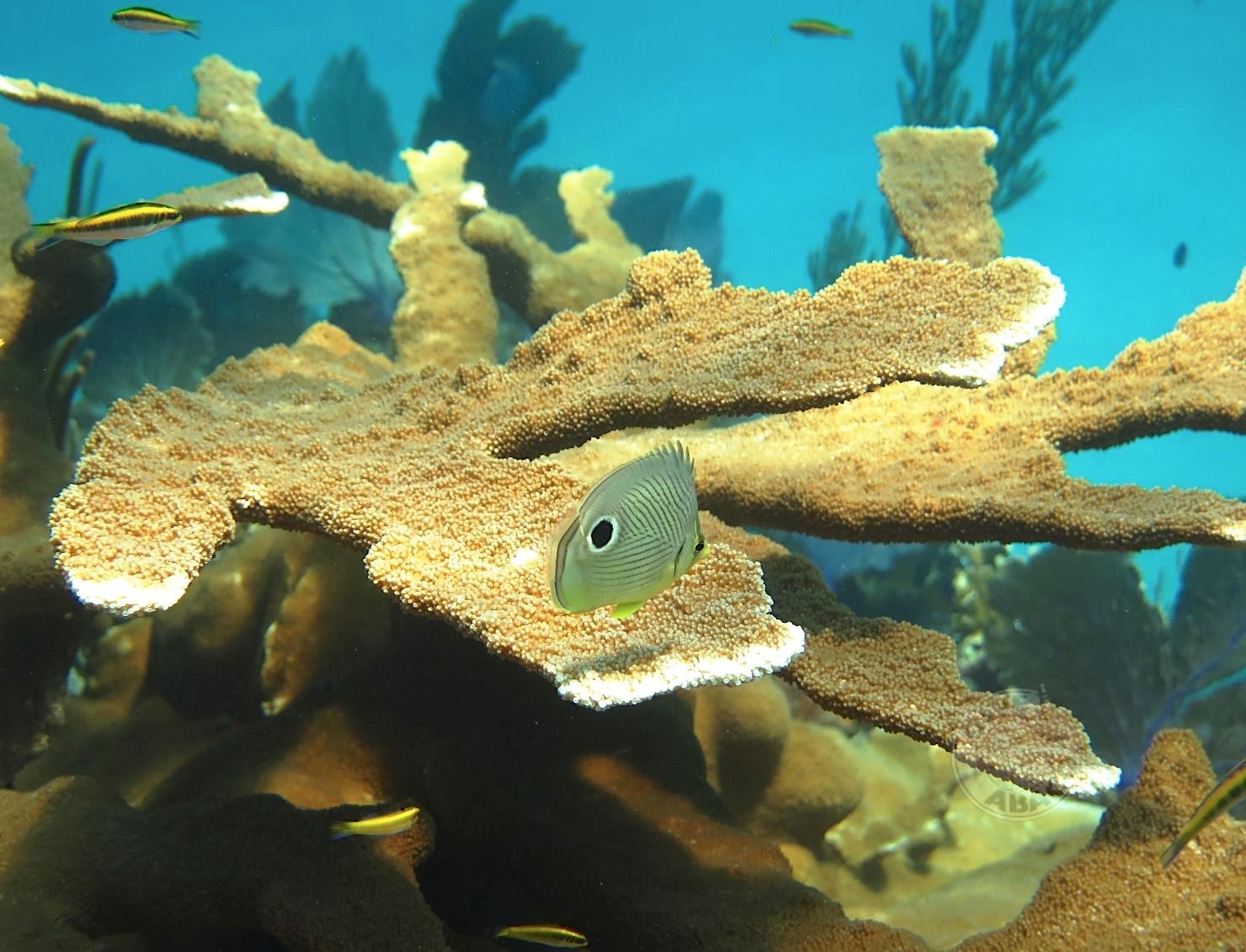
ELKHORN CORAL (Acropora palmata) is a widespread reef coral, an unmistakeable species with large branches that resemble elk antlers. The dense growths create an ideal shady habitat for many reef creatures. These include reef fishes of all shapes and sizes, lobsters, shrimps and many more besides. Elkhorn and similar larger corals are essential for the wellbeing both of the reef itself and also its denizens. These creatures in turn benefit the corals and help keep them in a healthy state.
Examples of fish species vital for healthy corals include several types of PARROTFISH, the colourful and voracious herbivores that spend much of their time eating algae off the coral reefs using their beak-like teeth. This algal diet is digested, and the remains excreted as sand. Tread with care on your favourite beach; in part at least, it will consist of parrotfish poop.
Other vital reef species living in the shelter of elkhorn and other corals are the CLEANERS, little fish and shrimps that cater for the wellbeing and grooming of large and even predatory fishes. Gobies, wrasse, Pedersen shrimps and many others pick dead skin and parasites from the ‘client’ fish including their gills, and even from between the teeth of predators. This service is an excellent example of MUTUALISM, a symbiotic relationship in which both parties benefit: close grooming in return for rich pickings of food.
VULNERABILITY TOCLIMATE CRISIS
Formally abundant, over the course of just a couple of decades elkhorn coral (along with all reef life) has been massively affected by climate change. We can all pinpoint the species responsible for much of the habitat decline and destruction, and the primary factors involved. In addition, global changes in weather patterns result in major storms that are rapidly increasing in both frequency and intensity worldwide.
Physical damage to corals may seriously impact on reproductive success: elkhorn coral is no exception. The effects of a reduction of reef fertility are compounded by the fact that natural recovery is in any case inevitably a slow process. The worse the problem gets, the harder it becomes even to survive, let alone recover, let alone increase.
HOW DOES ELKHORN CORAL REPRODUCE?
There are two types of reproduction, which one might call asexual and sexual:
Elkhorn coral reproduction occurs when a branch breaks off and attaches to the substrate, forming a the start of a new colony. This process is known as Fragmentation and accounts for roughly half of coral spread. Considerable success is being achieved now with many coral species by in effect farming fragments and cloning colonies (see Reef Rescue Network’s coral nurseries)
Sexual reproduction occurs once a year in August or September, when coral colonies release millions of gametes by Broadcast Spawning
All photos: Melinda Rogers, with thanks as ever for use permission
I have just been lightly involved in a long online thread showcasing the weirdest / most science fiction-y creatures around the world. Trust me, there are plenty. There were quite a few duplications. My own contribution was the frogfish, which no one else had nominated. They are so special – and so weird – that I am reposting my article about them. Don’t miss the last video!
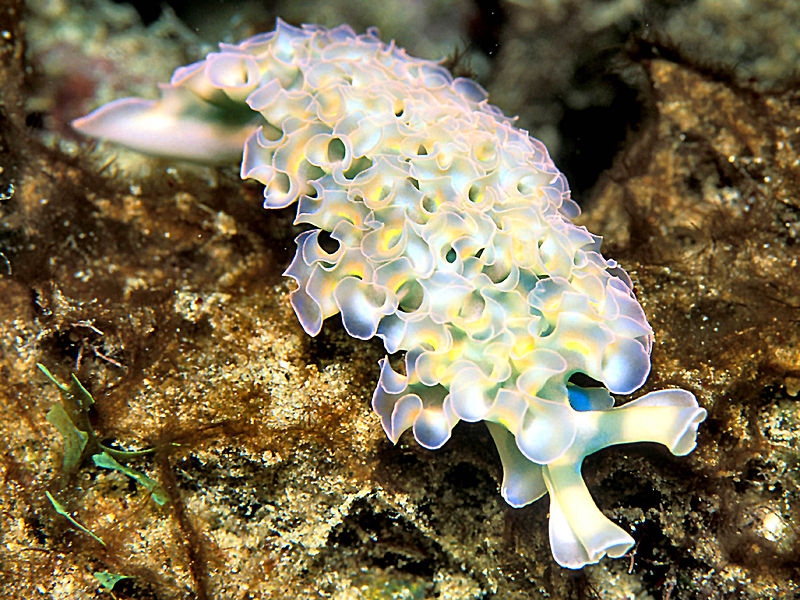
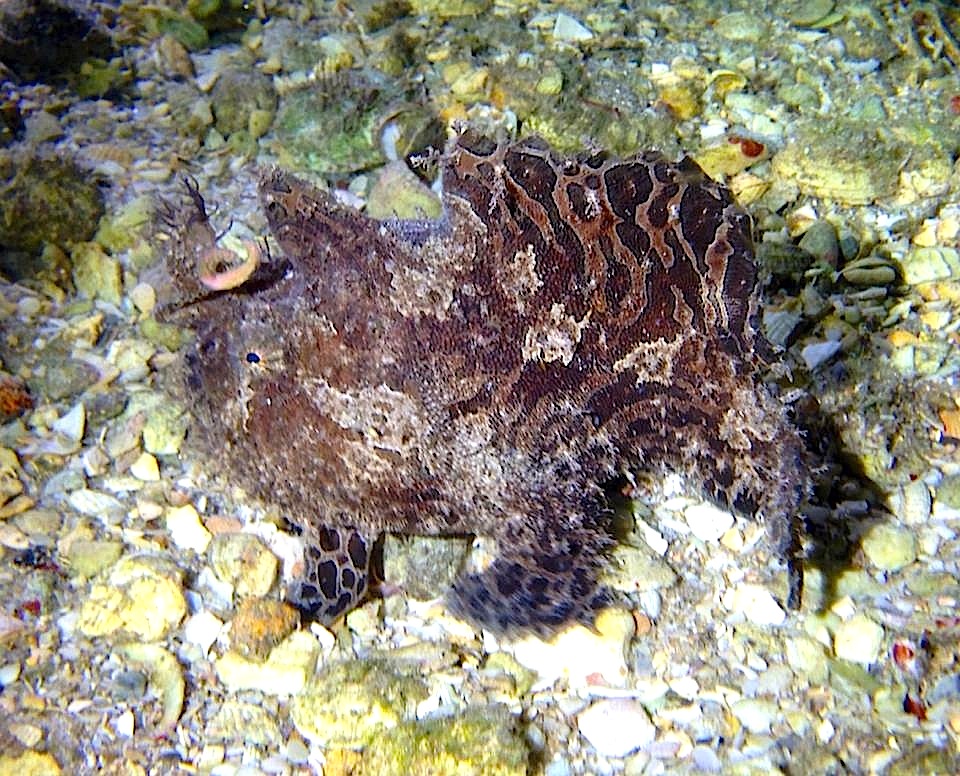
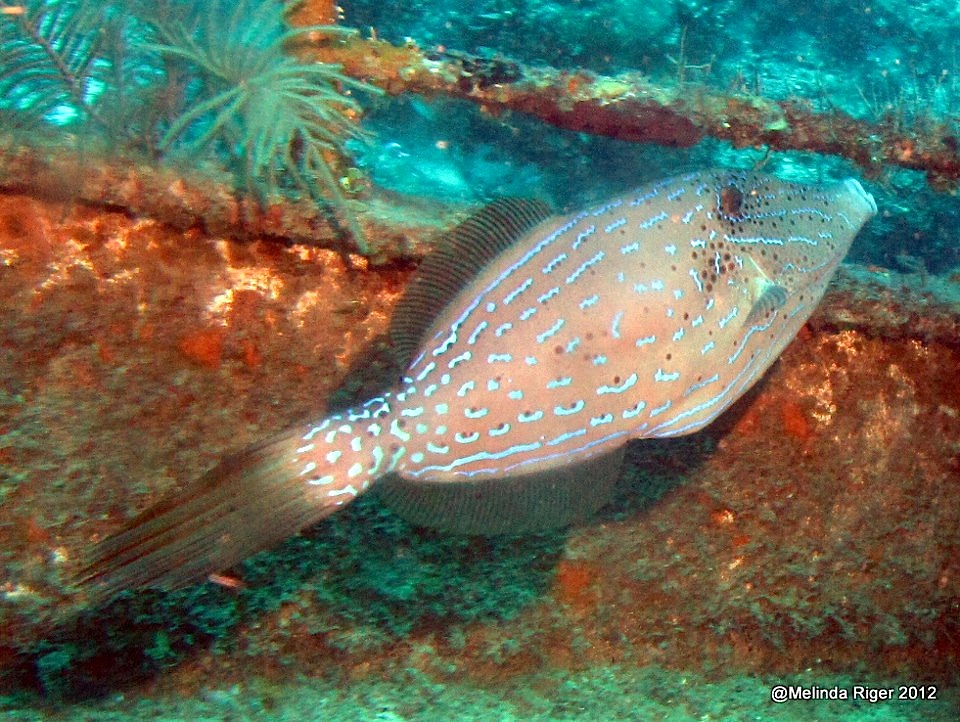
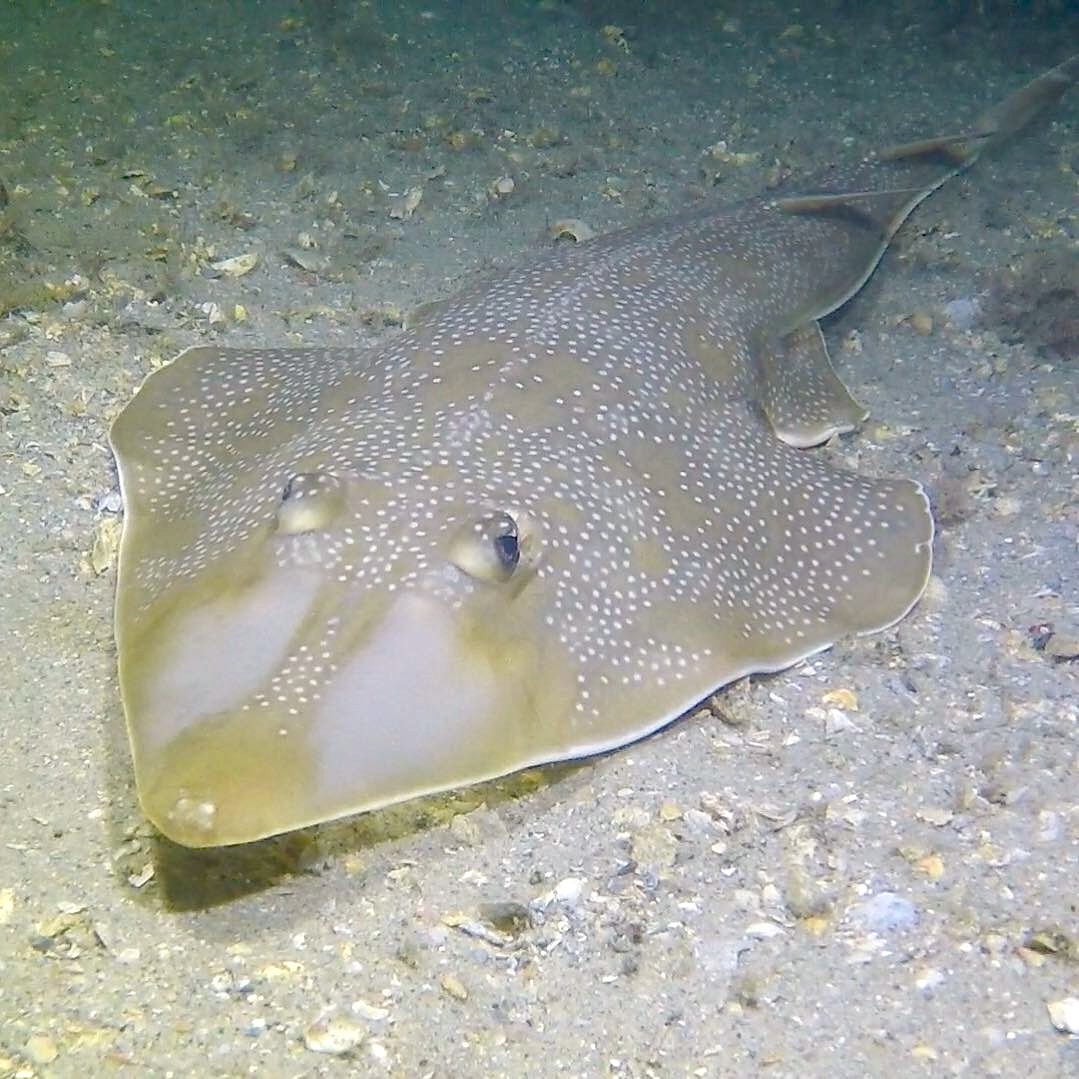
This ‘WTF?’ series started with a relatively conventional species, the REMORA. It has been getting progressively more bizarre. We moved onto an omnium gatherum of WEIRDO FISHES, then the remarkable LETTUCE SEA SLUG, and most recently the BATFISH. Time to ramp up the stakes: with many thanks to scuba expert Adam Rees for use permission for his terrific photos, I present… the FROGFISH.
The frogfish is a kind of anglerfish found in almost all tropical and subtropical oceans and seas. There are about 50 different species worldwide, covering an astonishing range of strange appearances. They generally live on the sea floor around coral or rock reefs. In size they vary from tiny to about 15 inches long – although ‘long’ is a flexible concept because they are to an extent shape-changers in height and width.
FROGFISH SUPERPOWERS YOU MAY WISH TO HAVE
INVISIBILITY CLOAK . Frogfish are masters of disguise and camouflage. This enables them to catch their prey with minimal effort and also to avoid predators. Their camouflage methods – broadly known as ‘aggressive mimicry’ – include
Ability to change colour for days or even weeks to mimic their surroundings
Getting covered in algae and other organic matter that matches their habitat or
Looking inherently like a plump rock or in some cases, plant
Fear for the life of the spider crab…
IRRESISTIBLE ATTRACTION
A sort of frontal dorsal fin called an illicium to which is attached a
Lure called an esca which may mimic a worm, shrimp or small fish etc and which is
Retractable in many species and
Regenerates if it gets mislaid
The ‘dollop of cream’ thing is the esca. Note the characteristic large mouth
Spot the esca…
BUOYANCY CONTROL & SHAPE-SHIFTING
Most frogfish have a ‘gas bladder’ to control their buoyancy.
Some species can change shape or even inflate themselves by sucking in quantities of water in a so-called defensive ‘threat display’.
HOW DO FROGFISH REPRODUCE?
Although not conventionally attractive creatures, frogfish clearly manage to reproduce. Little is known about the techniques in the wild, but one is probably ‘with care’, especially for a male frogfish who may not survive for long if he hangs around after fertilisation has taken place. It has been noted that females tend to select far smaller males to fertilise their huge numbers of eggs, perhaps for that very reason.
FROGFISH FEEDING SKILLS – GOOD OR BAD?
When deploying the lure, potential prey that comes too close to that wide mouth stands no chance. A frogfish will strike in a fraction of a second. Frogfishes have voracious appetites for crustaceans, other fish, and even each other. I can do no better than borrow this vivid description of a feeding frogfish:
“When potential prey is first spotted, the frogfish follows it with its eyes. Then, when it approaches within roughly seven body-lengths, the frogfish begins to move its illicium in such a way that the esca mimics the motions of the animal it resembles. As the prey approaches, the frogfish slowly moves to prepare for its attack; sometimes this involves approaching the prey or “stalking” while sometimes it is simply adjusting its mouth angle. The catch itself is made by the sudden opening of the jaws, which enlarges the volume of the mouth cavity up to twelve-fold, pulling the prey into the mouth along with water. The attack can be as fast as 6 milliseconds. The water flows out through the gills, while the prey is swallowed and the oesophagus closed with a special muscle to keep the victim from escaping. In addition to expanding their mouths, frogfish can also expand their stomachs to swallow animals up to twice their size.“
HOW DO FROGFISHES GET AROUND? SWIM? WALK? CRAWL?
Frogfishes do not in fact move around a great deal. Using their camo advantages, they prefer to lie on the sea floor and wait for prey to come to them. As mentioned in the quote above, they may slowly approach prey using their pectoral and pelvic fins to “walk” along the sea bottom. They can swim using their tail fin (or in some species by simple ‘jet propulsion’ by forcing water out of their gills) but rarely do so – they don’t feed on the move, and they are adapted to the sea floor environment where they food is readily available. However their “walking” ability is limited to short distances.
DO FROGFISH HAVE OTHER COLOUR SCHEMES?
Indeed they do. In stark contrast to the camo species, some frogfishes are highlighter bright. Here are two of my favourite photos by Adam that show this clearly. I’ve no idea if these are a male and female. I suspect they are different species. I think the brown one is a striated frogfish and the other is… a yellow frogfish. Some people keep these creatures in aquaria, but apparently it is impossible to sex them, and they have to be kept on their own for everyone’s peace of mind…
FROGFISH INFOGRAPHICS
FROGFISH VIDEOS
These two videos, from Lester Knutsen and Daan Van Wijk respectively, show some of the characteristics I have written about above. Both are short and both are fascinating.
To read more about frogfishes and for some fabulous photos I highly recommend the websiteFROGFISH.CHYou can reach the main page(s) but the link seem to be broken so I have not been able to contact Teresa Zubi, whose site it is. She clearly has a sense of humour and uses a neat pair of gifs which I hope she won’t mind my using…
Credits: All main photos, Adam Rees of Scuba Works with many thanks; wiki for ‘spot the esca’, red quote & basic info; videos Lester Knutsen & Daan Van Wijk; Teresa Zubi for website & gifs; infographics, authors u/k
After many decades of the savage depletion of the global whale population, the tide turned in their favour in the 1960s. It was fair to assume that, gradually, a new era of cetacean recovery must follow and that whales would be accorded the respect they deserve. Over time, many organisations were formed with the specific aim of protecting and conserving marine mammals, theBahamas Marine Mammal Research Organisation (BMMRO)based on Abaco among them.
The struggle to fulfil that aim in the face of entirely man-made environmental damage has become increasingly difficult. However, there have more recently been encouraging reports of population recovery in some seas, a good reason to celebrate WORLD WHALE DAY and to consider supporting the many organisations that work to preserve marine mammals.
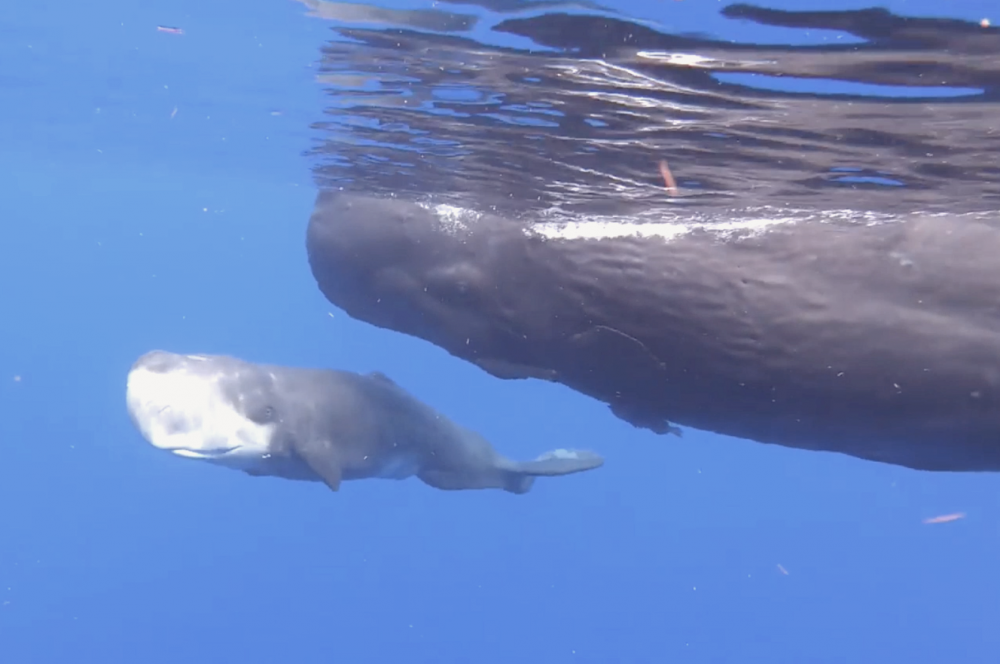
The photographs and the 2 very moving videos below are of an adult sperm whale and new-born calf. They were taken by BMMRO in Bahamas waters. There’s optimism in these images. I’d like to think that a smiling baby whale holds out hope for the future. Hopefully it will flourish and live for decades. If it does not, the overwhelmingly likely cause will be mankind, either directly or indirectly.
CREDITS: Close-up footage plus the clips I have taken from it – Charlotte Dunn / Diane Claridge / BMMRO
DONATE: If you are touched by the magic of this little Bahamas sperm whale, may I invite you to consider making a donation to BMMRO for its research and conservation work – a scientific commitment that reaches far beyond the waters of the Bahamas. The system is set up to process donations from just $10 upwards, and every cent is used to further the work of BMMRO. Please click the logo below to reach the right page directly.
You must be logged in to post a comment.