Unknown's avatar

SEABIRDS, SHOREBIRDS & WADERS: 30 WAYS TO DISTINGUISH THEM


Sanderling Trio, Delphi Beach, Abaco (Keith Salvesen) 5

SEABIRDS, SHOREBIRDS & WADERS: 30 WAYS TO DISTINGUISH THEM 

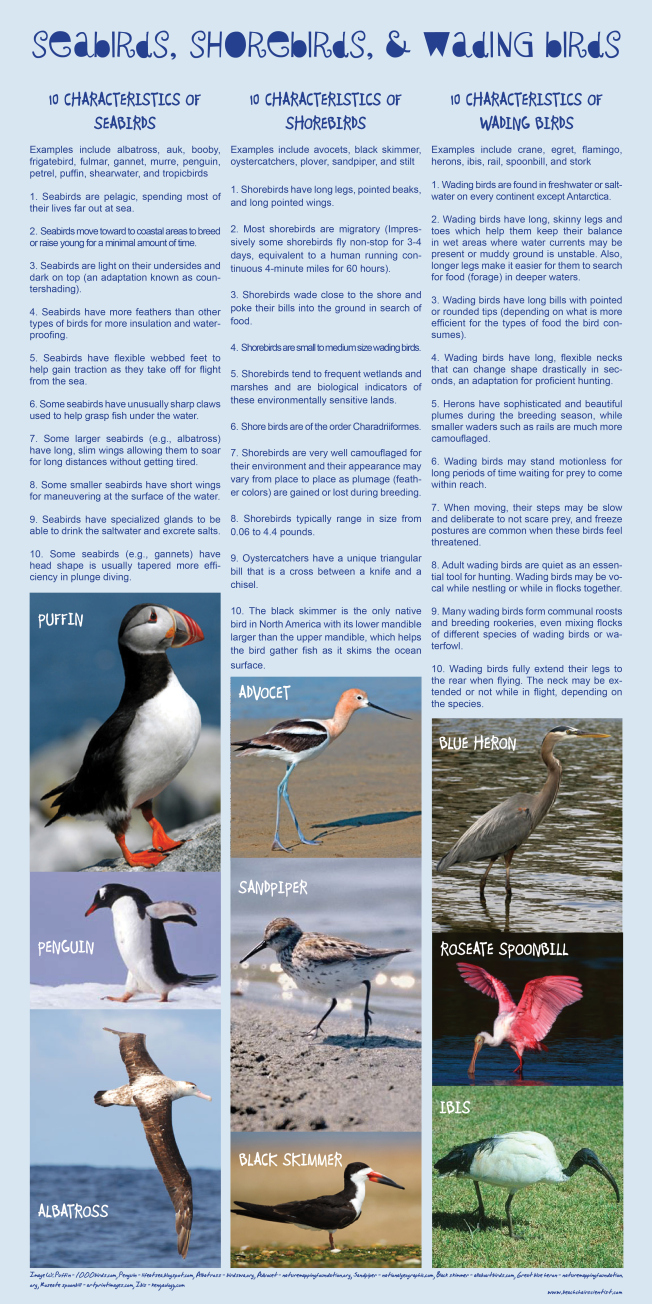
While putting together “The Birds of Abaco” I looked at and archived hundreds of photos of birds, many with aquatic or semi-aquatic lives. These can be broadly categorised as seabirds, shorebirds or wading birds. But with some bird breeds, there can be doubt as to which category applies (and in different parts of the world the categories themselves may be named differently). There is the strict Linnaean ordering of course, but in practice there is a degree of informal category overlap and some variation in the various bird guides. This is especially so between shorebirds and the smaller wading birds. Shorebirds may wade, and wading birds may be found on shores. Then I remembered a past blog post by the estimable BEACH CHAIR SCIENTIST that I thought deserved another outing here. Even if you have no problem distinguishing birds in the 3 categories, there are avian characteristics within each list that are interesting observations in themselves. 

10 CHARACTERISTICS OF SEABIRDS 
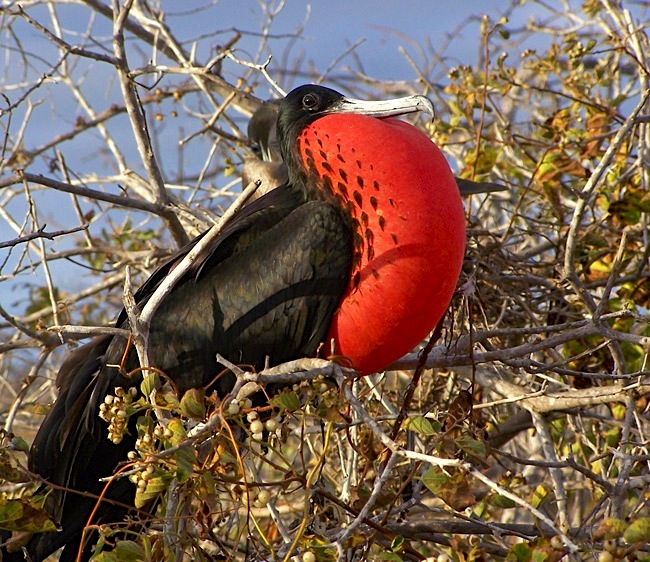
Magnificent Frigatebird (inflated-throat) (Michael Vaughan)

(Examples include albatross, auk, booby, frigatebird, fulmar, gannet, penguin, petrel, puffin, shearwater, and tropicbirds)

1. Seabirds are pelagic, spending most of their lives far out at sea.
2. Seabirds move toward to coastal areas to breed or raise young for a minimal amount of time.
3. Seabirds are light on their undersides and dark on top (an adaptation known as countershading).
4. Seabirds have more feathers than other types of birds for more insulation and waterproofing.
5. Seabirds have flexible webbed feet to help gain traction as they take off for flight from the sea.
6. Some seabirds have unusually sharp claws used to help grasp fish under the water.
7. Some larger seabirds (e.g. albatross) have long, slim wings allowing them to soar for long distances without getting tired.
8. Some smaller seabirds have short wings for maneuvering at the surface of the water.
9. Seabirds have specialized glands to be able to drink the saltwater and excrete salts.
10. Some seabirds (e.g. gannets) have a head shape that is usually tapered for more efficiency in plunge diving.

10 CHARACTERISTICS OF SHOREBIRDS 

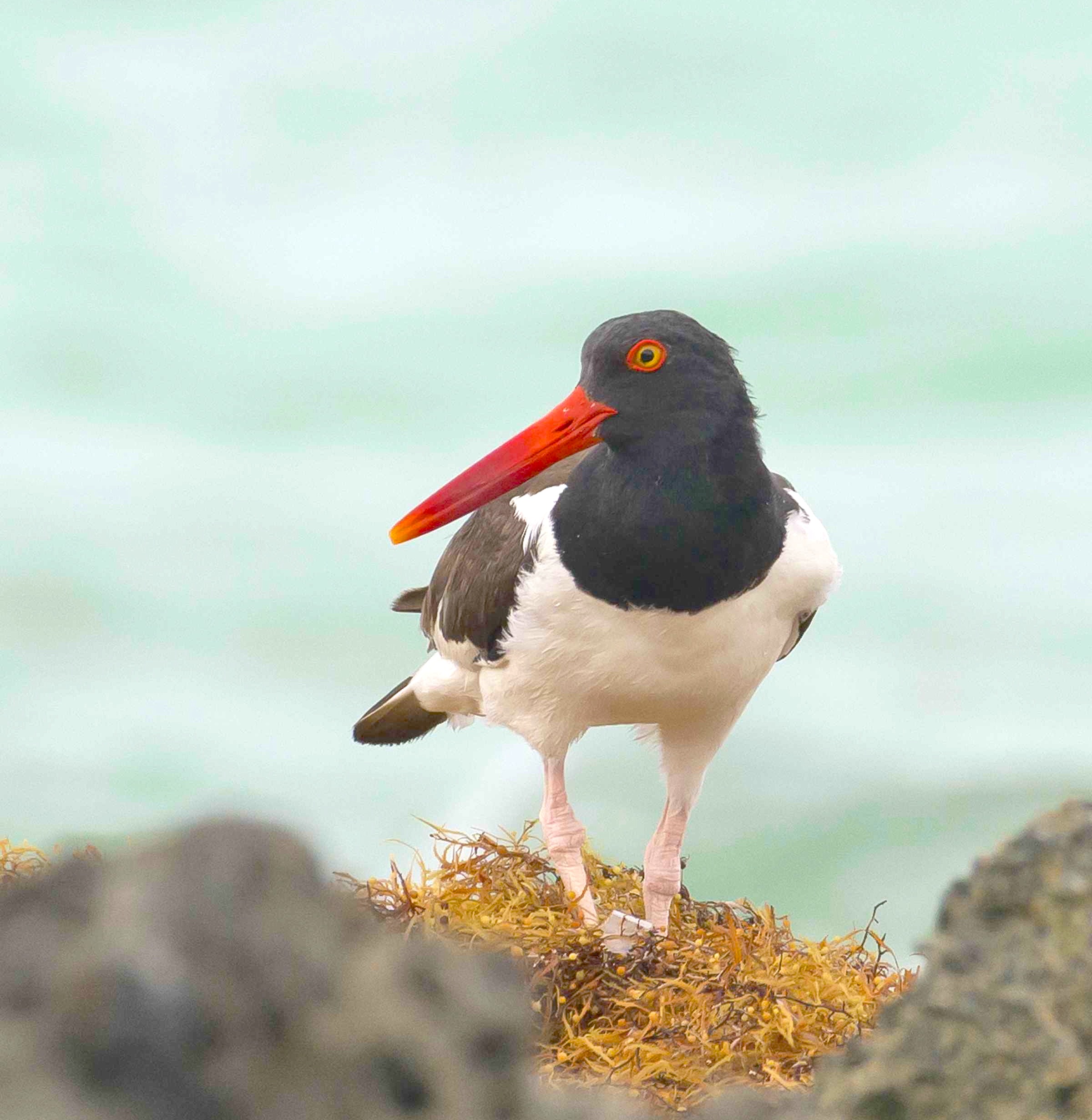
American Oystercatcher, Delphi, Abaco (Tom Sheley)

(Examples include avocet, black skimmer, oystercatcher, plover, sandpiper, and stilt)

1. Shorebirds have long legs, pointed beaks, and long pointed wings.
2. Most shorebirds are migratory (impressively, some shorebirds fly non-stop for 3-4 days, equivalent to a human running continuous 4-minute miles for 60 hours).
3. Shorebirds wade close to the shore and poke their bills into the ground in search of food.
4. Shorebirds are small to medium size wading birds.
5. Shorebirds tend to frequent wetlands and marshes and are biological indicators of these environmentally sensitive lands.
6. Shore birds are of the order Charadriiformes.
7. Shorebirds are very well camouflaged for their environment and their appearance may vary from place to place as plumage (feather colors) are gained or lost during breeding.
8. Shorebirds typically range in size from 0.06 to 4.4 pounds.
9. Oystercatchers have a unique triangular bill that is a cross between a knife and a chisel.
10. The black skimmer is the only native bird in North America with its lower mandible larger than the upper mandible, which helps the bird gather fish as it skims the ocean surface.

10 CHARACTERISTICS OF WADING BIRDS 

Great Egret, Abaco - Tom Sheley

(Examples include crane, egret, flamingo, herons, ibis, rail, spoonbill, and stork)

1. Wading birds are found in freshwater or saltwater on every continent except Antarctica.
2. Wading birds have long, skinny legs and toes which help them keep their balance in wet areas where water currents may be present or muddy ground is unstable. Also, longer legs make it easier for them to search for food (forage) in deeper waters.
3. Wading birds have long bills with pointed or rounded tips (depending on what is more efficient for the types of food the bird consumes).
4. Wading birds have long, flexible necks that can change shape drastically in seconds, an adaptation for proficient hunting.
5. Herons have sophisticated and beautiful plumes during the breeding season, while smaller waders such as rails are much more camouflaged.
6. Wading birds may stand motionless for long periods of time waiting for prey to come within reach.
7. When moving, their steps may be slow and deliberate to not scare prey, and freeze postures are common when these birds feel threatened.
8. Adult wading birds are quiet as an essential tool for hunting. Wading birds may be vocal while nestling or while in flocks together.
9. Many wading birds form communal roosts and breeding rookeries, even mixing flocks of different species of wading birds or waterfowl.
10. Wading birds fully extend their legs to the rear when flying. The neck may be extended or not while in flight, depending on the species.

These lists were put together in useful chart form. Please check with BCS (link above) if you want to ‘borrow’ itseabird shorebird wading bird chart ©beachchairscientistImage Credits: Table – ©Beach Chair Scientist; Pics – Keith Salvesen, Michael Vaughn, Tom Sheley
Unknown's avatar

WTF? (WHAT’S THAT FISH?) 11: STARGAZER FISH


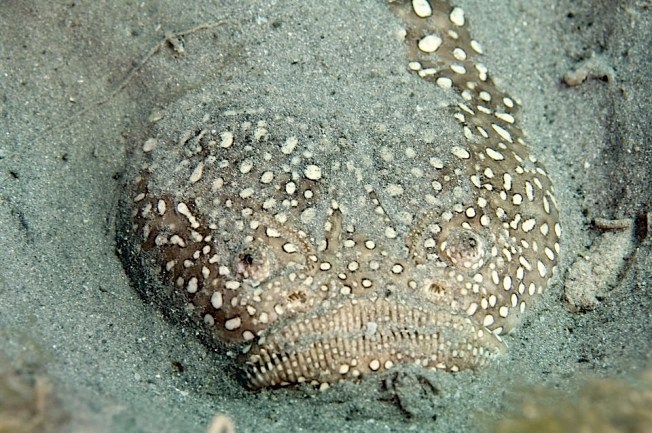
Star Gazer fish (Adam Rees : Scuba Works)

WTF? (WHAT’S THAT FISH?): STARGAZER FISH

It’s a real shocker! This fish is a serious contender. An A-list horror-fish. The WTF? series has featured some extraordinary, bizarre and frankly unbelievable fish species. Here’s one that might just blow them all out of the water. So to speak. Not only is this fish weird in a number of respects, but it is also dangerous. Behind its eyes it has a special ‘electric organ’ (a “Hammond”?**) that produces a shock when touched. Oh for a superpower like that, even if only to be used defensively. 

“They’re the meanest things in creation,” fish scientist William Leo Smith, who owns a stargazer, told the New York Times. “I was so excited to get it. It’s the worst pet on earth.”

‘Fish out of water’. Note (but do not touch) the area behind its eyes…Northern_Stargazer (Canvasman21 wiki)

The Northern Stargazer Astroscopus guttatus whiles away the long lazy days lying mostly buried by sand, the stargazy eyes on top of its head picking out prey – mostly small fish – to ambush and stuff into its bizarre YKK zip-mouth. It can bury itself in seconds. An adult stargazer may grow to nearly 2-foot of concealed eating machine. They will stay put unless disturbed, confident that a false move by a creature – it could be you in your flippers – will mean it will be in for a shock. 

201408040721421059060930

10 STARGAZER ATTRIBUTES TO ADMIRE (BESIDES THE ELECTRIC SHOCKS)

  • The strange mouth looks as it does because it is fringed to keep out sand
  • The head-top eyes can be made to protrude to allow a wider field of vision 
  • It ambushes small fish and swallows them whole (see video below)
  • To lure prey, stargazers discharge seawater through their gills… (Alert Reader: why?)
  • It stirs up sand – possible lunch is waiting for a fish further up the food chain to enjoy
  • They are born with their eyes on side of the head (Alert Reader: why?)
  • Their eyes move to the top of the head as they grow from the larval stage
  • They are content to be solitary, except in the Spring (for the usual reasons)
  • Apparently little is known about the mating behaviours of these creatures. A pity, I feel.
  • They have no scales, but they make up for that with an impressive 13 anal spines
  • Unimpressed? Well they also have venomous spines near their gills & above their pectoral fins

stargazer-fish.jpg.653x0_q80_crop-smart

WEIRD FISH – AND WHAT’S WITH THE WEIRD NAME?

I wondered that too. The Astroscopus part derives from the Greek, ‘astro’ (star) and Latin ‘scopus’, a conceptual noun combining watching and targeting – think ‘telescope’, or ‘far-target-watching’. The guttatus (L) part simply means spotted or speckled. A Homo guttatus may need mild medical attention.

Stargazer clip (Wideangl)

THOSE ELECTRIC SHOCKS – HOW BAD ARE THEY?

Well. I kinda knew you’d ask so I looked into it. According to the exceptionally cool ‘Monsters of the Deep’ (see credits), the stargazer shock is approximately 50 volts. The British Health and Safety Executive, whose job is normally to interfere with almost every aspect of daily life in the UK (“you are strongly advised not to drink from bottles marked ‘Rat Poison’ portraying a Skull & Crossbones motif, lest disappointment should result”) has assisted: 

A voltage as low as 50 volts applied between two parts of the human body causes a current to flow that can block the electrical signals between the brain and the muscles. This may have a number of effects including: stopping the heart beating properly; preventing the person from breathing; causing muscle spasms.

The exact effect is dependent upon a large number of things including the size of the voltage, which parts of the body are involved, how damp the person is, and the length of time the current flows.

Sadly, you are quite unlikely to find a stargazer in Abaco waters, which lie slightly beyond their fairly limited western Atlantic range. But hop over to Floridian waters, move a bit north, and you might meet one.

**A musical instrument allusion

Credits: Adam Rees / Scuba Works; Canvasmas21 wiki; Nat Geo Kids;  MONSTERS OF THE DEEP (cool underwater site to check out!); Casey Patton / FMNH; Mother Nature Network (inc for video); Wideangl (clip)

Unknown's avatar

THE BAHAMAS: A STAMPING GROUND FOR DOLPHINS


Dolphin leaping, Abaco (BMMRO)

THE BAHAMAS: A STAMPING GROUND FOR DOLPHINS

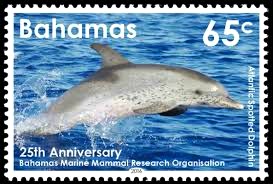
I have commented before on the excellent wildlife stamps produced by the Bahamas Philatelic Bureau, and there is a fairly comprehensive page featuring many of the special issues HERE. Recently, dolphins were treated to their own set of stamps, in conjunction with the BMMRO (Bahamas Marine Mammal Research Organisation).  Four dolphin species are showcased, with a fifth species (Risso’s Dolphin) shown on the commemorative Official First Day Cover (replete with the BMMRO logo). The release date was 31 March 2016.

Bahamas Dolphin Stamps 2016

l_bmmro 25th ann_20160304134635-1

The stamps are available as sets of 4 or of course individually. In a newsletter earlier this year, the BMMRO included some fascinating information about their valuable work – in particular with whales – and about the individual dolphin species featured in this very special philatelic issue. This was also published by the stamp producers, Pobjoy Mint Stamp Division.

BMMRO is a Bahamian non-profit organisation whose mission is to promote the conservation of marine mammals in The Bahamas through scientific research and educational outreach. Since 1991, BMMRO has been conducting small vessel surveys primarily around Abaco Island to document the occurrence, distribution and abundance of marine mammals in The Bahamas.

imgres-3

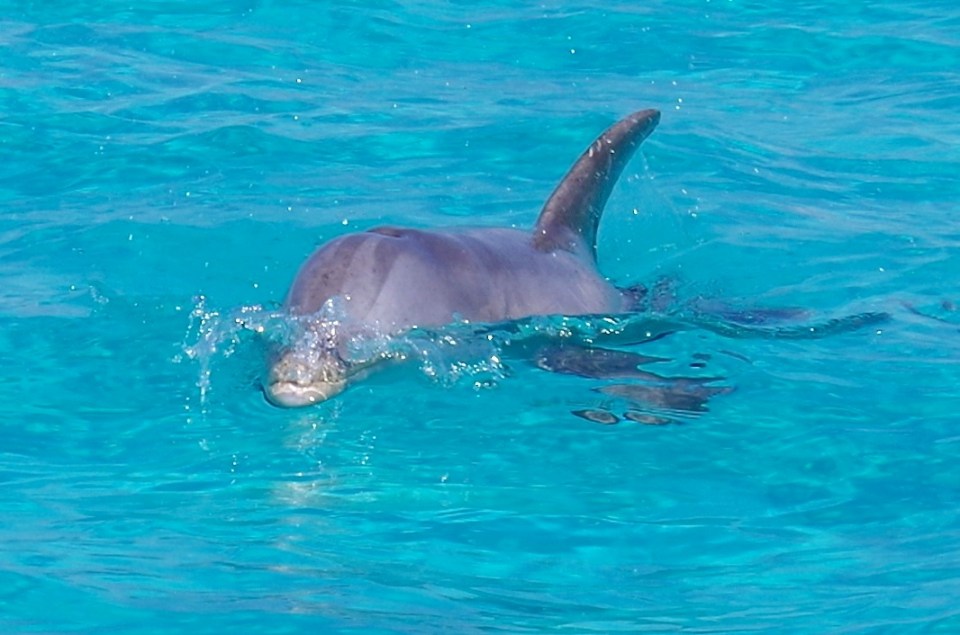
BOTTLENOSE DOLPHINS Tursiops truncatus

These are the most common marine mammals seen on the Bahama banks. It should be noted, however, that there are at least two distinct “breeding populations” or “ecotypes” of this species: coastal bottlenose dolphins that inhabit the shallow waters of the banks; and oceanic bottlenose dolphins found in pelagic waters. These populations diverged genetically several hundred thousand years ago and have since developed different physiological adaptations to their respective marine environments. The coastal ecotype is smaller in length reaching just over 8 feet and has a relatively larger dorsal fin and pectoral fins which helps them to maneuver more readily around rocks and reefs to catch fish, and to regulate their internal body temperature (the temperature of the shallow Bank waters fluctuates much more than the deeper Atlantic Ocean). The coastal dolphins do not travel much beyond the bank edge and live in small resident communities. The deeper diving oceanic ecotype can reach 10 feet or more in length, are usually seen in larger groups and appear to have a more extensive range with movements documented between Abaco, Bimini and Exuma Sound.

imgres-4

ATLANTIC SPOTTED DOLPHINS Stenella frontalis

These dolphins are not born with spots, but actually accumulate them as they mature, becoming quite mottled-looking as adults. Hence, young spotted dolphins are often confused with bottlenose dolphins, and sometimes the two species will interact, which adds to the confusion. Although they can reach almost the same length as bottlenose dolphins, they have a smaller girth and thus body weight. Atlantic spotted dolphins are a year-round resident species in The Bahamas. Individuals photo-identified 20 years ago in Abaco can still be seen in the same areas today. They are commonly seen in groups of 20-50 dolphins in the oceanic waters where they feed on flying fish and squid, and rarely venture on to the bank. However, along the western edges of Little and Great Bahama Banks this species can regularly be found on the bank during the daytime where they come to rest and socialise.

imgres-5

PANTROPICAL SPOTTED DOLPHINS Stenella attenuata

This species is more slender in body shape than Atlantic spotted dolphins, and also have a distinctive dark dorsal cape, which sweeps from their rostrum to behind their dorsal fin. Like Atlantic spotted dolphins, they accumulate their spots with age, which allows researchers to readily document age-classes within groups. This species is strictly oceanic in its distribution. Pantropical spotted dolphins are not as frequently sighted as Atlantic spotted dolphins in The Bahamas. They occur in groups of 50-100 dolphins and are often seen engaging in acrobatics, such as making high leaps out of the water, and bow-riding.

imgres-6

ROUGH-TOOTHED DOLPHINS Steno bredanensis

These dolphins are dark grey in colour with a long beak and prominent white lips. Their lower jaw and belly can sometimes be a pinkish colour. They reach just over 8 feet in length. They are an oceanic species and although appear to be rare in some parts of The Bahamas, can be regularly seen in the Tongue of the Ocean where they occur year round. Some individuals have been re-sighted in this area over the past ten years. They are typically found in groups of about 20 animals, but are sometimes in larger mixed-species aggregations of several hundred dolphins.

Risso's Dolphin - BMMRONot on a stamp but shown on the First Day Cover

RISSO’S DOLPHIN Grampus griseus

These are large light grey dolphins that can reach over 13 feet in length, and have a relatively tall, dark dorsal fin. Adults are typically covered with overlapping white scars caused by the teeth of their con-specifics making them look quite battered. They have a rounded head, lacking a beak, but have a deep vertical crease down the center of the forehead. As they mature, their forehead becomes prominently white, and as such they are one of the easiest species to recognize at sea. Risso’s dolphins are commonly seen in oceanic waters in the northern Bahamas each winter and spring, primarily on the Atlantic side of the islands. It is unknown where these groups range the rest of the year, but some individuals have been seen off Abaco repeatedly over the years.

RELATED POSTS

BAHAMAS WILDLIFE STAMPS PAGE

PHILATELY WILL GET YOU…

ABACO BIRD STAMPS

Bottlenose Dolphins, Rocky Point, Abaco (Keith Salvesen : BMMRO) 7

Credits: BMMRO for relevant text & images except last (RH), Pobjoy Mint, Bahamas Philatelic Bureau

Unknown's avatar

SMALL CHANGE THAT MAKES A DIFFERENCE: BAHAMAS COINAGE


Abaco Parrot coin jpg

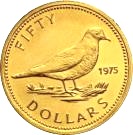
‘Bahama Parrot’ 1975 Flora & Fauna Colour Coin issue

SMALL CHANGE THAT MAKES A DIFFERENCE: BAHAMAS COINAGE

Some time ago I did a series of posts about the lively and colourful wildlife stamps produced by the Bahamas Postal Service and its Philatelic Bureau, with numerous special editions over recent years featuring  birds, reef fish, butterflies, flowers and much more besides. In due course I amalgamated the posts into a dedicated stamp page – click link STAMPS

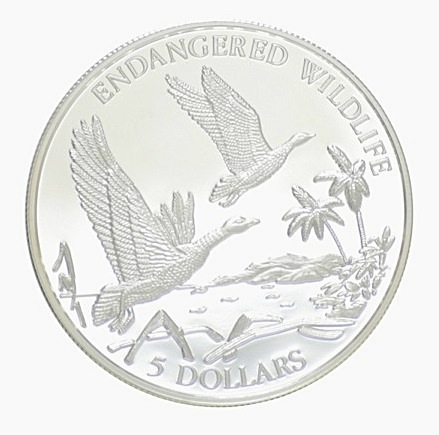
Whistling Ducks 1994  for Endangered WildlifeWhistling duck coin jpg

I have a vague theory that a country or government’s interest in the wildlife (and in the protection of it) that is enjoyed by its citizens can be measured by the quality of its stamp issues. Almost all countries must have stamps, and those that choose to celebrate their natural history on them deserve a cheer. The Bahamas has definitely taken the initiative.

Brown Pelican on Coat of Arms 1998Pelican coin JPG

I’ve now found a new example of my stamp theory – national coinage. And again the Bahamas has taken the lead, producing plenty of coins featuring natural history both before, since and in honour of Independence. Earlier this week I found one of the recent 10c bonefish coins lying bright and shiny in a drawer. Then I thought about some of the other coins – the flamingos, the starfish, the conch and so forth. The result is the first of three posts about the small change you have in your pocket – the coins your use every day (except maybe the very high value ones, like the $100 ‘Independence’ parrot below) – starting with an avian theme.

Cuban Parrot for Independence 1973
images-1

Bahamas coinage is regulated and issued by The Central Bank of the Bahamas. In 1966, a ‘Numismatic Coin Programme’ was initiated through the banking department with the issuing of two specimen silver sets: a 7-coin and 9-coin set designed by a British artist Arnold Machin. These sets, being pre-Independence, were minted by the Royal Mint of London.

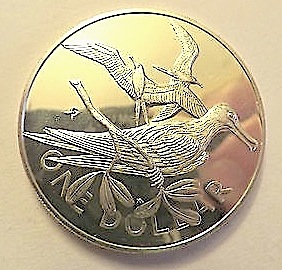
Magnificent Frigatebirds 19731973 Commonwealth of the Bahamas Proof Dollar

The NCP is responsible for many of the flashy ‘special editions’. As their website puts it: “Generally, proof/non-proof Gold and Silver commemorative coins are produced in collaboration with a promoter for sale to coin dealers and numismatists. In fact, many of the coin programmes commemorate events of both national and international significance, such as Bahamian Independence, the Olympic Games, the 500th Anniversary of Columbus’ discovery of the New World, the World Cup; and have featured various wildlife themes.”

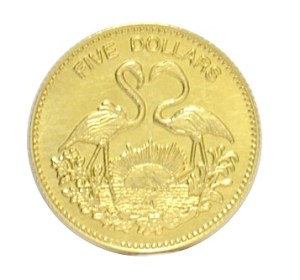
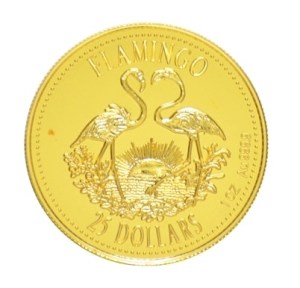
Sometimes coins featuring a particular bird will change either by having the design updated; or because a different value ‘flamingo’ is issued; or because the metal content (which directly relates to the value) is changed. A special high value gold coin may be struck, for example, with the design used for a lower value silver coin with the same or similar design. Here are some flamingo-based examples.

                              $2 undated                                                   $2 dated
Flamingos silver coin JPG

s-l225-7

$5                                                                 $25

Flamingos gold coin JPGFlamingo gold coin JPG

$50 1973 Independence

images-2

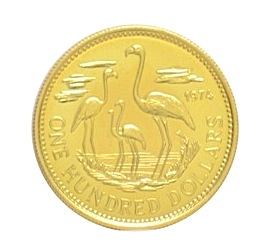
The coins above are all based on a ‘two-flamingos-facing-above-a-rising-sun’ design. However, for the big money $100 coin the design was changed to 4 flamingos and no sun…

$100 dollar, with more flamingos for your bucksFlamingo coin, gold JPG

The last bird coin is a bit of an oddity. The Bank issued this $50 in 1974 piece with the listing ‘White Crown Pigeon’. However, it may look to you more like a Common Ground (Tobacco) Dove. That’s certainly how others have listed it. Comments welcome…

White-crowned Pigeon? Or Tobacco Dove?

298White-crowned pigeon coin jpg

And just to prove that currency notes can feature wildlife effectively…images-4

Sources include Central Bank of the Bahamas / Numismatic Coin Programme site, Numista, and random open source material to get clear pics of coins (if anyone wants to contact me to claim a specific credit / get an eBay etc image expunged, please do so before issuing death threats or suing)

Unknown's avatar

ABACO’S MAJESTIC SUMMIT (134 ft asl) : ABACO LANDMARKS (2)


Matterhorn from Domhütte - 2.jpg

ABACO’S MAJESTIC SUMMIT (134 ft asl) : ABACO LANDMARKS (2)

The header photograph is in fact nothing to do with Abaco. Apologies for any confusion. You can put away your ice axe, crampons or skis. It’s the Matterhorn, towering over the border of Switzerland and Italy, complete with high altitude, year-round snow and sub-zero temperatures. Abaco has its own skiing, of course, but solely of the watery sort.

I was curious as to the exact location of Abaco’s highest point. There are a couple of rocky hills in the pine forests of South Abaco that I thought might be candidates. All sources I checked agreed that the altitude is a dizzying 134 feet, with some equating that with 40 metres and others with 41. It would be nit-picking to use the straight conversion of 40.8432 metres. I am that nit-picker.

A site called PEAKBAGGER is useful for such queries. Click on the link and it takes you to the Abaco entry; elsewhere on the site there is a mass of remarkable worldwide altitude information that you could easily spend an hour or 2 investigating.

EIGHT ESSENTIAL ABACO SUMMIT FACTS TO ASTOUND YOUR FRIENDS

  • Elevation: 41 meters / 134 feet
  • Name: “Unnamed High Point” [according to John Bethel, it is known locally as ‘Pidgeon Hill’]
  • Latitude/Longitude: 26° 34′ 6” N; 77° 8′ 14” W 26.568399, -77.137319
  • 3rd highest point in the Bahamas
  • 54th highest point in the Caribbean
  • 1014th highest island point in the world
  • Nearest high point is on Eleuthera
  • No ‘ascents’ by registered ‘Peakbaggers’ (this is now on my bucket-list for personal achievements – and it’s an easy start on the way to fame and the conquest of Everest).

THE PRECISE LOCATION OF ABACO’S HIGHEST POINT

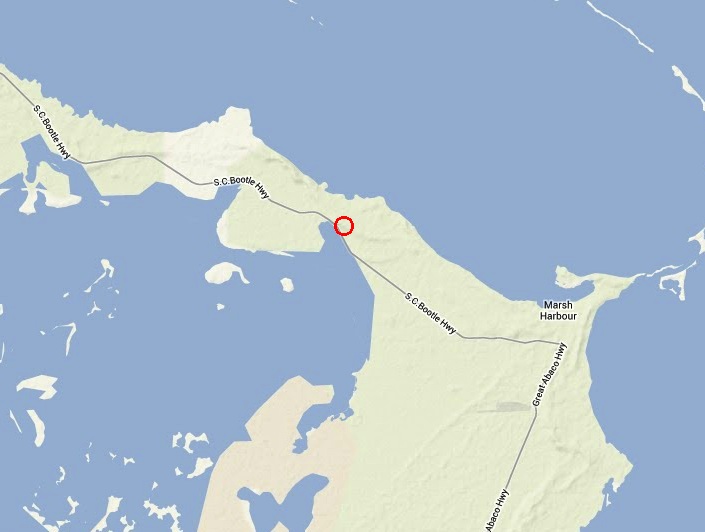
Peakbagger’s map places the high point close to the Highway north of Marsh Harbour. Although the land relief shown on the Peakbagger map suggests a higher ridge to the north-west of the red circle, it is in fact only 30 metres high.Abaco High Point Map 1

Quite a while back I contacted Sandy Estabrook, éminence grise behind the wonderful ABACO ESCAPE website. Within a very short time he got back to me with a clipping from a nautical map, confirming the high point’s location as the one given by Peakbagger. Abaco Nautical Chart

Far more importantly, it turned out that Sandy actually ascended the summit in 2009 with a friend and without oxygen. His expedition journal states simply:

“Heading South along Queens Hwy, Frank pointed out a hill on the Sea of Abaco side of the road. It had quite some elevation of over a hundred feet or more it seemed. I have not seen a higher place in all of Abaco. And atop the hill was a tower that I was told was built by real estate interests some years ago for prospective clients to view the surroundings. We climbed the tower and I took a couple pics”. 

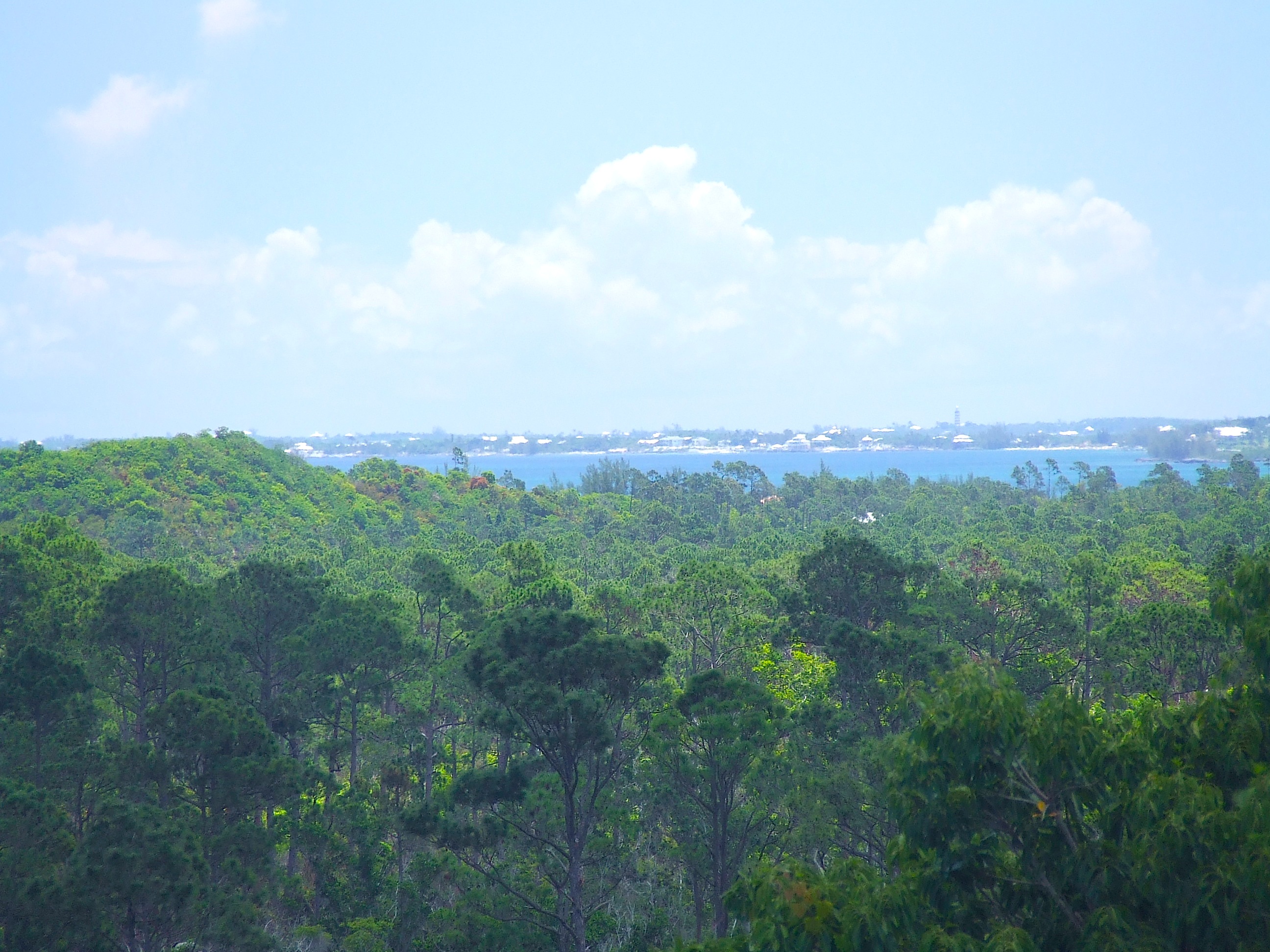
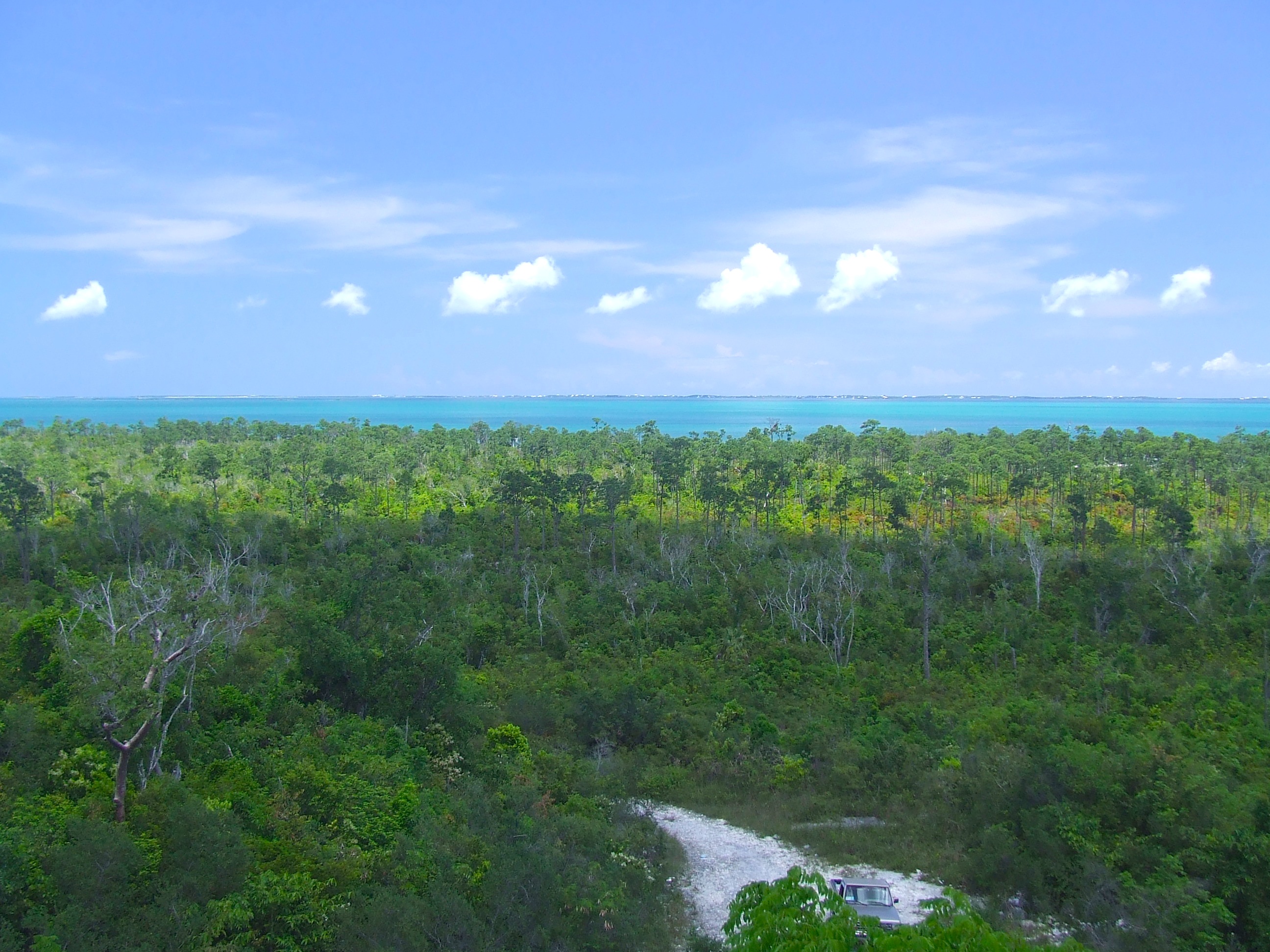
The tower will be familiar to travellers passing by on the Highway. I had read that this was a good place to look out for birds, and had assumed it was some sort of fire-watching tower. The use of a tower to scope out land for development is an ingenious one, but the landscape remains undeveloped. Here are some photos from the vantage point taken on Sandy’s expedition.

View roughly south-east from the tower to Hope Town. The lighthouse is visible to the right.Frank View from Tower 84 copy

Looking north-east, with Great Guana Cay just visible on the horizonFrank View from Tower 82 copy

The view north(ish) along the ridge, with the Highway snaking up to Treasure CayFrank View from Tower 83 copy

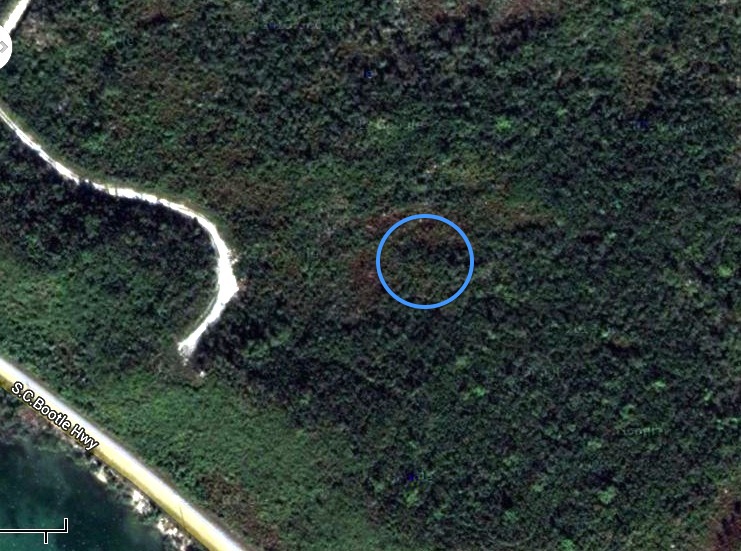
AERIAL VIEWSMount Abaco 5 copyMount Abaco 3 copy

WHERE IS BASE CAMP?

Turn east off the Highway and take the spur road to the right. Park at the wider area near the end. Prepare for a scramble up. If there is – or was – a path to the top, I expect it’s overgrown now, unless for some reason it has been cleared. And if anyone undertakes the challenge, it would be fun to post your account of the adventure plus views from the top – especially looking west.

Thanks to Sandy Estabrook and to Peakbagger

 Abaco Escape logoPeakbagger Logo

This is a rijig of a post I did in 2013, because it fits in with my new ‘Landmarks’ series. Also, I (luckily) have loads more followers these days. If there have been any significant changes to the location, I’d be pleased to hear and amend accordingly. And if there are any other local names for the hill, I’ll add them. 

Unknown's avatar

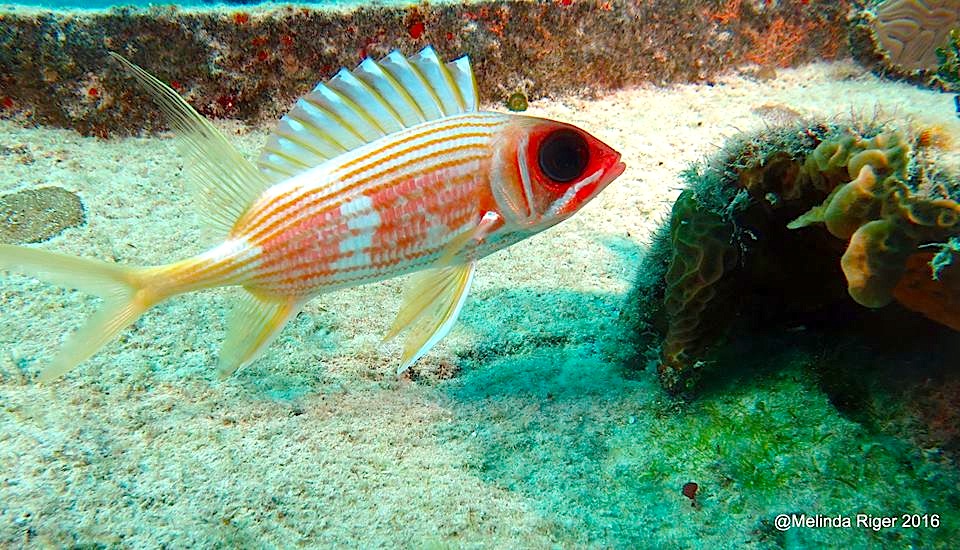
“CALLING ELVIS” (THE SQUIRRELFISH, NOT THE MAN)


Squirrelfish Elvis ©Melinda Riger @ G B Scuba

“CALLING ELVIS” (THE SQUIRRELFISH, NOT THE MAN)

How proud The King would be to know that his name lives on in the form of an attractive though sadly unmusical Bahamian squirrelfish. This little guy is at least 5 years old. What is more, he has lived at the same address all that time, defending it against usurpers and protecting himself from predators in its safe depths. Here is the loveable little Elvis photographed at home between 2012 and 2016 (header image), the master of his own underwater Graceland…

Squirrelfish (%22Elvis%22) ©Melinda Riger GB ScubaElvis the Squirrelfish ©Melinda Riger GB Scuba Squirrelfish ©Melinda Riger @ GB Scuba Squirrelfish ©Melinda Riger @ G B Scuba

The reason that Elvis has such large eyes is that these fish are mostly nocturnal, and (apart from when Melinda is out with her camera), he and his friends spend most of the day either at home, or in crevices, small rock caves, or under ledges. However, here are a couple of shots of Elvis out and about, enjoying some quality time among the corals.

Squirrelfish (Elvis) ©Melinda Riger @ Grand Bahama ScubaSquirrel Fish ©Melinda Riger @ G B Scuba

ROLLING HARBOUR MUSICAL DIGRESSION

I so wanted to add a specific Elvis catalogue ‘Musical Digression’, but try as I might, there is no title in The King’s discography that has any potential for finny nuance or piscine pun value. However, here’s a track from the now tragically unhip Dire Straits on their follow-up album to the phenomenal ‘Brothers-in-Arms’, the much under-rated ‘On Every Street’. I give you… Calling Elvis, a song that cunningly contains as many titles of Presley hits as anyone could ever wish for.

All images: Melinda Riger at Grand Bahama Scuba; cartoon from a sequence on the excellent BCCR Defenses page – learn about camouflage and other fishy self-protection techniques

Nocturnal squirrelfish checks out a parrotfish’s sleeping arrangementscamoSquirrWparrot01

Unknown's avatar

CHEROKEE LONG DOCK: ABACO LANDMARKS (1)


Cherokee Long Dock Aerial (David Rees)

CHEROKEE LONG DOCK: ABACO LANDMARKS (1)

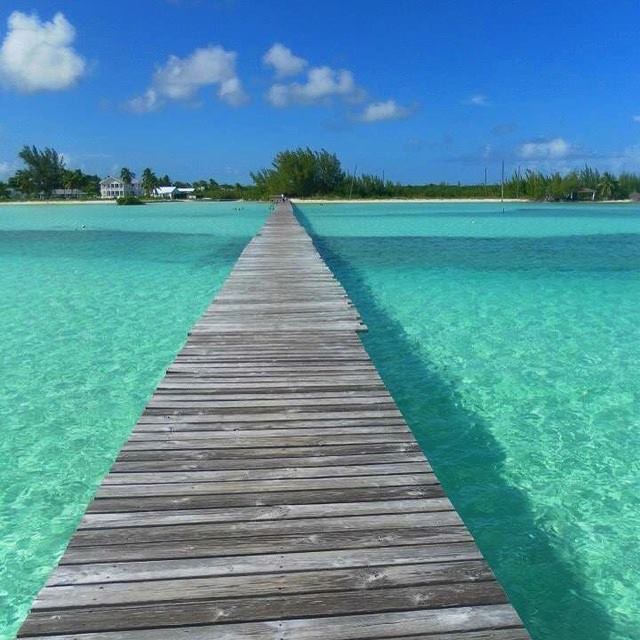
Cherokee Long Dock has a significant claim to prominence on an Island that has, with its Cays, a good few docks to admire. The impressive 770 foot wooden dock is the longest wooden dock in the Commonwealth of the Bahamas, as its plaque proudly proclaims. The waters of Cherokee Sound are very shallow in places, and as the tides retreat, so sandbanks appear and the rest is barely covered by the sea. Hence the need arose for a very long dock to serve the very small community of Cherokee.

Cherokee Long Dock, Abaco, Bahamas (Larry Towning 1)Cherokee Long Dock, Abaco, Bahamas (Larry Towning 2)

Before the roads were built – in relatively recent memory – Cherokee was an isolated settlement. There was a shortcut connection by boat to a now-abandoned dock at the nearest community, Casuarina, across the Sound. However, non-tide-dependent access from the open sea was vital for supply boats and mail boats. Access to the sea was needed by the fishermen.

Cherokee Long Dock 4 (Amanda Diedrick) Cherokee Long Dock 2a (Amanda Diedrick) Cherokee Long Dock 1 (Amanda Diedrieck) jpg

The plaque documents the history of the dock, the damage inflicted by hurricanes, and the ‘countless hours of labour’ by local people- ‘men, women and children’ – to preserve the dock.Cherokee Long Dock: the plaque (Amanda Diedrick)

Royal terns and other seabirds use the dock to rest; and as a safe place from which to fishCherokee Long Dock (Velma Knowles)

long-dock-cherokee-abaco-karen-eldonCherokee Long Dock 3 (Amanda Diedrieck)IMG_3013

Photo credits: David Rees and his wonderful drone (header); Larry Towning (2, 3); Amanda Diedrick (4, 5, 6, 7, 9); Karen Eldon, Velma Knowles (8); last image from a FB friend with thanks and many apologies – I’ve lost my note of who took it…  to be added if possible; short vid from Youtube.

Unknown's avatar

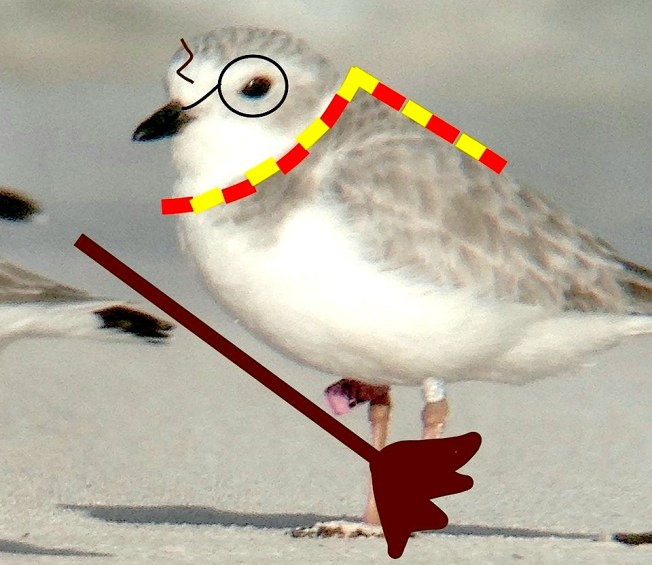
“HARRY POTTER & THE MAGIC BAND” (A PIPING PLOVER STORY)


PIPL PINK22 Harry Potter π Stehanie Egger copy

“HARRY POTTER & THE MAGIC BAND” (A PIPING PLOVER STORY)

by ROWLING HARBOUR

It was a bright sunny morning and the sand on the beach was warm under Harry Potter’s bare feet. Although by now a very experienced flyer, his recent adventures during his epic 1000-mile journey had left him very tired. All his friends that had undertaken the same long flight were tired too. Now they were enjoying a quiet, peaceful time away from all the dangers they had somehow survived during their scary expedition (see Harry Potter and the Migration of Fear). It would be a long time, Harry said to himself – maybe as long as 6 months – before he wanted to have another experience like that. He wondered when Ron Piper and Hermione Plover would arrive. He hadn’t even found them yet… 

_Piping_Plover_on_the_Fly (USFWS Mountain-Prairie wiki)

But the little group on a remote shoreline on Abaco were not as safe as they thought. Unknown to the happy, sleepy plovers on the beach, they were already being stalked by two creatures. This determined pair had one sole aim – to find plovers, to catch them and to carry out scientific experiments on them. That’s three aims, in fact. The editor would surely fix that error later (No – ed.). Would Harry and his friends soon find themselves in mortal peril from these formidable adversaries, these beasts with huge brains, armed with the latest technology? What magical powers would be needed to combat the imminent danger creeping stealthily towards them? The male definitely had a spine-chilling look about him; the female appeared less daunting – but might therefore be all the more dangerous…

TOPO & STEG PIC JPG   piping-plover

Suddenly, Harry felt a sense of danger. Fear ruffled his neck feathers and his little left foot started drumming impatiently on the sand. He’d felt like this several times before, like that time the Dark Lord had driven a SUV straight at him on that nesting beach many miles away, the one where he cracked out (see Harry Potter and the Vehicle of Dread). And when the massive dog came and sniffed round the nest when he was a tiny chick (see Harry Potter and the Hound of Horror). Instinctively, he grabbed a magic meat-string from the damp sand, ate it, and took to the air… only to be caught up in some sort of fearsome spider’s web (a mist net – ed.). He was trapped. He struggled bravely, peeping out his anger at this cruel trick. But it was no good – he was caught fast, and wriggling only seemed to make it even worse. The massive creatures were running towards him fast, shouting in triumph – they had got Harry exactly where they wanted him – at their mercy…

A Mist Net (if unsuccessful, A Missed Net)Mist Net jpg

Just as Harry had started to believe that his last moment had arrived, an amazing thing happened. Instead of dispatching him with a swift blow to head, as the Dark Lord might have done, he was gently removed from the net and softly held in the female’s hands. His instant fear that she might crush him to a horrible mangled pulp rapidly lessened. Why, she was even talking to him. And those voices. They sounded not so much fearsome as friendly. But were they lulling him into  false sense of security, only to wreak an evil vengeance upon him? (*Spoiler Alert* No – ed.).

The Steph of Egger with captive Harry Potter, & wearing the cap of the mysterious ‘Delphi Club’1484646_10205144305680789_2528266936610237451_n

Then suddenly things got worse. Much worse. Harry was slowly wrapped in a large white blanket and laid on something that wasn’t sand. Something hard. What were they planning to do with him now. He heard the male – Harry had now concluded that he must be dealing with the Avian Overlord himself, the infamous Todd of Pover, first cousin of Severus Snipe – mutter an incantation: “54 grams. Pretty good. 54 grams. Have you got that”. Yes, they’d taken his dignity and his weight but there had been no pain. Yet. Harry began to relax a little.

10957577_10205144275960046_8670418050291183808_n

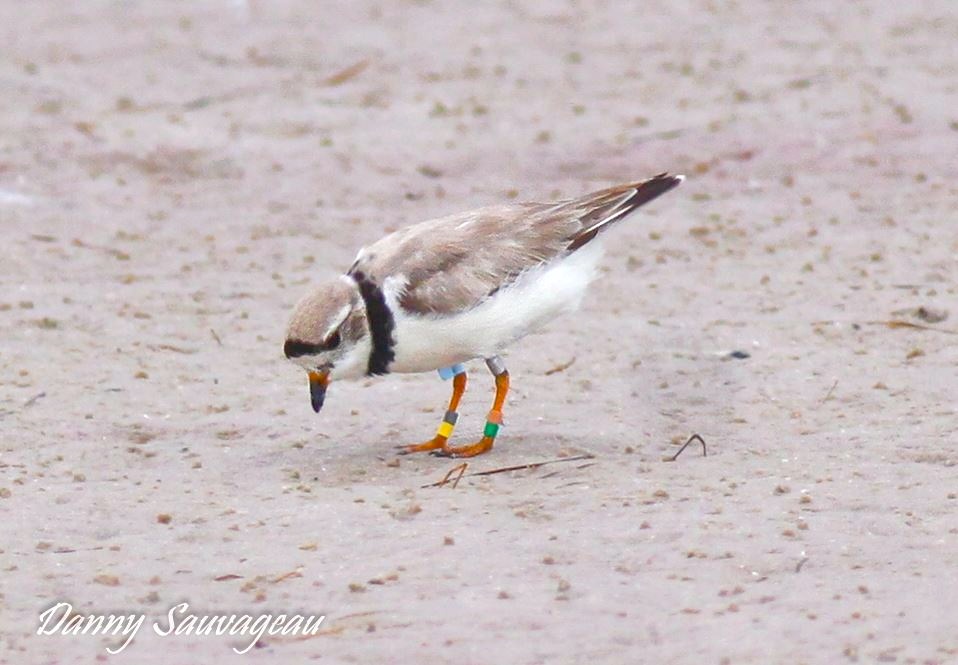
Meanwhile, Steph the Egger was making a strange rattling sound. As Harry was unwound from his shroud he suddenly saw a box filled to the brim with exotic jewels of the most opulent colours glistening in the sunlight. At once, he knew he had to have one of them. A beautiful pink one. One to wear on his leg. One that he could keep for ever. One that would always mean ‘Harry Potter’. That very one on the top. Just there. With the magic number 22 on it in black writing. And Harry started to breathe a special silent Piping Spell: ‘Please pick me up… in your hand… and fit the Magic Two-Two Band…’ 

10953155_10205138160647167_6364662204306663309_n

And, miraculously, the spell began to work. First, Harry was gently held as the Magic Band was put round his right leg. At the top, just where he wanted it. Harry shut one eye and repeated the spell.18265_10205144276640063_342488571243728001_n

Then despite an awful wound from an earlier battle, the Todd of Pover made sure the band was secure and would never come off. It would be there forever – the Harry Potter ID band. By this time Harry didn’t even mind the indignity of being turned upside down.1688061_10205144276200052_1782966976770605282_n

Finally, it was done. Really, the jewel was more like a flag than a band. But Harry knew instinctively that it would take a massive effort for his story to be rewritten to make this clear from the start, so he decided to let it pass. Band. Flag. What did it matter. It was his prize, gloriously his. 

And then he was passed to Steph the Egger. Harry presumed she got her name for her ability to find nesting birds in that other place he had flown South from. And now, here she was, holding him tenderly, talking to him and telling him how cool he looked. Even her bright red claws did not seem so frightening now. Except… WHAT WOULD HAPPEN TO HIM NOW?

10169303_10205144274240003_5908333687210042239_n

Suddenly, Steph the Egger stood up and Harry found himself several feet above the safe warm sand. Steph held him out in front of her and then, in an instant, he was free… Free to fly away with his beautiful pink jewel band, his special number, and an intuition that wherever he might be, and whoever saw him, they would always know that he was Harry Potter for as long as he lived. Against all odds he had gained… THE MAGIC BAND.

10931116_10205144276720065_5757419875474692020_n

piping-plover

POSTSCRIPT

No one knows when Harry Potter left Abaco last spring, nor where he spent his Summer. All that can be said with certainty is that 12 months later he was found again on the same beach, Long Beach Abaco, in the same place. 5 other PIPL were pink-banded with him last year by the National Audubon, Virginia Tech, BNT, and CWFNJ team (pink being the colour used for Bahamas birds). Of those 6, 5 have been resighted on the same beach in the last few days. They migrated north last Spring, spent the Summer probably in different locations yet found their way back to the same place on Abaco to overwinter together again.

GENDER NOTE In fact it isn’t clear if HP is male or female (see below). He might be Harriet Potter. But I have played safe and stuck with the gender implied by his given name…

Harry Potter Pink 22 UR on Long Beach Abaco, 3 Dec 2015, a year after he was banded therePIPL PINK22 Dec 3 2015 Long Beach Abaco 1 (Stephanie Egger) copy PIPL PINK22 Dec 3 2015 Long Beach Abaco 2 (Stephanie Egger) copy

STEPH THE EGGER EXPLAINS THE NAME, NUMBER & QUIDDITCH PIC

“I helped band this piping plover last winter, and called him “Harry Potter.” I know 22 isn’t Harry’s quidditch number (07), but 22 is for my birthday when I mostly seem to be down in Abaco. We don’t know where Harry Potter bred this year as no reports came in for him (or her). Maybe next season!

DISCLAIMER RE HEADER IMAGE I don’t suggest making silly photos of all “named” birds as this is an endangered species that we should certainly take very seriously. That said, I do think that names help people connect to the species and it also aids the researchers in id’ing (my personal opinion)”.

piping-plover

Credits: Stephanie Egger, Todd Pover, Conserve Wildlife Foundation of New Jersey & co-banding teams, USFWS Mountain-Prairie (PIPL in flight), Birdorable, Rowling Harbour, and star of the show Harry Potter Pink 22 UR. Apologies to JKR for feeble pastiche.

Unknown's avatar

BAHAMAS MANATEES: GINA’S CALF NEEDS A NAME!


Gina the Bahamas Manatee (pregnant) Eleuthera (BMMRO)

Gina the Manatee, Eleuthera – expectant mother (BMMRO)

BAHAMAS MANATEES: GINA’S CALF NEEDS A NAME!

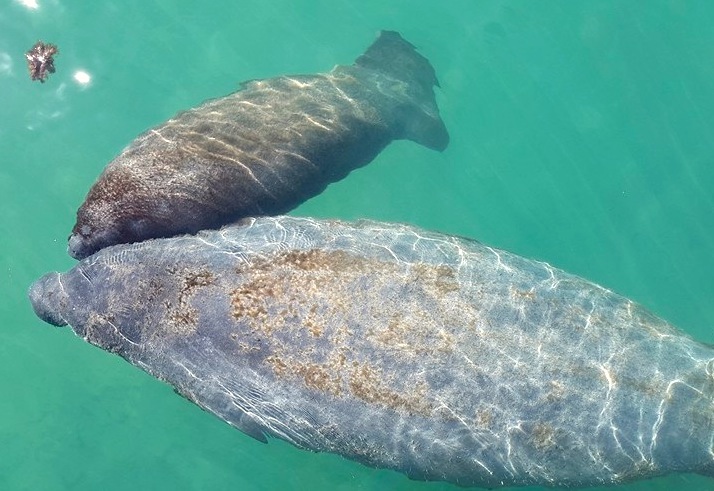
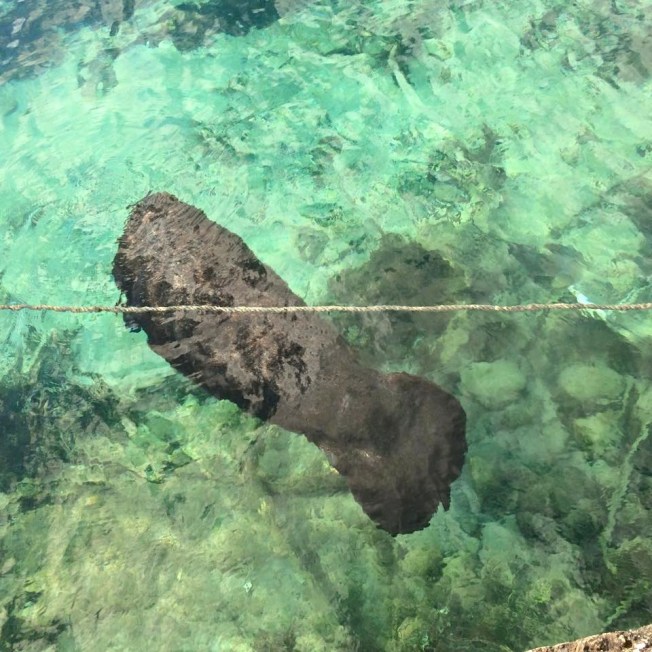
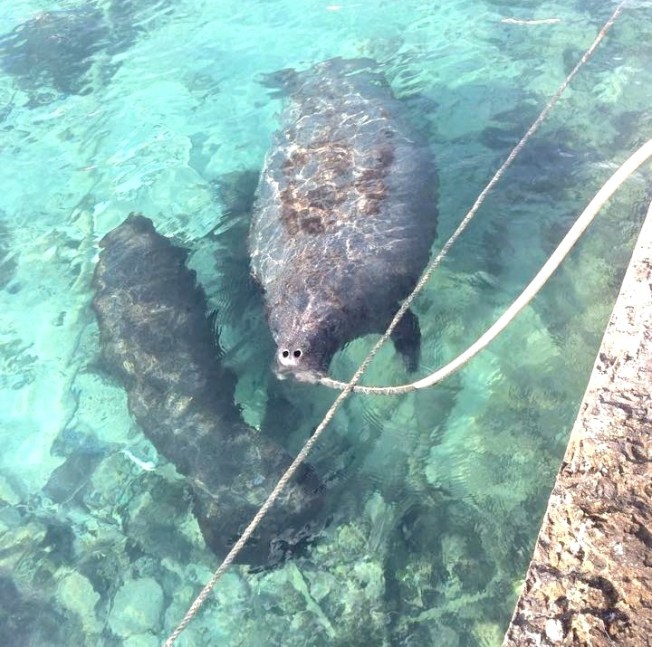
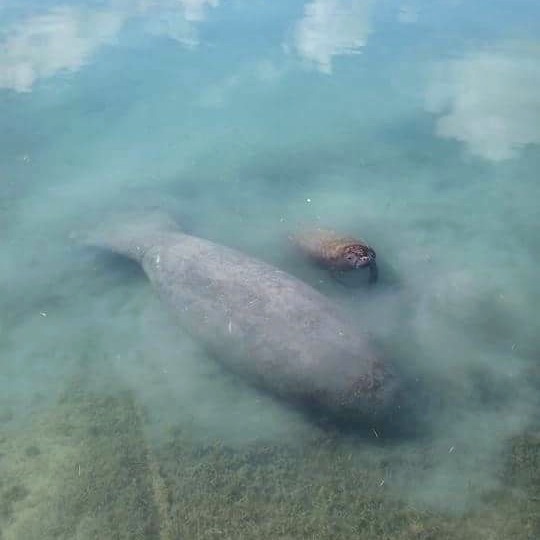
Earlier this year I posted the welcome news that Bahamas manatee Gina was beyond any doubt pregnant. You can read about it HERE. Gina has been living for some time in Eleutheran waters, under regular observation by the BMMRO. At the turn of the year, she was re-tagged in Harbour Island, Eleuthera, when her pregnancy was discovered. I promised to give an update and this is a perfect moment. Gina’s calf was safely born and is growing fast. The pair have spent a lot of time in and around Spanish Wells, Eleuthera. Recently they have begun to move further afield, and there have been several sightings with some great photos shared on FB and in particular on Felice Leanne Knowles’s terrific BAHAMAS MANATEE CLUB page, some of which are included here duly credited.

Gina the Bahamas Manatee (pregnant) Eleuthera (BMMRO)

Gina’s calf is currently just called “Gina’s calf”. Its gender is unknown, and it will take a close inspection from below to ascertain from its… I don’t have to go on with this, do I? The point being that the chosen name will need to be unisex because it may take a while until there is sufficient development of the… I don’t have to go on with this either, do I? Let’s see the nameless calf at once! Details of the competition at the end of this post…

Gina with her newborn calf, July 27 (BMMRO) (note apparent prop scars on Gina)11209341_1012183408800885_310154952620912454_n

Spanish Wells, October 26 (π Junea Pinder / BMMRO) Gina the Bahamas manatee and her calf (Junea Pinder / BMMRO) Gina the Bahamas manatee and her calf (Junea Pinder / BMMRO)

Gregory Town, November 5 (Lynne Hirzel / BMMRO)12188935_10156306821645195_3509772562942760375_n 12219637_10156306821330195_1471887362053804519_n

Hatchet Bay, November 13    (π Jeffrey Louis / BMMRO)  10425501_1042928762405755_7163144254688618862_n 12108239_1042928735739091_6064773734031487371_n

November 18: Now you see it… (π Norma Roberts / BMMRO)Gina & Calf Norma Roberts 1 copy

…and now you don’t…Gina & Calf Norma Roberts 2 copy

THE COMPETITION

ATTENTION TEAM MANATEES!!! Due to a consistent influx of sighting information and photos, we would like to add Gina’s calf to our catalogue. It would be nice for it to have a NAME!! We cannot monitor these manatees without your help and it is only fitting that  YOU name the manatee. The deadline for name suggestions is November 29th, 2015 and the winning name will be revealed on November 30th, 2015. The member with the winning name suggestion will receive an official manatee club T-Shirt!!

RULES

1. The name must be submitted on the Club Page Bahamas Manatee Club as an individual post – DO NOT comment your suggestion.
2. The name must be unisex – we do not know the sex of the calf yet.
3. A meaning or description must be submitted along with the name.
4. Please do not submit any derogatory or explicit “names.”
5. If you are submitting on behalf of a child who is not on Facebook, please add their name to the post as well.

Spread the word! Tell your friends and families to join the club and help us with a name!! The name will be selected on it’s meaning or description as it relates to marine mammals OR The Bahamas. The amount of “likes” per post will also go into consideration during the selection process.

Regretful Note: I made the stupid mistake of being amongst the very first to post my suggestion, meaning that after a day or two I’d get no likes at all, as more people got involved and my offering sank slowly. But there’ve been plenty of much better ones since, so probably just as well!

Bahamas Marine Mammal Research Organization

Bahamas Manatee Club

For more information about West Indian manatees, you can visit the MANATEE PAGE. There are several links there to specific manatee stories.

Finally, here is a great manatee map that Felice has recently made, showing which of the increasing number of manatees is where at the moment. Just think, only 4 or 5 were known about four years back. Now look!

12241226_298174587019969_1571890190333376929_n

Credits: primary founts of Bahamas manatee knowledge Felice & BMMRO; Photos BMMRO, Junea Pinder, Lynne Hirzel, Jeffrey Louis, Norma Roberts

mantsw~1

Unknown's avatar

SEABIRDS, SHOREBIRDS & WADERS: 30 WAYS TO TELL THEM APART


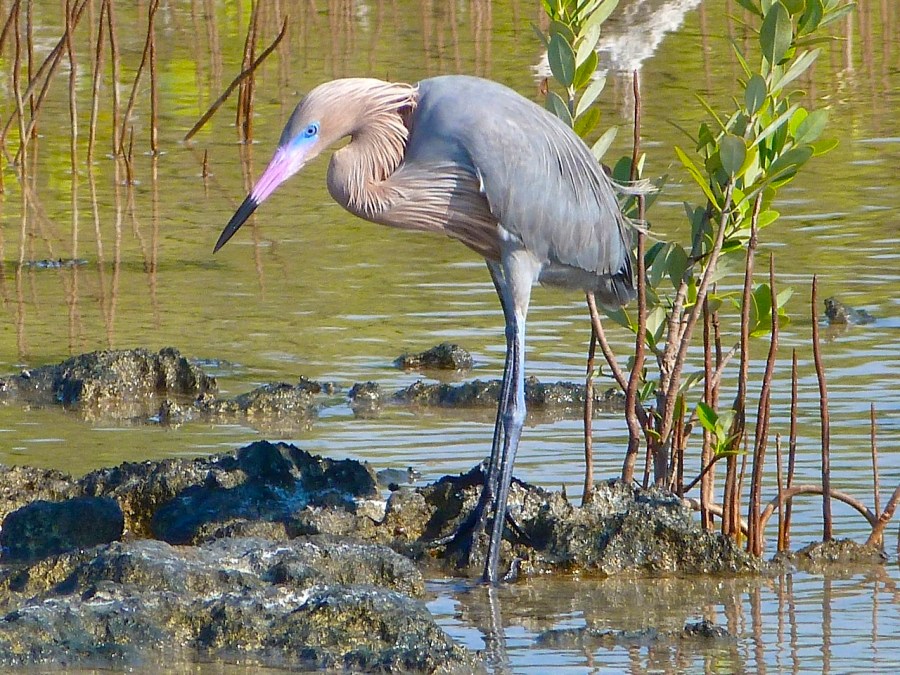
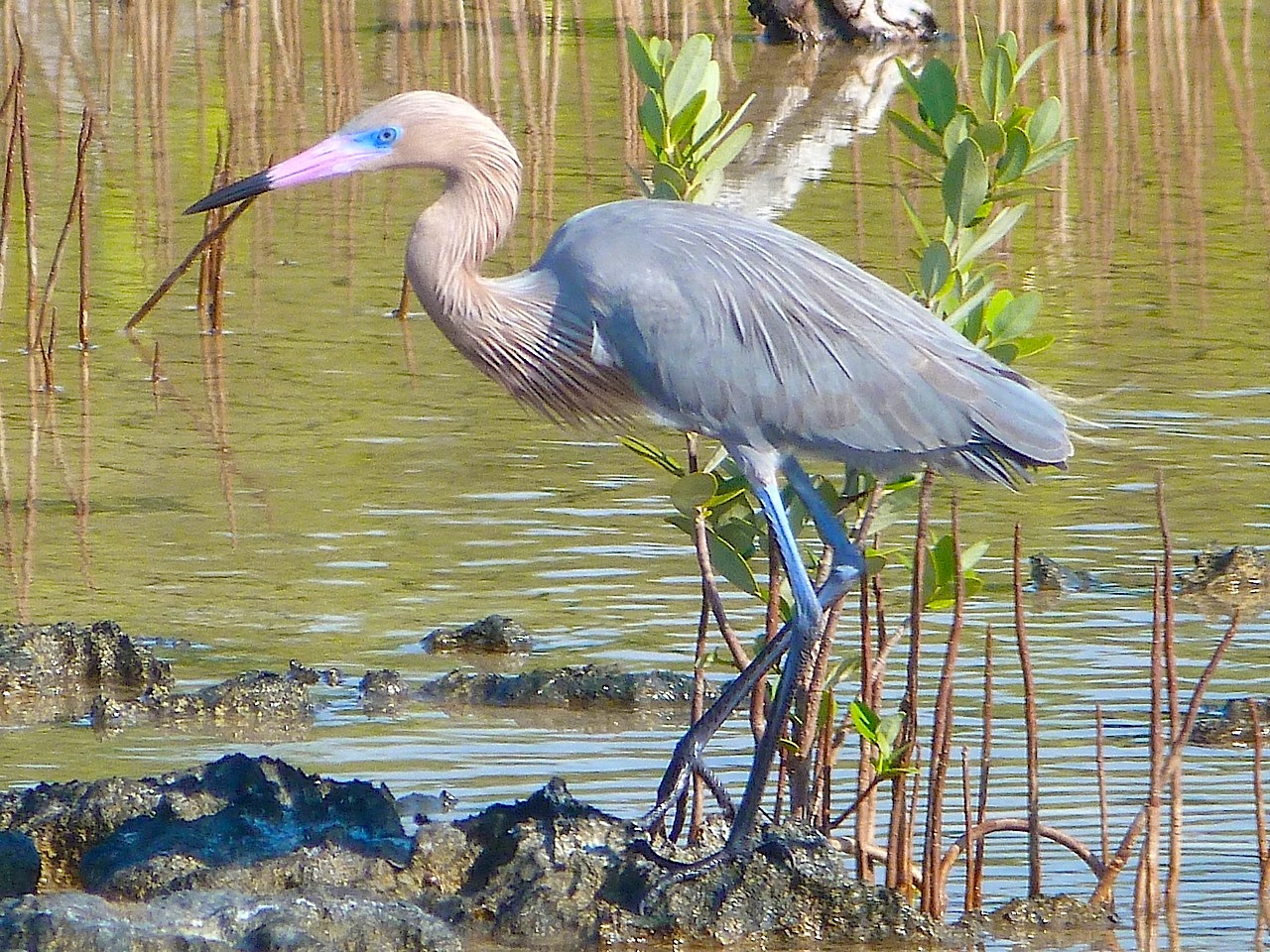
Reddish Egret, Crossing Rocks, Abaco (Keith Salvesen)12

Reddish Egret male in breeding plumage, Crossing Rocks, Abaco

SEABIRDS, SHOREBIRDS & WADERS: 30 WAYS TO TELL THEM APART

This weekend is Wader Conservation World Watch weekend, promoted by WADER QUEST. This is the perfect moment to help with the vexed question: “See that bird? Over there. No, THERE! Is it a seabird, shorebird or a wader?” 

Publication1

There is plenty of scope for confusion, since in practice there is a degree of informal category overlap and even some variation between the various bird guides. And after all, shorebirds may wade. And wading birds may be found on the shore*. Here is a reminder of 30 infallible rules to sort out which is which, courtesy of the estimable BEACH CHAIR SCIENTIST blog. 

*STOP PRESS Rick Simpson of Wader Quest has kindly added a comment pointing out the marked difference in the categorisation on either side of the Atlantic: “What you in the USA call shorebirds we here in the UK call waders (peeps, sandpipers, plovers oystercatchers etc – but not skimmers). Shorebirds to us can be any bird that lives on a shore, ie egret, herons, gulls. To add more confusion some seabirds such as Gulls, Skuas (Jaegers) Terns and Auks are also all in the group called Charadriiformes, not just the waders… er I mean shorebirds, or do I? [So] should any of you decide to participate in our world watch it is your shorebirds (but not skimmers) that we are interested in and we call them waders. Anyone want to know the rules of cricket? It is easier to explain!”

magnificent-frigatebird

10 CHARACTERISTICS OF SEABIRDS 

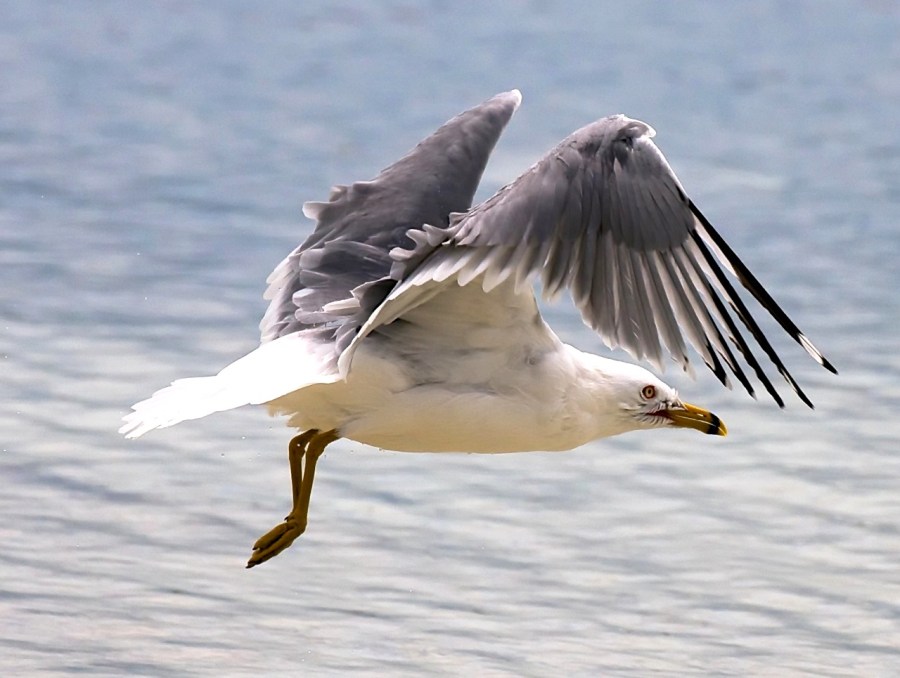
Ring-billed gull, AbacoRing-billed Gull (Nina Henry : DCB)

Examples include frigatebirds, petrels, shearwaters, gulls, terns and tropicbirds

1. Seabirds are pelagic, spending most of their lives far out at sea.
2. Seabirds move toward to coastal areas to breed or raise young for a minimal amount of time.
3. Seabirds are light on their undersides and dark on top (an adaptation known as countershading).
4. Seabirds have more feathers than other types of birds for more insulation and waterproofing.
5. Seabirds have flexible webbed feet to help gain traction as they take off for flight from the sea.
6. Some seabirds have unusually sharp claws used to help grasp fish under the water.
7. Some larger seabirds (e.g. albatross) have long, slim wings allowing them to soar for long distances without getting tired.
8. Some smaller seabirds have short wings for manoeuvering at the surface of the water.
9. Seabirds have specialized glands to be able to drink the saltwater and excrete salts.
10. Some seabirds (e.g. gannets) have a head shape that is usually tapered for more efficiency in plunge diving.

piping-plover

10 CHARACTERISTICS OF SHOREBIRDS 

Ruddy Turnstone, AbacoRuddy Turnstone Abaco Bahamas. 2.12.Tom Sheley copy 2

Examples include oystercatchers, turnstones, knots, plovers and sandpipers

1. Shorebirds have long legs, pointed beaks, and long pointed wings.
2. Most shorebirds are migratory (impressively some shorebirds fly non-stop for 3-4 days, equivalent to a human running continuous 4-minute miles for 60 hours).
3. Shorebirds wade close to the shore and poke their bills into the ground in search of food.
4. Shorebirds are small to medium size wading birds.
5. Shorebirds tend to frequent wetlands and marshes and are biological indicators of these environmentally sensitive lands.
6. Shore birds are of the order Charadriiformes.
7. Shorebirds are very well camouflaged for their environment and their appearance may vary from place to place as plumage (feather colors) are gained or lost during breeding.
8. Shorebirds typically range in size from 0.06 to 4.4 pounds.
9. Oystercatchers have a unique triangular bill that is a cross between a knife and a chisel.
10. The black skimmer is the only native bird in North America with its lower mandible larger than the upper mandible, which helps the bird gather fish as it skims the ocean surface.

roseate-spoonbill

10 CHARACTERISTICS OF WADING BIRDS 

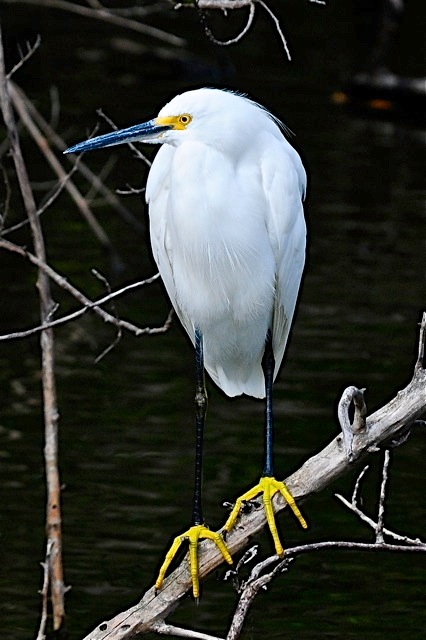
Snowy Egret, Abaco
Snowy Egret ?NP_ACH1409 copy

Examples include egrets, herons, flamingos, ibis, rails, and spoonbills

1. Wading birds are found in freshwater or saltwater on every continent except Antarctica.
2. Wading birds have long, skinny legs and toes which help them keep their balance in wet areas where water currents may be present or muddy ground is unstable. Also, longer legs make it easier for them to search for food (forage) in deeper waters.
3. Wading birds have long bills with pointed or rounded tips (depending on what is more efficient for the types of food the bird consumes).
4. Wading birds have long, flexible necks that can change shape drastically in seconds, an adaptation for proficient hunting.
5. Herons have sophisticated and beautiful plumes (‘bridal plumage’) during the breeding season, while smaller waders such as rails are much more camouflaged.
6. Wading birds may stand motionless for long periods of time waiting for prey to come within reach.
7. When moving, their steps may be slow and deliberate to not scare prey, and freeze postures are common when these birds feel threatened.
8. Adult wading birds are quiet as an essential tool for hunting. Wading birds may be vocal while nestling or while in flocks together.
9. Many wading birds form communal roosts and breeding rookeries, even mixing flocks of different species of wading birds or waterfowl.
10. Wading birds fully extend their legs to the rear when flying. The neck may be extended or not while in flight, depending on the species.

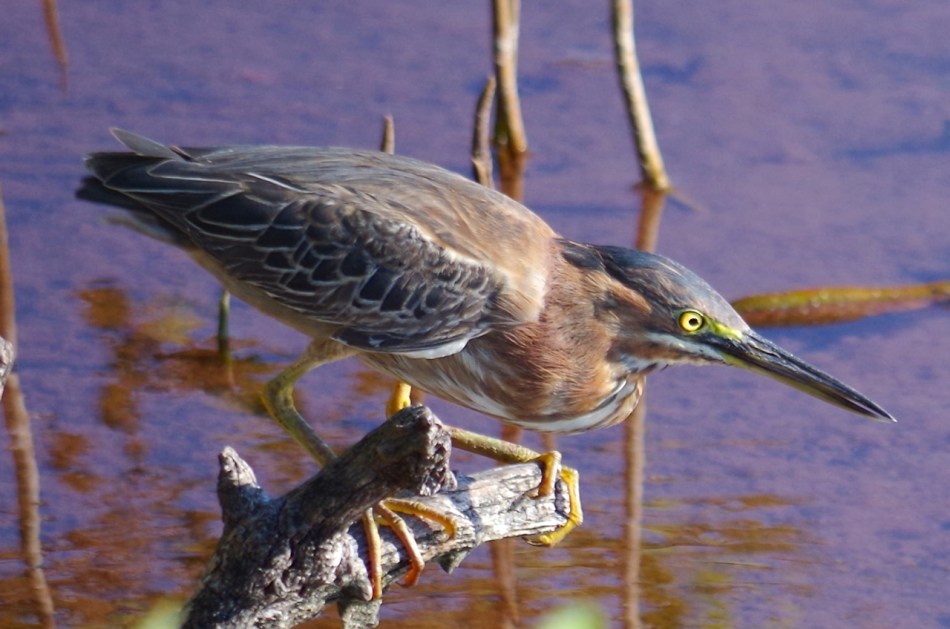
Green Heron, AbacoGreen Heron, Gilpin Point, Abaco (Keith Salvesen)11

These lists were handily put together in useful chart formseabird shorebird wading bird chart ©beachchairscientist

Credits: Table – ©Beach Chair Scientist; Pics – Nina Henry (RBG), Tom Sheley (RUTU), Tony Hepburn (SNEG), Keith Salvesen (REEG & GRHE) ; Cartoons – Birdorable

Unknown's avatar

“THE DELPHI CLUB GUIDE TO THE BIRDS OF ABACO”


Abaco Parrot, Abaco Bahamas (Peter Mantle)

“THE DELPHI CLUB GUIDE TO THE BIRDS OF ABACO”

A new season – the seventh – of the Delphi Club is now underway. There are fish to be caught, poolside inactivities to relish, chef-prepared meals to eat and a capacious wine cellar to be explored. To which, add birds to be spotted. Delphi has turned out to be a superb place for birding – not a feature given prominence in the original prospectus… The Club’s remoteness and its rich mix of pine forest, coppice, gardens and a pristine one-mile beach ensure the prefect protected habitat for a vast number of bird species common, uncommon and rare.

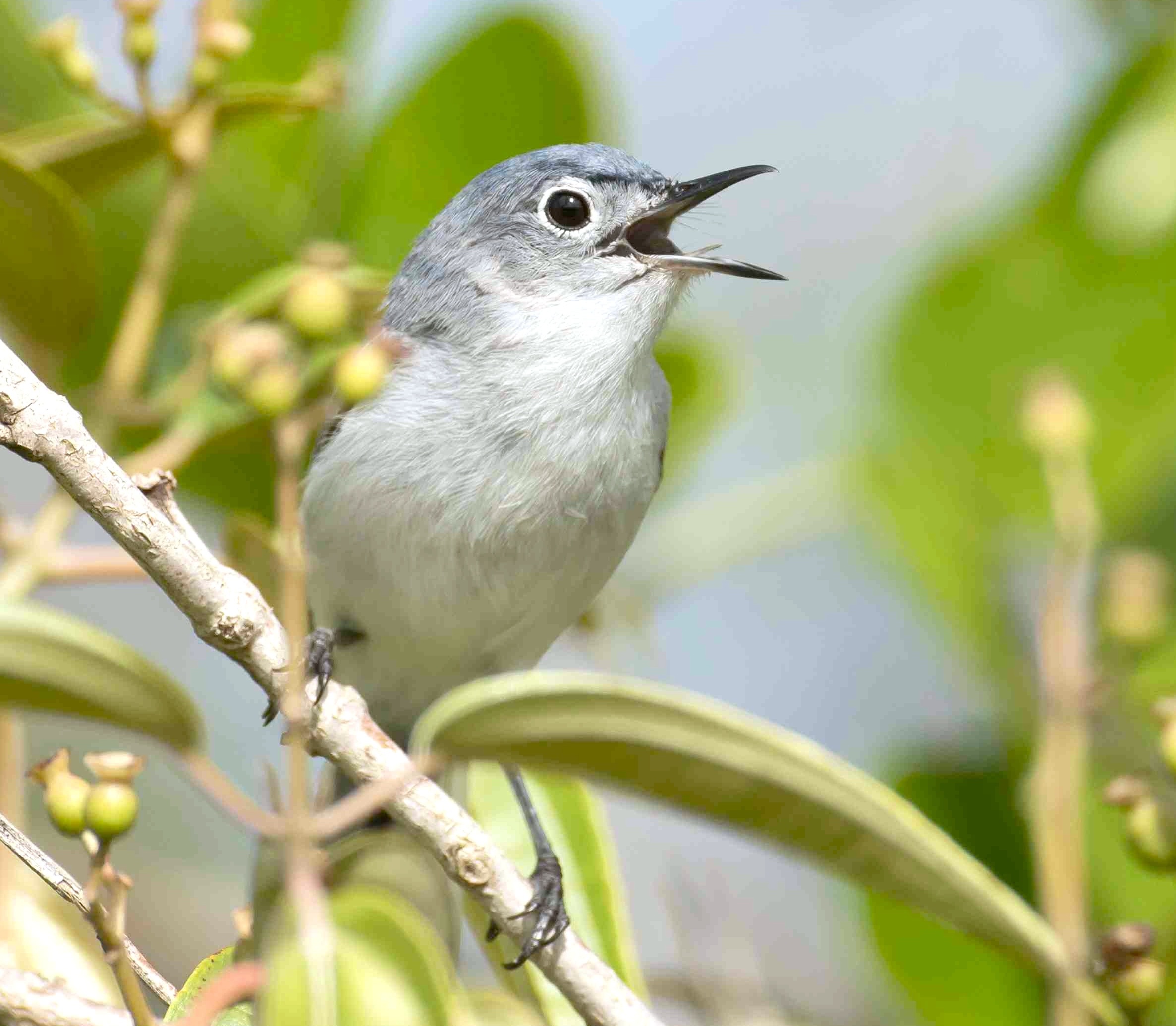
Blue-gray Gnatcatcher vocalizing.Abaco Bahamas.6.13.Tom Sheley a

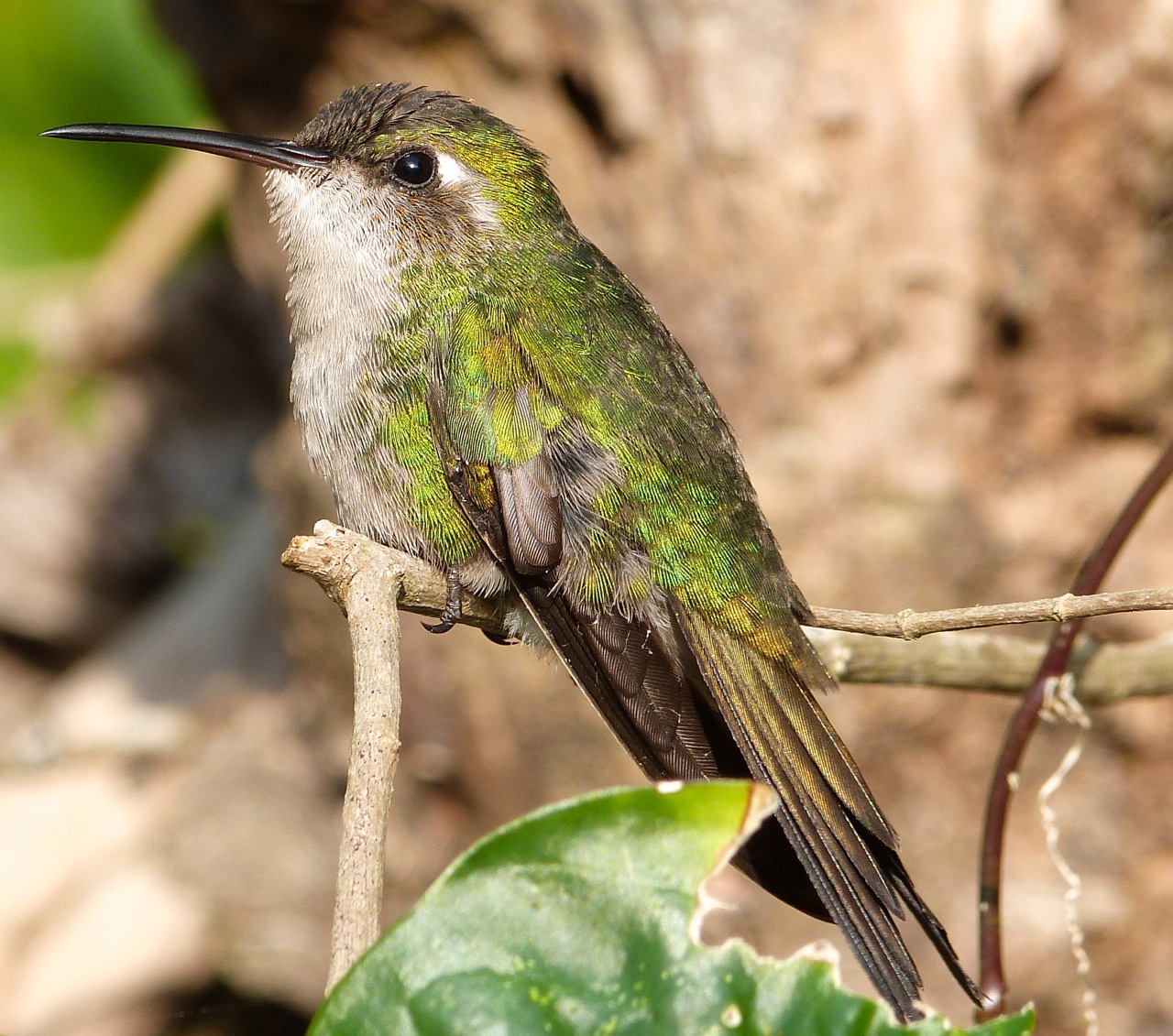
Eighteen months ago, “The Delphi Club Guide to THE BIRDS OF ABACOwas published. The originator of the idea – as with the entire Delphi project – was of course Peter Mantle, the publisher. The book took 16 months from conception to the arrival of three pallets of printed books on the dockside in Marsh Harbour, having travelled by a tortuous route from specialist printers in Italy. Cuban Emerald Hummingbird, Delphi, Abaco (Keith Salvesen)

The book was launched at the Delphi Club in March 2014, to generous enthusiasm and support both on Abaco and beyond. 75% of the edition has been sold already. In addition, Abaco schools, libraries and wildlife organisations have been given copies for educational purposes. A percentage of profits is to be given to local wildlife causes. We couldn’t be more pleased with the response to this lavish book, a unique publication in the Bahamas. 

Delphi Club Guide to the Birds of Abaco (Jacket)

The incremental growth of social media is rapid. Blogs gain readers. Facebook and Twitter pages gain new friends and followers. The start of this new Delphi season is therefore a good moment to post a reminder about the book, illustrated with a few of the wonderful bird species featured. And… ahem… there are only 57 more ‘sleeps’ until Christmas. 

Short-billed Dowitcher, Abaco (Bruce Hallett)

The Guide showcases the rich and varied bird life of Abaco, Bahamas and features both resident and migratory species including rarities and unusual sightings. The main features are as follows:

  • 272 pages with more than 350 photographs
  • 163 species shown in vivid colour – nearly two-thirds of all the bird species ever recorded for Abaco
  • Every single photograph was taken on Abaco or in Abaco waters
  • All birds are shown in their natural surroundings – no feeders or trails of seed were used
  • Several birds featured are the first ones ever recorded for Abaco or even for the entire Bahamas

Clapper Rail Abaco Bahamas Tom Sheley

  • A total of 30 photographers, both experienced and amateur, contributed to the project
  • The book has had the generous support of many well-known names of Abaco and Bahamas birding
  • A complete checklist of every bird recorded for Abaco since 1950 up to the date of publication was compiled specially for the book.
  • A neat code was devised to show at a glance when you may see a particular bird, and the likelihood of doing so. Birds found at Delphi are also marked.
  • Specially commissioned cartographer’s Map of Abaco showing places named in the book

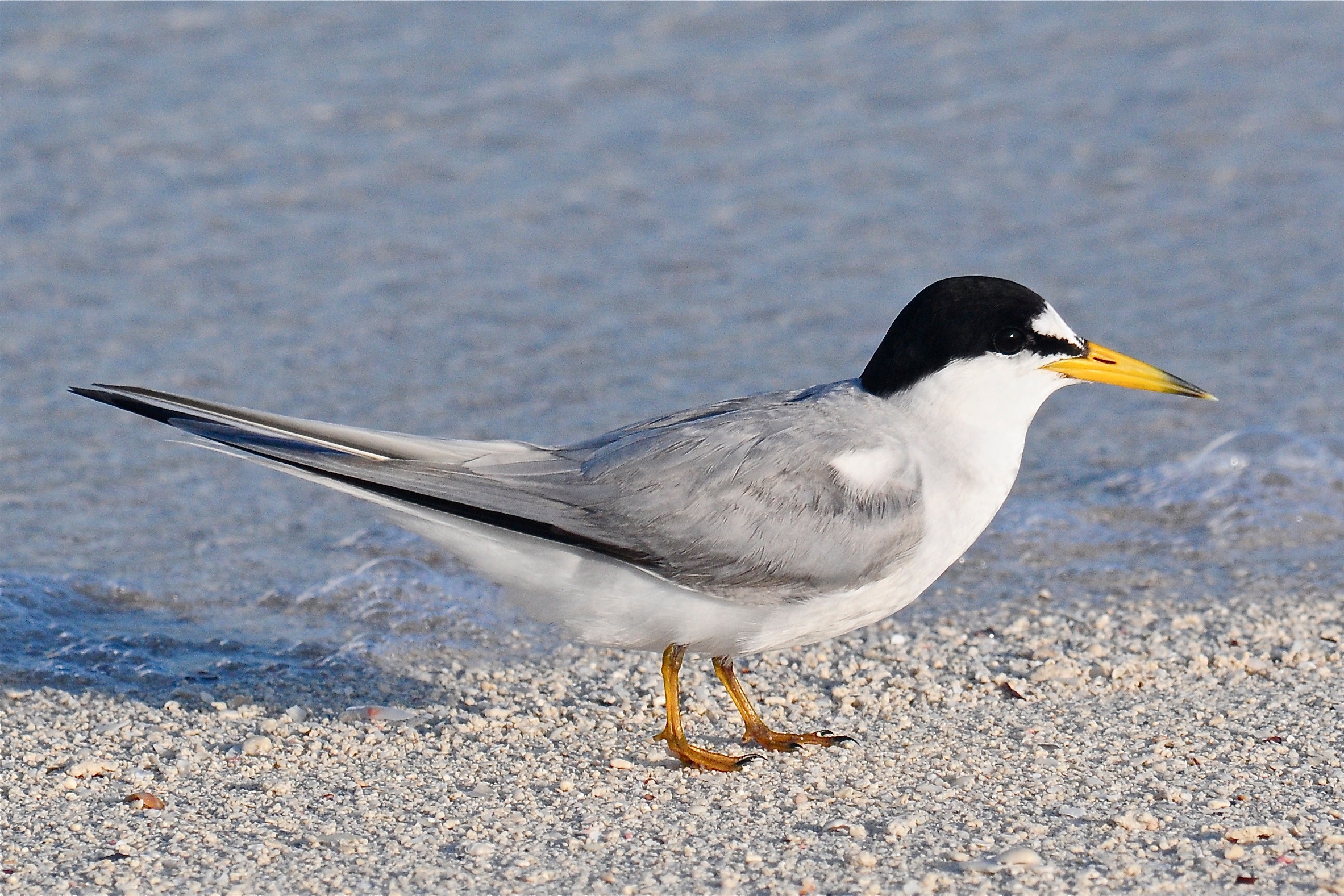
Least Tern_ACH3672 copy

  • Informative captions intentionally depart from the standard field guide approach…
  • …as does the listing of the birds in alphabetical rather than scientific order
  • Say goodbye to ’37 warbler species on consecutive pages’ misery
  • Say hello to astonishing and unexpected juxtapositions of species

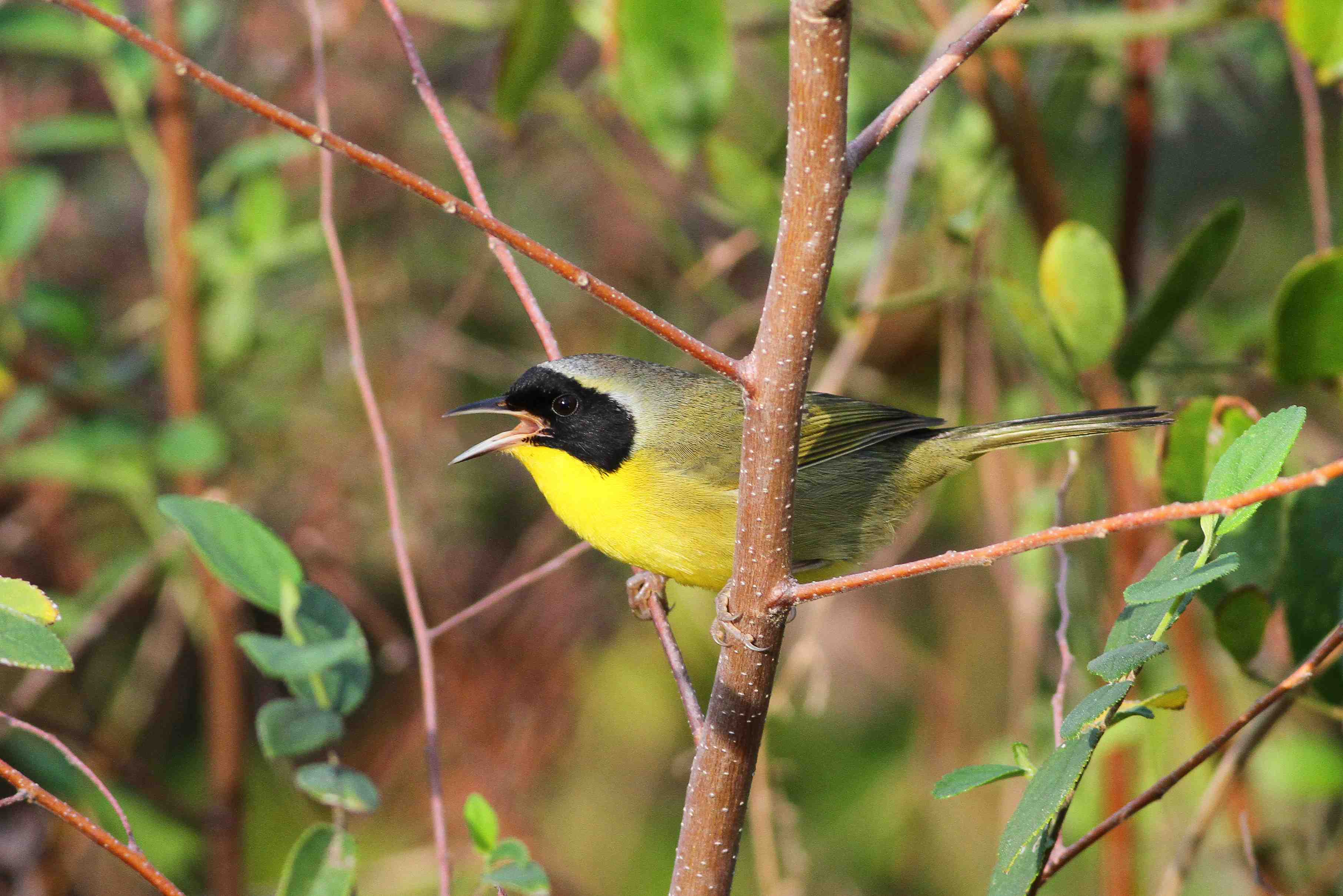
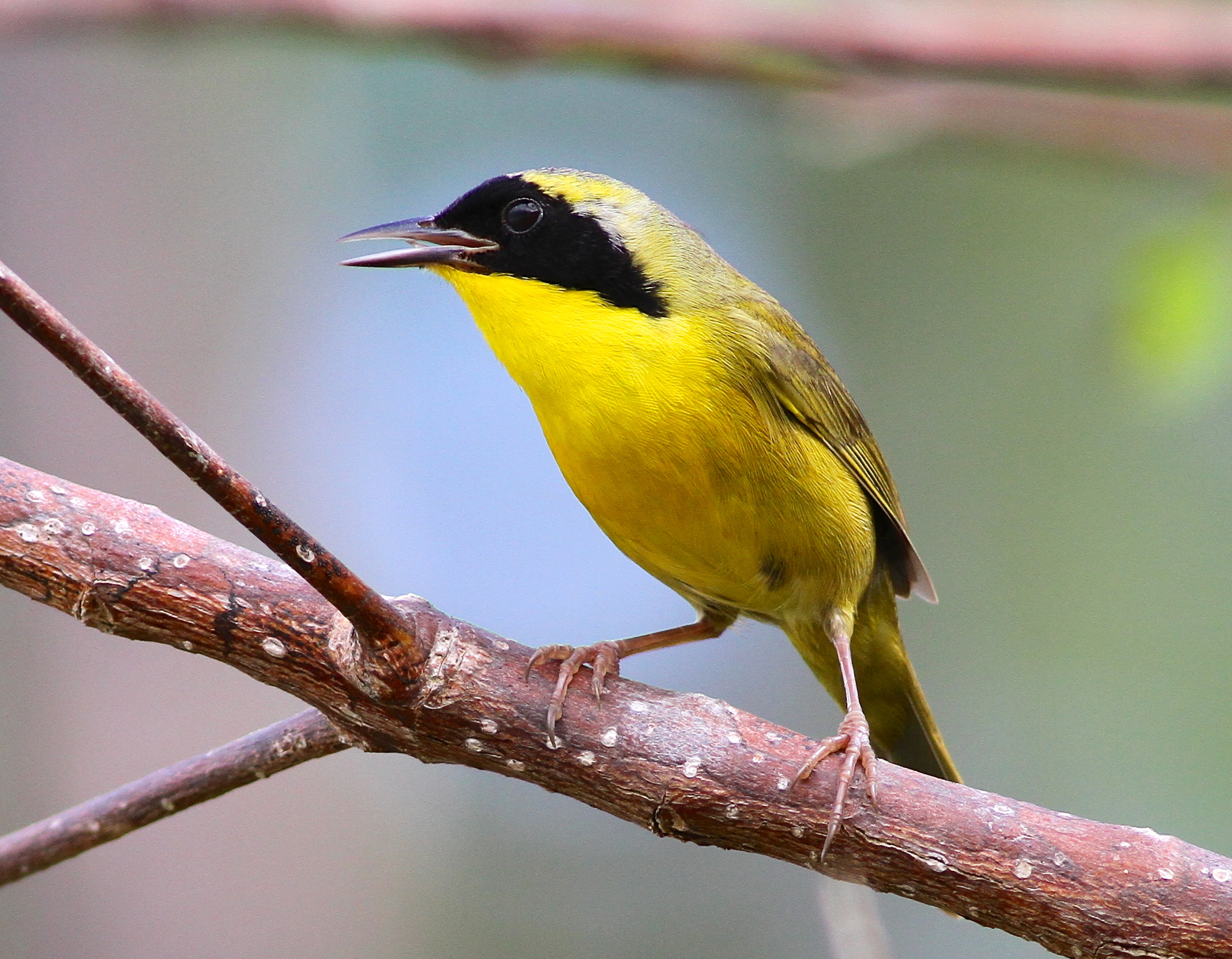
Abaco_Bahama Yellowthroat_Gerlinde Taurer copy

  • The book was printed in Florence, Italy by specialist printers on Grade-1 quality paper
  • Printing took pairs of printers working in 6 hour shifts 33 hours over 3 days to complete
  • The project manager and the author personally oversaw the printing

Smooth-billed Ani pair GT

  • The book is dedicated to the wildlife organisations of Abaco
  • A percentage of the proceeds of sale will be donated for the support of local wildlife organisations
  • A copy of the book has been presented to every school and library on Abaco

Piping Plover BH IMG_1919

The book is published by the Delphi Club (contact details below). The project was managed by a publishing specialist in art books. The author is the wildlife blogger more widely known on Abaco and (possibly) beyond as ‘Rolling Harbour’. Oh! So that would in fact be Mrs Harbour and myself. Well well! What are the chances? Painted Bunting male.Abaco Bahamas.Tom Sheley
The Delphi Club at Rolling Harbour
PO Box AB-20006, Marsh Harbour, Abaco, Bahamas
Tel: +1-242-366-2222
General Manager – Max Woolnough: +1-242-577-1698
delphi.bahamas@gmail.com

Or email rollingharbour.delphi@gmail.com with any queries or commentsAmerican Oystercatchers BH IMG_2000 copy 2

Images by Tom Sheley,  Bruce Hallett, Gerlinde Taurer, Tony Hepburn, Peter Mantle, RH

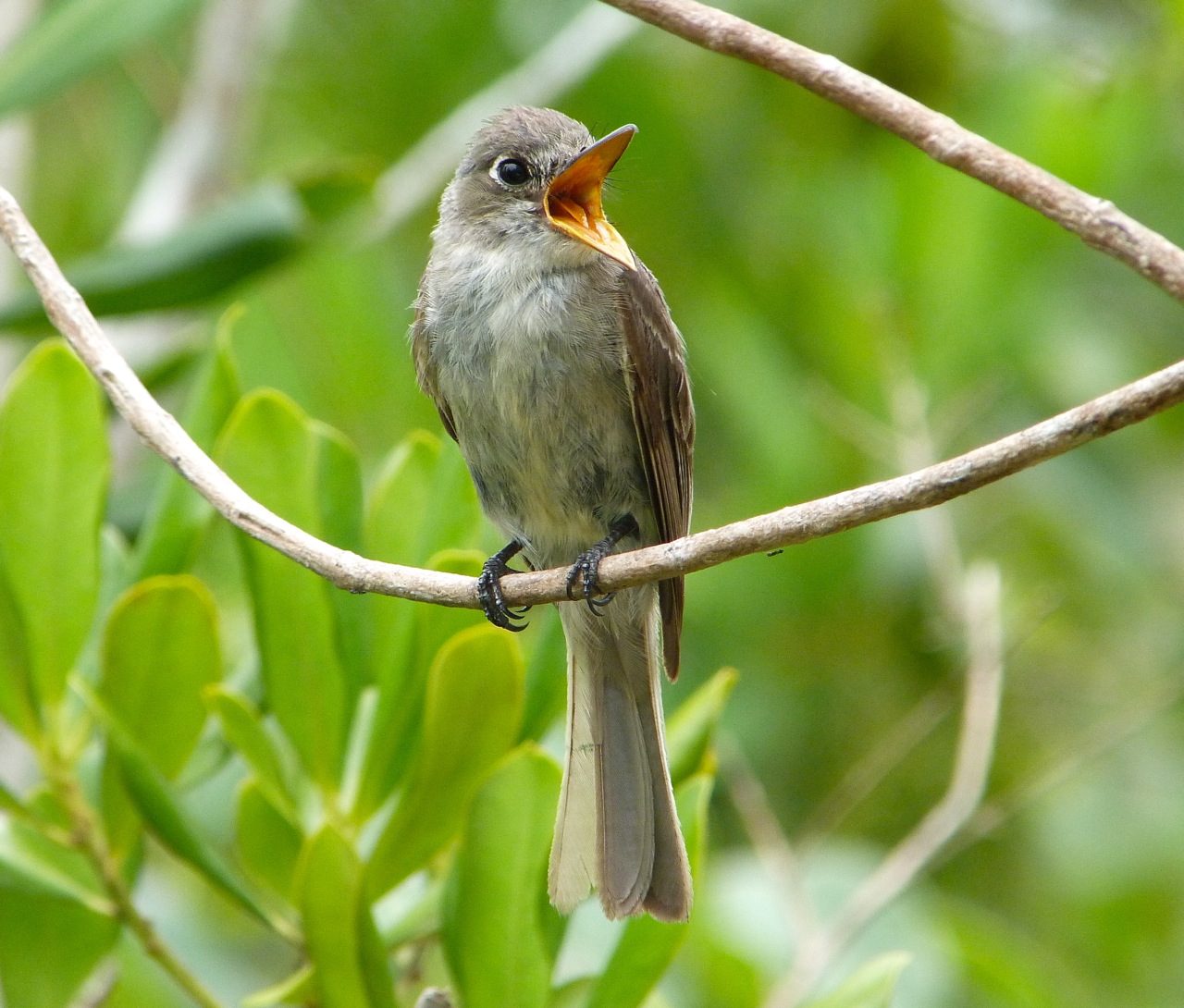
Cuban (Crescent-eyed) Pewee, Delphi, Abaco (Keith Salvesen)"Birds of Abaco" flyer

Unknown's avatar

“CRABACO?”: CRABBING ON ABACO, BAHAMAS


Ghost Crab in surf.Delphi Club.Abaco Bahamas.Tom Sheley

“CRABACO?”: CRABBING ON ABACO, BAHAMAS

It’s been a while since I was in a crabby mood, but autumn is here and there’s a sharp nip in the early morning air… What better time to visit a selection of the many crab species found on Abaco. 

GHOST CRAB

I thought I had some good photos of these cute little guys with their ‘Carson the Downton Abbey Butler’ white gloves. However, Tom Sheley (header and below) has perfectly caught the  tide-hanging that they enjoy, sometimes disappearing completely or perhaps leaving just their twin periscopes showing.Ghost Crabin surf.Delphi Club.Abaco bahamas.Tom Sheley
HERMIT CRAB

Many people’s favourite small crab, with their endearing house-moving habits as they grow. Excellent for racing, too (see HERE). Here’s one taking its mobile home up a tree; and another tucked safely into a nerite [Capt Rick Guest amends] Magpie Shell, Cittarium pica, (used to be Livona pica), the living animal of which is the 3rd most consumed animal behind Lobster & Conch in the Caribbean. They are Littoral around Shorelines and are also used as bait.Hermit Tree Crab.Abaco Bahamas.6.13.Tom Sheley copy Hermit Crab in a nerite shell, Delphi Abaco (Keith Salvesen)

BLACK-BACKED LAND CRAB Black-backed land crab, Abaco 1 (Charles Skinner) Black-backed Land Crab, Abaco 2 (Charles Skinner)

Faithful guardians of my rod (there are 2 there)!Black-backed Land Crab, Delphi, Abaco (Keith Salvesen)

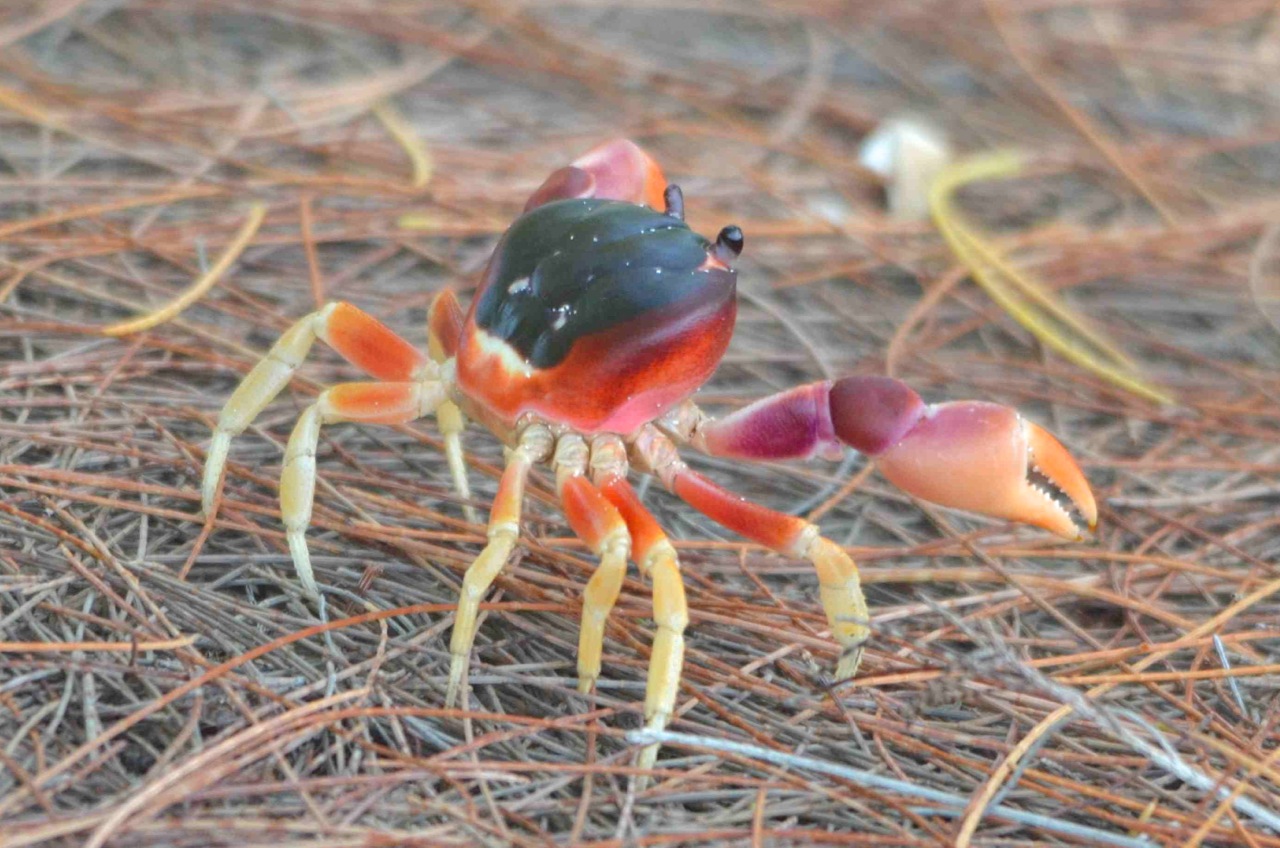
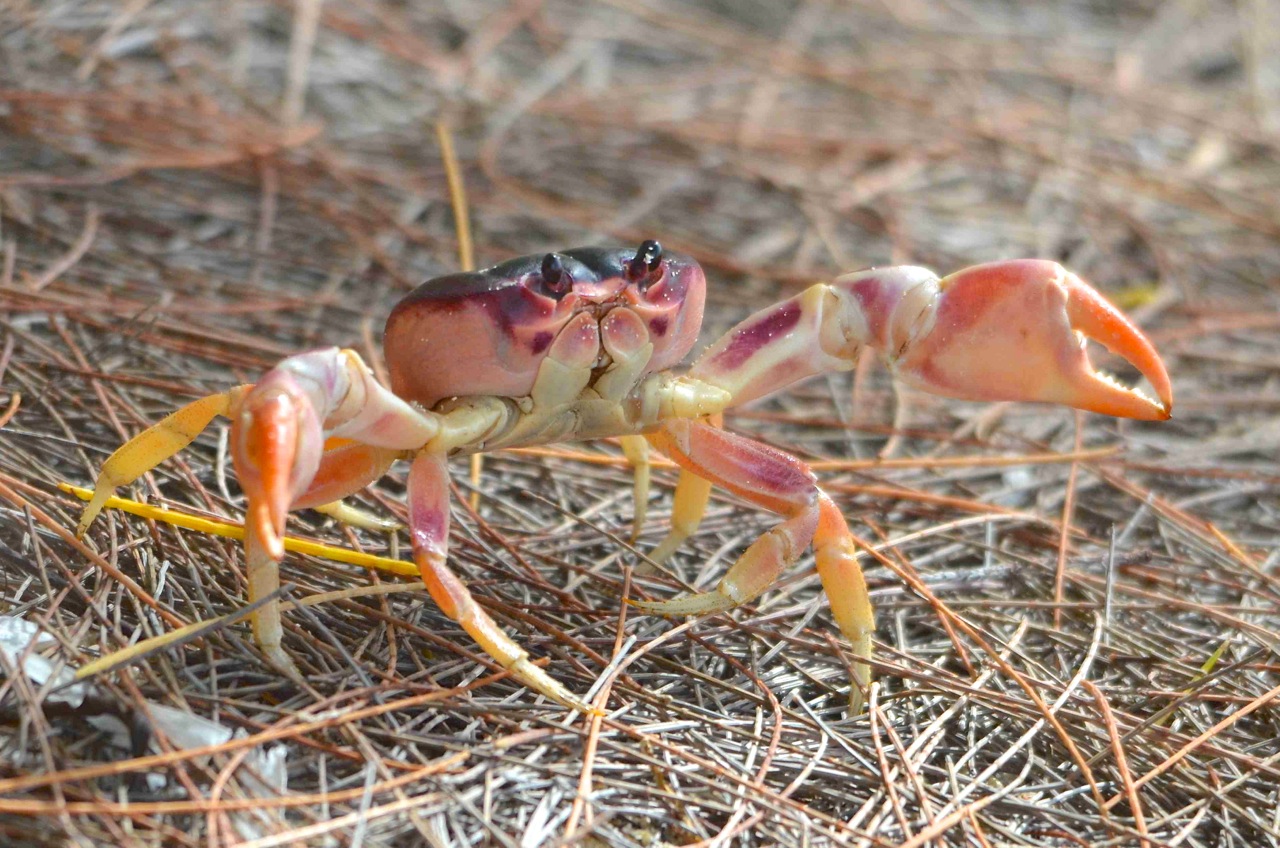
LAND CRAB Land Crab, Bahamas Palm Shores Abaco (Keith Salvesen)Land Crab, Bahamas Palm Shores Abaco 2 (Keith Salvesen)

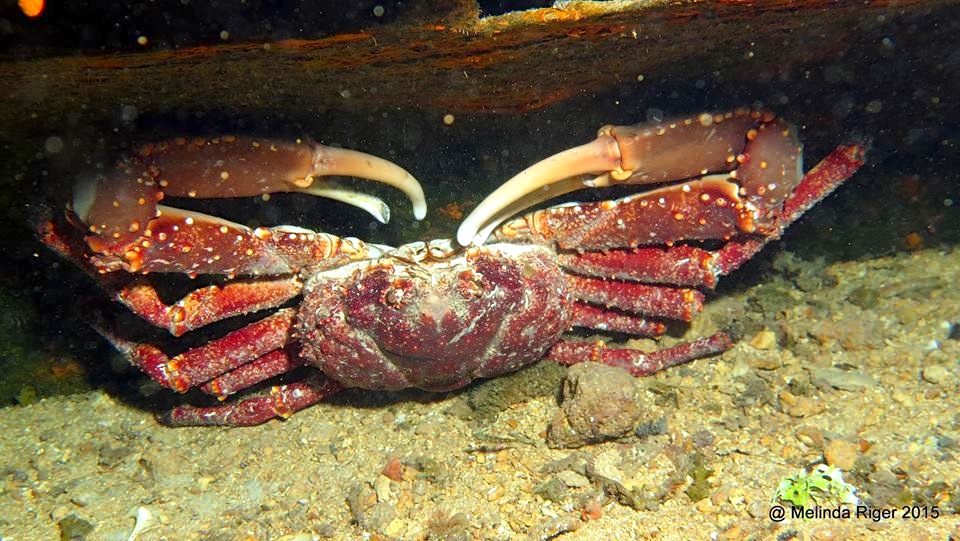
STONE CRABStone Crab ©Melinda Riger @ G B Scuba

ARROW CRAB Arrow Crab ©Melinda Riger @ GB Scuba copy

CLINGING CRAB Clinging Crab © Melinda Riger @ G B ScubaClinging Crab ©Melinda Riger @ G B Scuba copy

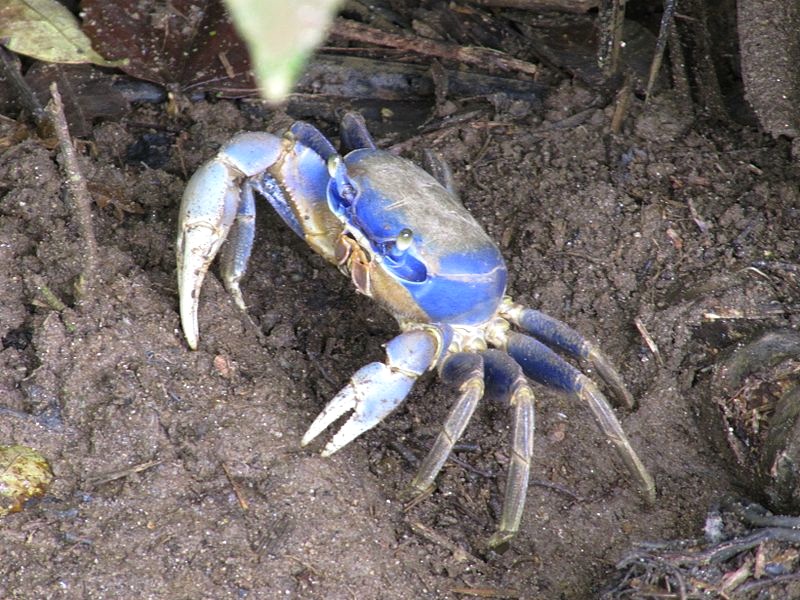
BLUE CRAB Blue crab (Atlantic) - Leoadec Wiki

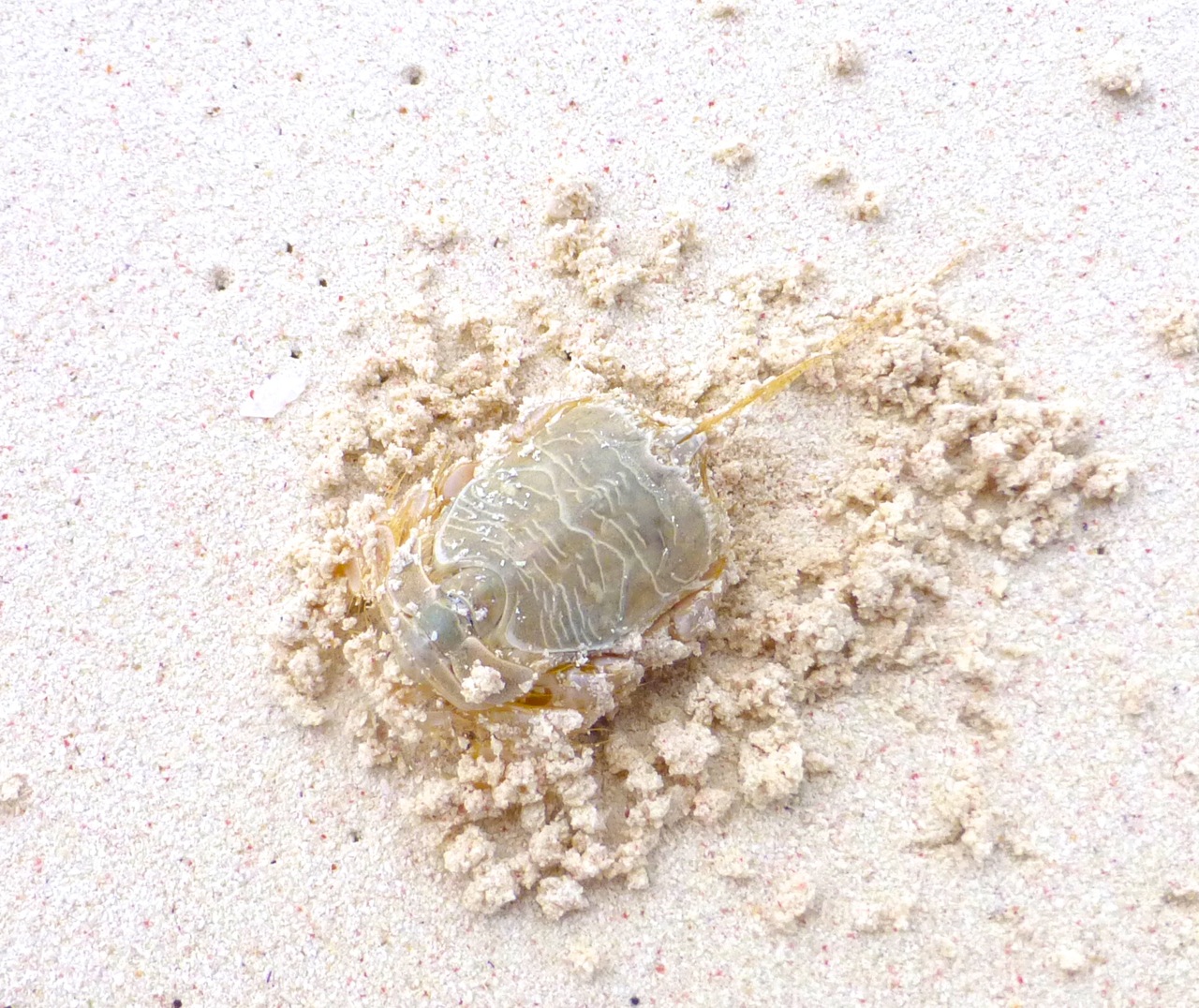
HORSESHOE CRAB (LIMULUS)Horseshoe Crab (Limulus), Delphi Beach, Abaco Bahamas (Keith Salvesen)


Credits: Tom Sheley (1, 2, 3); Keith Salvesen (4,7,8,9,15); Charlie Skinner (5,6); Melinda Riger (10,11,12,13); Leodec (14)

Unknown's avatar

SEEING THE BACK OF HURRICANE JOAQUIN: LATEST UPDATE OCT 3


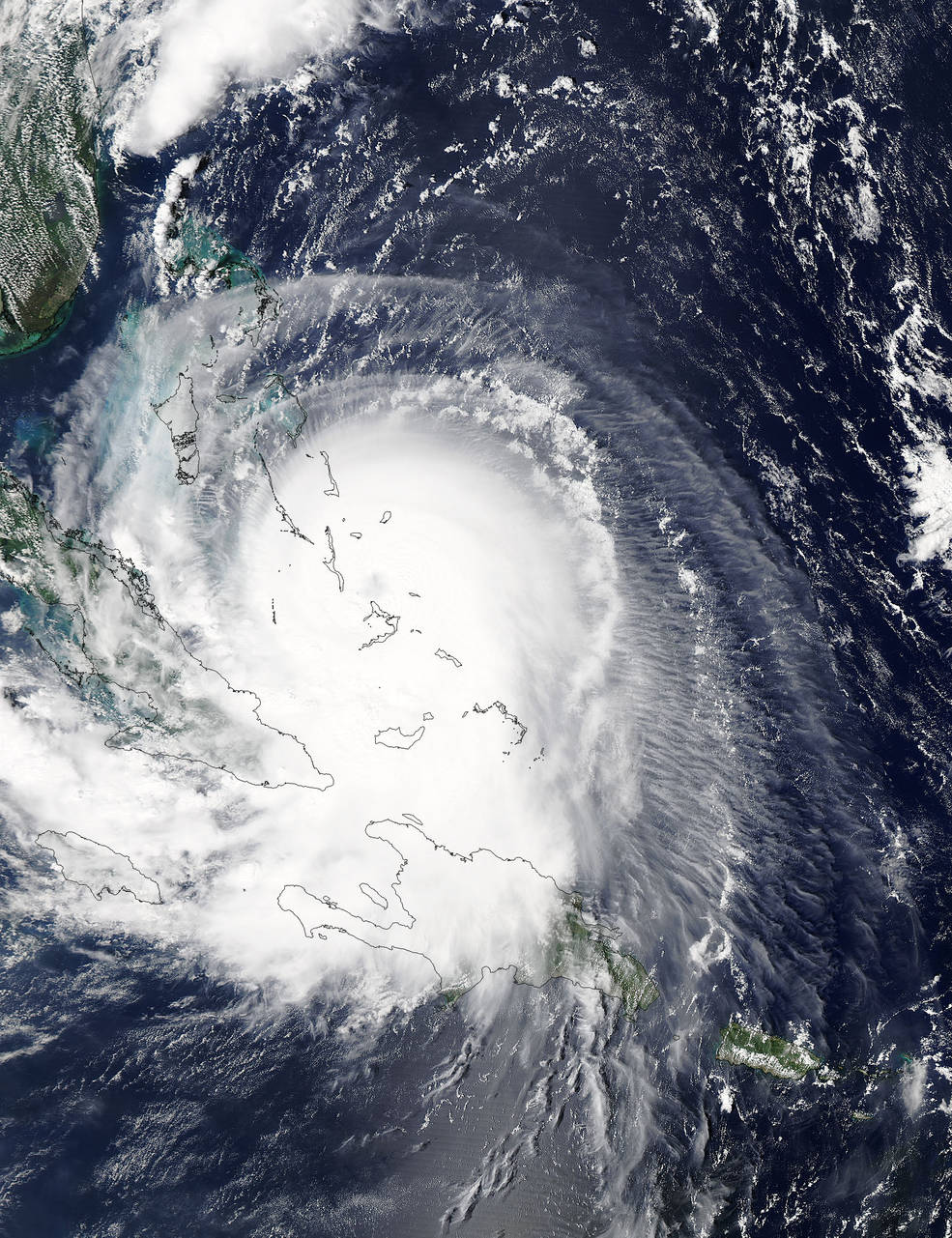
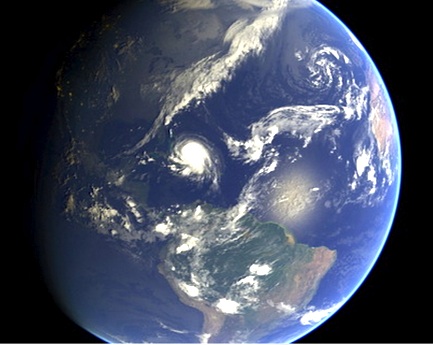
Hurricane Joaquin at dawn from International Space Station, Oct 2 (Scott Kelly / ISS / NASA)

Hurricane Joaquin at dawn from International Space Station, Oct 2 (Scott Kelly / ISS / NASA)

SEEING THE BACK OF HURRICANE JOAQUIN: LATEST UPDATE OCT 3

Since my post yesterday HERE confirming evidence that Joaquin was hooking out into the Atlantic and away from northern Bahamas, the storm has picked up speed as it now heads for Bermuda. It is also on a direct route to Ireland and the UK, but is already weakening. With the storm now reduced to a Cat. 3, a continuing lessening of intensity is predicted.

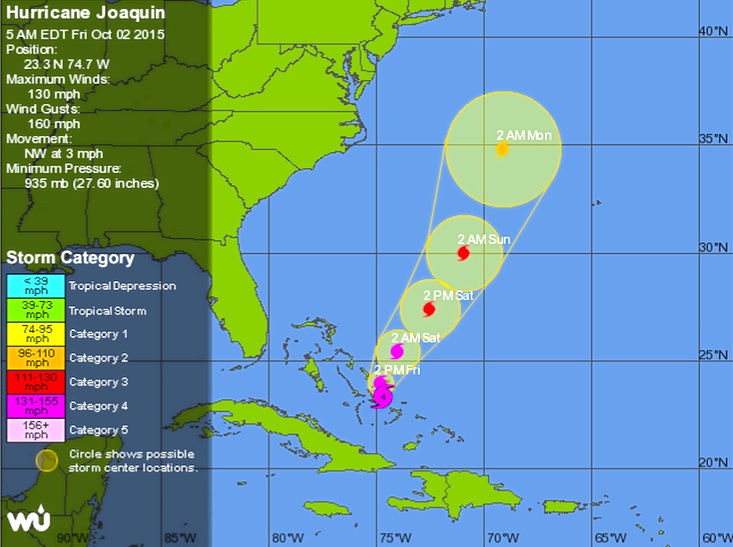
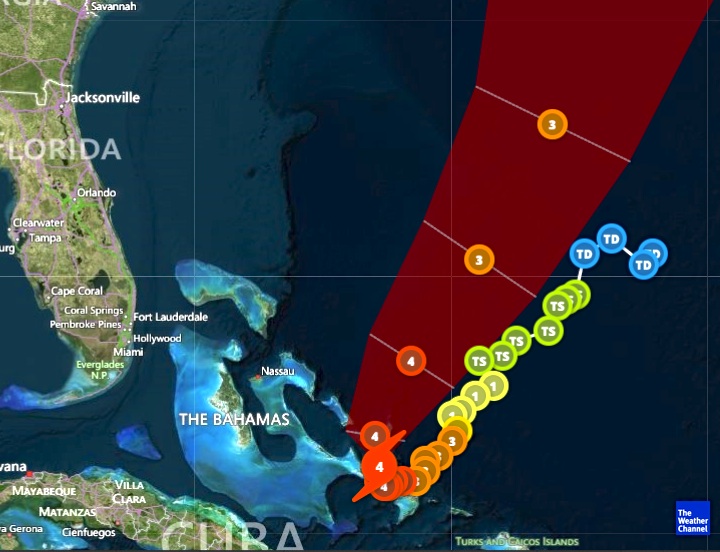
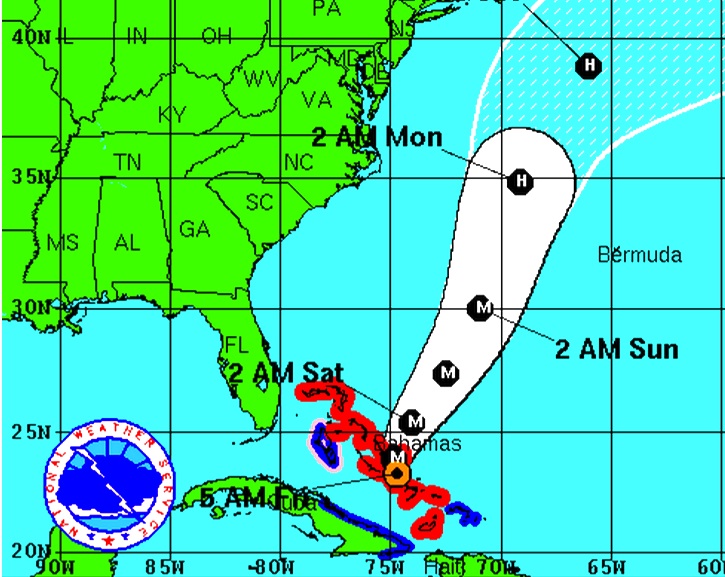
In this second – and, I hope, final – post of the hurricane season, the images below show the current state of play early today. I’ll repeat the weather watch links at the end.

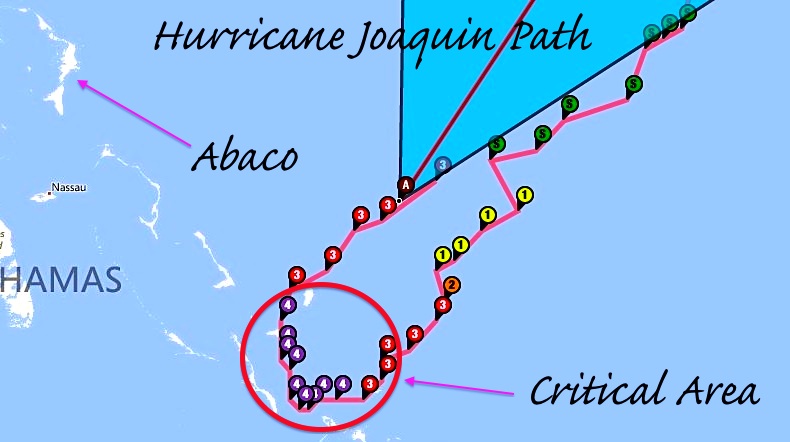
Joaquin clears the Bahamas & heads out into the Atlantic towards Bermuda as a Cat. 3 stormHurricane Joaquin Storm path October 3

Forecast eye-path early on Oct 3Hurricane Joaquin Storm path October 3

The remarkable storm path, hooking round over Central Bahamas & going back on itseslfHurricane Joaquin Storm path October 3

The strange beauty of a hurricane captured from spaceHurricane Joaquin over central Bahamas, seen from space

USEFUL DIRECT LINKS FOR HURRICANE INFORMATION

NOAA / NHC

WUNDERGROUND

WEATHER CHANNEL

ACCUWEATHER

NASA

and for local Bahamas news

TRIBUNE 242

Credit: 'Watts Up With That

Sources: NASA, NOAA, ISS / Scott Kelly, Wunderground, Accuweather

Unknown's avatar

HURRICANE JOAQUIN: LATEST TRACKING UPDATE OCTOBER 2


Hurricane Joaquin Oct 2nd 6

HURRICANE JOAQUIN: LATEST TRACKING UPDATE OCTOBER 2

There’s a great deal of information about Hurricane Joaquin flying around the internet right now, which is completely understandable. How quickly things have progressed since Irene in 2011 in the very early days of this blog, when there was little public information and an almost complete absence of information on social media. I posted daily (or more) updates as the hurricane swept up over the Bahamas. In 4 days, and despite communications being largely blanked, I had over 15,000 hits and a mass of questions along the lines ‘Any news of Treasure Cay’; ‘Can you find out how my boat is – Saucy Sue in Little Harbour’; and ‘Hi I’m on Elbow Cay, can you tell my mom in Maine that I’m ok’ [+ email]…

Here is the position today, at 05.00 EDT, according to the various resources that people turn to. Central Bahamas has taken – is taking – a battering and we have the people there very much in mind. But for the northern Bahamas the picture has improved, with the veer of Joaquin’s predicted path to the northeast increasing overnight. This does not mean an absence of strong winds and big waves – these are already being felt. But the most serious area of this Cat 4 hurricane is not expected to pass over Abaco – the direct concern of most readers of this blog. How different from Irene which wrought its havoc right over the island; and Sandy, which took much the same route.

USEFUL DIRECT LINKS FOR HURRICANE JOAQUIN INFORMATION

NOAA / NHC

WUNDERGROUND

WEATHER CHANNEL

ACCUWEATHER

NASA

and for local Bahamas news

TRIBUNE 242

Anyway, all the best to everyone affected by this fierce storm directly or indirectly, and good luck.

Credit: 'Watts Up With That

Hurricane Joaquin Oct 2nd 1Hurricane Joaquin Oct 2nd 3Hurricane Joaquin Oct 2nd 4Hurricane Joaquin Oct 2nd 7Hurricane Joaquin Oct 2nd 5Hurricane Joaquin Oct 2nd 2Sources: NASA, NOAA, Wunderground, Weather Channel, NYT, Accuweather

Unknown's avatar

MARINE DEBRIS: BALLOONS – WHAT GOES UP MUST COME DOWN…


Marine Debris - Balloons & Plastic (Balloons Blow)

MARINE DEBRIS: BALLOONS – WHAT GOES UP MUST COME DOWN…

Two sisters, Chelsea and Danielle, grew up by a Florida beach. With their parents,they learned from an early age to collect rubbish from the beach and to keep it clean. When they were little, the problems weren’t so great. Gradually, the tide changed. Literally. And indeed littorally. As is a common experience with any shoreline these days however remote and unspoilt, all manner of debris washes in on every tide, from plastic straws to SPACE ROCKET FAIRINGS. There has been a massive increase in ‘single-use’ plastic items. Most of it will take years, decades or even centuries to decompose. And there are deflated balloons, with their strings.

A typical haul of a lot of plastic and several balloons from just one beach collectionMarine Debris - Balloons & Plastic (Balloons Blow)

As ‘business’ on the Florida beach increased, so it became clear that balloons were becoming a significant problem. The increasing popularity of mass releases of balloons at sports events, civic or institutional occasions, and smaller celebrations means 100s or even 1000s of balloons being released into the sky. In most cases they are filled with helium – a finite resource – which carries them high over the earth. Very festive. Then the problems begin. They get caught in thermals, winds and crosswinds, gales and storms. Whether onto land or water, they all have to come down eventually. The problems caused therefore affect creatures inland, on the shoreline and out to sea.

Marine Debris - Balloons & Plastic (Balloons Blow)

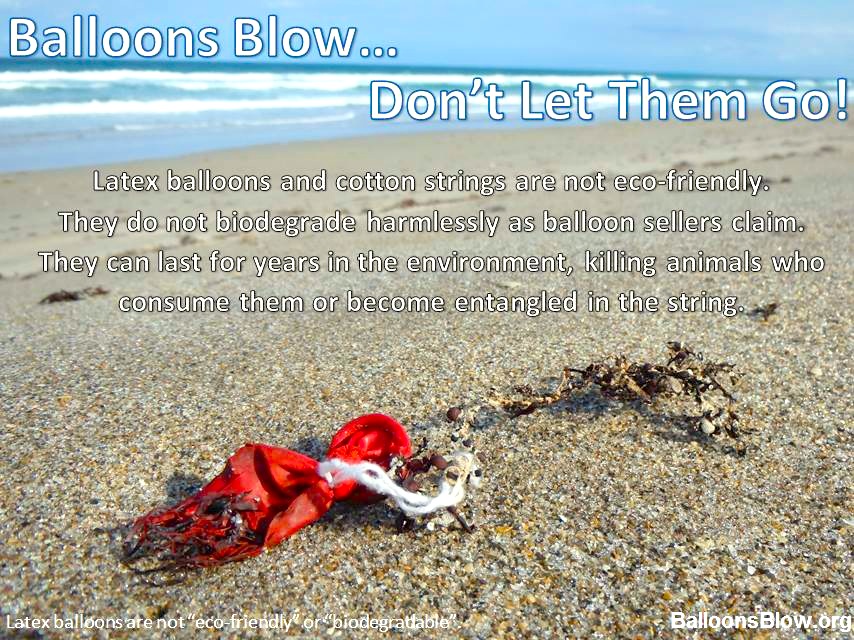
Eventually the sisters decided to take action. They started a website BALLOONSBLOW.ORG, linked to a FB page. They post regularly about their beach clean-ups, now extended to other beaches on the south-west coast of Florida. They also produce balloon-based information sheets and flyers such as these:

Balloons Blow fact sheet

Marine Debris - Balloons & Plastic (Balloons Blow)

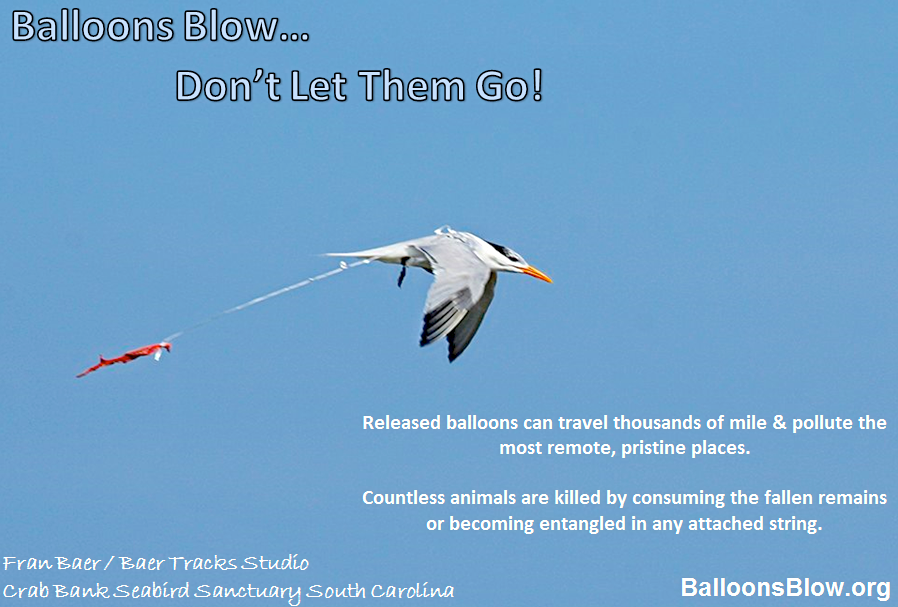
I have a folder in which I keep some horrific images of incapacitated, dying or dead creatures. I use them sparingly because in the main they are upsetting. Almost every one of them involves entanglement in or ingestion of such materials as plastic, mylar, styrofoam, rubber or latex. Here are just 3 examples involving balloon strings – I’ll spare you others I have collected (e.g. a turtle that died trying to excrete the remains of a balloon).

Marine Debris - Balloons & Plastic (Balloons Blow)Marine Debris - Balloons & Plastic (Balloons Blow)Sea Turtle tied up in balloon string (Blair Witherington : NOAA)

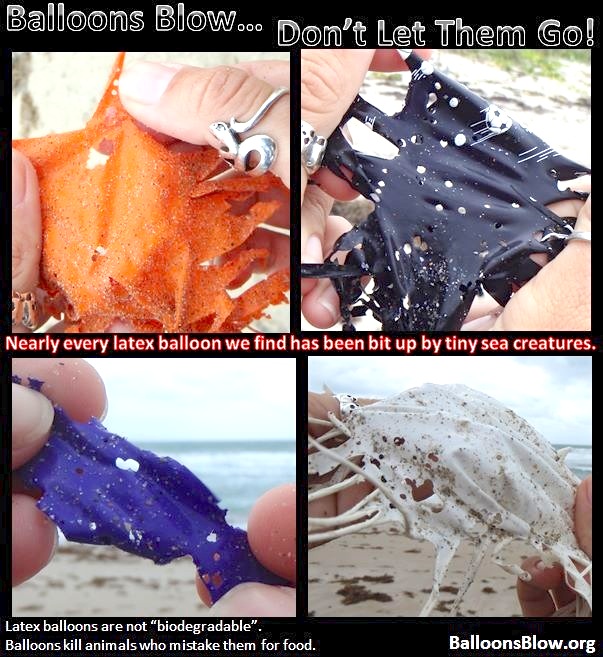
I don’t have a down on ‘fun’ – and nor do Chelsea and Lucy I’m sure. But, now in their 20s, they have had years of direct hands-on experience clearing their beach and one can see why they decided to take wider action. From one area they have accumulated a vast collection of balloons that will take many decades to break down. Even then, the degraded pieces and micro-pieces will be eaten by fish, turtles and birds.

Here’s an illustration of the problem of creatures nibbling away at latexMarine Debris - Balloons & Plastic (Balloons Blow)

Marine Debris - Balloons & Plastic (Balloons Blow)

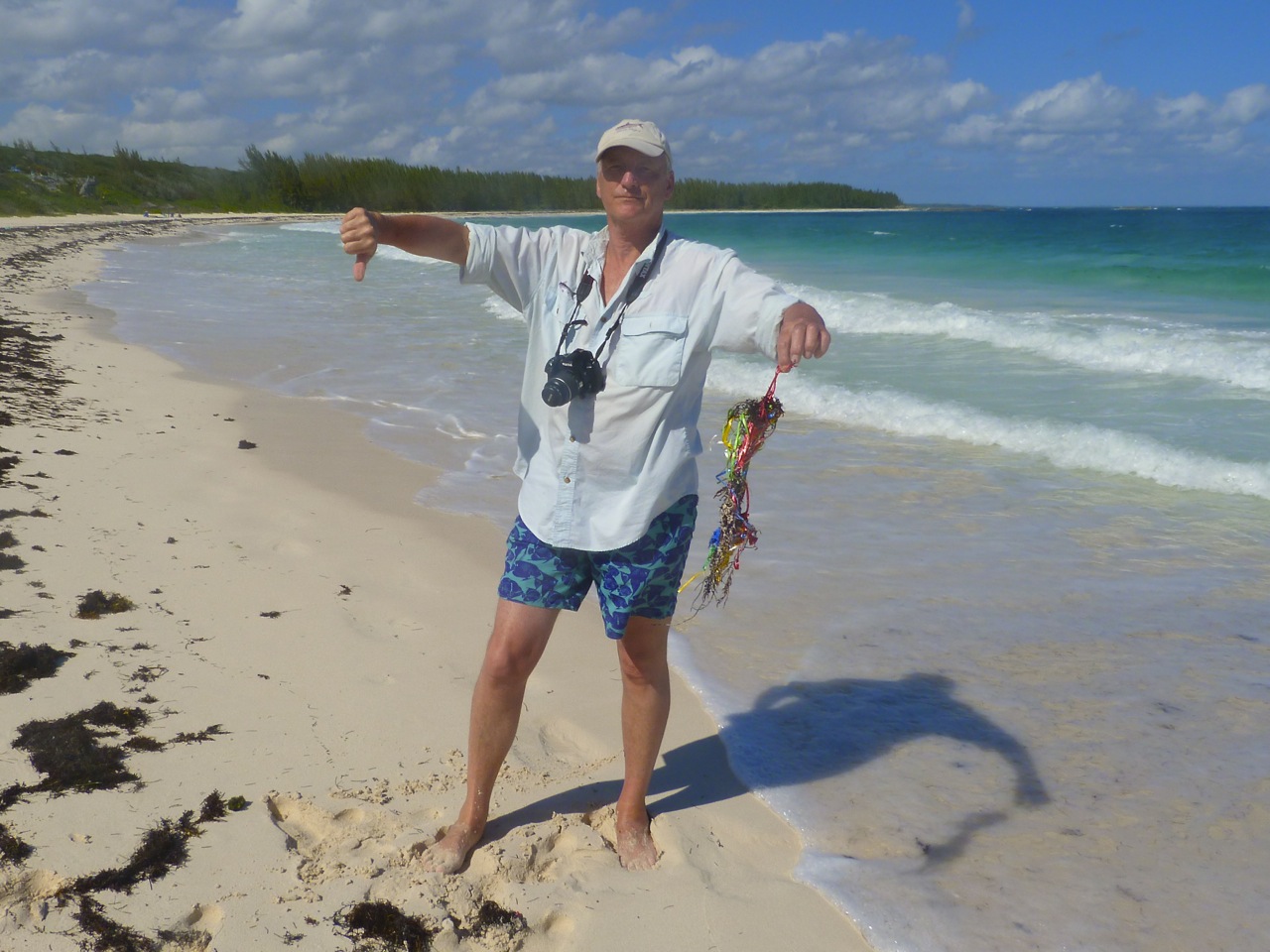
The Delphi beach is very regularly cleaned up, of course, but there’s nothing that can be done to stem the arrival of debris large and small on every tide. Beautiful and remote though the one-mile curved strand may be, one cannot walk far without seeing plastic of some description. As a matter of interest, I tried a test: walking south on the beach in the tide-line, how long would it take to find balloon evidence? The answer was, less than 10 minutes.

Marine Debris: RH on DCB beach - balloon strings

The decomposition rate of various common itemsPlastic trash -5 Gyres Infographic

The Balloons Blow website is constructive in offering festive alternatives to mass balloon releases, rather than merely chronicling the downsides. The balloons and other plastic junk mostly arrives from the western fringes of the North Atlantic Gyre, in the Sargasso Sea, where the trash gets caught in the sargassum and is eventually forced onto the shoreline by currents, winds and tides. 

             North Atlantic Gyre hotspot infographic                           North Atlantic Gyre Garbage Patch wired_com

Marine Debris - Balloons & Plastic (Balloons Blow)

This post has concentrated on the dangers to wildlife caused by latex and mylar balloons that are sometimes claimed to be biodegradable but are not. There’s more to be said about plastic marine trash, but I’ll keep that for another day. 

Marine Debris - Balloons & Plastic (Balloons Blow)

IMG_4836

RELATED POSTS

MARINE DEBRIS / NOAA PAGE

MARINE DEBRIS? NO THANKS!

MAPPING ABACO

Credit:  BALLOONSBLOW.ORG 

Marine Debris - Balloons & Plastic (Balloons Blow)

Unknown's avatar

MAKE FRIENDS WITH ANEMONE: BAHAMAS REEF LIFE


Anemone (Giant) ©Melinda Riger @GBS copy

MAKE FRIENDS WITH ANEMONE: BAHAMAS REEF LIFE

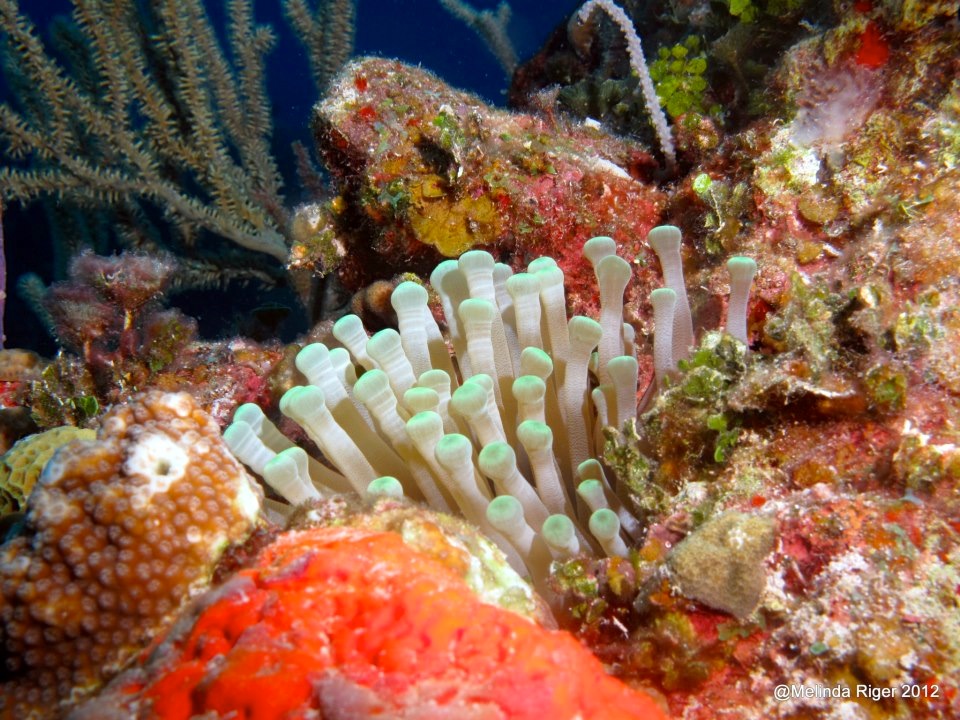
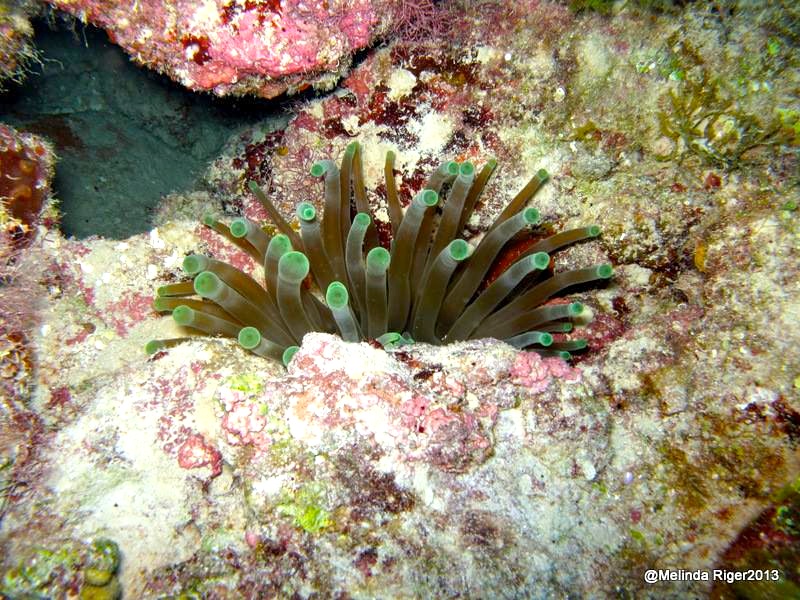
The giant anemone is found in the shallow reefs and lagoons of the Caribbean and western Atlantic. These are, of course, animals and not plants, with many tentacles that surround their mouth. They attach themselves to rock or in rock crevices, mooring themselves securely against the swell of the waves.  

Giant anemone with ‘Speckles’, a spotted moray eelGiant Anemone & Speckles ©Melinda Riger @ G B Scuba copy

ARE THEY USEFUL?

One important feature of a healthy anemone population is the shelter they give to certain small fish and cleaner shrimp species. They act as bases for FISH CLEANING activities, a vital role in the undersea community.

Giant Anemone ©Melinda Riger @ G B Scuba copy

HOW DO THEY HAVE… ERM… SEX?

The sex lives of anemones seems particularly complicated (as they would doubtless think about humans). Cutting to the chase, reproduction involves the synchronous spawning of eggs and sperm, with fertilisation occurring in the surrounding water. The fertilised eggs become larval and spread in the water column, which increases their chances of survival. They settle on the BENTHOS, where they develop a “pedal leg” (rather in the manner of a gastropod) which in due course they will use to move from A to… A plus a very short distance.

Giant Anemone ©Melinda Riger @ G B Scuba copy 4

These anemones come in many colours. The tentacles often have tips of various hues, and are the only free-floating part of the animal. The body is safely attached to the rock. 

The giant anemone has primitive defensive mechanisms. It needs them, because it crawls so slowly that successful escape by moving is unlikely. Instead they reduce their size by drawing their tentacles into, or as close as possible to, their gastric cavity. They make room for this by forcing most of the water out. This reduces their overall size and of course removes – or at least diminishes – the ”50 colourful tentacles waving around” predator-magnet problem. But also…
Giant Anemone ©Melinda Riger @ G B Scuba copy 7
…they have a trump card. The tips of the giant anemones’ tentacles are packed with cells that contain a toxin. When stimulated, the cells (‘nemocysts’) “explode out of the capsule, impaling the attacker”. The toxin is then discharged, causing extreme pain and paralysis. How cool is that? It’s the superpower we’d all like to have! Or is that just me?
This is also how an anemone feeds, by quickly paralyzing its prey with the ‘toxic tentacles of doom’. The prey is moved to the mouth and swallowed whole…
Giant Anemone ©Melinda Riger @ G B Scuba copy 6
Credits: Melinda Riger of Grand Bahama Scuba, with thanks as always
Unknown's avatar

MANGROVE DIE-BACK IN THE ABACO MARLS: THE FACTS


Mangroves, The Marls, Abaco, Bahamas (Keith Salvesen, Rolling Harbour)

MANGROVE DIE-BACK IN THE ABACO MARLS: THE FACTS

For some time now, there has been understandable concern about the increasing evidence of mangrove die-back in the Abaco Marls and elsewhere in Abaco waters. Scientific investigations are ongoing and you will find some of the survey results so far on the excellent Abaco Scientist interactive map HERE. You’ll find other relevant and authoritative mangrove material if you check out the BLOG menu of the website.
Abaco - The Marls

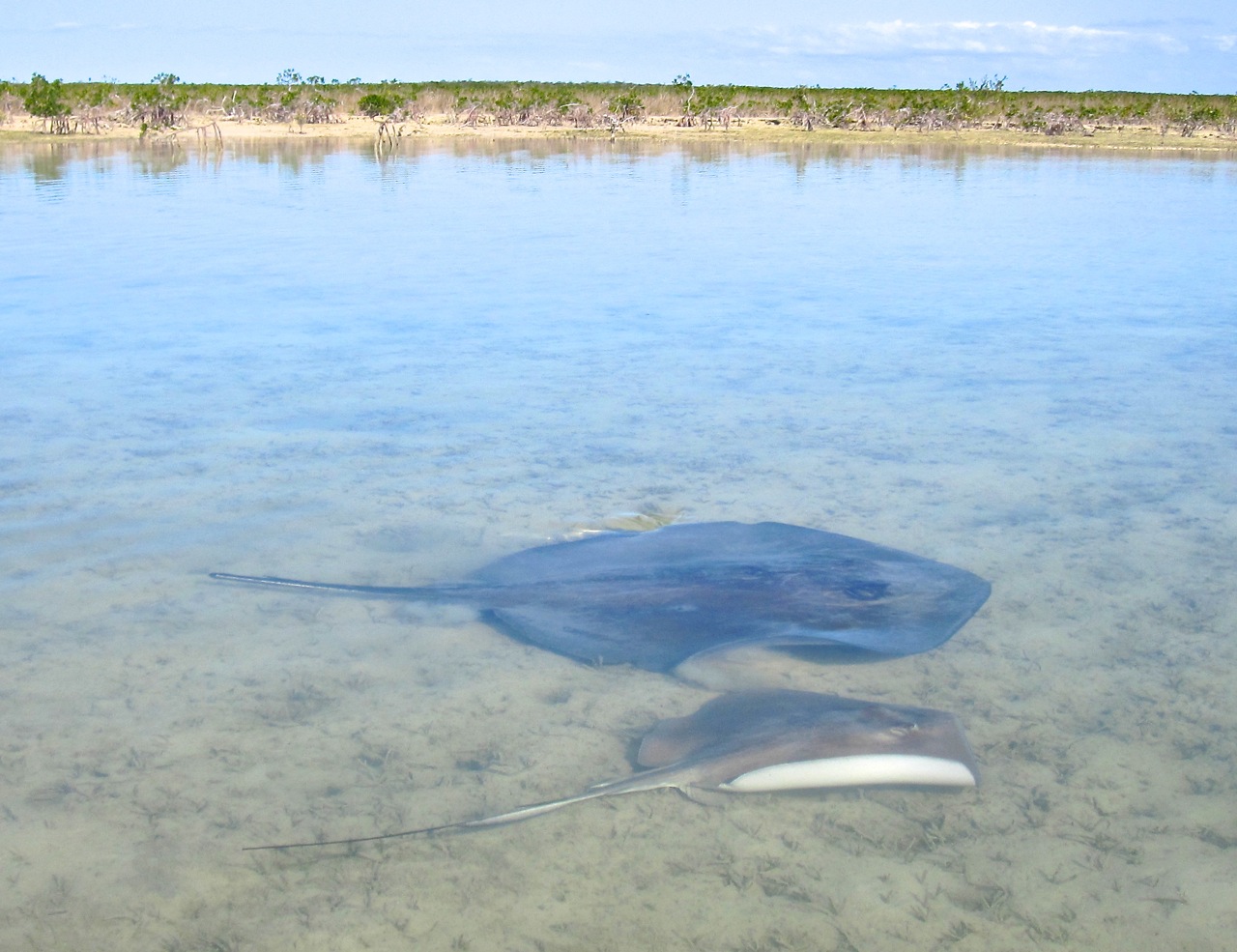
The ‘200 sq. miles’ in my map is debatable, depending what one includes. Other estimates are of 300 or even 400 sq. miles. Whichever, the Marls cover a massive area of mangroves, islets, flats, channels and wonderfully diverse wildlife. A large proportion of the many species – fish, birds, turtles etc – depend on the complex ecology of the mangroves for food, shelter and breeding. Depletion of the mangroves from whatever cause will have a direct effect on the creatures of the Marls.

Stingrays Abaco Marls 6

Ryann Rossi, a PhD student with North Carolina State University, has been researching the worrying phenomenon of mangrove die-back in the Marls this summer. She has written an interesting and informative  account (conveniently in the RH ‘Facts about…’ style) that was published in Abaco Scientist last week. The blue links will take you to the ABSCI site for further information on each topic. I’m grateful to Ryann and ABSCI for permission to use the material.

Five Things to Know About the Mangrove Die-back in The Marls (at this point, anyway)

1. This die-back appears to be the result of multiple stressors acting together. Think of it in the sense of our own body – when our immune system is down, we are often more susceptible to getting sick. The same thing is likely happening to the mangroves.Mangrove Die-back 1 (Abaco Scientist : Ryann Rossi)

2. It appears as though a fungal disease may be taking advantage of already stressed mangroves and causing die-back. We did preliminary surveys across Abaco and found fungal lesions nearly everywhere. However, the fungus was present in different densities in different areas. In the die-back area nearly all the leaves remaining on trees have lesions. We think that this pathogen capitalized on the mangroves being weakened by other stressors such as hurricanes, which cause extensive leaf drop, change in the movement of water, change in sedimentation and erosion.

Mangrove Die-back 2 (Abaco Scientist : Ryann Rossi) jpg

3. We are still working on identifying the pathogen associated with the lesions we’ve found. We are confident that it is a fungus and are currently growing fungal cultures in the lab to examine defining morphological characteristics in addition to using DNA sequencing to identify the culprit.

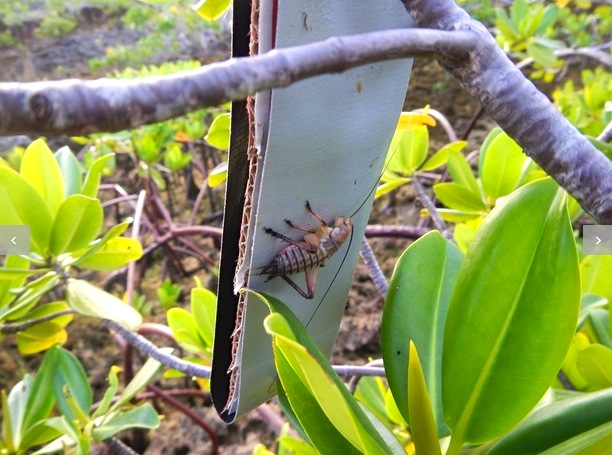
4. We have documented the presence of the Robust Bush Cricket (Tafalisca eleuthera) in the die-back areas as well as other areas with high densities of lesions. These crickets are documented to consume Red and White mangrove leaves. As such, we were concerned about their potential role in die-back. We set out a caging experiment to exclude the crickets from certain dwarf Red mangrove trees to see just how much grazing they may be doing in the die-back area. This experiment is ongoing.

Mangrove Die-back 3 (Abaco Scientist : Ryann Rossi) jpg

5. The take home: there is likely more than one causal agent of the die-back in The Marls. Many factors govern mangrove productivity and functioning: nutrient availability, salinity, sedimentation rate, herbivory, and disease are just a few of the factors that contribute to overall mangrove function making it very difficult to pin point which factors may be driving the die-off. On the bright side, we are confident that we have a lead on the causes and we are working hard in the field and laboratory to fully understand what is going on in The Marls.

By Ryann Rossi|August 26th, 2015|Disease, fungus, Insects, Mangroves and Creeks, The Marls
All pics below taken while fishing on the Marls except Melinda’s shark (I’ve never got a good one)
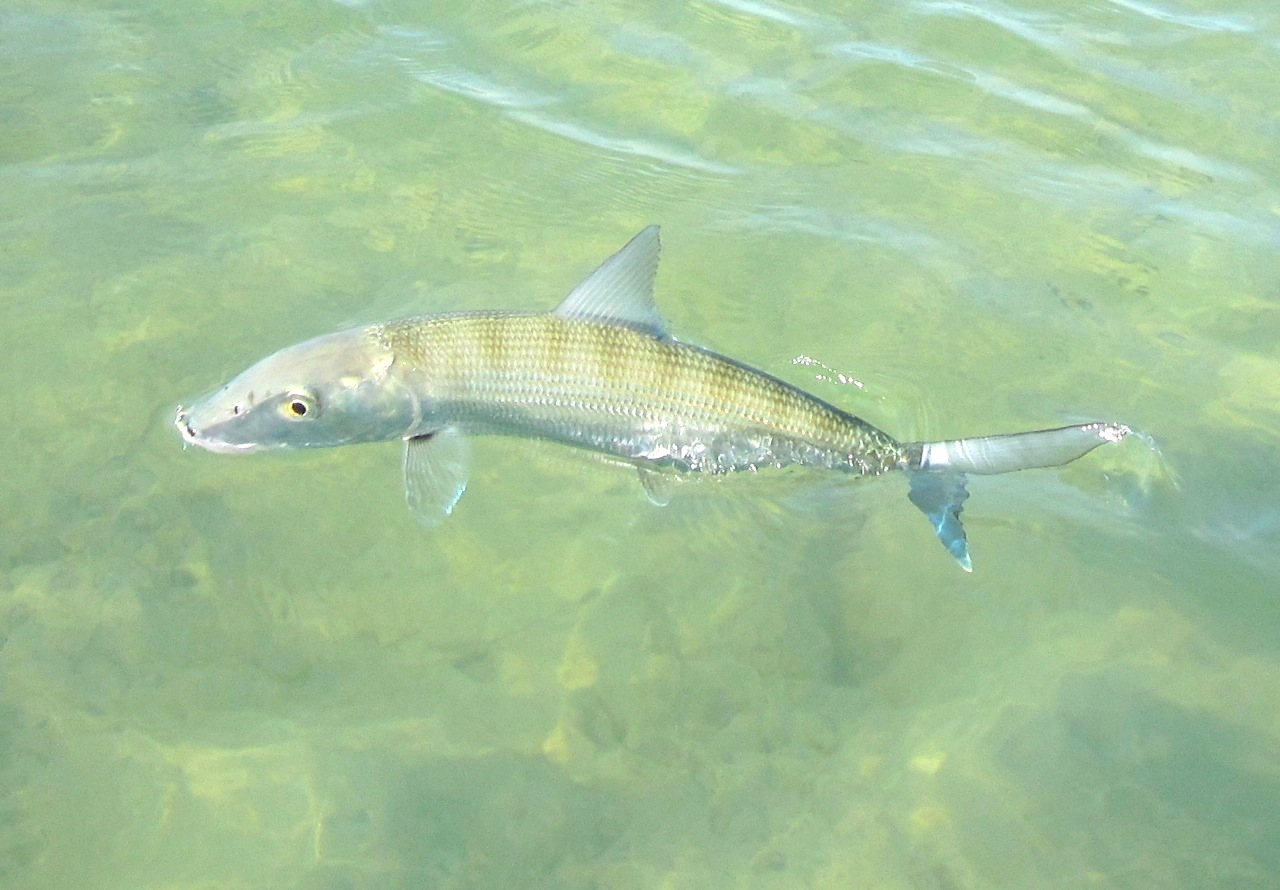
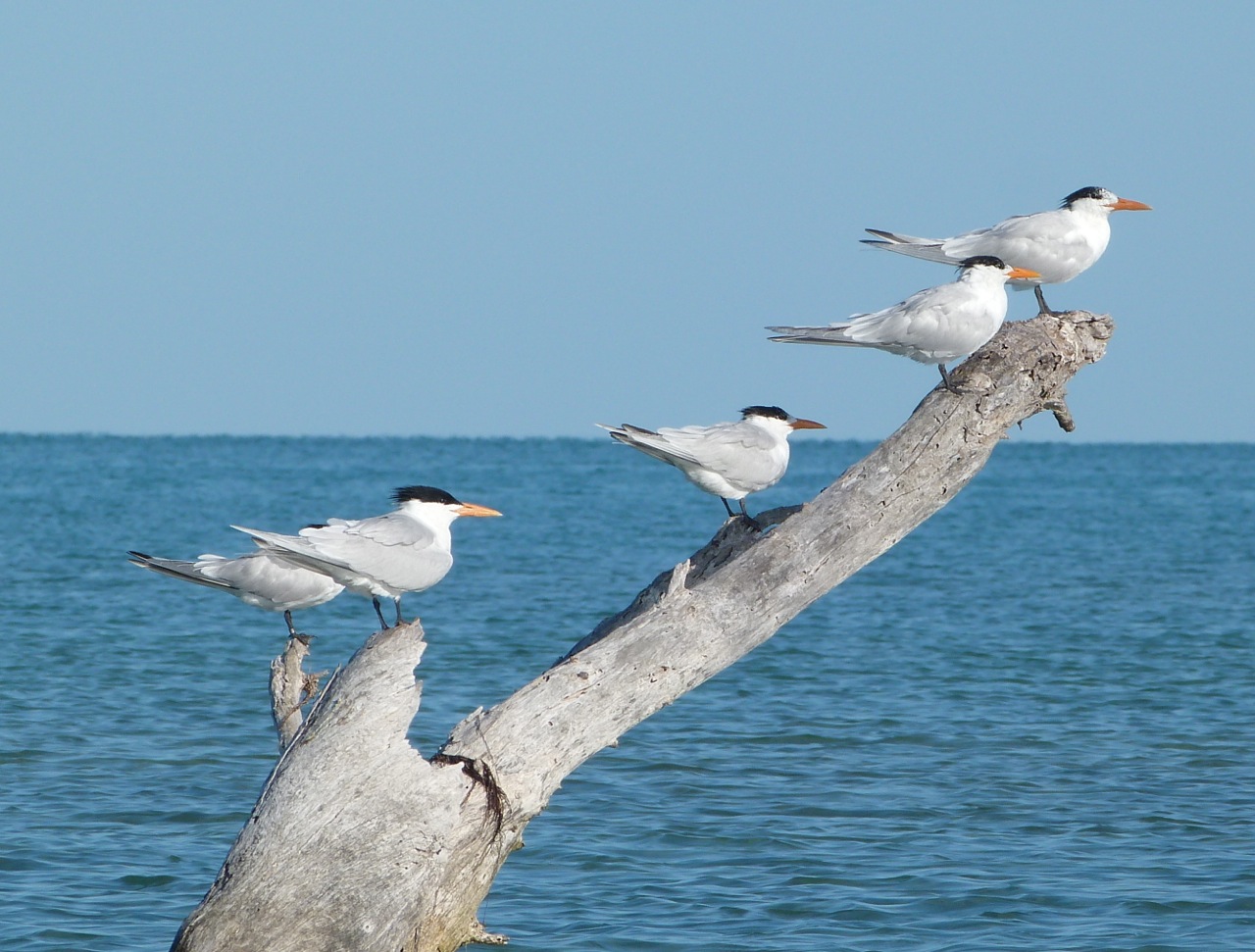
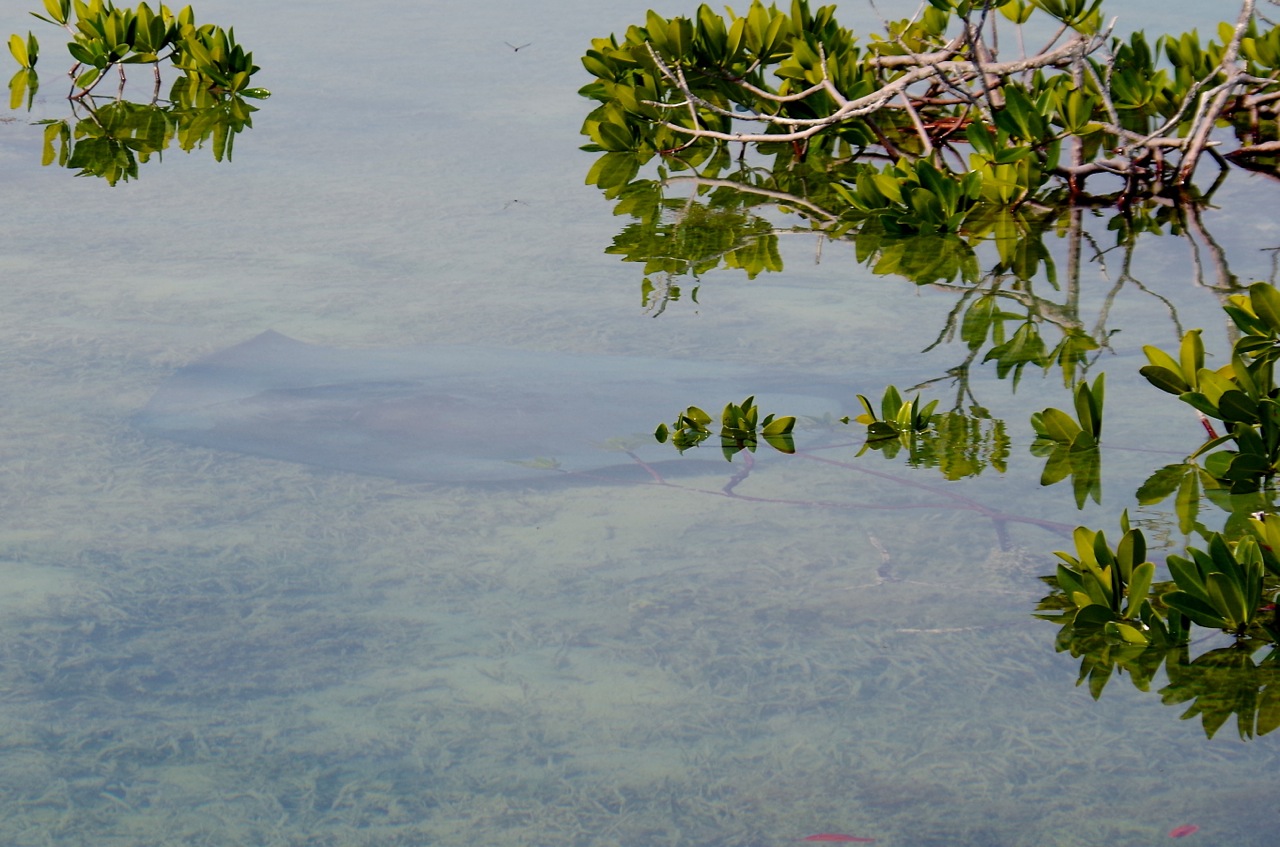
Hawksbill Turtle, Abaco Marls (Keith Salvesen)Bonefish Abaco Marls 4Shark 4 ©Melinda Riger @ G B Scuba copyOsprey - Abaco Marls 1 Reddish Egret (White Morph), Abaco MarlsRoyal Tern, Abaco, Bahamas (Marls) 3Willet, The Marls, AbacoSouthern Stingray, Abaco Marls (Keith Salvesen 4)
FRIENDS OF THE ENVIRONMENT has also included an article on die-back by Ryann in its latest Newsletter:

Mangrove Die Off on Abaco by Ryann Rossi, NCSU

This summer Stephanie Archer and I continued research efforts focused on determining the cause of the mangrove die-off in The Marls (work funded by the National Science Foundation). Our efforts were predominantly focused on the fungal pathogen we found associated with the die-off site. We created a small citizen science and outreach project to document the presence or absence of the pathogen across Abaco. This project consisted of short surveys and leaf collections. In total, 92 areas were surveyed including locations from Abaco and San Salvador. We also took this outreach project to the annual Bahamas Reef Environment Education Foundation (BREEF) teacher training conference.  There we disseminated survey packets to teachers from islands throughout The Bahamas who will help us collect more data on the presence (or absence) of this pathogen on other Islands.

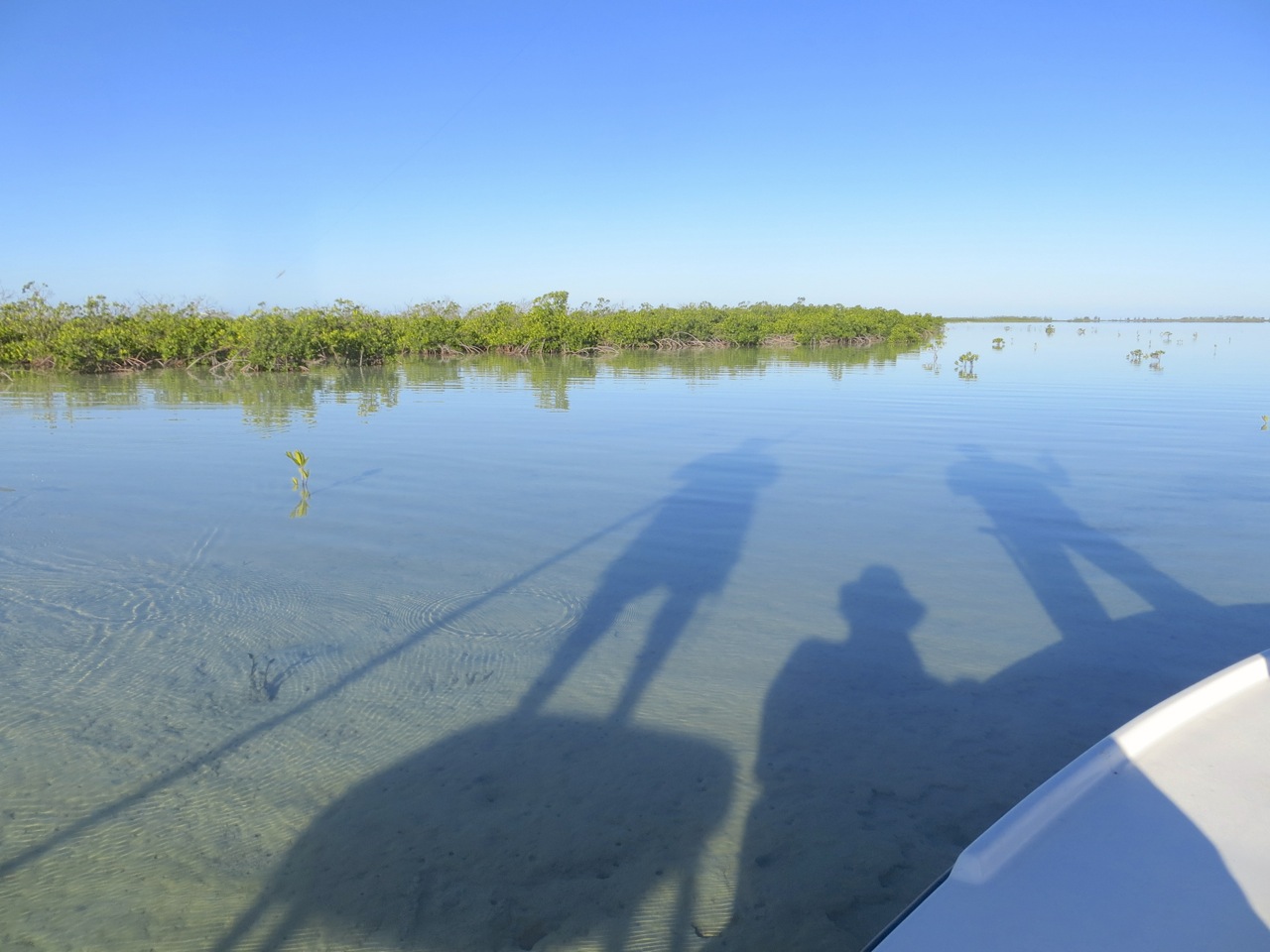
3 men on a skiff, Abaco Marls (Keith Salvesen : Rolling Harbour)

Three men on a skiff – Abaco Marls

On Abaco, we constructed an experiment to investigate the role of grazing and the presence of fungal lesions on Red mangroves. We simulated grazing using crafting scissors to cut small sections on 600 leaves in 4 different mangrove creeks. We observed the leaves for 28 days to determine if cutting leaves predisposed leaves to fungal infection. At these sites we also trapped for insects to gain an idea of what kind of grazers may be chewing on the leaves. We also did a series of disease incidence surveys that will be routinely monitored for disease progress over the next 2 years. These surveys will allow us to systematically track the progress of the disease. In addition to our field work, we spent many hours in the laboratory isolating fungi from leaves to grow in culture. These cultures were brought back to North Carolina State University and will be sequenced in order to help us identify the fungal pathogen responsible for making the lesions on the mangrove leaves.

Mangroves, Abaco Marls (Keith Salvesen)

Credits: Source material Ryann Rossi; Abaco Scientist; all photos © Keith Salvesen @ Rolling Harbour except those by Ryann / ABSCI in the main article and Melinda Riger’s cool shark

Unknown's avatar

ABACO’S BIRDING HOTSPOTS (42 OF THE BAHAMAS TOP 100)


Black-necked Stilt, Abaco (Tom Sheley)

ABACO’S BIRDING HOTSPOTS (42 OF THE BAHAMAS TOP 100)

Right now, I’m doing daily checks on the indispensable EBIRD CARIBBEAN in relation to the ABACO PIPING PLOVER WATCH project (and incidentally if you encounter one or more on a beach near you, details would be very welcome – below is what to look out for!).

Piping Plover, Abaco - Bruce Hallett

It occurred to me to check out the contention that Abaco is Numero Uno birding destination in the Bahamas (though sadly lacking the flamingoes, except for vagrants; and the Bahama oriole, now extirpated and confined to select areas of Andros). Sure enough, Abaco has 42 out of the top 100 birding hotspots. In the map below, gray pointers indicate a few observations, blue means 50+ and green represents 100+. Nowhere has yet achieved the flame-red pointer – the ultimate hotspot accolade…

Abaco Birding Hotspots Map (eBird)

People often ask where best to go for quality birding on Abaco. The answer depends of course on the season and on what they are after – for example shorebirds or warblers; parrots or absence of parrots and so on. The Abaco 42 are listed below. There are a couple points to make about the hotspot list:

  • There is a degree of duplication, eg Gorda Cay / Castaway Cay being shown as separate entries, as is Angelfish Point / Angel Fish Point
  • Also, the data gathered by eBird is entirely dependent on regular uploads of checklists. Inevitably the birders will mostly be regulars, with their own preferred beats or perhaps with an interest limited to the area where they live. Some records show long gaps – sometimes a couple of years – between reports. So the eBird data can only give an overview, not a precise record of actual observations or birding effort and success. 

Bahama Woodstar male 3.1.Abaco Bahamas.2.12.Tom Sheley copy
In very general terms, and assuming a broad birding interest, I would recommend the Treasure Cay area; in and around Marsh Harbour; the stretch east of the Highway that takes in Bahama Palm Shores, the Abaco Neem Farm, Delphi, Crossing Rocks & Gilpin Point; the National Park; and Sandy Point. I’m sure there will be other views, but I am thinking primarily of the visitor who has but a single day to spare from a packed schedule of fishing, swimming, sunbathing, eating and drinking… [nb as a soi-disant photographer I’m not so keen on the dumps and landfill. Yes, the birding can be good. No, I don’t want to feature rubbish in my already rubbish photos…]

American Oystercatcher4.1.Delphi Club.Abaco Bahamas.6.13.Tom Sheley RH 2

Here’s the eBird list, omitting all the non-Abaconian hotspots. Clicking on the links will take you straight to the relevant location’s latest reports and show some of the species seen there. I haven’t checked every link, but spot-checks suggest they work ok…

3 Treasure Cay GC
4 Abacos–Citrus Farm near Treasure Cay

5 Abaco–Sandy Point

8 Angel Fish Point

10 Marsh Harbour

12 Abaco–Crossing Rocks

13 Abacos–Treasure Cay Dump

14 Abacos–Treasure Cay West Side

18 Abaco Cays IBA–Great Guana Cays

20 Abacos–Treasure Cay Sunset Ridge and vicinity

22 Robert’s nursery, ponds and marls overlook

23 Abaco–Bahama Palm Shores

28 Abaco Cays IBA–Green Turtle Cay

32 Gilpin Point

35 Hope Town, Elbow Cay

37 Big Bird

38 Castaway Cay

41 Man-o-war Cay

44 Abaco National Park IBA

45 Marsh Harbour–Landfill

52 Island Homes–Beach

57 Abaco Beach Resort

60 North Atlantic Abaco Cays IBA

62 North dump (Abaco)

65 Marsh Harbour

69 Cherokee Sound

70 Great Guana Cay

72 Green Turtle Cay Sand Spit

73 Angelfish Point

81 Green Turtle Cay

82 Track north of Hwy

86 Southern Abaco IBA

87 Abaco Neem farm

88 Marsh Harbor Airport

89 Abaco–Crown Haven

91 Little Abaco IBA

92 Abaco–Hole-in-the-Wall

93 Camp Abaco

94 Little Harbour

96 Castaway Cay

97 Cooper’s Town

98 Crossing Rock / Island Homes

Bahamas-Great Abaco_4846_Bahama Yellowthroat_Gerlinde Taurer copy

RELATED POSTS

AUDUBON’S ‘PRIORITY BIRDS’ ON ABACO

ABACO BIRDS FOUND IN NYC (& VICE VERSA)

THE BIRDS OF ABACO”

Reddish Egret, Crossing Rocks, Abaco (Keith Salvesen)11

Credits: Tom Sheley, Bruce Hallett, Gerlinde Taurer, RH

Unknown's avatar

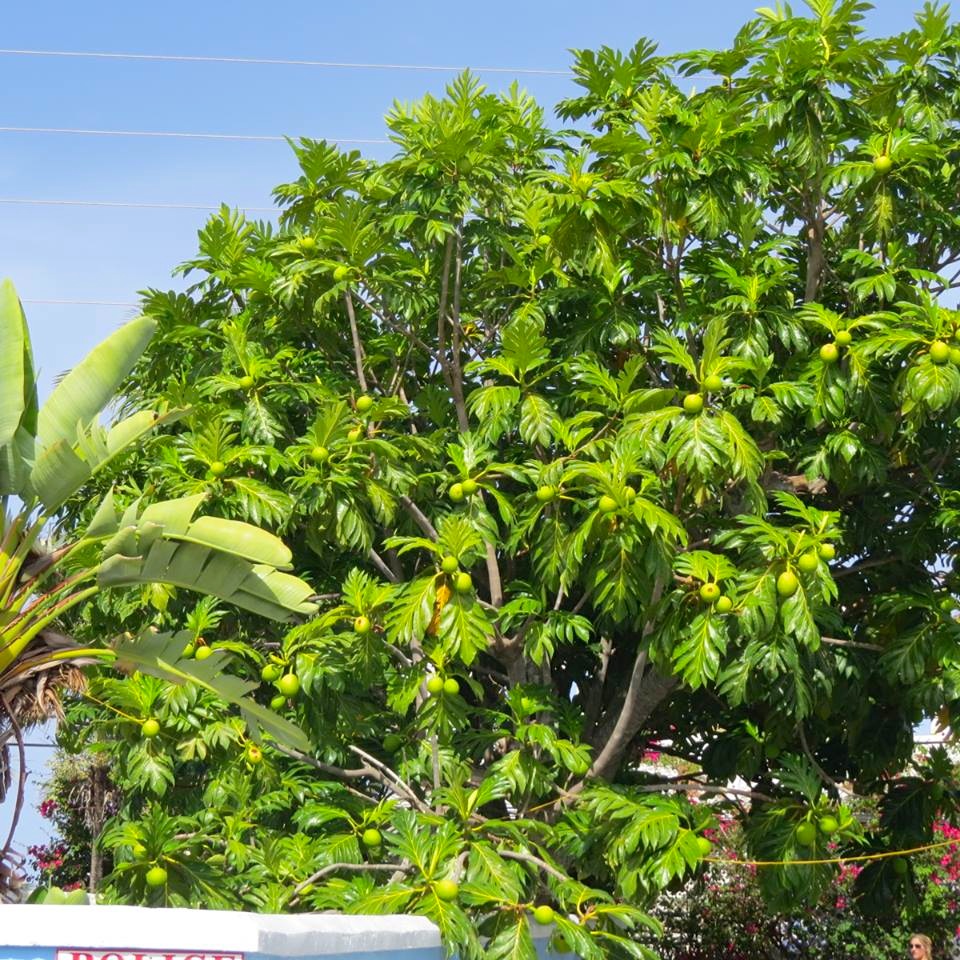
BREADFRUIT: NATURE’S BOUNTY (WITH ADDED MUTINY)


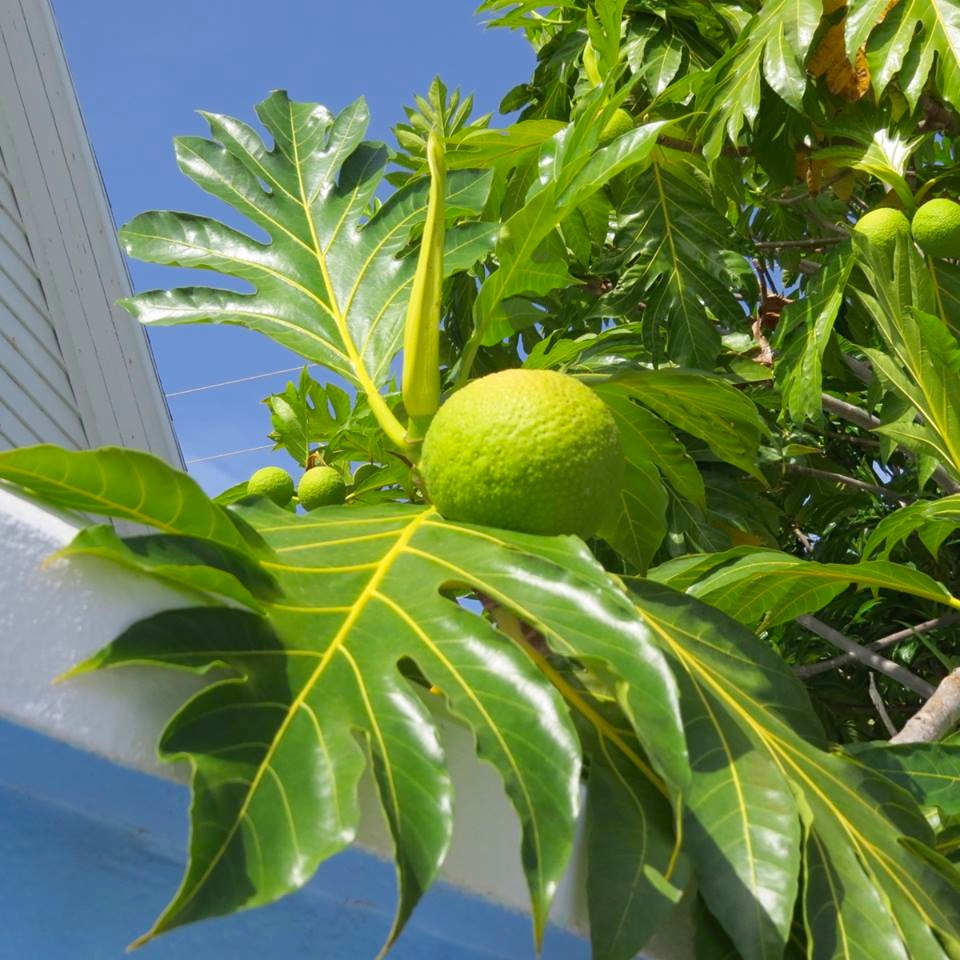
Artocarpus altilis - breadfruit (Hans Hillewaert)

BREADFRUIT: NATURE’S BOUNTY (WITH ADDED MUTINY)

Capt. William Bligh achieved fame for all the wrong reasons. Despite a distinguished and wide-ranging seafaring career he is widely remembered for just two things: (1) The Bounty and (2) Mutiny On. In 1787, he was dispatched to Tahiti to collect specimens of breadfruit (a fruit of the Pacific islands, in particular Polynesia) to help provide food for the British colonies in the West Indies. To be clear, the breadfruit was intended to be a basic and cheap staple food not just for settlers but also for the indigenous population.Breadfruit 2

Capt. Bligh’s Bounty crew unfortunately mutinied – possibly to do with the amount of water the breadfruit required compared to their own meagre rations – and threw overboard the hundreds of breadfruit plants that were in transit. Then they set Bligh with his loyal officers and crew adrift… He was later court-martialled but cleared of culpability for the mutiny. 
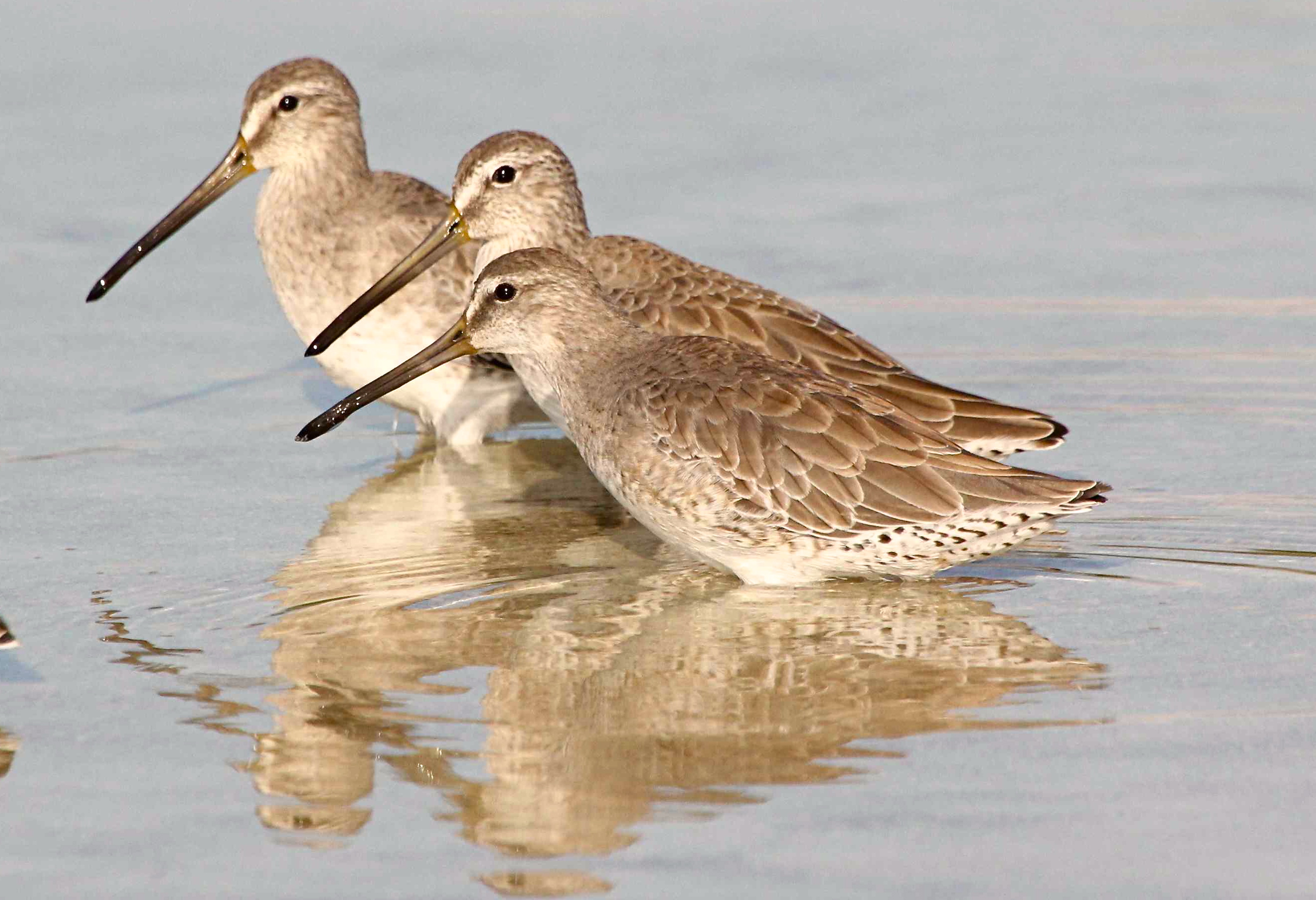
Mutiny on the HMS Bounty (Robert Dodd)

This isn’t the place for a disquisition on the Mutiny. You can read all about it HERE. Or better still, watch one of the rollicking all-star-cast films based loosely on the episode for a careful and accurate historical record of the events that will buckle your swash…

Mutiny_on_the_Bounty_Poster (1935)     220px-Poster_for_Mutiny_on_the_Bounty

Following that skirmish, and indeed blemish on his record, in 1793 Capt. Bligh was yet again charged with the task of shipping breadfruit trees from their origin to the Caribbean. His heart must have sunk, yet finally he succeeded, only for those on the eating end to express considerable distaste for such a bland, starchy fruit. It took a long time to catch on, and its culinary versatility was only discovered many decades later. By which time slavery had thankfully been abolished anyway.Breadfruit image (Pacific site)

The most famous breadfruit tree in all Abaco is to be found in Hope Town (Elbow Cay). I can do no better than display the notice that proudly proclaims the historic significance of the tree; and of course the tree itself.

Breadfruit Tree Notice, Hope Town Abaco (Dp PatersonBreadfruit Tree, Hope Town Abaco (Dp Paterson)

Unusually for a fruit plant, a true breadfruit Artocarpus altilis does not produce seeds. It is propagated by removing the suckers that grow at at the base of the tree.

For those unfamiliar with the fruit and its interior, here it is in both slice and cross-sectionBreadfruit sliced (US Pacific Basin Agricultural Research Center)

BREADFRUIT IN ART

Breadfruit has received artistic recognition over the years. Here are some examples – the first, very jolly (and an early representation of the Polydamus Swallowtail butterfly, I think); the second, quite dull; the third, instructional (oddly equating breadfruit with tea, coffee and chocolate); and the fourth, frankly not at all appetising to look at…

Breadfruit with butterflies (Royal Botanic Garden, Kew)Breadfruit (Royal Botanic Gardens, Kew)

                                 Breadfruit (John Frederick Miller)                                  Breadfruit drawing  John Frederick Miller

      Breadfruit & related plants used as food (William Rhind (1841)     Breadfruit etc William Rhind (1841)

Breadfruit - Bahamas Stamp

WORLD DISTRIBUTION OF BREADFRUIT

Breadfruit will flourish only within a certain latitude range where the rainfall and temperature suit it, as this map shows. I include this information in case you ever find yourself in the awkward position of being socially stranded with someone whose conversation has become soporific. Be armed with some useful worldwide breadfruit stats for just such an occasion – you will soon find yourself alone…Breadfruit - the world propagation range

A CULINARY TREAT

Breadfruit is sometimes thought to be a dull and untasty, at least compared with many other fruits. I thought I’d include a recipe or two that rather appealed to me – the second because even I could do that…

Breadfruit Recipe  (myrecipefriends.com)

BAKED BREADFRUIT

Large, ripe breadfruit 1 cup water Butter 1 lime or lemon

Heat oven to 33 degrees F. Put the water in a shallow pan and place the whole breadfruit in the water. Bake in oven for three hours. Remove from oven, allow to cool slightly, peel, removing the large core and stem. Cut the fruit into sections and place in a serving dish. Cover with butter and a squeeze of lime or lemon juice.

A PERFECT HOPE TOWN BREADFRUIT
Breadfruit, Hope Town Abaco (Dp Paterson)

This post was inspired by an article on breadfruit and the Hope Town tree by local historian Deb ‘DP’ Patterson, who will be known to many for her committed involvement with the Wyannie Malone Historical Museum in Hope Town. I’m grateful to her for permission to use her idea and indeed some of her material, in particular her photos of the tree and its notice. If you do visit this delightful little town, the museum is a treasure house of Abaconian history that deserves a visit. You can check out its website HERE and the FB page HERE.

Wyannie Malone Museum Crest, Hope Town, Abaco

Capt. Bligh managed to put his breadfruit adventures and the mutiny behind him, and continued a distinguished naval career with successive command of an impressive number of  ships. He ended up a Vice-Admiral, and (on his death in 1817) in a grave in Lambeth, London.

V-A William Bligh (1814)Grave of William Bligh, Lambeth, London (Geograph, Commons Media

HMS BOUNTY II (Full Sails). A 1960 reconstruction (Dan Kasberger)HMS_BOUNTY_II_Full_Sails 1960 reconsrtuction (Dan Kasberger)

Credits: First and foremost, Deb Patterson; Magpie Pickings including Hans Hillewaert, US Pacific Basin Agricultural Research Center, Royal Botanic Garden Kew, myrecipefriends, M Kwek, whatsonbahamas, Wyannie Malone Historical Museum, ‘Geograph’, Dan Kasberger, and Wiki; and anyone else I have omitted…

Unknown's avatar

“GOOD MIGRATIONS” by THE BEACH BIRDS


Piping Plover 32 (banded as an adult in 2010 at Manistee, MI Sleeping Bear Dunes N L, MI)

Banded in Michigan in 2010 – in Florida right now!

“GOOD MIGRATIONS” by THE BEACH BIRDS

It’s started already. The autumn migration of piping plovers from up north to down south. It seems only the other day (April in fact) that the last PIPL were seen on Abaco. Since then, they have spent the summer in their breeding grounds, raising families. This seems to have been a successful breeding season, with good reports that included a record number in the tiny Great Lakes population. But the attrition rate to predation is high: for example, of the 4 chicks in one family that was closely observed on Long Beach Island NJ, only one (‘Beth’) has survived.

Piping Plovers - 2 chicks, 2 eggs - CT (Danny Sauvageau)

Piping plovers: 2 chicks & 2 eggs, Connecticut

WHAT’S SO SPECIAL ABOUT THESE BIRDS?

A recent estimate put the world’s supply of these little birds at 8000. And of these, many spend their winter in the Bahamas, Abaco being one of their favoured destinations. The survival of the species is in the balance. Habitat degradation at either end of their migrations could be disastrous; at both ends, more than doubly so.

Piping Plover (juv) CT (Danny Sauvageau)

Piping Plover juvenile, Connecticut

HOW CAN THEIR SURVIVAL BE ASSURED?

A number of organisations and individuals are dedicated to looking out for the PIPL. This includes ensuring preservation of habitat integrity and protection on the beaches where they nest, and banding programs so that birds can be tracked and monitored during their migrations. This is one aspect which people on Abaco (and elsewhere) can help with – looking out for these birds, reporting their location and how many are seen, and if possible describing the bling: colour of bands, which legs, which order,visible numbers etc. Or better still, taking photos!

Piping Plover CT (Danny Sauvageau)

WHERE WILL I FIND PIPING PLOVERS ON ABACO?

On beaches and shorelines. On the mainland, places where they were reported last year included Long Beach, Crossing Rocks, Schooner Bay, the beach at Delphi, Bahamas Palm Shores, Casuarina and Little Harbour. They also visit the cays, with a number reported on Man-o-War Cay for example.Piping Plover (Danny Sauvageau) 3

HOW FAR HAVE THEY GOT IN THEIR TRAVELS?

Well on their way south. Danny Sauvageau, who combines monitoring beaches in Florida with being a wonderful bird photographer, has just reported the first arrivals. On 23 July he saw 3 unbanded PIPL in Dunedin Fl. – here’s one of them.Piping Plover, Dunedin, FL (Danny Sauvageau)

Then on 29 July Danny found his first banded Piping Plovers of the 2015-16 wintering season at Fort Desoto – 6 birds of which 5 were banded. This enabled him to recognise them as returners, and to identify their origin: “Two were from the Great Lakes (Michigan), two were from the Great Plains (North Dakota and South Dakota) and one was from Nebraska!”.

These 3 examples show the wide variation in banding in the different locations. Which is why a photo of a bird’s legs is particularly helpful for the research into the species.

PPL-106- 2nd year at Ft Desoto - Banded in Nebraska PPL-35 - 3rd year at Ft Desoto - Banded as a chick 2012 Vermillion, MI along Lake Superior PPL-2 - 3rd year at Ft Desoto - Banded as a adult 2013 Whitefish Point, MI along Lake Superior

The CONSERVE WILDLIFE FOUNDATION OF NJ is involved annually with researching the piping plovers of Abaco. Many will be familiar with the scientists Todd Pover and Stephanie Egger who visit each year to monitor the plovers. For those who do not already have a direct line to them I would be very pleased to receive reports of sightings to collate and pass on. The monitoring work provides exactly the kind of information that will help to ensure the survival of this adorable but vulnerable species. Please email me at rollingharbour.delphi@gmail.com or, better still, upload info / pics to the new FB page I have set up, ABACO PIPING PLOVER WATCH 2015 – 16Piping Plover Charadrius melodus (Ontario, MDF : wiki)

The most helpful information to have is date; time; location; number of birds; whether banded or unbanded; and if banded, as much information as possible or ideally a photo…

lbi-piping-plover-chick

TYPICAL MUSICAL DEVIATION FROM THE TOPIC

The referencing in the title to a famous ‘disc’ from 1966 by a ‘popular beat combo’ does not presage a re-formation. In the past there was acrimony. Some drink ‘n’ drugs hell. Splits and re-formations. Sadly not all former members are still with us. Here’s a memory of them from (arguably) their most satisfyingly inventive era… **EARWORM ALERT** now you won’t be able to get the wretched tune out of your head. It’s given you ‘excitations’. Sorry about that.

Credits: All photos courtesy of Danny Sauvageau except ‘lone chick’ MDF & ‘chick in hand’ CWFNJ; shout outs to Danny, Todd, Stephanie and all PIPL researchers. Plus Bay Soundings. And the Beach Boys…

ADDENDUM AUG 2 A good article about the significance of banding can be found at BAY SOUNDINGS (based around Tampa Bay). It includes contributions from Danny and a useful info box:

Reporting banded birds

Reporting banded birds is one of the most important activities for citizen-scientists, says Wraithmell. “It’s the only way we have to solve the mystery of migration – to learn where they stop and where they winter so we can protect that habitat too.”

Most photographers stumble upon their first banded birds accidentally because they don’t always see the bands until they review their images on a computer screen. After that, they’ll learn to watch for the bands even if they don’t get close enough to see them with their naked eye.

“There’s something very exciting about photographing banded birds, learning where they came from and following their travels if they’ve been seen and reported before,” Sauvageau said.

But capturing an image shouldn’t outweigh allowing the bird to rest or feed in peace, Wraithmell said. “One thing that’s really important is not disturbing the birds, whether they’re nesting or just resting,” she said. If nesting birds are disturbed, they fly off and leave their eggs or babies in broiling sun and defenseless against predators. Wintering birds need to rest and pack on the pounds before they fly back to their summer breeding grounds.

“Some birds, like piping plovers, actually spend more time here than they do nesting,” she said. “Their main job over the winter is eating and resting so they can nest successfully. And breeding is hard work – it takes a lot of energy to make an egg and then to feed and defend a chick until it’s old enough to take care of itself.”

For the scientists who band birds, “it’s like putting a message in a bottle and throwing it in the sea,” Wraithmell said. “Every resighting is valuable because we learn something new.”