Unknown's avatar

MANATEE AWARENESS MONTH (& BABY TALK)


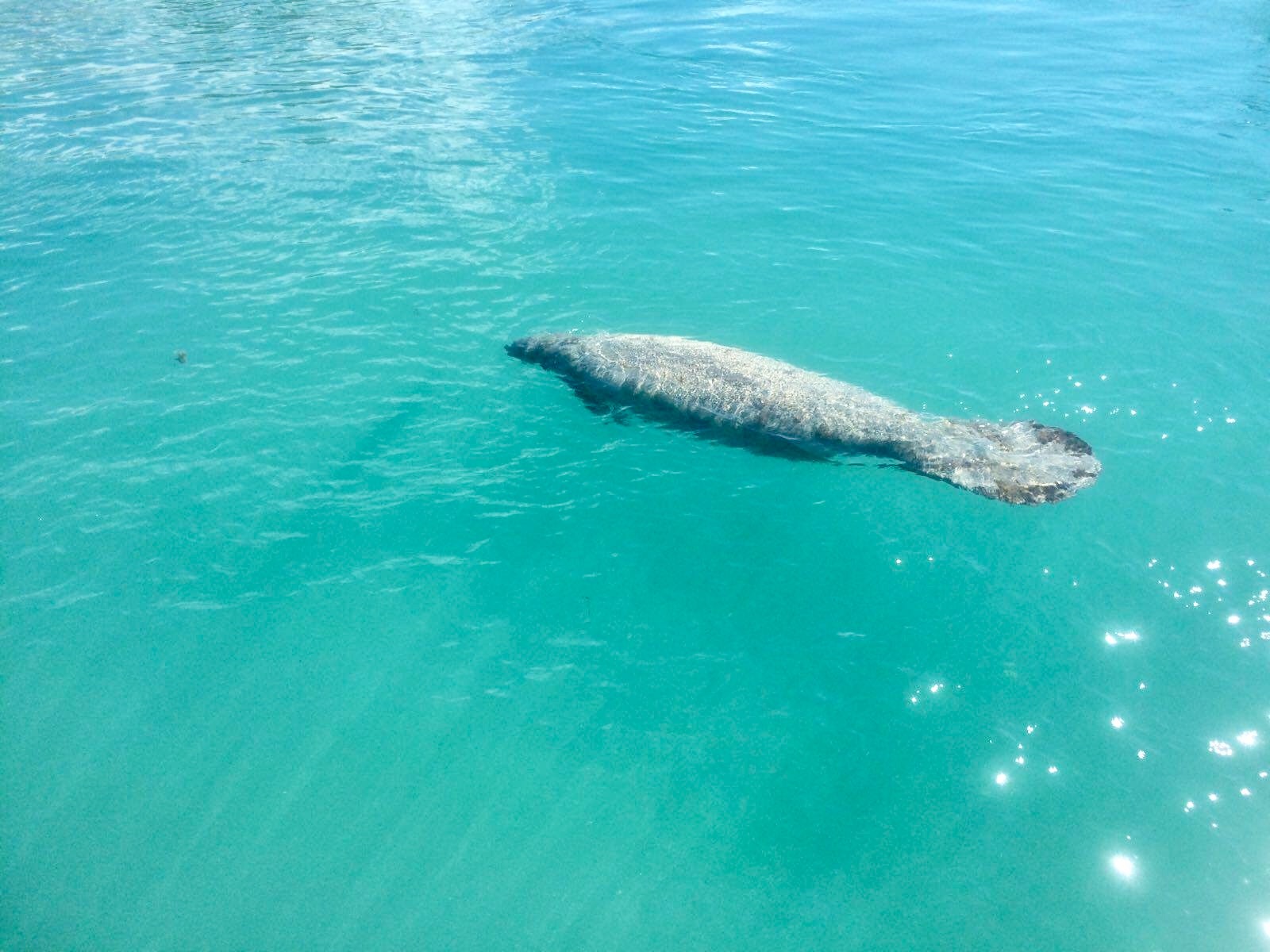
Rita the Mantee & her new baby. Bahamas (BMMRO)

MANATEE AWARENESS MONTH (& BABY TALK)

Are you aware of the Bahamas manatees? Just a few years ago your answer might well have been “Bahamas what? No, why? Where?” But suddenly they arrived. And their numbers are increasing. Alternatively, of course, they have always been there, mooching around peacefully and unnoticed in the seagrass. 

Manatee Awareness Graphic (Peppermint Narwhal)

Rita and her recently born daughter – Kamalame, AndrosRita the Mantee & her new baby. Bahamas (BMMRO)

The Bahamas Marine Mammal Research Organisation BMMRO has been keeping tabs on occasional sightings of manatees in Bahamian waters for some years. But until around 2012 – when I first learned of them and wrote about them – they appeared to be few and far between. They seemed to be unrecorded for Abaco, or anyway unphotographed.** Then the sightings began. Names were given to individuals, identified primarily by distinctive marks or cuts on their ‘paddles’ (tails). Gina. Rita. Georgie. Randy. JJ. Sightings in Hope Town, Little Harbour, Cherokee and the Casuarina canal. Manatees had arrived and were being paid attention. The ease of digital photography and the rapidly increasing use of social media resulted in more reports, wider interest and – yes – greater awareness both on Abaco and elsewhere in the wider Bahamas

**so much for being factually assertive! Many thanks to Mary for her account of one on Green Turtle Cay ‘seen by everyone’; and Kelley for her 2008 one in Galleon Bay canal… of which she actually got a photo…

manatee-galleon-bay-canal-tc-abaco-feb-2007-kelley-niedoba

To give you an idea of the rapid spread of the West-Indian Manatee population, here is a great infographic made recently by Felice Leanne Knowles of the BMMRO, mapping 2016 sightings of both known and unidentified manatees in the Bahamas. An amazing 15 in all, in an area where the natural fresh water these creatures need for survival is in short supply.

Bahamas Manatee sightings infographic (BMMRO / Felice Knowles)

You’ll see that in July both Gina and Rita had nosed their way down to Andros. At this time, Gina was known to be heavily pregnant. She gave birth in Kamalame Cay, and the photos of her above with her new calf were taken there.

The baby manatee is known to be a female and there is currently a competition to name her. A spreadsheet-worth of names was submitted to the BMMRO, and they have been whittled down to 3 for a final poll-off between Andie (Andros), Kaman (Kam[alame] An[dros]) and Morgan (Arrrrrrrr in Piratese). 

Waiting for a name…Rita the Mantee & her new baby. Bahamas (BMMRO)

RELATED LINKS

BAHAMAS MANATEE CLUB (BMMRO)

BAHAMAS MANATEES: GINA’S GOOD NEWS

BAHAMAS MANATEES: A SHORT HISTORY 1904 – 2015

WEST INDIAN MANATEES (RH PAGE)

img_4120

Credits: BMMRO and individual photographers whom I will identify when my backup has finished churning away; Felice Leanne Knowles; ‘Kelly’ (header); @kamalamecay; Sarah Jayne Buchanan; Peppermint Narwhal for their (as usual) inspired illustrative graphics.

mantsw~1

Unknown's avatar

THREE “HALLOWEEN-COLOURED” BIRDS ON ABACO (2016)


6292695150_32bb41d043

THREE “HALLOWEEN-COLOURED” BIRDS ON ABACO

Black and orange seem to have become – perhaps always have been – the colours most associated with Halloween (“Holy Evening” at one time in its history). Black, I suppose, for witches, their cats, and the night; orange for fire and pumpkins. In nature, surprisingly few creatures and plants have an exclusively black and orange livery. Some birds. A salamander of two. A few fish and butterflies. The odd flower. 

I decided for no reason at all to spend (waste?) a small amount of time discovering which birds found on Abaco are true Halloween species. I had to allow for some white markings, on the spurious basis that white is not a colour but rather an absence of colour… That left 3 species (and even then some troublemakers might argue that the precise borderline between yellow and orange is debatable…). 

AMERICAN REDSTART

The Redstart Setophaga ruticilla is a species of warbler and a common winter resident on Abaco. They are mostly seen in the coppice and in gardens. The males are black with orange markings; the females have yellow markings instead of orange and were therefore ineligible for this post. Sorry.

American Redstart (m) Abaco (Craig Nash) American Redstart (m) Abaco (Gerlinde Taurer) American Redstart (m) Abaco (Tom Sheley)

BALTIMORE ORIOLE

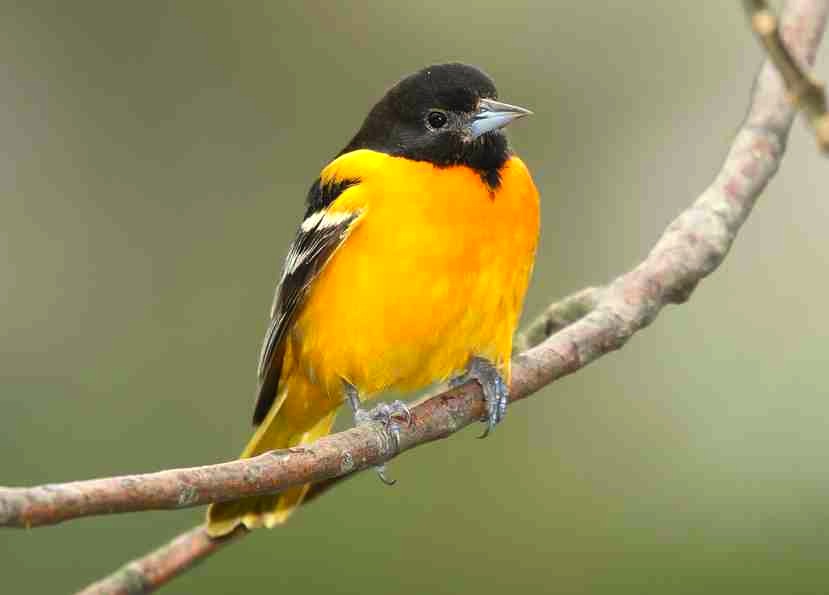
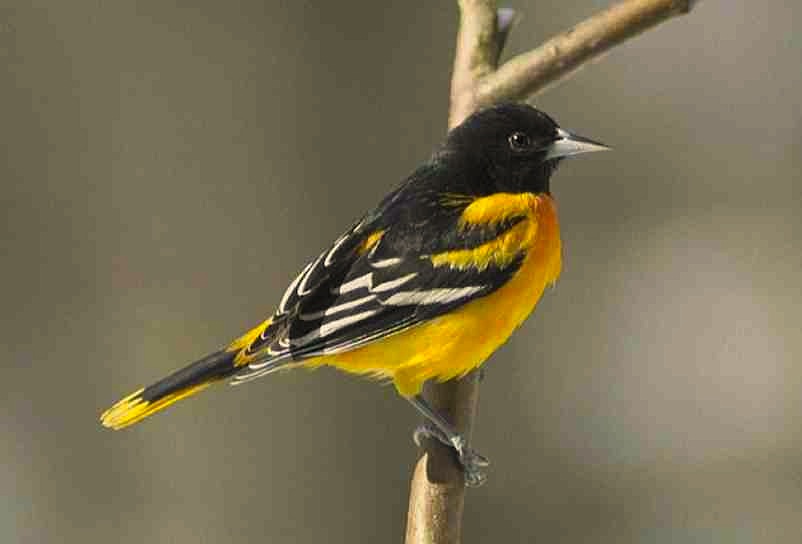
These Orioles Icterus galbula are rather less common winter visitors. A couple have recently been reported. Many are completely black and orange apart from white wing bars. However, there’s no doubt that others are more of a yellowy-orange.

Baltimore Oriole (pinterest) copyBaltimore Oriole (mdf-wiki)Baltimore Oriole (Brezinski-wiki)

WESTERN SPINDALIS

The handsome, colourful Spindalis zena is one of my favourite birds. The Spindalis is a common permanent resident, and I am determined to make it qualify as a Halloween bird even though (arguably) plenty of its surface area is neither black not orange. Apologies to purists.

Western Spindalis, Delphi, Abaco (Keith Salvesen)Western Spindalis (m) Abaco (Craig Nash) Western Spindalis (m) Abaco (Gerlinde Taurer)

No birds were hexed, vexed, tricked or even treated in the making of this post 

Credits: Craig Nash, Gerlinde Taurer, Tom Sheley, Keith Salvesen, pinterest, wiki & an unknown Angry Bird pumpkin carver

Unknown's avatar

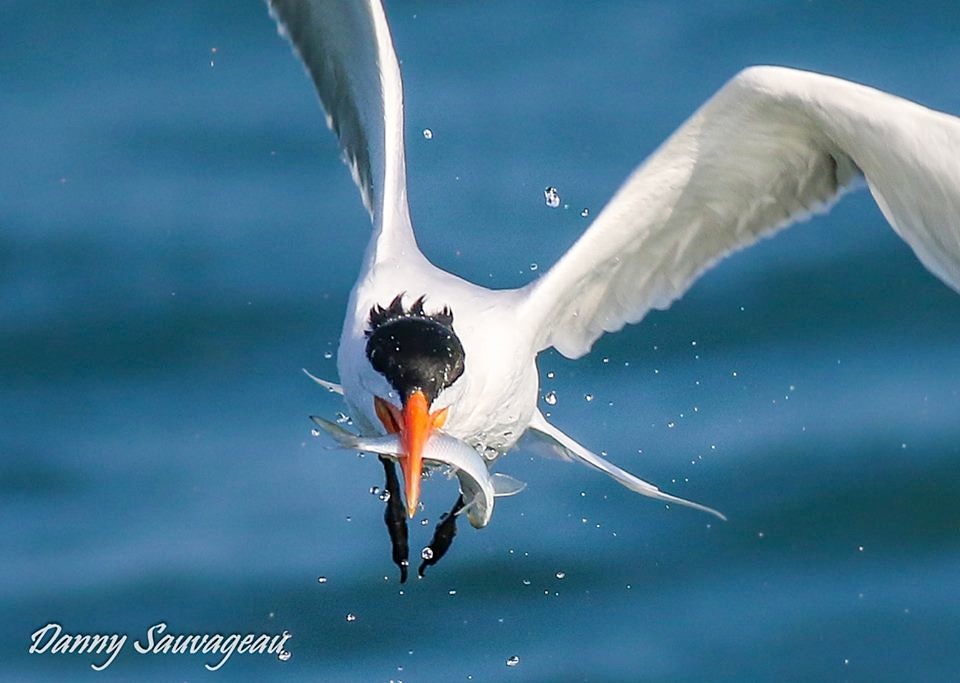
ROYAL TERNS: DIVING FOR SILVER


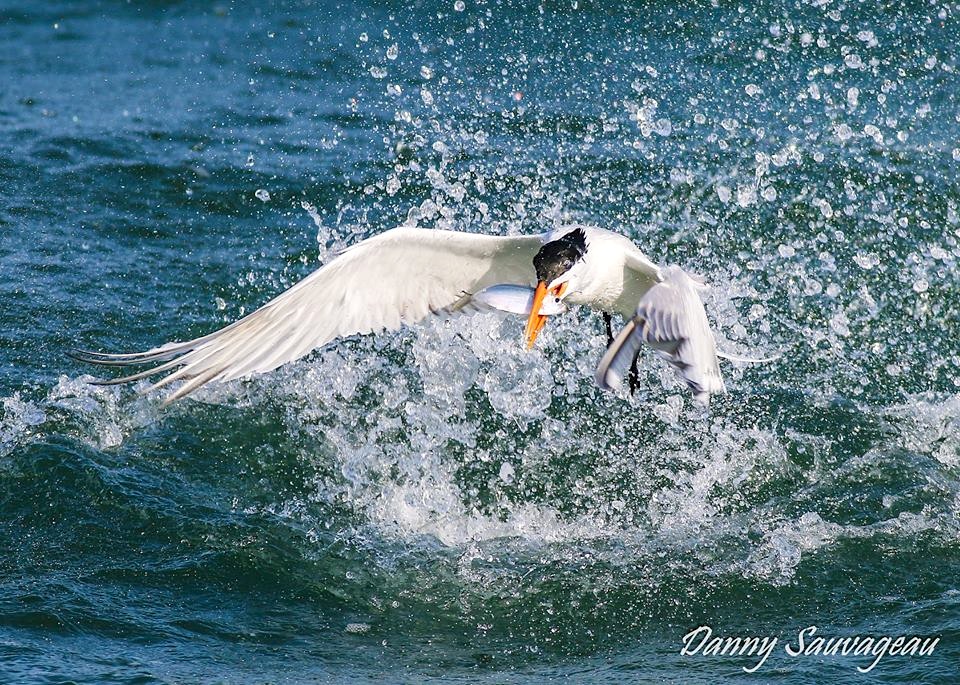
Royal Tern diving for fish (Danny Sauvageau)

ROYAL TERNS: DIVING FOR SILVER

Terns. They have voracious appetites for fish. One of the great birding sights is to watch a tern rise above the sea, and hover watchfully from a height before plunge-diving to smash into the sea and emerge in a cloud of spray with a silver prize. Here are some astounding photos by Danny Sauvageau of Royal Terns doing what they like to do best…

THE HOVER

Royal Tern diving for fish (Danny Sauvageau)Royal Tern diving for fish (Danny Sauvageau)Royal Tern diving for fish (Danny Sauvageau)

THE PLUNGE

Royal Tern diving for fish (Danny Sauvageau)Royal Tern diving for fish (Danny Sauvageau)Royal Tern diving for fish (Danny Sauvageau)Royal Tern diving for fish (Danny Sauvageau)

THE PRIZE

Royal Tern diving for fish (Danny Sauvageau)Royal Tern diving for fish (Danny Sauvageau)Royal Tern diving for fish (Danny Sauvageau)

KNOW YOUR TERNS (WITH THE ADMIRABLE BIRDORABLE)Birdorable: Tern Species

Credits: DANNY SAUVAGEAU, with thanks as always for use permission; BIRDORABLE, with thanks for their wit and amazingly effective highlighting of the essential distinguishing features of bird species

Unknown's avatar

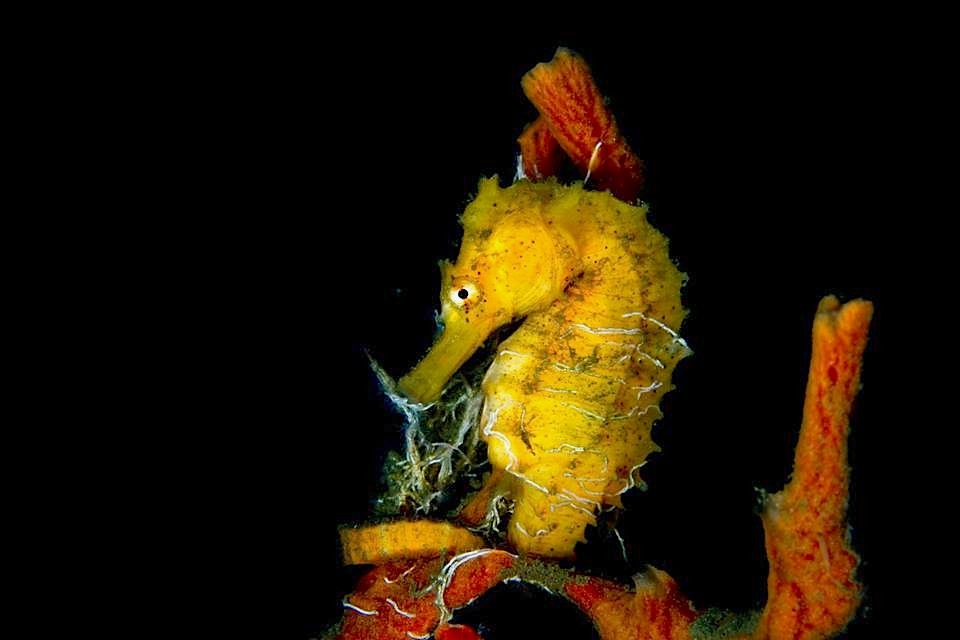
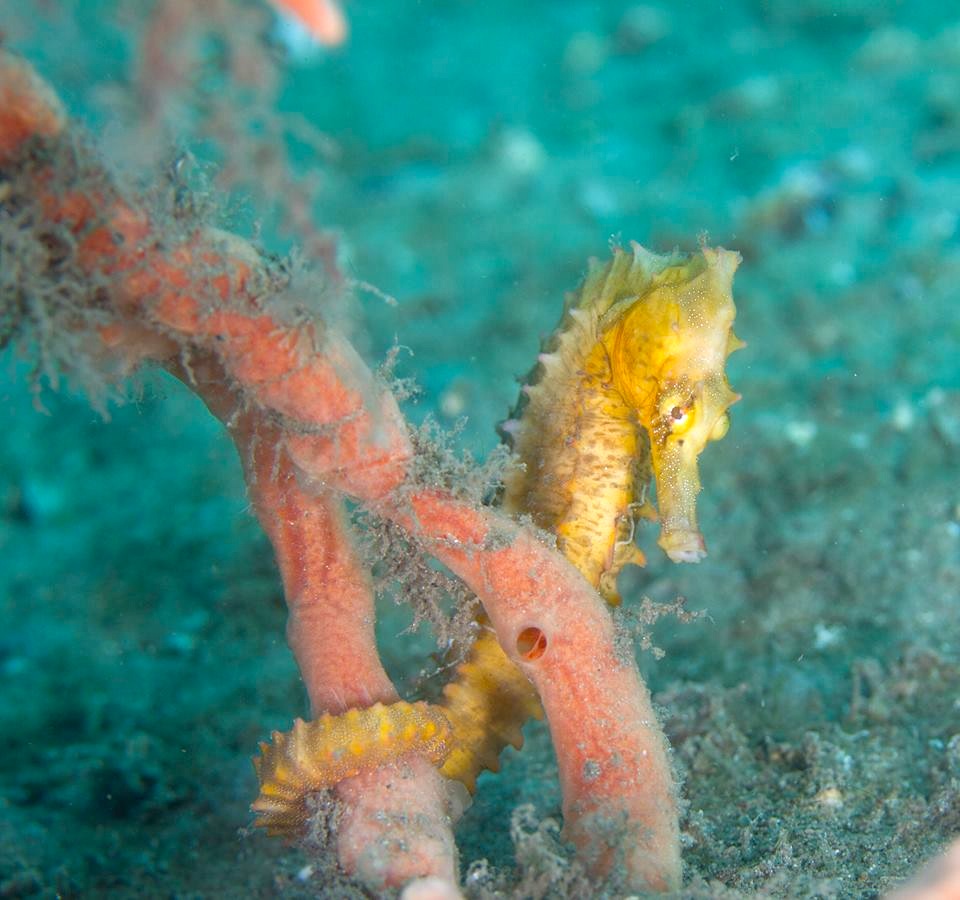
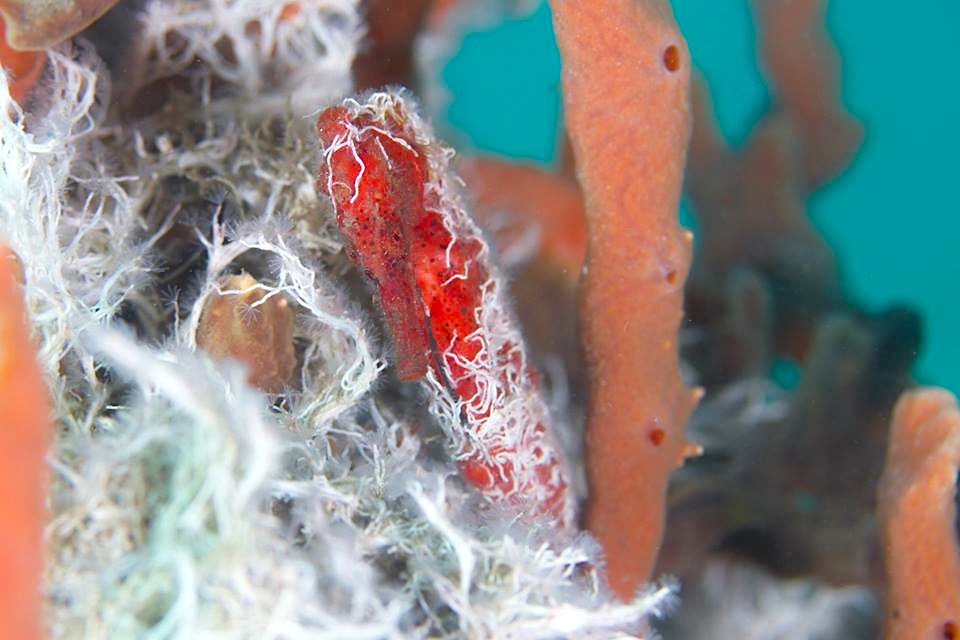
PREHENSILE TALES FROM THE REEF (2): HIPPOCAMPI


Seahorse (© Adam Rees / Scuba Works)

PREHENSILE TALES FROM THE REEF (2): HIPPOCAMPI

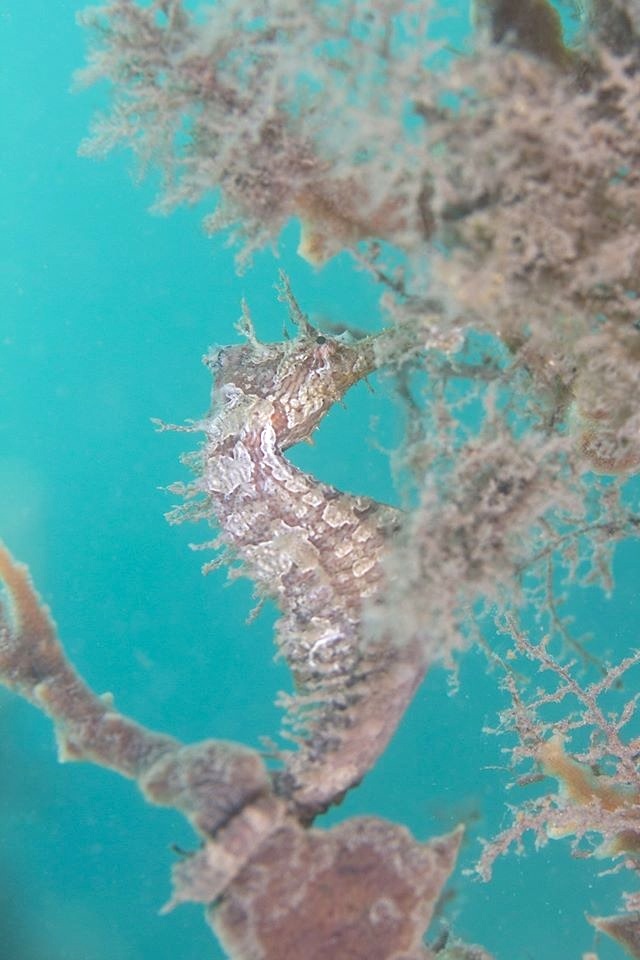
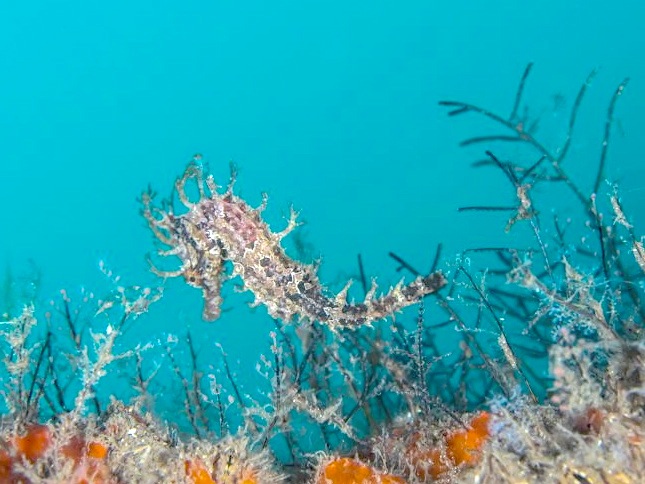
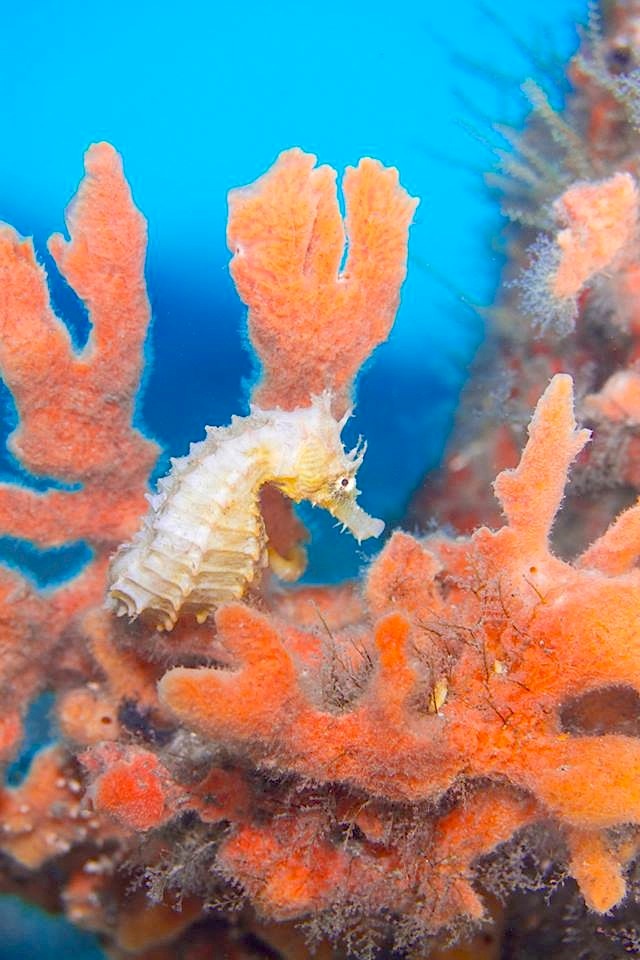
It is a statistical fact that no one in the world – not even the meanest despot or cruellest tyrant – fails to love seahorses. It would be fair to add that in certain parts of the world, some people love them too much. In more than 65 countries. To the tune of an estimated 150 million a year that are used in the ‘traditional medicine’ trade. An attrition rate that is unsustainable in the long or even the medium term – with the bleak consequence that it won’t be long before people must look elsewhere for their source for Genital Tonic Pills. 

Seahorse (Adam Rees / Scuba Works)Seahorse (Adam Rees / Scuba Works)

Medicinal use – of empirically vague benefit to its enthusiasts – is joined by the aquarium trade in accounting for the removal of very large numbers of seahorses from their accustomed surroundings. At least these creatures live on (rather than being dried out alive), though research suggests that the survival rate of seahorses in captivity is low. 

Seahorse (Adam Rees / Scuba Works)

Do you sometimes hanker for a plastic brooch or paperweight with a tiny seahorse embalmed inside it? It would be good to resist the temptation to buy such things in seaside shops or online. Your little specimen will be one of a million or so souvenir seahorses sold each year, alongside seashells, starfish, sponges and (protected) corals. 

Seahorse (Adam Rees / Scuba Works)

As you contemplate your purchase, you may be reassured to find that the product is labelled ‘environmentally friendly’, ‘responsibly sourced’ or ‘from a sustainable source’. You can make up your own: ‘lovingly harvested from the bluest oceans’, maybe. In the words of the SEAHORSE TRUST: 

“Nothing could be further from the truth; there is nothing sustainable about this exploitation of the seas. You can make change by not buying them. If there was no market there would be no trade.”

Seahorse (Adam Rees / Scuba Works)Seahorse (Adam Rees / Scuba Works)

USES FOR SEAHORSES: MEDICINE OR (WITH SCORPIONS) STREET FOOD  images-1 seahorses_scorpions_skewer

seahorse-adam-rees-scuba-worksSeahorse (Adam Rees / Scuba Works)

RELATED POSTS AND ONLINE RESOURCES

HIP HIP HIPPOCAMPUS!

PREHENSILE TALES 1

SEAHORSE TRUST

SEAHORSE TRUST FB GROUP

SEAHORSES: NAT GEO

                   Sustainable Seahorses

s-l225-2      s-l225-1

Credits: Adam Rees / Scuba Works for more stunning photos; Seahorse Trust for material; Wiki & open source for the random thumbnails

Unknown's avatar

HUDSONIAN GODWITS ON ABACO: VANISHINGLY RARE


Hudsonian Godwit, Abaco (Roger Neilson)

HUDSONIAN GODWITS ON ABACO: VANISHINGLY RARE

MEET ‘HUGO’

Abaco continues to enhance its reputation as a prime birding destination. New species. Rare species. Unusual species. Endangered species. Surprising species. Every year they turn up, whatever the season. And those, of course, are only the ones that get seen by someone who knows what they are or anyway what they might be. This is where the digital camera – or even a modern phone camera – trumps (oops… stepping into a political minefield) the old-fashioned method of collecting and identifying specialist birds. Which was, shoot them…

Hudsonian Godwit, Abaco (Roger Neilson)

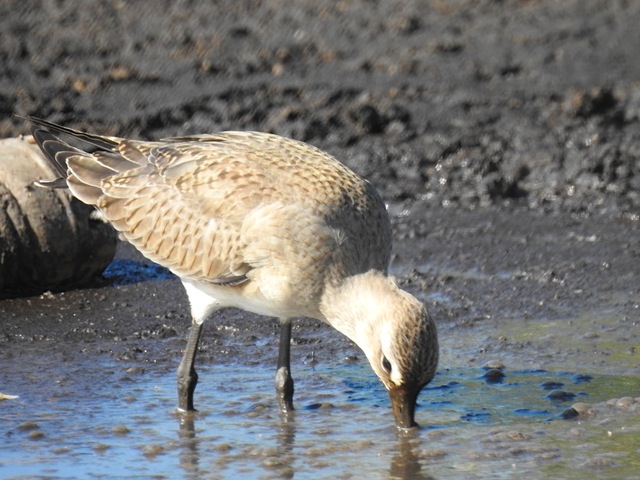
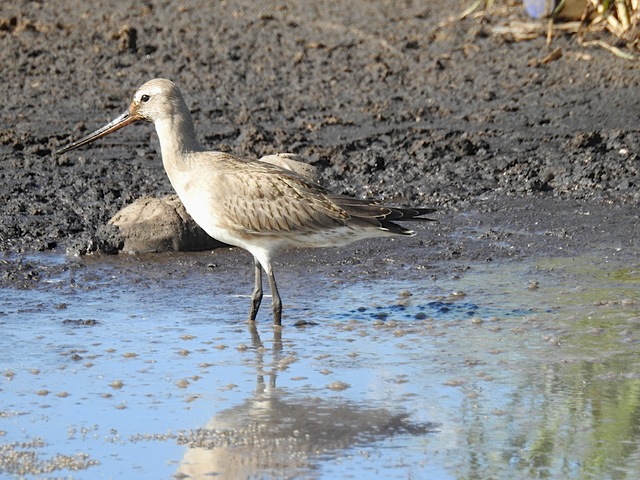
Woody Bracey, Abaco’s ornithological eminence grise, is currently hosting a party of birders on Abaco. On a visit to one of the excellent birding hotspots of South Abaco, the group of 5 came across an totally unexpected wading species mixed in with a group of yellowlegs. At first, they were thought to be Marbled Godwits. Further consideration confirmed the 2 birds to be equally rare Hudsonian Godwits Limosa haemastica (HUGOs for short). Since then, at least one of the birds has been seen in the same location by birder Keith Kemp.

hudsonian-godwit-abaco-stewart-neilson-2

SO JUST HOW EXCITING IS THIS SIGHTING?

Extremely! Both species of godwit are exceptionally rare on Abaco and indeed in the Bahamas. They are officially classified as V5, which is to say vagrant / accidental visitors outside their normal range, with fewer than five records since… records began. In practical terms, the baseline is considered to be 1950. There must have been at least one previous sighting of a HUGO on Abaco, but Woody has never seen one before, nor does he know when the report was made. And he knows his godwits – he is the person who, some years ago, saw the MAGO on Abaco that accounts for its existence as a V5 in the complete checklist for Abaco.

hudsonian-godwit-abaco-stewart-neilson-1

WHERE DOES HUGO LIVE?

These large shorebirds – a species of sandpiper – with their long, upturned bills, breed in Arctic or tundra regions, and winter in southern South America. Note in the photo above the contrast in size, bill and leg colouring compared to the yellowlegs they were mixing with. The Cornell range map below shows how remote the HUGO summer (red) and winter (blue) habitats are. And you can see clearly the two main migration routes – in the simplest terms, the central flyway and the eastern flyway. Neither route takes the birds directly over the Bahamas, although one can see how the occasional one might be blown off course and need a rest during its journey.

limo_haem_allam_mapHudsonian Godwit in flight, Abaco (Roger Neilson)

HOW OFTEN HAVE THEY BEEN SEEN IN OR AROUND THE BAHAMAS?

I checked the invaluable database EBIRD for HUGO reports over the last 10 years. The only previous report for the entire Bahamas was made by Bruce Purdy, who saw one one Grand Bahama (Reef Golf Course)… in 2007. Sightings in Florida over the period are scant. The most notable feature of the map clip below is that Bermuda has had a couple of HUGO visits, perhaps suggesting off-course birds finding an area of land to rest on in a vast expanse of open sea. Further afield, the birds are rare vagrants to Europe, and even to Australia and South Africa.

Hudsonian Godwit 10-year eBird sighting map

WHY ‘GODWIT’? OR HUDSONIAN? OR Limosa haemastica?

‘Godwit’ is said to derive from the bird’s call, in the same way as ‘Bobwhite’ and ‘Killdeer’ – so, these are birds that say their own name… The Hudson Bay area is one of the summer breeding grounds, and a place where the birds congregate for migration. ‘Limosa‘ derives from the Latin for mud (see header image); and ‘haemastica’ relates to their red breeding plumage, from the Ancient Greek for ‘bloody’. Bloody muddy. It’s not a great name, in truth. Let’s move swiftly on to what they sound like…

Doug Hynes / Xeno-Canto

Hudsonian Godwit, Abaco (Roger Neilson)

STOP PRESS As mentioned earlier, Keith Kemp found one of the HUGOs at the same location a couple of days later – a “lifer” for him and everyone else! Here are three images he posted on eBird.

Hudsonian Godwit, Abaco (Keith Kemp) Hudsonian Godwit, Abaco (Keith Kemp)Hudsonian Godwit, Abaco (Keith Kemp)

I always check a new species to see if it was depicted by Audubon. I didn’t expect him to have included the HUGO but I was wrong. He did, and with his characteristic slightly exaggerated elegance.

_57

This post is rather special, because these are almost certainly the first photographs of a Hudsonian Godwit taken on Abaco – or indeed in the entire Bahamas. And very good they are, too.  So even if a lone HUGO was noted on Abaco 40 years ago pausing briefly on a rock before continuing its journey to Argentina, I consider this qualifies as a new sighting. It certainly does for the c21.

Hudsonian Godwit (Crossley ID Guide, Eastern Birds)  463px-hudsonian_godwit_from_the_crossley_id_guide_eastern_birds

Credits: special thanks to Woody Bracey, Roger Neilson, and Keith Kemp (Stop Press) for photos, information and use permissions; Cornell Lab – Range Map; open source Audubon; Doug Hynes / Xeno-Canto; Crossley ID Guides; wiki and sundry standard sources for snippets


Unknown's avatar

LITTLE HARBOUR LIGHTHOUSE: A DERELICT MARITIME LANDMARK


Little Harbour lighthouse Abaco - Darlene Chisholm

LITTLE HARBOUR LIGHTHOUSE: A DERELICT MARITIME LANDMARK

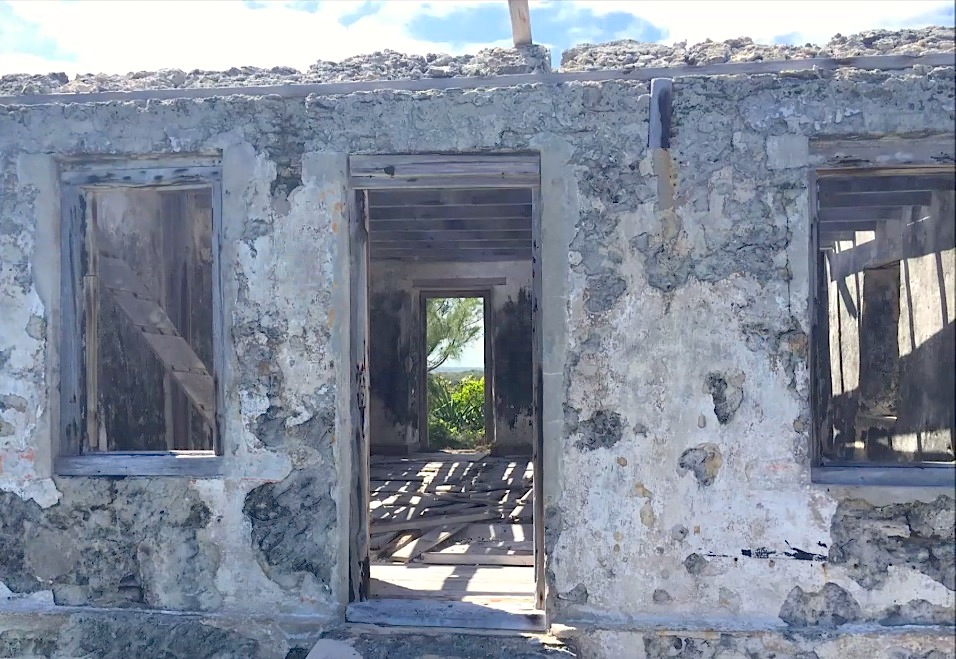
The words ‘Abaco Lighthouse’ are near-synonymous with the splendid striped edifice on Elbow Cay. This beloved building is truly iconic, in the modern sense of the word. But it would not do to forget the other principal lighthouse of Abaco at Hole-in-the-Wall, also with its original Fresnel lenses. The small light at Little Harbour is by contrast relatively unknown, unvisited and unloved. And derelict. Maybe that explains it. You can read in detail about this neglected relic of Abaco’s maritime history HERE

little-harbour-lighthouse-abaco-1-bob-rusby

Last Spring,  friends and fellow Delphi Club members Bob & Annie Rusby and their children stayed for a while in Little Harbour. Among their adventures was a walk to the lighthouse, which is situated quite remotely on a promontory, and a decent stagger from Pete’s Pub. They took some up-to-date photos (the ones shown are in fact video stills) which supersede the ones I have previously posted. 

little-harbour-lighthouse-abaco-3-bob-rusby

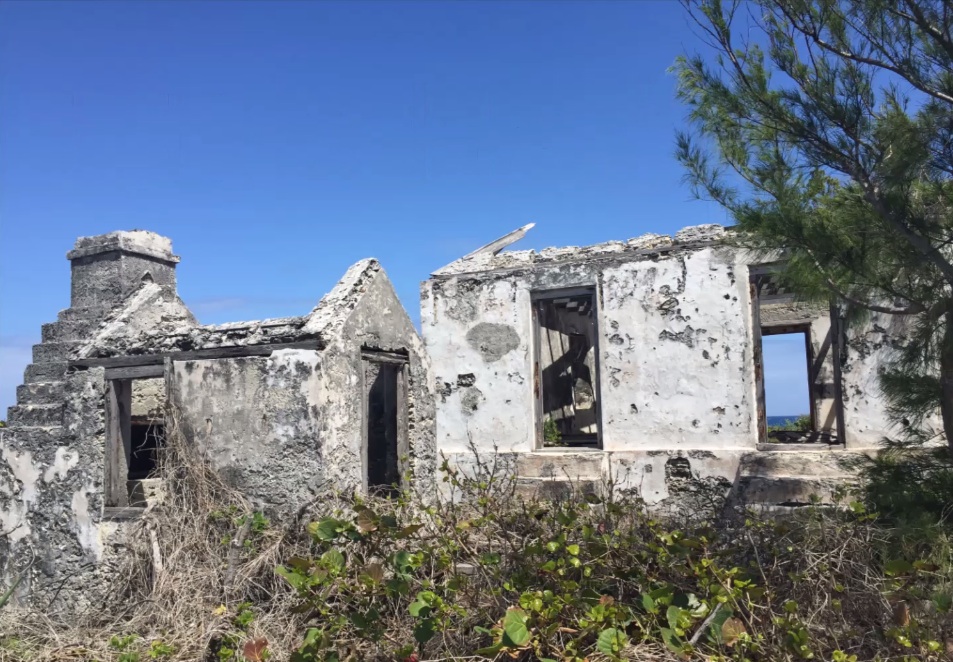
This small lighthouse station – “The Old Lighthouse” – was established in 1889 at the entrance to Little Harbour. Originally, it was manned, with the lighthouse keeper and his wife being (according to Sandy Estabrook) the only inhabitants of that part of Little Harbour. The light presumably served more to locate the channel to the secluded and safe harbour than to warn of reef dangers.

little-harbour-lighthouse-abaco-4-bob-rusby

In due course the living quarters fell into dereliction and the existing beacon (type unknown?) on a small tower was converted to a solar-powered light. This arrangement did not survive the devastation of Hurricane Floyd in 1999. The replacement was a modern steel framework tower that carried an active light until it was blown over by Hurricane Sandy in October 2012. The header image shows the tumbled structure, which has never been replaced. Even the steel tower seems now (4 years later) to have gone. 

little-harbour-lighthouse-abaco-2-bob-rusby

Little Harbour Lighthouse 1 jpg copyLittle Harbour Lighthouse 4 jpg

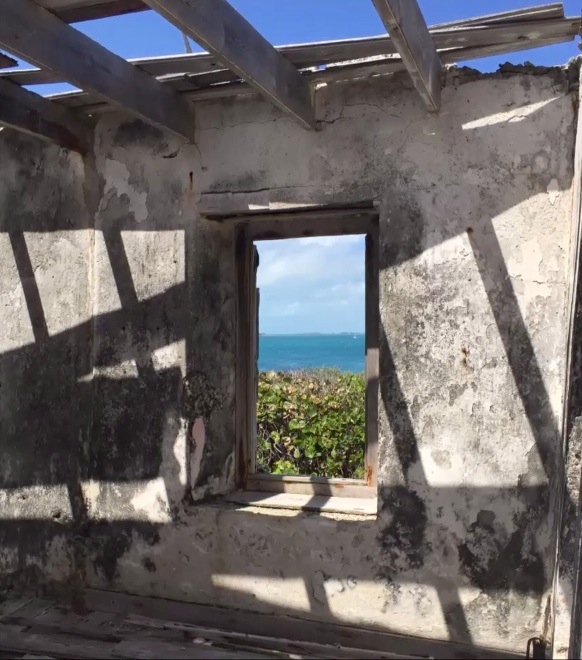
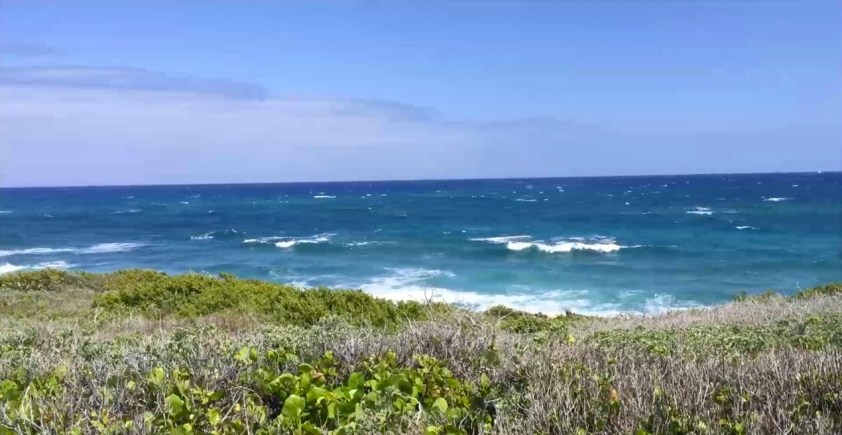
The views from the elevated position of the ruin are spectacular, both from inside the ruin (lucky keeper!) and from outside. In good weather, anyway… It remains to be seen whether light is now considered completely redundant, or whether another automatic light will in the end be positioned here when funds or willpower permit. I’m not aware of any groundswell of opinion suggesting that, in the absence of a beacon at Little Harbour, there is a potential safety issue. I’d be interested to hear any views.

little-harbour-lighthouse-abaco-6-bob-rusby

STOP PRESS Chuck Rickey has left a wonderful comment in response to this post, full of personal and historical interest. Any other reminiscences would be most welcome.

“My grandmother’s first cousin, Curtis Lowe, was lighthouse keeper here for many years and along with his wife, Bessie, raised children Hartley, Maitland, Lois and Robert, obtaining staples buy walking a tract road or sailing to Cherokee Sound. Later on, they were able to motor to Snake Cay, to get provisions from Owens Illinois’ company store aboard the “Robert Fulton”, an old side-wheel steamer, permanently moored there. I was fortunate to spend much fun time there during school vacations growing up”.

little-harbour-lighthouse-abaco-5-bob-rusby

RELATED POSTS

ELBOW REEF LIGHTHOUSE: A BEACON ICON

HOLE-IN-THE-WALL LIGHTHOUSE

LITTLE HARBOUR LIGHTHOUSE

Lighthouse ruins, Little Harbour Abaco - Patrick Shyu

Credits: Darlene Chisholm (header image); Bob Rusby (all main images); Patrick Shyu (last photo); Sandy Estabrook (special thanks for info re earlier post)

Logo of the World Lighthouse Society

Logo of the World Lighthouse Society

Unknown's avatar

SPANISH MOTHS & CONVICT CATERPILLARS ON ABACO


xanthopastis-spanish-moth-abaco-bahamas-2

SPANISH MOTHS & CONVICT CATERPILLARS ON ABACO

I start confidently enough by using plurals in the headline, but in truth I have only ever seen one Spanish Moth on Abaco. It was sunning itself on the wooden stairs leading up to the Delphi Club verandah. I might have trodden on it, except that I usually check out the treads for insects or curly tails (and the surrounding foliage for small birds). They like the warmth of the wood, and also moisture from overnight rain or from plant watering. I took 3 quick photos, but I was on a mission. Breakfast beckoned…

xanthopastis-spanish-moth-abaco-bahamas-3

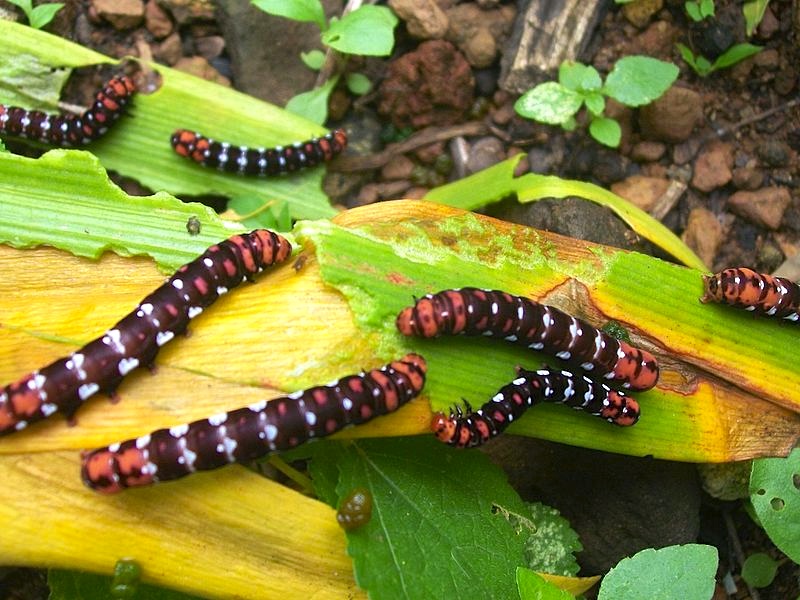
Spanish Moths (Xanthopastis timais) and their ‘Convict Caterpillars’, as they are known, are generally found in South and Central America, and in the Caribbean. There is a similar moth recorded for North America, but it is a different subspecies. However ‘our’ moth is apparently quite commonly found in Florida. 

xanthopastis_timais_cramer_feeding_on_amaryllis-shiras-wc

When I tried to ID this creature, I was surprised to find how few images of it are to be found online – and of those that are, most are either strictly © or are pinned into Pinterest.** So I’m grateful to the person who uploaded these cool convict caterpillars  above to a wiki-site. They are certainly worthy of admiration, and should be easy to identify. These colourful larvae feed on the leaves and bulbs of their host plants, mainly amaryllis, iris and lily species.

spanish-moth-robert-siegel-stanford-edu

I’d be really interested to hear from anyone who has seen these moths – or the caterpillars – on Abaco. Maybe they are everywhere, all the time, and I just haven’t noticed them. Or maybe it’s just that I am an occasional blow-in interloper, not a resident. Anyway, reports, observations and photos welcome (for the usual imaginary Kalik reward).

xanthopastis-spanish-moth-abaco-bahamas-1

**I’m never quite sure about the status of Pinterest images. Are they reusable with (where possible) an attribution, on the basis that they have been ‘put out there’ in the public domain, as on Facebook? Or does one risk a getting stroppy comments for recycling images that pinners have themselves borrowed in the first place? 

Credits: unknown Wiki benefactor (3); R. Siegel / Stanford.edu (4); moi (1, 2, 5)

Unknown's avatar

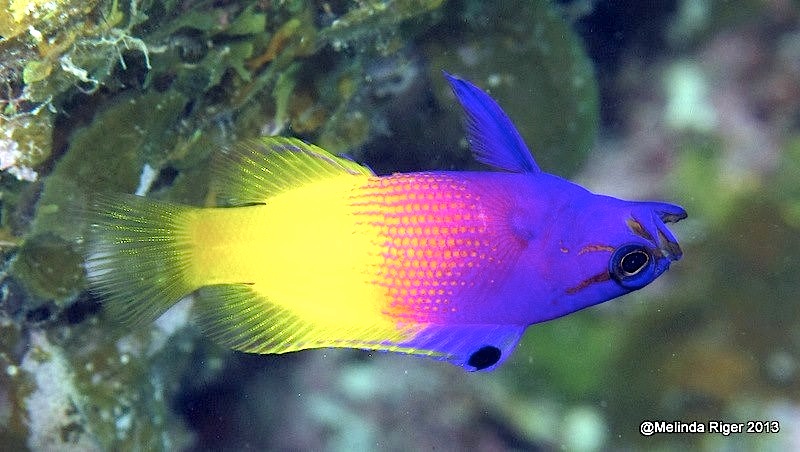
FAIRY BASSLET (‘MIND YOUR GRAMMA’): BAHAMAS REEF FISH (33)


fairy-basslet-melinda-riger-g-b-scuba-copy-2

FAIRY BASSLET (‘MIND YOUR GRAMMA’): BAHAMAS REEF FISH (33)

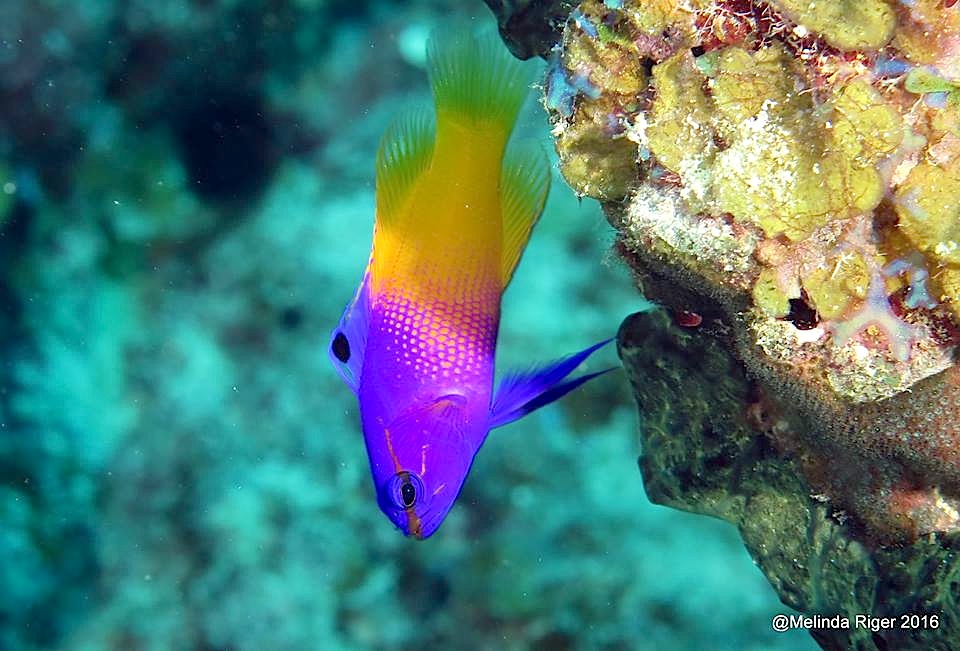
The Fairy Basslet is a tiny brightly-coloured fish with a pretentious alternative name. It is otherwise known as the Royal Gramma (Gramma loreto). These fish are found  in the coral reefs of the (sub)tropical western Atlantic. They are also found in aquariums anywhere you like, being small, bright, placid and generally good-natured.

fairy-basslet-melinda-riger-gb-scuba

Conveniently, the basslet is unlikely to be confused with any other species. Its striking two-tone colour scheme of purple and yellow is hard to miss. The purple front half (which is presumably where the ‘royal’ comes from, being a regal or imperial colour) may also be violet or even blue in some fish and / or in some light conditions. Another identification pointer is a black spot on the dorsal fin. 

fairy-basslet-melinda-riger-grand-bahama-scuba

You’ll notice that the basslet above appears to be upside down. Which is because it is – this isn’t an inadvertent photo-flip. These little fish tend to orientate themselves to be parallel with the closest surface. This leads to them happily swimming upside down, or aligning vertically. As one article I read says severely, “this behaviour is not to be mistaken for illness”.

fairy-basslet-melinda-riger-g-b-scuba

Fairy basslets / royal grammas are also CLEANER FISH. They pick parasites and dead skin off larger fish that visit so-called cleaning stations to be attended to by tiny fish and cleaner shrimps, and in some instances to have their gills and even their teeth cleaned. The deal is that, in return, the large fish do not eat the cleaners. Even snack-sized ones rootling around inside their mouths.

fairy-basslet-melinda-riger-gb-scuba

 WHAT ABOUT BREEDING?
I really can’t improve on this rather touching description from Wiki: “The male will build the nest among rocks using pieces of algae. The male will then lead the female to the nest, where she will deposit 20-100 eggs in the nest. During the breeding period, this behaviour is repeated almost every day for a month or longer (my italics). The eggs are equipped with small protuberances over the surface with tiny threads extending from them which hold onto the algae of the nest and keep the eggs in place. The eggs will hatch in five to seven days, normally in the evening…”

fairy-basslet-melinda-riger-gb-scuba

HOW COME THE NAME ‘GRAMMA LORETO’?

This official name became a brainworm with me after I started this post. I had to check it out. The ‘Gramma’ part is unrelated to the fond name for a grandmother; rather, it simple denotes a member of the genus of fishes in the family Grammatidae.

The Loreto part is more mysterious. It is an an ancient town in Italy; and the name of several British schools, including – almost too good to be true – a school called Loreto Grammar. In a nutshell, the link between the town and places of education is that the Sisters of Loreto, founded in the c17 and named for a shrine in the Italian village, are dedicated to education in their Ministry.

How that ties in with a tiny Caribbean reef fish, I have yet to find out. I probably never will… Here’s a short video to alleviate the disappointment.

I failed to be able to resist finding out whether any country of the world has a purple and yellow flag. The answer is, no. However I am delighted to be able to report that the flag of the Independent Party of Uruguay is basslet-coloured.

inependent-party-uruguay-flag

fairy-basslet-melinda-riger-g-b-scuba-copy

Credits: all fantastic photos by Melinda Riger of Grand Bahama Scuba; magpie pickings of an unacademic sort for facts and speculation

Unknown's avatar

A NEW BIRD FOR ABACO: BUFF-BREASTED SANDPIPER


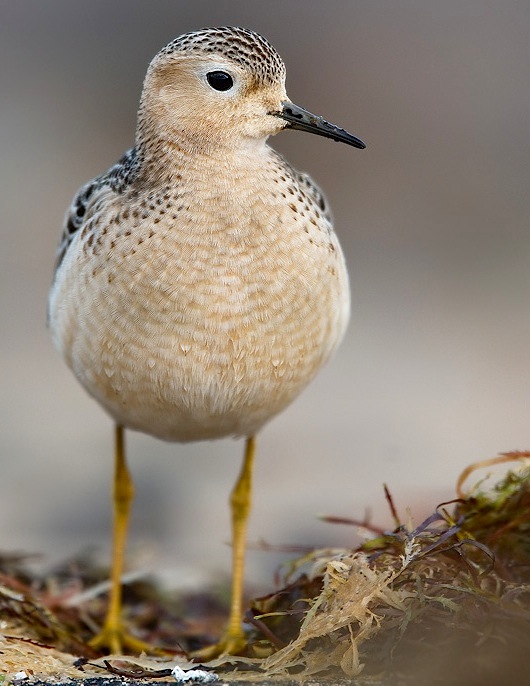
tryngites_subruficollis_-tim-lenz-wiki-sm

A NEW BIRD FOR ABACO: BUFF-BREASTED SANDPIPER

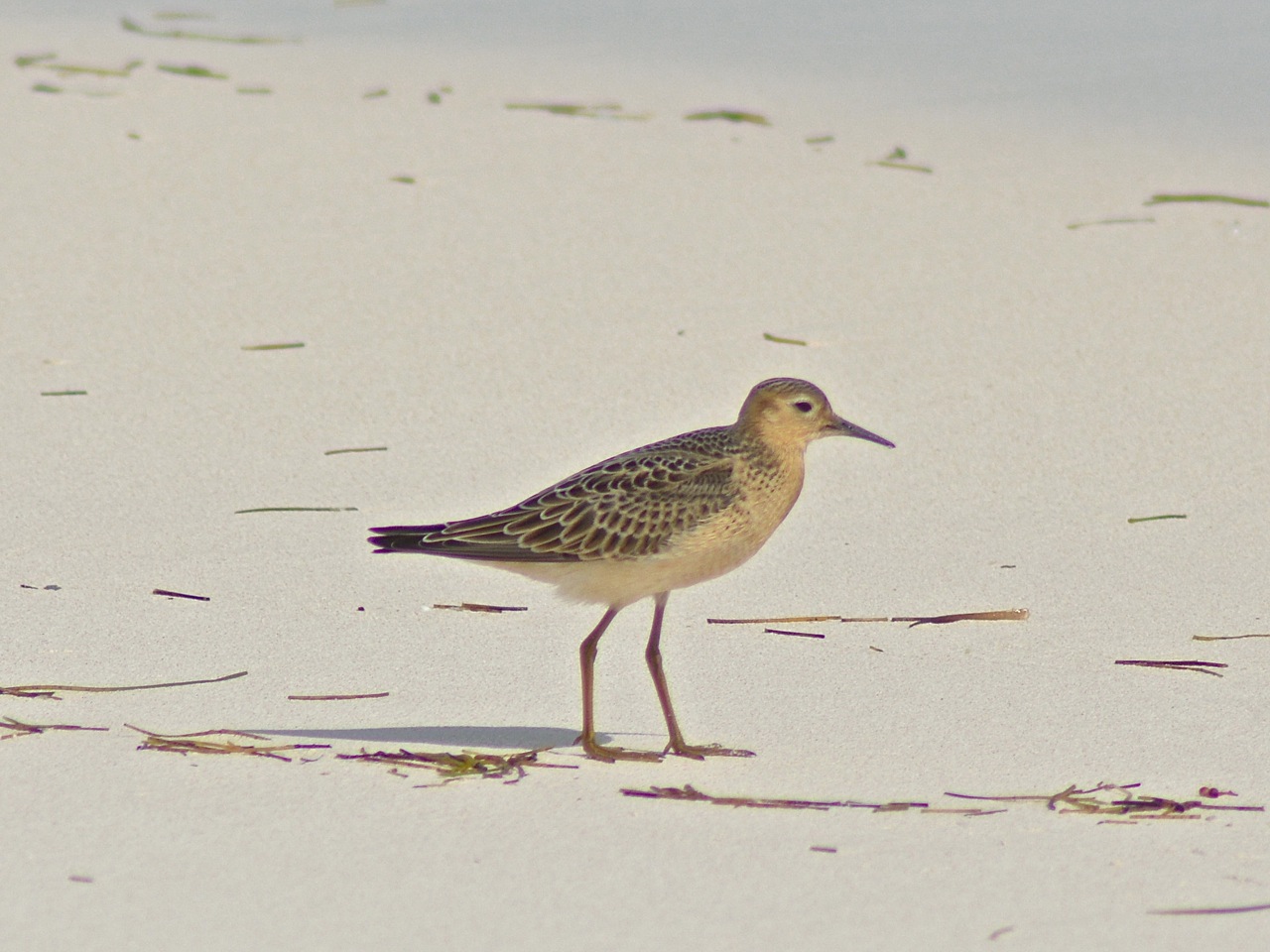
I’d best make it clear at the outset that, in the very narrowest sense, the buff-breasted sandpiper (Calidris subruficollis) is not strictly a new bird on Abaco. Tony White’s authoritative official checklist for Abaco, valid back to 1950 or so, does actually include the species. It is classified as a ‘V5’, which is to say a vagrant that is vanishingly rare – indeed may only have been sighted on Abaco once or perhaps twice before. Ever. The only category rarer than V5 is H for hypothetical, which essentially means that there is some unconfirmed report of a bird that it might not be outrageous to suppose might be blown onto Abaco. A penguin, therefore, would not qualify even for an H. 

buff-breasted-sandpiper-abaco-keith-kemp-1

A few days ago, beyond a shadow of a doubt this small shorebird was seen on Abaco by Keith Kemp, and photographed by him too. He is having an excellent year with his birding: this may well be the jewel in the crown for him. So even if one of these little guys was once spotted on an Abaco twig in 1961, Keith is definitely the first person to get a photo!

UPDATE (next day!) Abaco birder-in-Chief Woody Bracey has solved the mystery of the previous sighting – it was he himself who saw a BBSP “years ago” at the less-than-glamorous yet excellent-for-birding Marsh Harbour ‘Dump’.

buff-breasted-sandpiper-abaco-keith-kemp-2

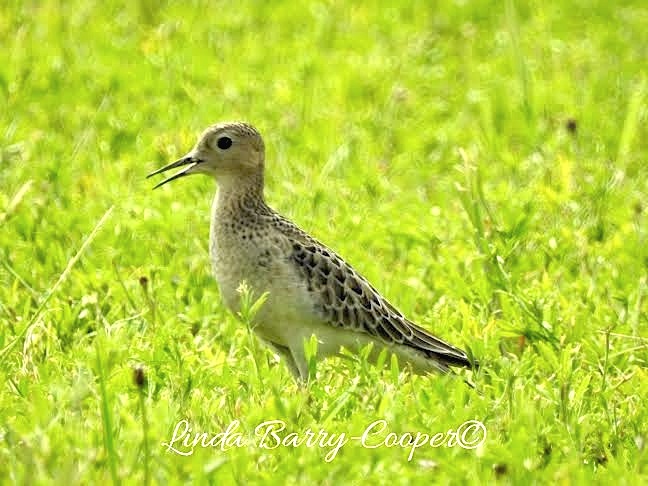
As it happens, some weeks ago a BBSP was also spotted at West End, Grand Bahama by Linda Barry-Cooper. I featured a guest post from her about the fall birds in that region HERE. Woody Bracey also says that he and Bruce Hallett saw 2 BBSPs at West End early this season. Erika Gates and Martha Cartwright saw one on the GB Reef golf course at the end of August. So these birds are around in the northern Bahamas, and perhaps it’s not such a surprise after all that one should have gone on a little expedition to Abaco to check out the undeniable joys of Winding Bay.

Buff-breasted Sandpiper, West End Grand Bahama (Linda Barry-Cooper)

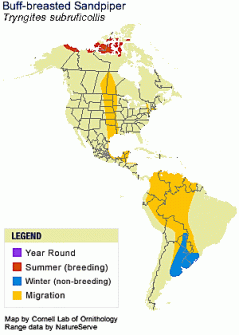
The buff-breasted sandpiper is a long-distance migrant, breeding mainly in the open arctic tundra of North America, and overwintering mostly in South America, especially Argentina. Its route takes it overland – the central flyway – rather than over coasts, but as it happens, as a species it is a bit of a wanderer. These birds a regularly found in Europe – including the UK – and although I am sure a sighting there must generate a great deal of excitement, they are not considered extremely rare. They have even been found, very occasionally, in South Asia and Australasia. 

tryn_subr_allam_map

So maybe it’s no surprise that the odd one turns up on Abaco. Maybe they do so every year, but only the keenest eye will spot one. And after all, there are many remote beaches on Abaco that are only very occasionally – if ever – visited by humans. Perhaps that’s where the BBSPs congregate…

buff-breasted_sandpiper_tryngites_subruficollis_magnus-manski-wiki-sm

In the breeding season, males collect on display grounds, or “leks,” to attract females. This helpful description comes from Audubon: “The leks are spread out, each male defending an area of up to several acres. The male displays by raising one wing, showing off the white underside. If females approach, the male spreads both wings wide, points its bill up, and shakes its body. One male may mate with several females; the male takes no part in caring for the eggs or young.” Typical, huh?

buff-breasted-sandpiper-mario-suarez-porras-wiki-sm

CONSERVATION STATUS

The BBSP is another bird that has been hit badly by the passage of time. By which I mean, of course, by mankind. At one time they were deemed ‘abundant’. Around 100 years ago a serious decline set in, not least because people were shooting them during their migration. Nonetheless, in 1988 the IUCN assessment was ‘lower Risk/least concern’. Then another slide began. By 2000 it was  ‘lower Risk/near threatened’. Since 2004 it has been ‘near threatened’. Why? Largely because the habitat for migrating and wintering birds has been destroyed or degraded. 

WHAT DO I LISTEN OUT FOR?

Xeno-Canto / Bernabe Lopez-Lanus

The BBSP page from the excellent Crossley ID guides (available via WikiMedia Commons)618px-buff_breasted_sandpiper_from_the_crossley_id_guide_eastern_birds

Credits: Tim Lenz, Keith Kemp, Magnus Manski, Linda Barry-Cooper, Cornell Lab (range map), Mario Porras, Crossley Guides, Bernabe Lopez-Lanus @ Xeno-Canto, Audubon, Wiki.

Unknown's avatar

MATTHEW MOVES ON: BRIGHTER LATER


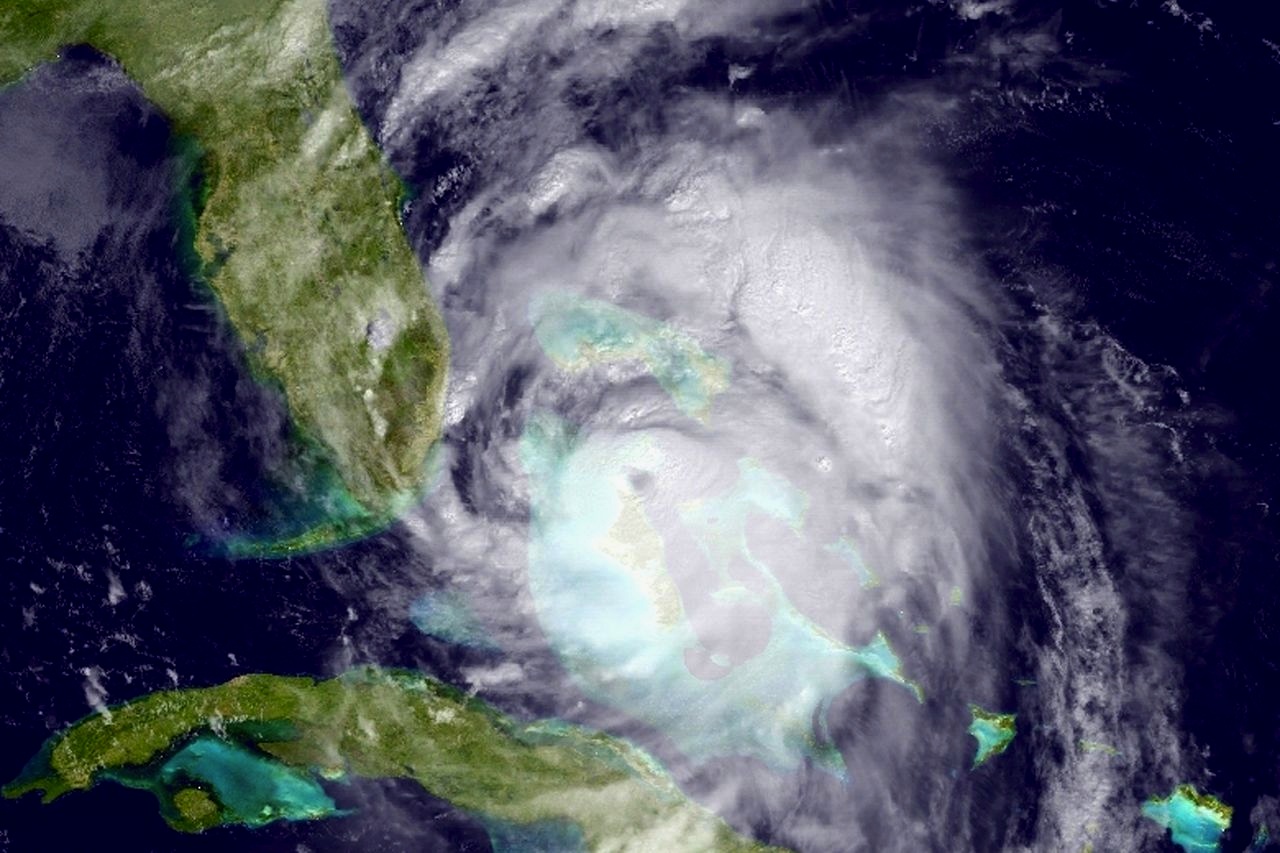
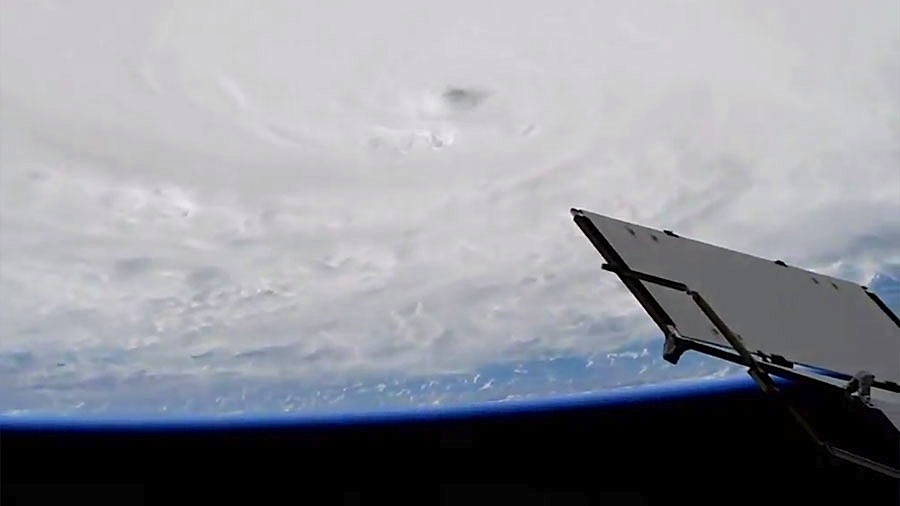
Hurricane Matthew (Satellite View - NASA)

HURRICANE MATTHEW MOVES ON: BRIGHTER LATER

Early reports and post-hurricane news for Abaco is fortunately encouraging, though I appreciate that the Island’s good fortune at the eleventh hour swerve by Matthew only meant that others came into the direct firing line. Plenty of environmental damage, of course, but in human terms the harm seems mercifully light.

Hurricane Matthew (Satellite View - NASA / ISS)

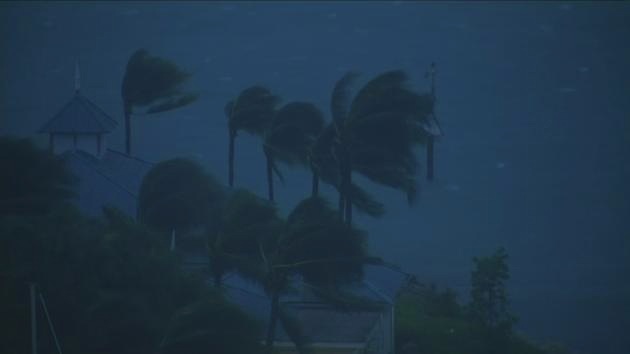
It’s too early to determine the impact on the wildlife of Abaco. The migratory winter birds must be wondering why they bothered this year. Land birds are obviously put at risk by the trashing of their habitat in the violent winds. Shore birds, too, are vulnerable: some beaches on Abaco are open to big tidal surges in high winds. Massive waves have smashed their way up the beach at Delphi. Long Beach, where the largest concentrations of piping plovers congregate at certain times, is also very exposed to surges. 100616nassaubahamashurricanematthewnbc6 1541819_630x354

Time will tell how the birds have fared. Meanwhile, here are some cheerful pictures – some of my favourite species – to relieve the gloom.

Abaco Parrot (Peter Mantle)

Western Spindalis, Delphi, Abaco (Keith Salvesen)Bananaquit, Abaco (Bruce Hallett)Painted Bunting male.Abaco Bahamas.Tom SheleyCuban Emerald Hummingbird preening, Abaco (Keith Salvesen)Bahama Woodstar male.Abaco Bahamas.Tom Sheley

OPTIONAL MUSICAL DIGRESSION

2q

‘BRYTER LAYTER’ was the second album by a ‘troubled genius’, the supremely talented but sadly doomed Nick Drake. Released in 1971, it failed to convert the ripples caused by his debut ‘Five Leaves Left’ (1969) into a deserved wave of popularity, not least because Drake was already starting his gradual retreat from live performance, from social contact, and indeed from life. Here’s the title track, a pastoral instrumental with orchestral embellishments, and (unusually) without Drake’s distinctive, wistful voice. 

Credits: NASA / ISS, News open sources, Peter Mantle, Keith Salvesen, Bruce Hallett, Tom Shelley

Unknown's avatar

HURRICANE MATTHEW & THE TRUE MEANING OF “AWESOME”


hurricane-matthew-nasa

Hurricane Matthew, NASA aerial view

HURRICANE MATTHEW & THE TRUE MEANING OF “AWESOME”

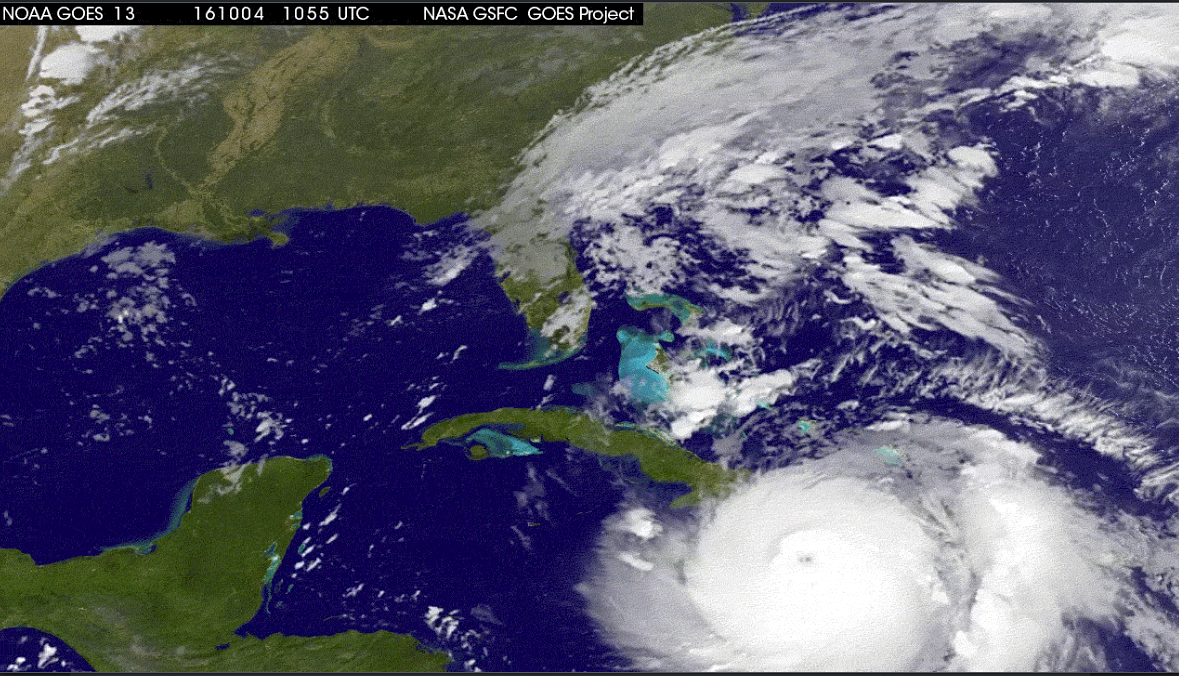
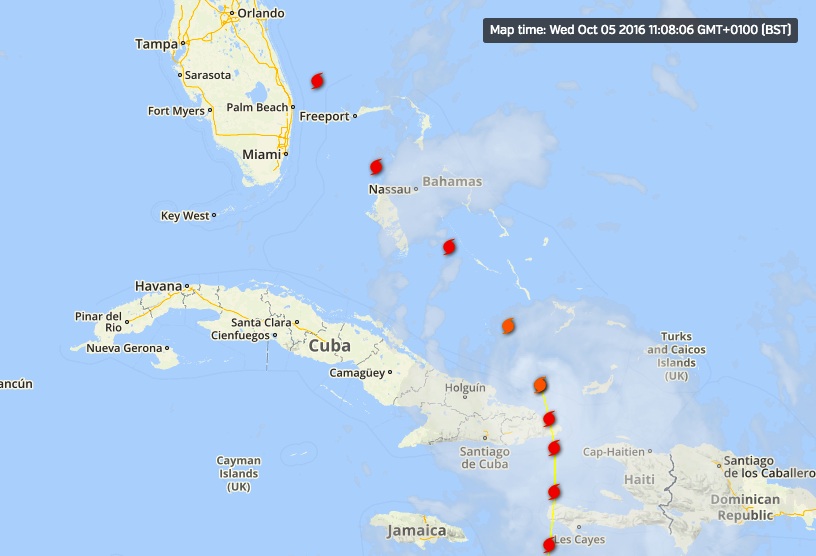
As Hurricane Matthew sweeps northwards, with Abaco in its path for the hit tomorrow, it’s an opportunity to take a look at the power and might of extreme weather, and maybe to recalibrate the word ‘awesome’ from its current diluted usage. The images used all relate to the state of play in the last 24 hours.

Hurricane Matthew_satellite view (NASA)

Satellite view at 14.00 EDThurricane-matthew-satellite-clip-wunderground

The concept of ‘awe’, historically and Biblically, comprised emotions such as wonderment, astonishment, terror and dread. Biblical translations use ‘awe’ and ‘awesome’ almost exclusively to refer to God or to His Works. In many Biblical instances of people being awed, they not only experience extremes of emotion but also exhibit palpable signs of fear – shaking, cowering, falling down, prostrating themselves.

Aerial view of Hurricane Matthew from the International Space Station, October 4hurricane-matthew- aerial view (ISS/ NASA)

The perfect example of the ‘proper’ meaning of awesome can be found in Genesis: ‘He (Jacob) was afraid and said, “How awesome is this place! This is none other than the house of God, and this is the gate of heaven.”‘ Some translations use the word ‘dreadful’ in place of ‘awesome’ for this passage – in its old meaning of ‘full of dread’, not its watered down modern meaning as in ‘dreadful headache’ or ‘dreadful nuisance’ (the same dilution that has happened to ‘terrible’).

Hurricane Matthew Tracking Path (Wunderground)

WHAT KIND OF EMOTION IS AWE?

In 1980 a man called Dr Robert Plutchik designed a ‘diagram of emotions’ in a floral wheel format. This device visualised eight basic emotions, with eight derivative emotions each composed of two basic ones. Awe is at 4.00 o’clock, showing the extreme of the Biblical meaning as a mixture of terror and amazement (think of the reaction of the shepherds while watching of their flocks, when unexpectedly interrupted by an angel…). There’s no place in the wheel for ‘awesome’ to mean ‘I really like that photo you took’. Or, ‘your soup is delicious’. Or, ‘I am so pleased to have made a plan to meet you at Pete’s Pub’.
plutchik-wheel-svg

Language is a living thing, and the hyperbolic application of powerful words to mundane emotions or objects is widespread and unsurprising. But a Cat. 4 hurricane really is awesome stricto sensu: it is both an amazing ‘extreme weather event’, and a terrifying one, as the header image and the many images of Matthew’s progress posted online amply  illustrate. The recent practice of  giving hurricanes comfortable names does nothing to dispel their power or the awe they inspire.  On present tracking, Matthew will reach Abaco some time tomorrow. From a safe distance, I wish everyone on Abaco and elsewhere in the target zone all the very best and a safe passage through the storm.

hurricane-matthew-wunderground-clip

HOW ARE HURRICANES CATEGORISED?

Credit: 'Watts Up With That" - Click image for Hurricane Irene page of this excellent weather & climate site

 FROM ASTOUNDING TO BADASS: AWESOME SYNONYMS ANCIENT & MODERN

Astounding, breathtaking, amazing, stunning, astonishing, awe-inspiring, stupendous, staggering, extraordinary, incredible, unbelievable, magnificent, wonderful, spectacular, remarkable, phenomenal, prodigious, miraculous, sublime, formidable, imposing, impressive, mind-boggling, mind-blowing, out of this world, supercalifragilisticexpialidocious, amazeballs, badass

hurricane-matthew-tracking-clip-craig-setzer-jpg-copy

Credits: Nasa / Goes, NASA / ISS, Wunderground, Craig Setzer

Unknown's avatar

SILVERSIDES: BAHAMAS REEF FISH (32)


silversides-school-melinda-riger-g-b-scuba

SILVERSIDES: BAHAMAS REEF FISH (32)

I have no idea if there is a collective noun for a large group of silversides. ‘Frenzy’ would cover it, but that is reminiscent of ‘feeding freezing’ which has a specialist meaning – and anyway, silversides are crazy even when they aren’t feeding. 24/7/12/365 as far as I can make out. I think ‘a panic of silversides’ might be the answer. They are just… all over the place at high speed. Sometimes swirling around pointlessly, other times moving in unison and suddenly all changing direction simultaneously, like a single creature made of tiny shards of silver.

silversides-school-melinda-riger-g-b-scuba-copyfish-frenzy-melinda-riger-gbs

There are quite a few silverside species around the world. The ones in the Bahamas are Atlantic silversides (Menidia menidia), also known in the north east of the United States as ‘spearing’. They seem to exist for two purposes. The main one is to be breakfast, lunch or dinner for larger fish, sea birds and shore birds. The other is for their usefulness in scientific research because of their sensitivity to environmental changes. 

silversides-melinda-riger-g-b-scuba-copy-2silversides-school-melinda-riger-gb-scuba

In one sense they are easy prey for predators. A determined fish will always manage a snack by swimming into the middle of a panic and (probably) simply by opening its mouth wide. On the other hand, their sheer numbers coupled with the speed and randomness of movement mean that a single may find a degree of safety in numbers. It’s hard for a predator to target any individual fish in the general melee and confusion. Silversides also favour seagrass beds, which give some shelter and protection – and a reasonably safe place to spawn. Or, as some of these photos show, they will hang around wrecks or squeeze into rocky spaces in the reef.

silversides-melinda-riger-g-b-scuba-copysilversides-melinda-riger-g-b-scuba

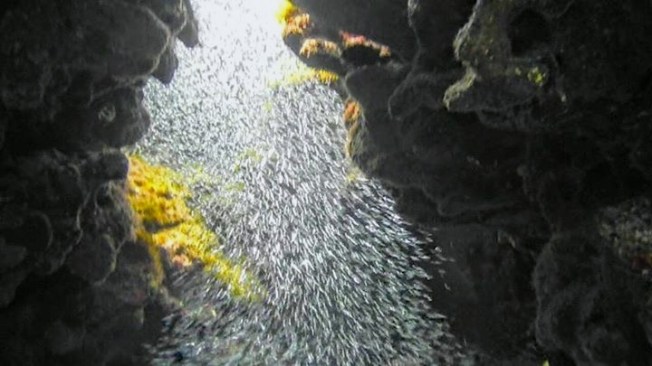
A panic of silversides apparently pouring like a waterfall down through a gap in the reefsilversides-waterfall-abaco-kay-politano

WHAT DOES A STATIONARY ATLANTIC SILVERSIDE LOOK LIKE?

meber_u0

Some time ago we used to go to the reef at Fowl Cay Marine Preserve with Kay Politano, and I would snorkel with a small and very basic lo-res underwater camera. I was hampered by being a disgracefully feeble swimmer; by not having snorkelled for a length of time calculable in decades; and by being a complete novice at underwater photography.  Despite these not inconsiderable disadvantages I managed to cobble together a few short movies on my computer (I was new to that too). Here’s one that nearly works, in that it gives an idea of what happens if you ‘swim with silversides’. I know you scuba guys all swim with sharks, but cut me some slack here please…

Photo Credits: Main photos Melinda Riger of Grand Bahama Scuba; Silverside Waterfall by Kay Politano; motionless silversides by FISHBASE.ORGMusic: Goldon Giltrap, ‘Fast Approaching’

Unknown's avatar

MELLOW YELLOW: HOODED WARBLERS ON ABACO


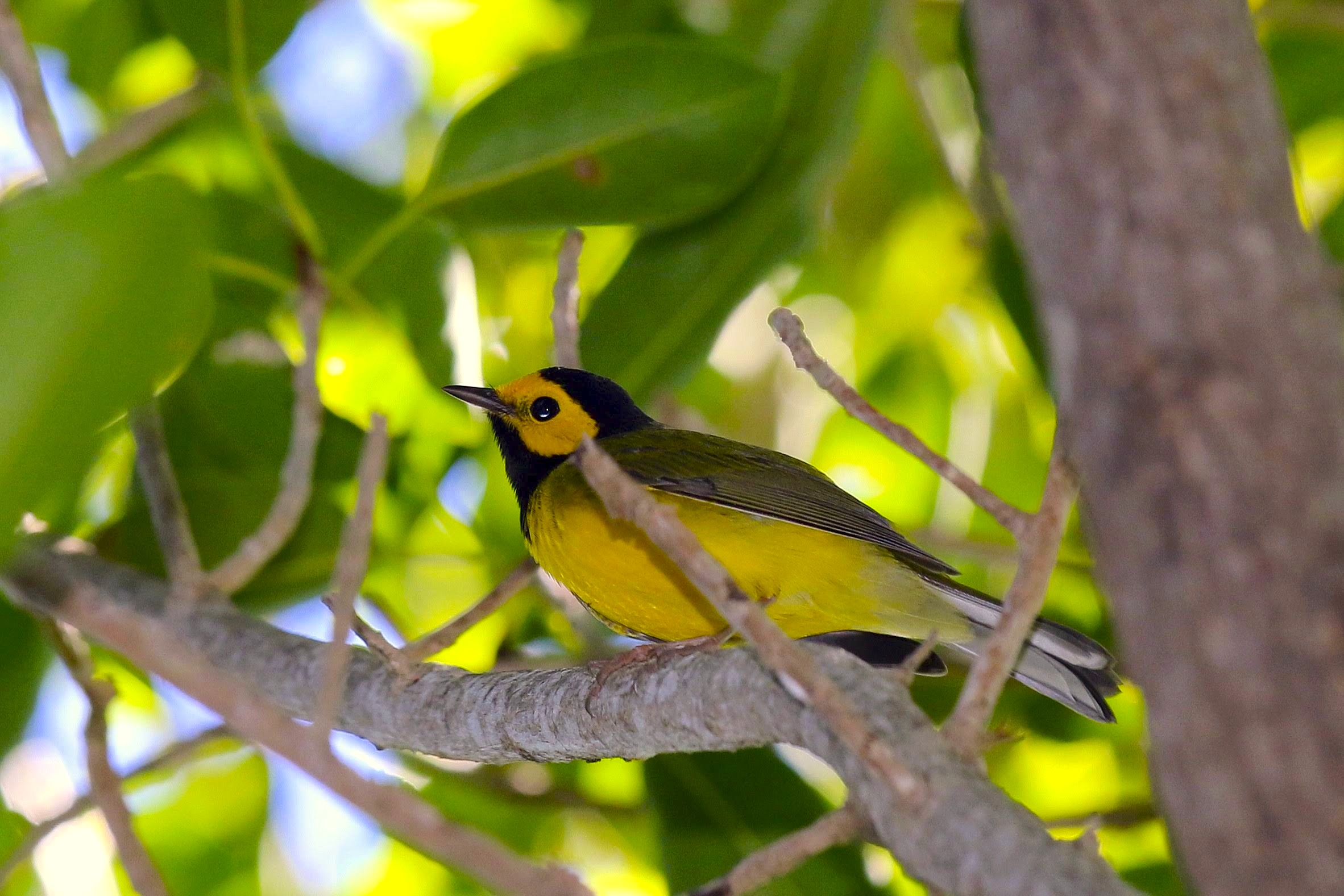
Hooded Warbler, Man-o-War Cay, Abaco (Charmaine Albury)

MELLOW YELLOW: HOODED WARBLERS ON ABACO

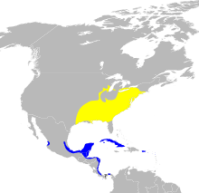
The Hooded Warbler (Setophaga citrina) breeds in eastern North America in summer, and winters in Central America and the West Indies. On Abaco they are classed as WR3, ‘uncommon winter residents’. The range map below reveals one strange aspect of their habitat. It looks as though they choose not to live in Florida either in summer or winter. I’m sure they must be found there as transients; and there must presumably be some small breeding or wintering populations in Florida. Or both. But it’s hard to understand why Florida does not seem to suit them.

220px-wilsonia_citrina_map-svg

ABACO WARBLER HOTSPOT

On Abaco, I have only ever had reports of Hooded Warblers from Man-o-War Cay, which seems to be a warbler hotspot every season. There are 37 WARBLER SPECIES recorded for Abaco. FIVE WARBLER SPECIES are year-round residents. Of the migratory 32, at least two dozen seem to favour Man-o-War for their winter break in the sun. MoW resident Charmaine Albury, who took the main photos in this post, has already counted 14 different warbler species before the end of September. She has found up to 5 species in a tree at the same time. 

Hooded Warbler, Man-o-War Cay, Abaco (Charmaine Albury)

WHAT’S IN A NAME?

There are periodic upheavals in Birdland which, following research, lead to an official reclassification of a particular bird species or genus. In 2011, many warblers that were cheerfully going about their business under the classification Dendroica found themselves merged into the older ‘priority’ genus Setophaga (Greek for ‘moth eating’). The Hooded Warbler, formerly Wilsonia, has found itself similarly merged into Setophaga – a kick in the teeth for the naturalist ALEXANDER WILSON, for whom the bird was named (along with many others – his plover being a well-known example on Abaco).

hooded-warbler-copy

WHY ‘CITRINA”? (FUN FACT!)

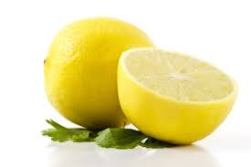
The word relates to lemons – citrus fruits – and their colour, and is undoubtedly apt for the hooded warbler. However the semi-precious calcite gem, ‘Citrine’ (same word origin) is not lemon coloured but (disappointingly) brownish.

                         imgresnatural-citrine-calcite

Hooded Warbler, Man-o-War Cay, Abaco (Charmaine Albury)

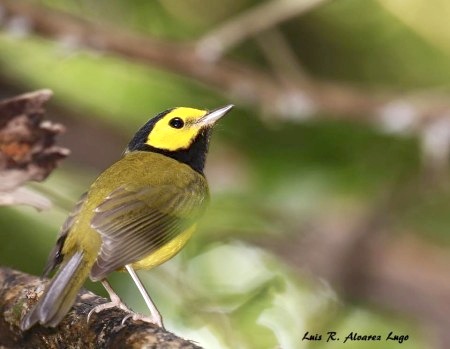
This little warbler has a plain olive / greeny-brown back, and a bright yellow face and underparts. There are white feathers on the outsides of their under-tail (I’m sure there’s a more technical word for this…) – see header image. Only males have the black hoods and bibs; females have an olive-green cap. 

hooded-warbler-luis-r-alvarez-lugo-450x349

Hoodies forage for insects in low vegetation and dense undergrowth, or catch them by HAWKING from a branch or twig. Sadly, they are one of the species that are targeted by brown-headed cowbirds, the cruel exponents of brood parasitismThese birds are rarely found transients on Abaco at present, but they are a robust species and there is evidence that their range is increasing. In some areas there are controlled (euphemism for… er… dispensed with). I’d favour that approach for Abaco, should they show signs of inflicting their evil ways on the resident breeding population of small birds.

Audubon plate-110-hooded-warbler-final

Hooded Warbler in Audubon’s Birds of America

WHAT DO THEY SOUND LIKE?

I am often at sea with the attempts to turn birdsong into to memorable words of phrases. Yes, a Bobwhite sounds a bit like a quizzical ‘Bob… White?‘. But I rarely ‘get’ the “I’d-like-a-Kalik-with-my-Conch” and suchlike. For what it is worth, I learn that for the Hooded Warbler “the song is a series of musical notes which sound like: wheeta wheeta whee-tee-oh, for which a common mnemonic is “The red, the red T-shirt” or “Come to the woods or you won’t see me“. See what I mean? Anyway, we can all agree that “the call of these birds is a loud chip.” As with so many species!  

So here’s what to listen out for (recording: FLMNH). Suggestions for a suitable phrase welcome!

1291c       3646

If you come across a bird that looks like a hooded warbler, but is motionless and makes no sound unless you squeeze it, you may have found the subspecies Audubonus stuffii, which is found mainly in the Amazon and E. Bay regions.51idfxzal

OPTIONAL MUSICAL DIVERSION

I haven’t had time to musically divert for a while. My title refers, of course, to the ‘psychedelic pop’ song by Donovan, released in the US in 1966 and the UK in early 1967. The theory is that the song relates to the supposed (but mythical) hallucinogenic high to be had from smoking dried banana skins. There are an explicit interpretation for the ‘electical banana’ which we need not go into in a family blog.  There was a rumour, now discredited, that Paul McCartney supplied the “quite rightly” in the chorus. Anyway, to chime in with the mood of the time, one of the first ‘coffee shops’ in Amsterdam was called Mellow Yellow. 

donovan_-_mellow_yellow

RELATED POSTS

ABACO’S 37 WARBLER SPECIES

ABACO’S 5 PERMANENT RESIDENT WARBLERS

hooded-warbler-copy

Credits: Charmaine Albury for the photos and her warbling work on Man-o-War Cay; Luis Alvarez-Lugo (Wikipici); random open source material; FLMNH (birdsong); my iTunes

Unknown's avatar

HAMMERHEAD SHARKS: UP CLOSE AND PERSONAL…


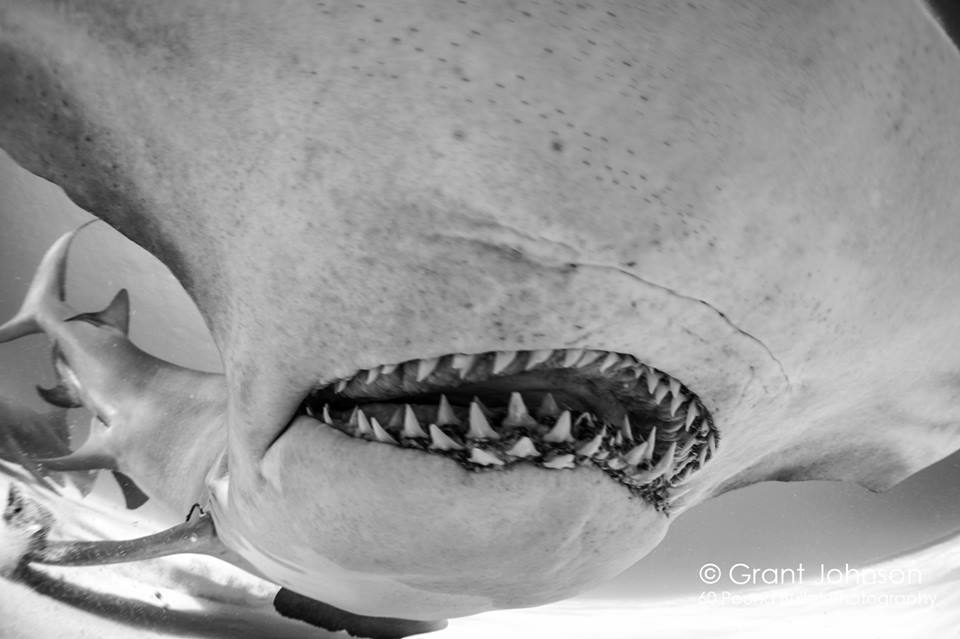
Great Hammerhead Shark, Bimini (Grant Johnson / 60 Pound Bullet)

HAMMERHEAD SHARKS: UP CLOSE AND PERSONAL…

Of all the words that have been devalued and diminished by overuse over the last decade, ‘AWESOME!!!’ must rank high in the top 10. Maybe it’s even made it to number 1. Awesome! Even in the wildest reaches of hyperbole, the offer of a Kalik can never truly be awesome. Nor can a kind and delightful gift. There’s no need to add more examples, because the photos that follow show something that really is awesome in it’s true meaning: the giant hammerhead shark at close – and very close – quarters. Grant Johnson takes astounding wildlife photos in Bimini and far beyond. Take the time to have a look at his page ’60 POUND BULLET’. Now let’s move on to ‘awesomely awesome…’

Great Hammerhead Shark, Bimini (Grant Johnson / 60 Pound Bullet)Great Hammerhead Shark, Bimini (Grant Johnson / 60 Pound Bullet)Great Hammerhead Shark, Bimini (Grant Johnson / 60 Pound Bullet)Great Hammerhead Shark, Bimini (Grant Johnson / 60 Pound Bullet)Great Hammerhead Shark, Bimini (Grant Johnson / 60 Pound Bullet)Great Hammerhead Shark, Bimini (Grant Johnson / 60 Pound Bullet)Hammerhead Shark 1 Bimini's Marine Protected Area Campaign

And yes, there are Hammerheads in Abaco waters. I have occasionally seen small- to medium-sized ones while fishing out on the Marls. In several of the images above, you can see those strange creatures, Remoras, that attach themselves to sharks by suction and hitch a ride. You can read more about them and learn why they do such a foolish thing HERE

Credits: All photos, Grant Johnson / 60 Pound Bullet, with many thanks for use permission

Unknown's avatar

MAPPING ABACO: A JOURNEY BACK TO THE c18


acaco-map-1778-crop

MAPPING ABACO: A JOURNEY BACK TO THE c18

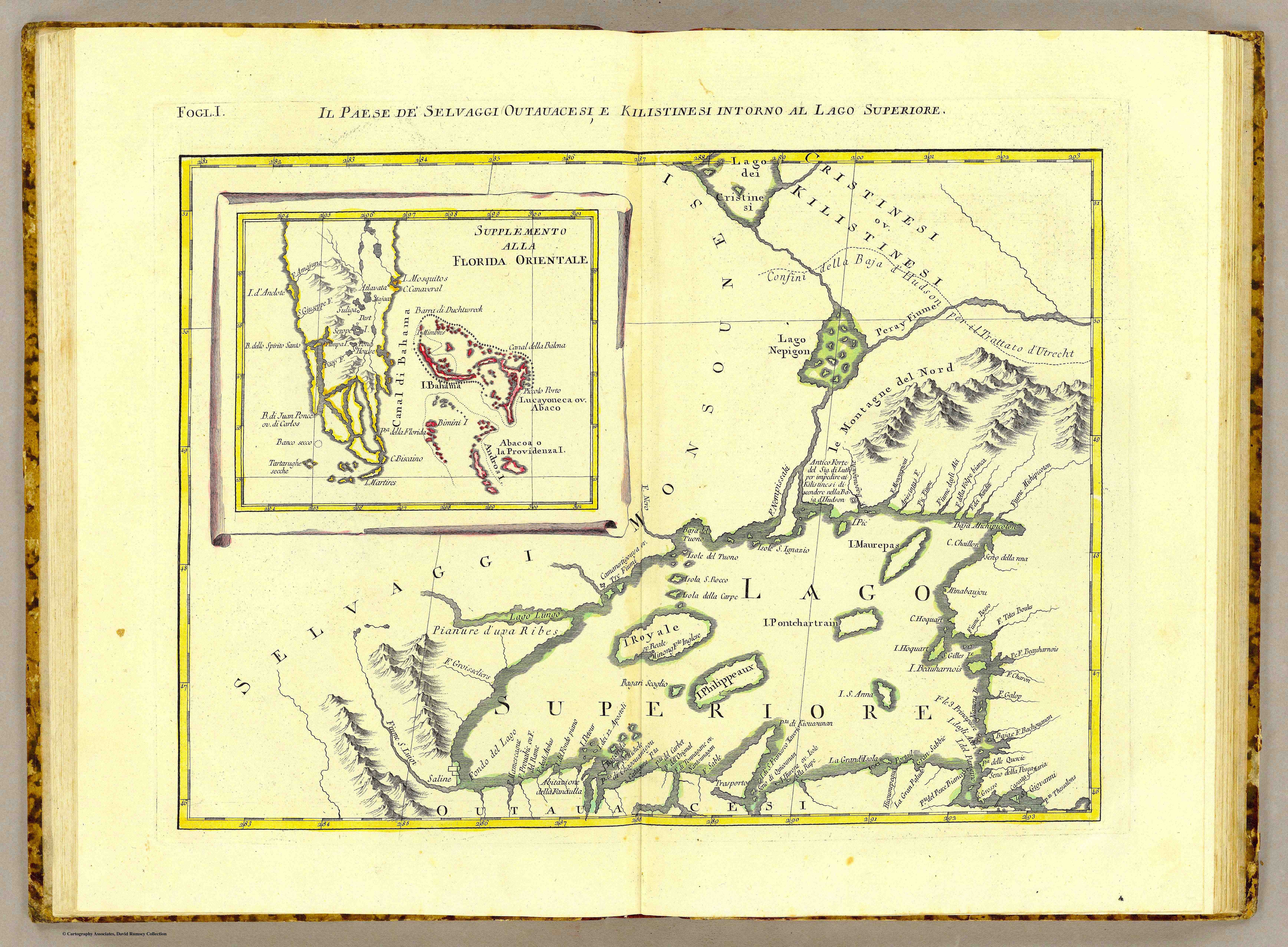
From time to time I come across historic maps of the Bahamas in general and Abaco in particular. Many were included in a post I wrote some time ago about the maritime and geographic importance of Hole-in-the-Wall, HERE. Almost all pre-c20 maps of the Bahamas contain insights into the maritime and geo-political history of the islands that are worth investigating. One that recently caught my eye is a map dated 1778 from Italy, published in Venice, with the excellent title “Il Paese de’ Selvaggi Outauacesi, e Kilistinesi Intorno al Lago Superiore”, attributed to Antonio Zatta, John Mitchell and G T Raynal.  “The title translated, might read, “The Country of the Savage Ottowas and Christineaux on the shores of Lake Superior.” Except for Ile Royale, the large islands in the lake are fictitious. The somewhat distorted outline of southern Florida in the inset is in keeping with general lack of British knowledge about this area” Portinaro & Knirsch 

Zatta was a Venetian cartographer who produced some important maps in the 1770s and 1780s, including a 4-volume atlas of the world. Mitchell was a geographer and botanist, best known for the first comprehensive map of eastern North America (1755); Guillaume Thomas Raynal was a French writer and journalist most famous for his treatise on the ‘philosophical and political history of the establishment of commerce by Europeans in the the two Indies’, a work that was considered controversial (it was banned in France, and copies burned). 

THE COMPLETE MAP

Lake Superior, with the ‘Supplemento alla Florida Orientale’ inset – a strange juxtaposition…abaco-map-zatta-1778-sm

FOCUS ON FLORIDA

The ‘eastern Florida’ inset conveniently happens to include the northern Bahamas. Staying with Fl. for a moment, of note is the inclusion of C. Canaveral, spelled then as now. Key Biscayne is also shown. I wondered about the place marked Tartarughe Secche – ‘Dry Turtles’. It is now Dry Tortugas National Park. “Mostly water, this remote park features abundant marine & bird life plus a 19th-century fort. It comprises 7 islands, plus protected coral reefs. Garden Key is home to beaches and the 19th-century Fort Jefferson. Loggerhead Key has a lighthouse and sea turtles. On nearby Loggerhead Reef, the Windjammer Wreck, the remains of an 1875 ship, is a popular dive site. Bush Key is a nesting site for seabirds like sooty terns.”** I suspect that these coral reef islets were marked on maps in days before lighthouses because of the hazards they posed to navigation at sea; and because, like Hole-in-the-Wall on Abaco, they were useful navigation aids.

abaco-map-inset-italian-c18

ABACO & NORTHERN BAHAMAS

Unacknowledged in both the map and the inset titles, are the northern Bahamas islands. We can pass by Bimini, Andros and (Grand) Bahama which, apart from distinct oddities of scale, shape, and location are more or less as one might expect for the period. Let’s look at some details of the depiction of Abaco. 

acaco-map-1778-crop

  • ABACO(A) The first geographical jolt comes not from the well-known fact that historically, present-day Abaco was originally called Lucaya (or variations), but that (New) Providence was called Abacoa. Adding to the confusion, some early maps also show certain cays as ‘Abaco’, ‘Abacoa’, or in the case of Tilloo Cay in 1815, ‘Aboca’, possibly through errors or misunderstandings. This map is one of the few I have seen that shows both the mapped transition of Lucaya (or its variants) to Abaco; and of Abaco(a) to Providence. If anyone has any idea why this came about, I’d be pleased to know!
  • HITW? The next surprise is that Hole-in-the-Wall, an established and mapped nautical landmark for some decades, is not marked. Shown on maps since at least 1738, this is the first map I have found – other than the most basic – that does not feature HITW (in whatever language) or ‘Lighthouse Point’. An odd omission.
  • PORTO PICCOLO’s inclusion is interesting because it continues a tendency – eg 1738, Couvens & Mortier – to show Little Harbour as the only named settlement, though by 1778 there must have been others. LH was clearly a place of some significance, and this presumably had a nautical explantation: the harbour is perfectly placed to offer protection and a safe refuge in stormy weather.
  • CANAL DELA BALENA refers to what, by the early c20, was called ‘Whale Cay Channels’ (below), by which time it was more accurately mapped. Other c18 maps also show ‘Chenal Whale’ and ‘Whale Channel’, but considerably north of the actual location. But in those days, even the outline of Abaco and the location of the cays was usually endearingly wonky.whale-cay-abaco-map-crop
  • BARRA DI DUCHTWRECK I haven’t been able to find out much about this location, or the wreck that gave it its name. A map by Thompson (1815) calls it ‘Dutch Wreck Bar’, and I can only assume that at some time in the early c18 – or even the c17 – a Dutch vessel came to grief on the reef. I need to look into this more. Someday. Oddly, the modern Italian for a reef is barriera not barra. Maybe the word has changed over time, or the usage barra then was colloquial; or perhaps in mapping terms it was a generally accepted abbreviation.
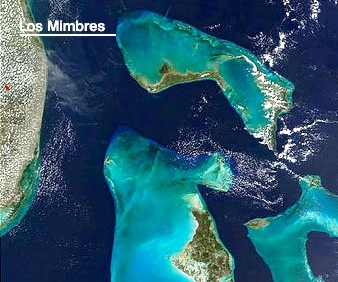
  • I MIMBRES This reef or shoal area of is usually mapped as Matanilla Reef, Maternillo Bank or Reef, or variants. In 1656 this area – presumably dangerous for shipping – was the scene of a dramatic tragedy involving a treasure ship, the flagship of a fleet. I dug up reports of the events in Portugese which baffled ‘Google Translator. I was bailed out by an article about treasure hunter Robert Marx and his findings:

shipwreck-ac-marxshipwreck-ac-marx-copy-2bahamabank-1

If you have got this far at all, or even with the assistance of 2 or 3 Kaliks, thanks for bearing with me. The old Abaco maps are fascinating, and of course once one begins to dig, so more stuff emerges… and so on.

Credits: David Rumsey Historical Map Collection, http://www.davidrumsey.com / Cartography Associates – in particular for licensing non-commercial use of material via a Creative Commons License; magpie pickings from multiple open-source sites.

**Dry Tortugas National Park review comments are eclectic and include “Crystal clear water, lots of wildlife, nice people and such a cool fort”; “The Dry Tortugas area first gained significance after the War of 1812” and “Constant nice breeze and comfortable night time temperatures for sleeping.”

Unknown's avatar

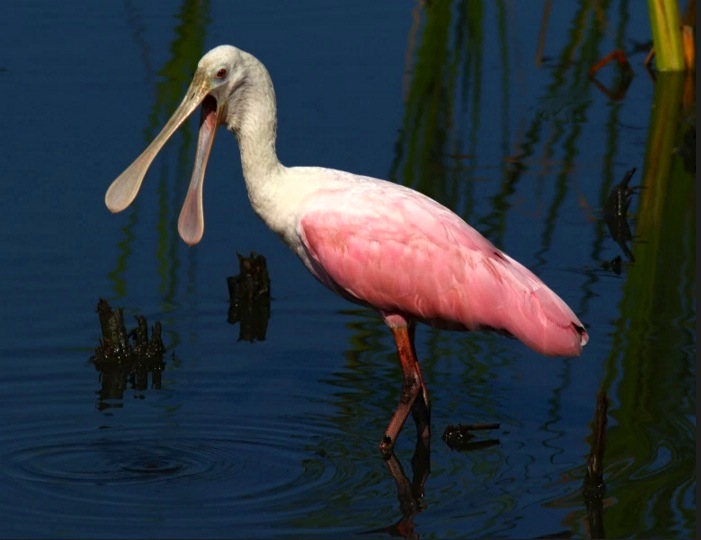
THINK PINK: A RUNCIBLE OF SPOONBILLS


spoonbill-4-9-16-phil-lanoue

THINK PINK: A RUNCIBLE OF SPOONBILLS

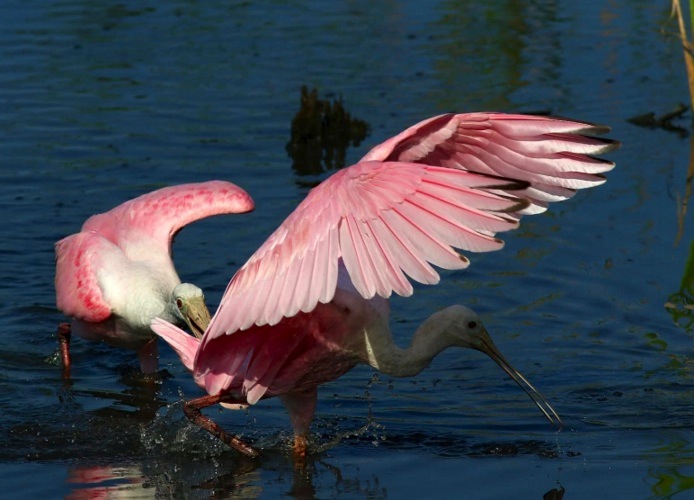
Healthy happy hungry birds ‘in the pink’. Always a pleasure to see. And when there is a group of them, how often one reaches for the correct collective noun: a murder of crows, an exultation of larks, a murmuration of starlings, a parliament of owls and so forth. Many are historical terms, dating back to medieval times in Europe, and often linked to hunting and falconry. As a rule of thumb, the more recent the term, the more likely to have been invented – especially if there is a comedy undertone.

spoonbill-2-9-16-phil-lanoue

The trouble with spoonies is that there is no historic or traditional name for a group of them. In such circumstances, using the term ‘flock’ is generally the safest bet. A quick glance online suggests that modern suggestions are mainly jocularly cutlery-based: a canteen, a measurement, a service, and… a ‘runcible’ (a neat nod to Lewis Carroll). That’s the one I prefer.**

spoonbill-7-9-16-phil-lanouespoonbill-6-9-16-phil-lanoue

One thing is beyond dispute: Phil Lanoue takes some of the best bird action shots around, and I’m proud to be permitted to showcase them from time to time. Spoonbills are rare enough these days in the northern Bahamas, so it is good to know that they are thriving not so very far away to the west. Abaco still has occasional spoonbills dropping in – you can see the latest one, found at Gilpin Pond, HERE.

What are you guys looking at?spoonbill-5-9-16-phil-lanoue

Got to get every feather just right…spoonbill-3-9-16-phil-lanoue

**The slightly ill-tempered-sounding baldmonkeyseenabird suggests ‘a repugnance of spoonbills’ but I think he / she may have been having a difficult day…

All photos by Phil Lanoue. Check out his awesome website https://phillanoue.com

I must fly now… see ya!spoonbill-1-9-16-phil-lanoue

Unknown's avatar

PLOVER APPRECIATION DAY 2016


Piping Plover in flight (Fl., Danny Sauvageau)

PLOVER APPRECIATION DAY  2016

Today’s the day that plovers appreciate the humans who enjoy them and look after them. Or maybe they have become more valuable than ever (I hope I have understood this right). I’m stuck at an airport right now waiting on a delayed flight, after our original flight had already postponed by 48 hours, and I’d sure appreciate being able to fly out of here under my own steam. So to speak. Free as a bird. Like these guys.


Semi-palmated Plovers in flight, Abaco (Alex Hughes)_Piping_Plover_on_the_Fly (USFWS Mountain-Prairie wiki)Semi-palmated Plovers in flight, Abaco (Alex Hughes)

Credits: Danny Sauvageau (1); Alex Hughes (2, 4); USFWS (3); BA for 2 extra days away…

Unknown's avatar

SEABIRDS, SHOREBIRDS & WADERS: 30 WAYS TO DISTINGUISH THEM


Sanderling Trio, Delphi Beach, Abaco (Keith Salvesen) 5

SEABIRDS, SHOREBIRDS & WADERS: 30 WAYS TO DISTINGUISH THEM 

While putting together “The Birds of Abaco” I looked at and archived hundreds of photos of birds, many with aquatic or semi-aquatic lives. These can be broadly categorised as seabirds, shorebirds or wading birds. But with some bird breeds, there can be doubt as to which category applies (and in different parts of the world the categories themselves may be named differently). There is the strict Linnaean ordering of course, but in practice there is a degree of informal category overlap and some variation in the various bird guides. This is especially so between shorebirds and the smaller wading birds. Shorebirds may wade, and wading birds may be found on shores. Then I remembered a past blog post by the estimable BEACH CHAIR SCIENTIST that I thought deserved another outing here. Even if you have no problem distinguishing birds in the 3 categories, there are avian characteristics within each list that are interesting observations in themselves. 

10 CHARACTERISTICS OF SEABIRDS 

Magnificent Frigatebird (inflated-throat) (Michael Vaughan)

(Examples include albatross, auk, booby, frigatebird, fulmar, gannet, penguin, petrel, puffin, shearwater, and tropicbirds)

1. Seabirds are pelagic, spending most of their lives far out at sea.
2. Seabirds move toward to coastal areas to breed or raise young for a minimal amount of time.
3. Seabirds are light on their undersides and dark on top (an adaptation known as countershading).
4. Seabirds have more feathers than other types of birds for more insulation and waterproofing.
5. Seabirds have flexible webbed feet to help gain traction as they take off for flight from the sea.
6. Some seabirds have unusually sharp claws used to help grasp fish under the water.
7. Some larger seabirds (e.g. albatross) have long, slim wings allowing them to soar for long distances without getting tired.
8. Some smaller seabirds have short wings for maneuvering at the surface of the water.
9. Seabirds have specialized glands to be able to drink the saltwater and excrete salts.
10. Some seabirds (e.g. gannets) have a head shape that is usually tapered for more efficiency in plunge diving.

10 CHARACTERISTICS OF SHOREBIRDS 

American Oystercatcher, Delphi, Abaco (Tom Sheley)

(Examples include avocet, black skimmer, oystercatcher, plover, sandpiper, and stilt)

1. Shorebirds have long legs, pointed beaks, and long pointed wings.
2. Most shorebirds are migratory (impressively, some shorebirds fly non-stop for 3-4 days, equivalent to a human running continuous 4-minute miles for 60 hours).
3. Shorebirds wade close to the shore and poke their bills into the ground in search of food.
4. Shorebirds are small to medium size wading birds.
5. Shorebirds tend to frequent wetlands and marshes and are biological indicators of these environmentally sensitive lands.
6. Shore birds are of the order Charadriiformes.
7. Shorebirds are very well camouflaged for their environment and their appearance may vary from place to place as plumage (feather colors) are gained or lost during breeding.
8. Shorebirds typically range in size from 0.06 to 4.4 pounds.
9. Oystercatchers have a unique triangular bill that is a cross between a knife and a chisel.
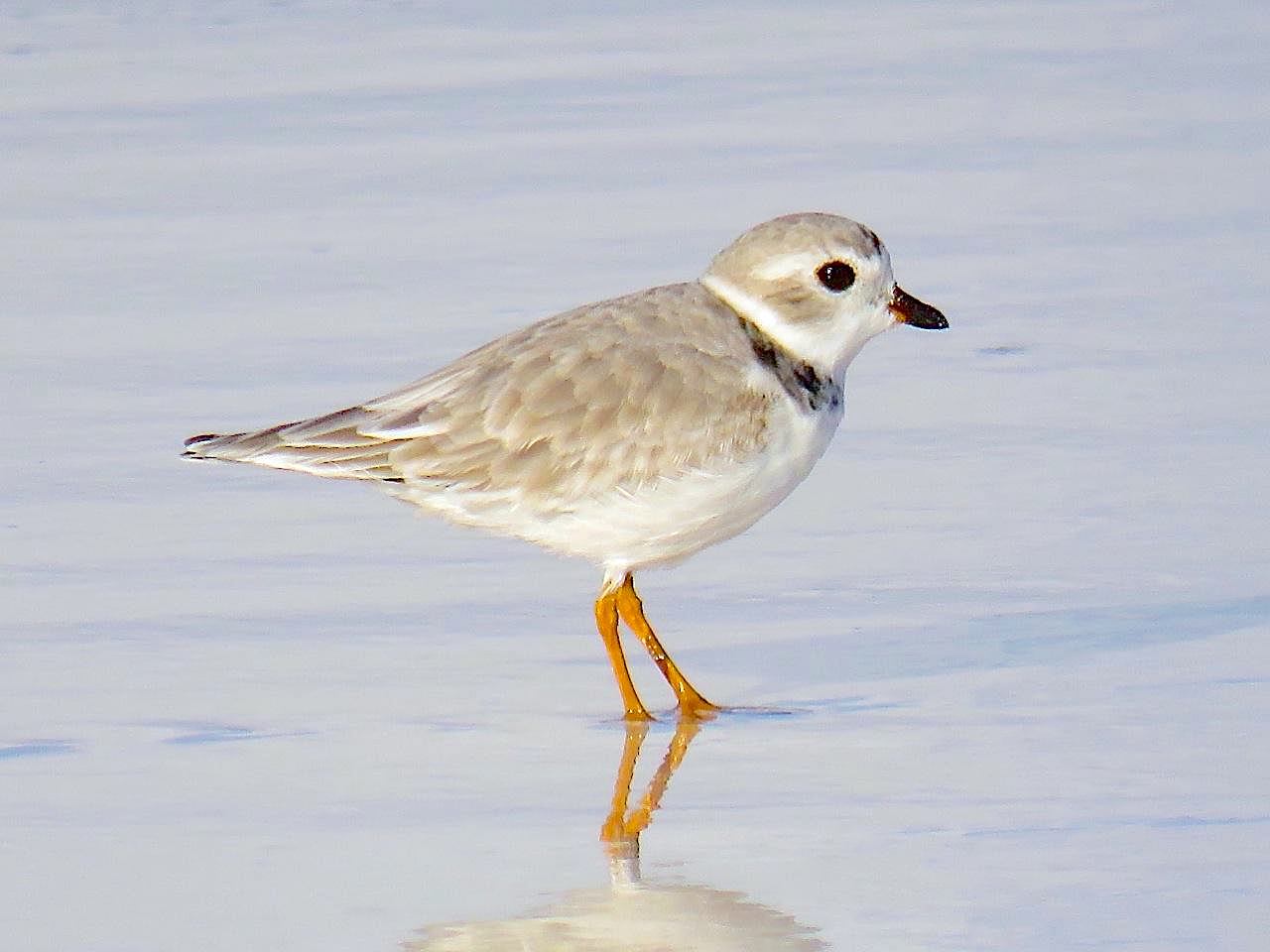
10. The black skimmer is the only native bird in North America with its lower mandible larger than the upper mandible, which helps the bird gather fish as it skims the ocean surface.

10 CHARACTERISTICS OF WADING BIRDS 

Great Egret, Abaco - Tom Sheley

(Examples include crane, egret, flamingo, herons, ibis, rail, spoonbill, and stork)

1. Wading birds are found in freshwater or saltwater on every continent except Antarctica.
2. Wading birds have long, skinny legs and toes which help them keep their balance in wet areas where water currents may be present or muddy ground is unstable. Also, longer legs make it easier for them to search for food (forage) in deeper waters.
3. Wading birds have long bills with pointed or rounded tips (depending on what is more efficient for the types of food the bird consumes).
4. Wading birds have long, flexible necks that can change shape drastically in seconds, an adaptation for proficient hunting.
5. Herons have sophisticated and beautiful plumes during the breeding season, while smaller waders such as rails are much more camouflaged.
6. Wading birds may stand motionless for long periods of time waiting for prey to come within reach.
7. When moving, their steps may be slow and deliberate to not scare prey, and freeze postures are common when these birds feel threatened.
8. Adult wading birds are quiet as an essential tool for hunting. Wading birds may be vocal while nestling or while in flocks together.
9. Many wading birds form communal roosts and breeding rookeries, even mixing flocks of different species of wading birds or waterfowl.
10. Wading birds fully extend their legs to the rear when flying. The neck may be extended or not while in flight, depending on the species.

These lists were put together in useful chart form. Please check with BCS (link above) if you want to ‘borrow’ itseabird shorebird wading bird chart ©beachchairscientistImage Credits: Table – ©Beach Chair Scientist; Pics – Keith Salvesen, Michael Vaughn, Tom Sheley

Unknown's avatar

UNDERWATER ANGELS: ANGELFISH


queen-angelfish-melinda-riger-g-b-scuba-copy-2

UNDERWATER ANGELS: ANGELFISH

We are away for a few days, so I have planned a few posts that won’t fall apart courtesy of being done on a phone. Hopefully.

Angelfish are fabulous and come in various ‘colorways’, as designers say. Queens are my favourite, with grays not far behind. The third type here, the French, is in bronze medal position on my piscine podium but this could change were I ever to meet one in real life…

QUEEN ANGELFISH

queen-angelfish-melinda-riger-gb-scubaqueen-angelfish-melinda-riger-g-b-scuba-copy-3

GRAY ANGELFISH

gray-angelfish-melinda-riger-gb-scuba-copy-2gray-angelfish-melinda-riger-g-b-scubagray-angelfish-7-16-melinda-riger-gb-scuba

FRENCH ANGELFISH

The middle fish is a juvenile

french-angelfish-melinda-riger-g-b-scuba-copyfrench-angelfish-juvfrench-angelfish-melinda-riger-g-b-scuba

Credits: Melinda Riger / Grand Bahama Scuba

Unknown's avatar

INTERNATIONAL MANATEE DAY SEPT 7


imageHow could I have forgotten? Here we are, just arrived in south-west France, hemmed in by mountains, sea and Spain. Blissful. imageYet there are more important things than mere vacations. Manatees are high on the list of priorities.
image

So to celebrate their special day, as the bats flitter above our glasses of Mas Rous, here’s an iPhone post in celebration of these curious – in both senses – and gentle creatures. imagePhotos courtesy of BMMRO, with thanks to Felice for her great Bahamas manatee FB page.image

Credits: BMMRO, the excellent Peppermint Narwhal (logo)