Unknown's avatar

HURRICANE IRMA UPDATE & ISS VIEWS: ABACO, BAHAMAS


HURRICANE IRMA UPDATE: ABACO, BAHAMAS

It’s Friday afternoon. Irma is spinning her destructive progress through the Bahamas towards… well, right at the moment it seems to be Andros and then towards the Florida coast and northwards up the panhandle. Abaco is not currently shown in the direct firing line – but there’s no doubt that the passage of such a massive storm will mean plenty of dirty weather very soon now. 

I have just taken a screenshot (above) of the live tracker I am using. Top right is a realtime satellite view of Irma’s current position. Bottom left is the predicted position later this weekend. The fiercest part of the storm will have passed over Andros and carried on northwest, a path further west of Abaco than recently forecast. We must hope so, remembering of course that one location’s dodged bullet will inevitably be another’s bullseye.

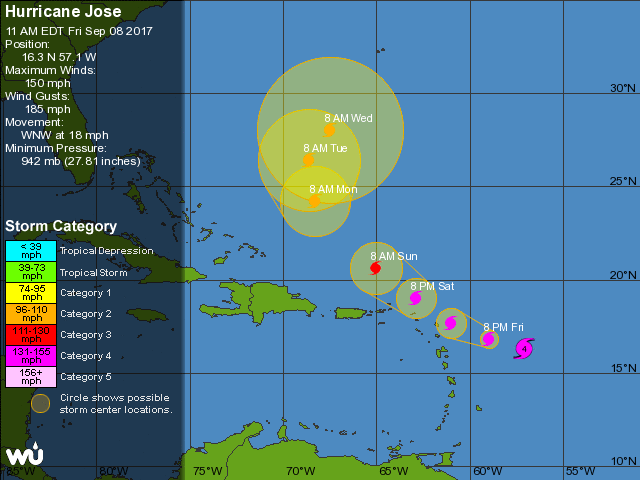
In the tracker realtime shot above, it’s impossible to ignore the lurking menace of Hurricane Jose – recently graded Cat 4 – to the east. Here’s the latest Jose tracker I can find for today. Right now (but who knows for how long) this system looks as though it may hook north and expend its savage energy in the open ocean.

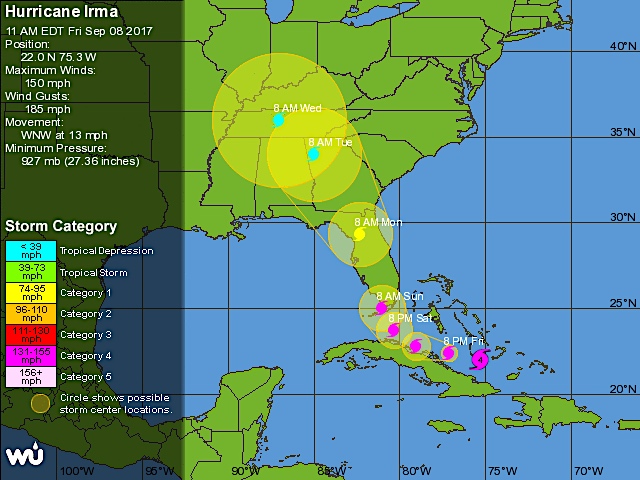
And here is the latest Irma tracker, as I write. It looks as if the storm may dissipate after it has made landfall at the southern tip of Florida, but it will clearly be very unpleasant down there I’m afraid.

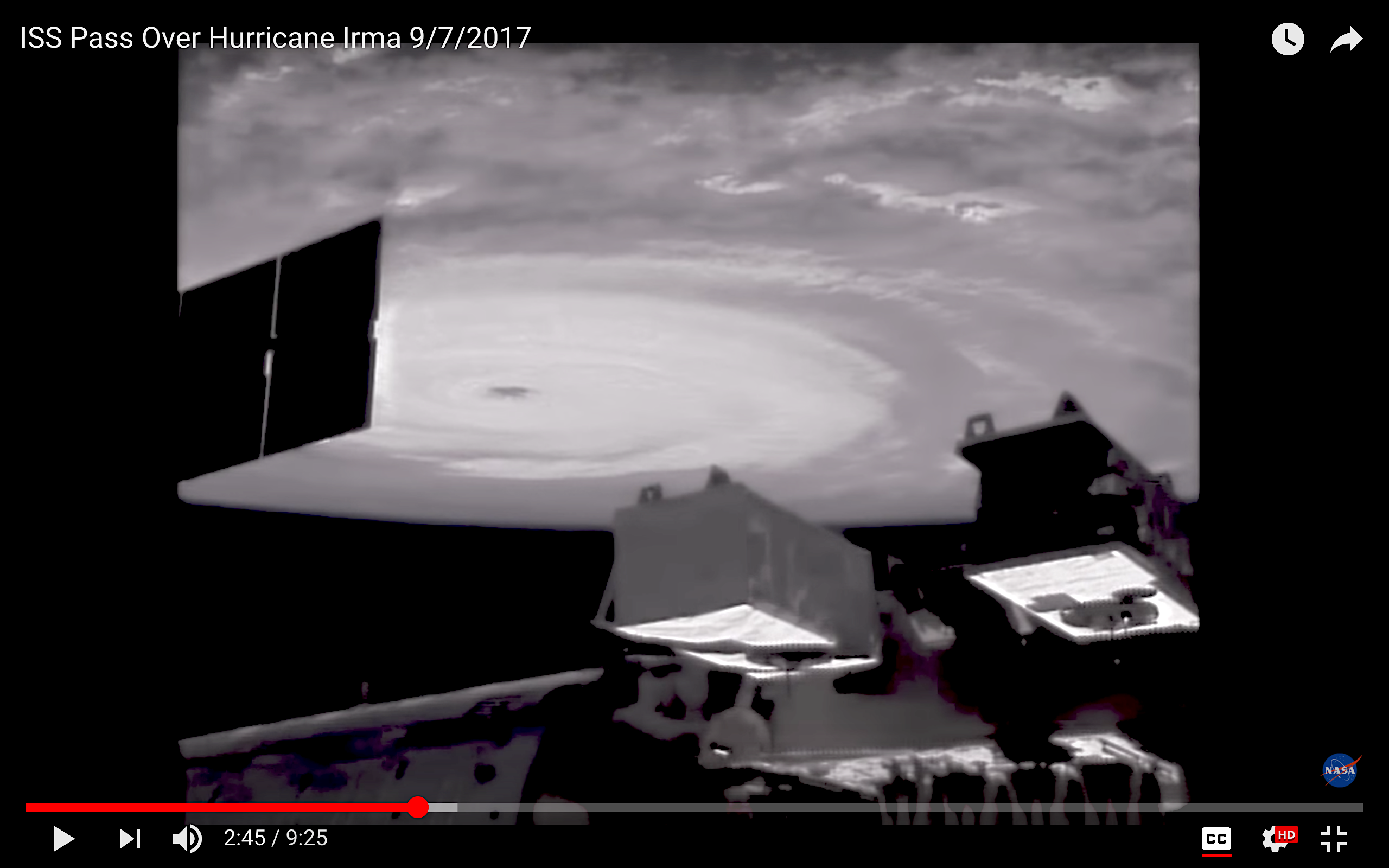
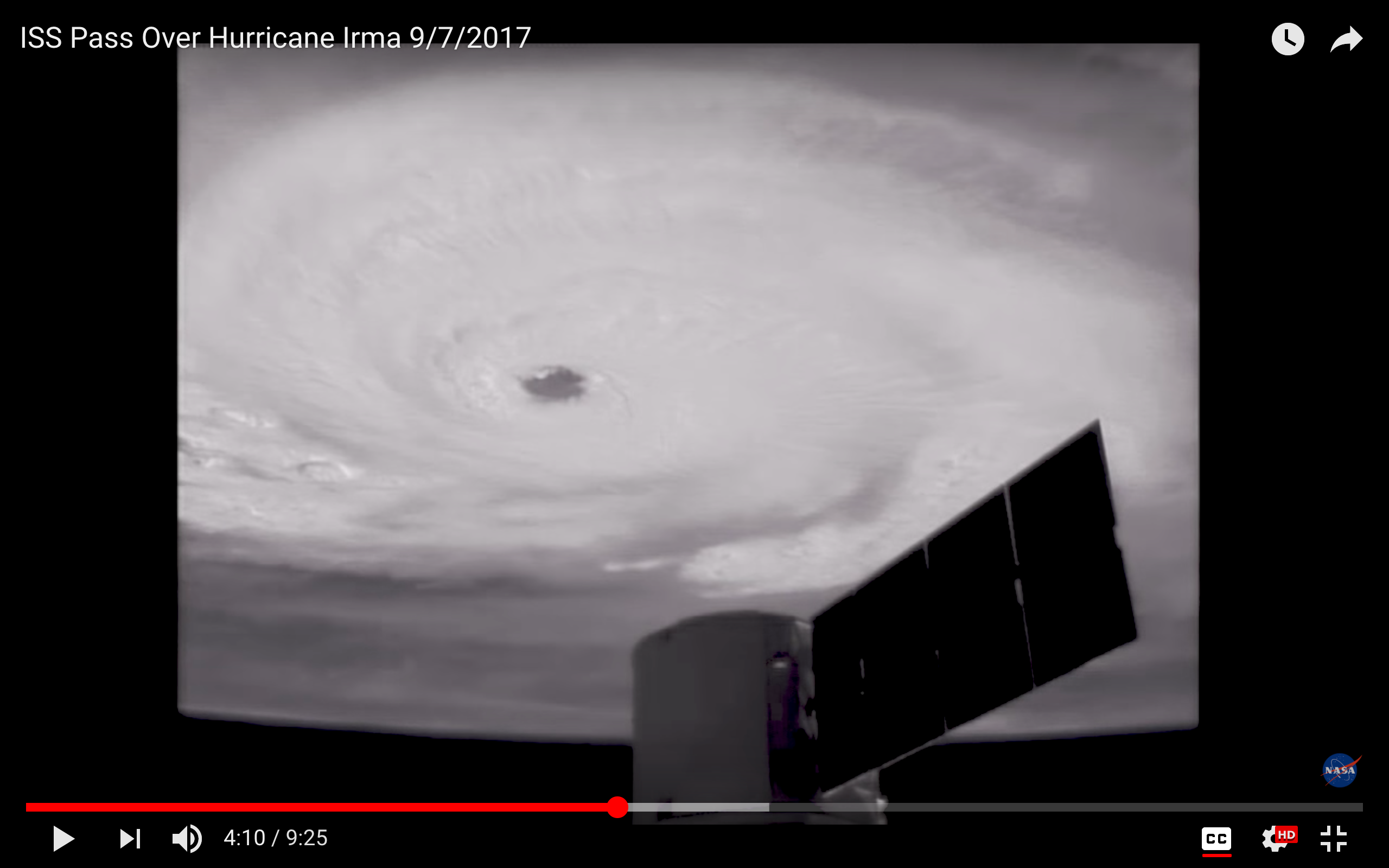
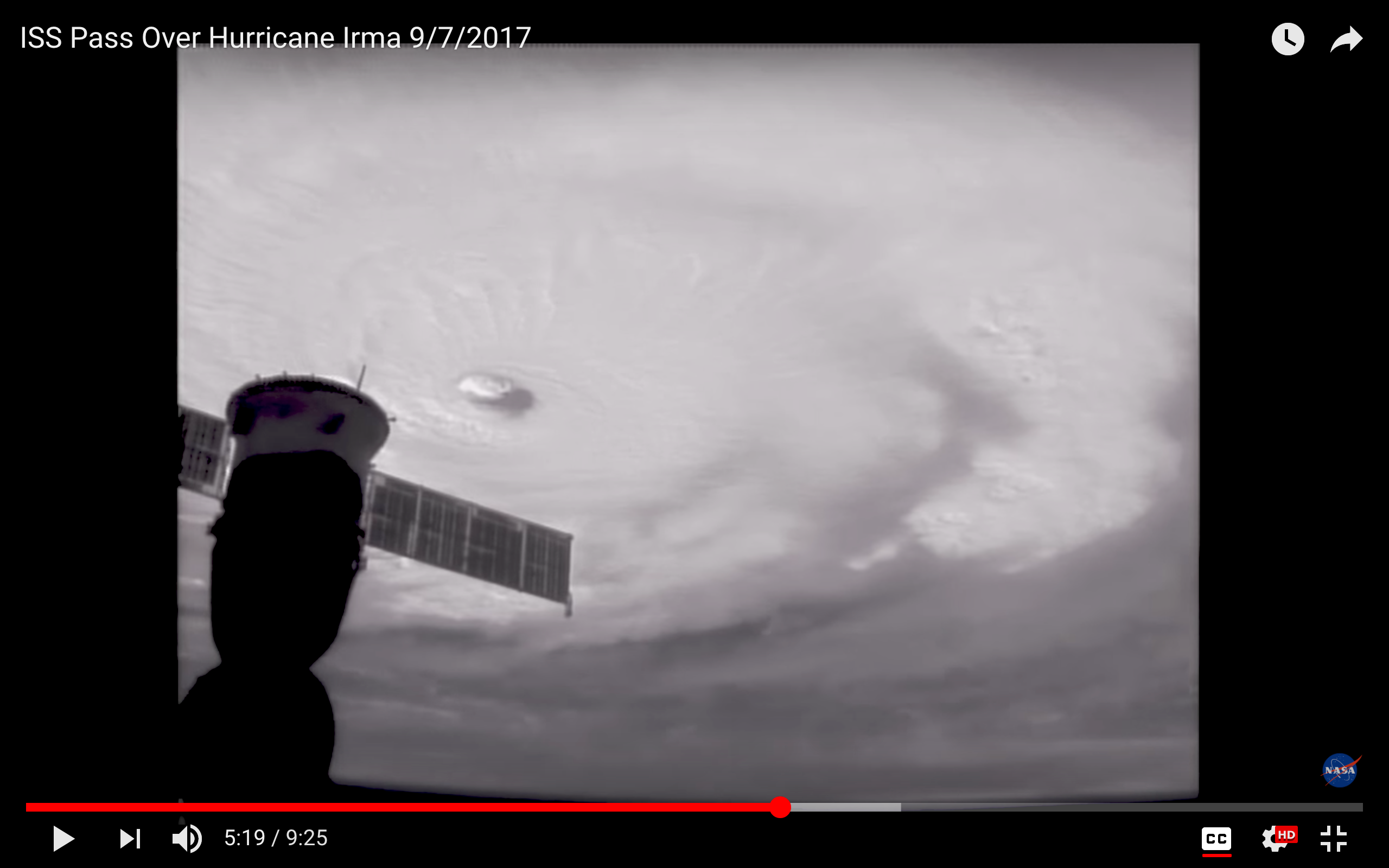
There’s been some interest in the International Space Station ISS images I posted yesterday. The serenity of the view of a hurricane topside is so at odds with the ferocity of the weather beneath and the destruction being wrought on the ground. And they work on the imagination: suppose you were in that capsule, moving with eerie calmness through the sky, looking at the swirling mass of white cloud far below…?

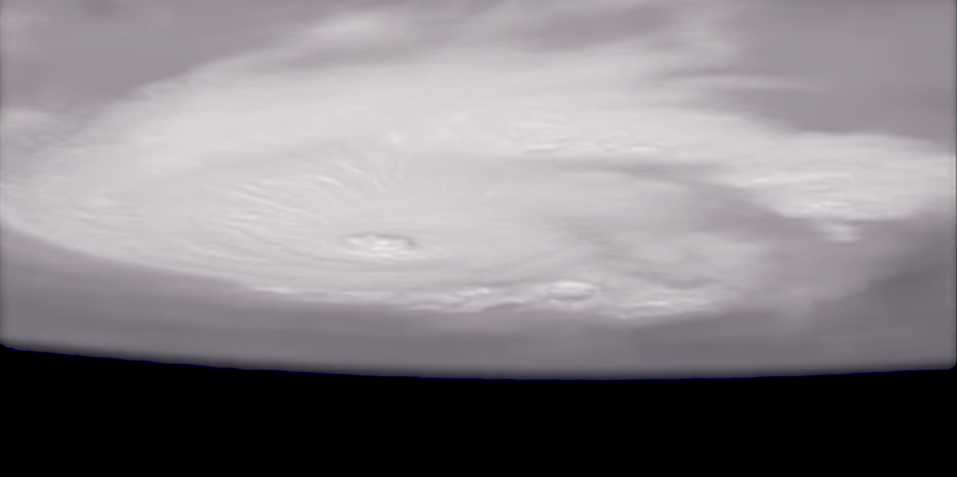
Today’s screenshots were taken during yesterday’s ISS pass over Irma, using external cameras. The one below is the last in the sequence, an upside-down view looking rather like some pale alien spaceship hanging above a dark earth.

I’ll be watching events during the weekend. By the time I next write, the storm will have passed the Bahamas, and the assessments will have begun. From a safe distance of 4250 miles, I will be thinking of those who are already counting the cost; those currently enduring the brutality; and those still awaiting Irma’s malice.

THE EVIL EYE

Credits: all images ISS / NASA; live tracker from NotableMedia; tracker images for Jose & Irma from Wunderground

Unknown's avatar

ROCK BEAUTY: BAHAMAS REEF FISH (37)


Rock Beauty, Bahamas (Melinda Riger / Grand Bahama Scuba)

 ROCK BEAUTY: BAHAMAS REEF FISH (37)

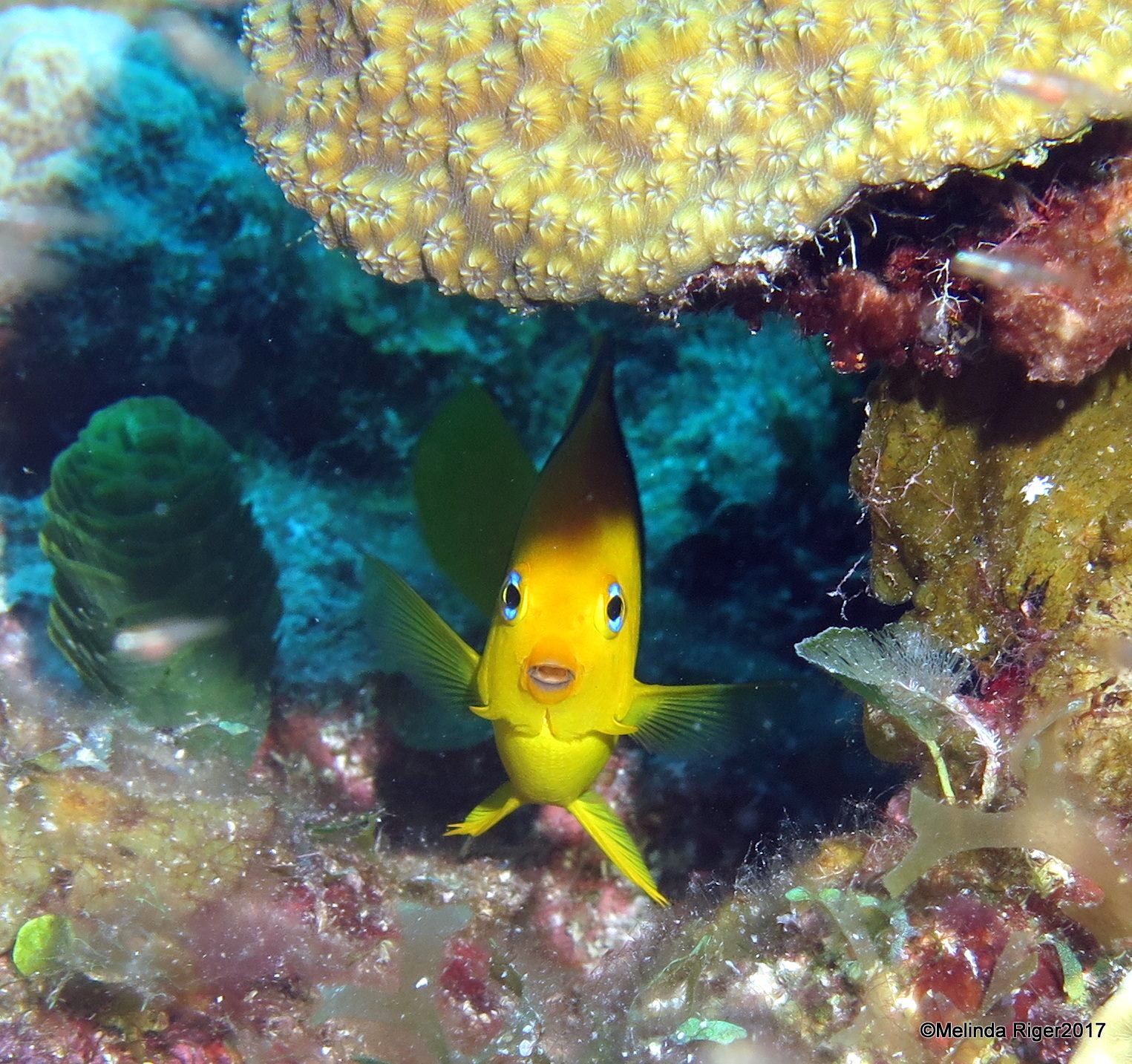
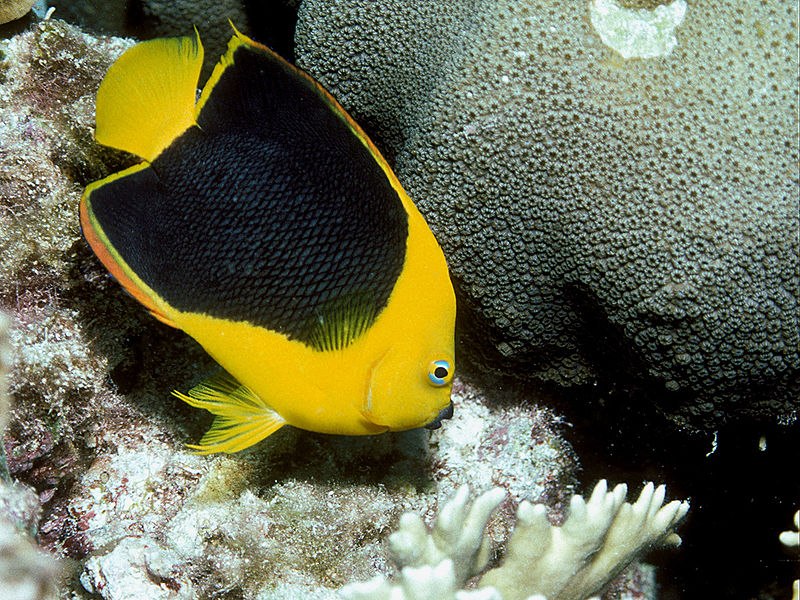
The Rock Beauty Holacanthus tricolor is a small species of Angelfish. Seen swimming around the reefs they are unmistakeable, not least because of their bright yellow hi-viz jackets, remarkable blue eyeliner and blue-black lippy. They featured near the start of this series HERE, and a recent online search (for something else completely, as is often the way) reminded me to give them another swim round Rolling Harbour.

Rock Beauty, Bahamas (Melinda Riger / Grand Bahama Scuba)

In addition to the hi-viz-and-eyeliner combo, the Beauty above has chosen a fetchingly cheeky pair of matching ISOPODS (crustacean parasites) to adorn its face –  possibly the piscine equivalent of a tat…

Rock Beauty, Bahamas (Melinda Riger / Grand Bahama Scuba)

Rock Beauties look like prime candidates for anyone’s aquarium, but their dietary requirements and tendency for aggression make them unsuitable. They are highly specialised feeders, needing marine sponge in their daily diet. They are also prone to chase their tank-mates and nip them. On balance, they look more fetching nosing about the coral anyway.

WHAT DO JUVENILES LOOK LIKE?

Juvenile rock beauties are cute mini-versions of the adults, only more yellow (including the lips). In some development stages, they have a smart blue circle in the middle of the dark patch on their sides (bottom image).


Rock Beauty (Juvenile)

NOTE Rock Beauties have no known relationship to Chrissie, Debbie, Lita, Stevie, Joanna, Madge and the rest of the accredited ‘Rock Beauties aka Chicks’.  

NOT A TRUE ‘ROCK BEAUTY’ (no offence, Lita)

A TRUE ROCK BEAUTY
800px-Holacanthus_tricolor_1

Credits: Melinda Riger, Grand Bahama Scuba,Wiki

Unknown's avatar

BAHAMAS REEF FISH (36): REEF BUTTERFLYFISH


Reef Butterflyfish, Bahamas - Melinda Riger / Grand Bahama Scuba

 BAHAMAS REEF FISH (36): REEF BUTTERFLYFISH

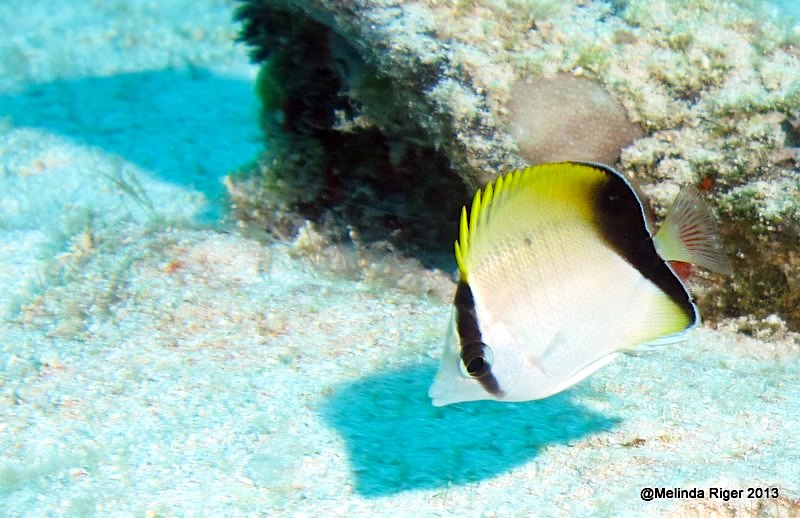
Butterflyfishes come in several varieties in Bahamian waters; and there are more than 120 species worldwide. Not so long ago I wrote about the LONGSNOUT variety, also known as the “Butterbun”. Now it’s time to take a look at the Reef Butterfyfish.

Reef Butterflyfish, Bahamas - Melinda Riger / Grand Bahama Scuba

In some ways butterflyfishes resemble small angelfishes – adult Reefs are just a few inches long. As the name suggests, these are creatures of the reefs, and of shallow waters. As one might expect, these colourful fish are popular for aquariums (or, strictly I suppose, aquaria). 

Reef Butterflyfish, Bahamas - Melinda Riger / Grand Bahama Scuba

Butterflyfishes have interesting spawning patterns. They release large numbers of buoyant eggs into the water. These become mixed in with plankton and suchlike, and float where the tides take them until they hatch. Then, most unusually, they go through a larval stage when they are covered by bony material, which they lose as they mature. This is known as an ‘armoured’ stage, which I can only assume is to provide protection to the tiny fry – perhaps by making them crunchy and unappetising. I’ve been trying to find a usable illustrative drawing, without success so far.

Reef Butterflyfish, Bahamas - Melinda Riger / Grand Bahama Scuba

OPTIONAL MUSICAL DIGRESSION

In some parts of the world the butterflyfish is called a BORBOLETTA, which is Portugese for ‘butterfly’. It is also the title of Santana’s criminally underrated sixth album (1974). For sure it’s no 1st, Abraxas, 3rd or Caravanserai… but if you can tolerate the man’s move to ‘jazz-funk-fusion’ – maybe John McLaughlin had a hand in that – there is much to enjoy. There’s less searing guitar and there’s some strange ‘soundscape’ stuff that’s maybe not to everyone’s taste. But still – it stand up pretty well in comparison with some of the later Carlos creations where a certain tiresomeness began to creep in and some tracks are (IMVHO) not really listenable-to. Anyway, the recently released (2016) Santana IV is a welcome return to the good old days, and the good old team.

Here’s ‘Promise of a Fisherman’ – 8 minutes of  Santana, from which you can judge the direction he’s taken by Album 6…

Reef Butterflyfish, Bahamas - Melinda Riger / Grand Bahama Scuba

All photos by Melinda Riger of Grand Bahama Scuba – mainstay, with Adam Rees, of the underwater photos I use, what with me being a feeble swimmer and all. Tip o’ the Hat to Carlos, who I have even managed to see Live a couple of times.

Unknown's avatar

REDSPOTTED HAWKFISH: BAHAMAS REEF FISH (35)


Redspotted Hawkfish, Bahamas (Melinda Riger)

REDSPOTTED HAWKFISH: BAHAMAS REEF FISH (35)

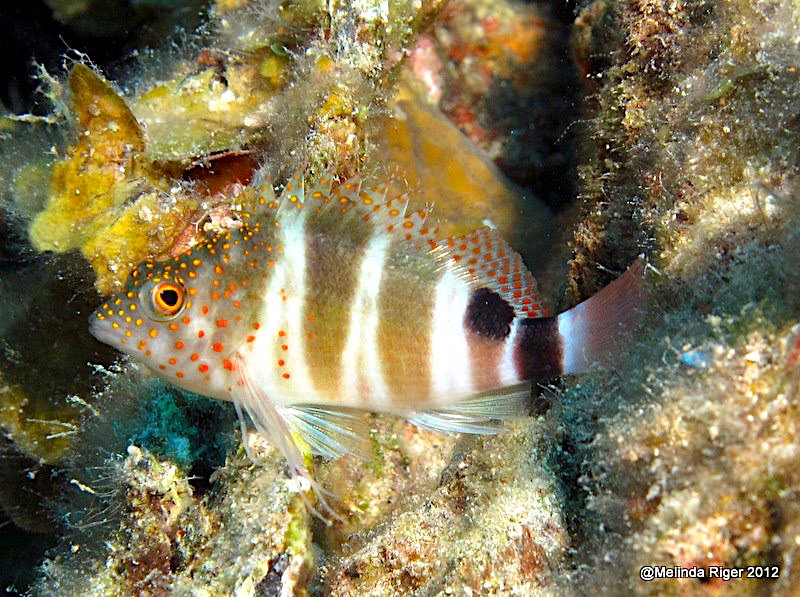
The redspotted hawkfish (Amblycirrhitus pinos) is one of a number of species of hawkfishes found worldwide. This one is found on the sub-tropical and tropical reefs of the Western Atlantic, and is therefore a fish you might see when out snorkelling or (more likely) scuba-ing in the Bahamas. These are small creatures – adults are unlikely to exceed 4 inches in length.

Redspotted Hawkfish, Bahamas (Melinda Riger)

There’s not a whole lot else to report about them. They have no medicinal superpowers, for example, nor wickedly toxic spines. A quick scroll through the highways and byways of the interweb reveals that redspotted hawkfish are considered (rightly, I think) to be attractive, tend to be shy, enjoy perching on coral ledges, and are generally benign, except to smaller fishes to which they may show aggression or – worse – an appetite. 

Redspotted Hawkfish, Bahamas (Melinda Riger)

As you might predict, these pretty little fish are popular in the aquarium trade, where on any view they should be kept safe from predators. But maybe captivity is a little limited in opportunities for travel and exploration. They can be bought for (I just checked) $29.99. Or else left alone on a reef to take their chances.

Photo Credits: Melinda Riger / Grand Bahama Scuba, with thanks as per…

Unknown's avatar

MAPPING ABACO, BAHAMAS & FLORIDA IN THE c17


MAPPING ABACO, BAHAMAS & FLORIDA IN THE c17

I once wrote a post tracking the history of Abaco in general, and Hole-in-the-Wall in particular, in historic maps spanning 4 centuries. You can read it HERE.

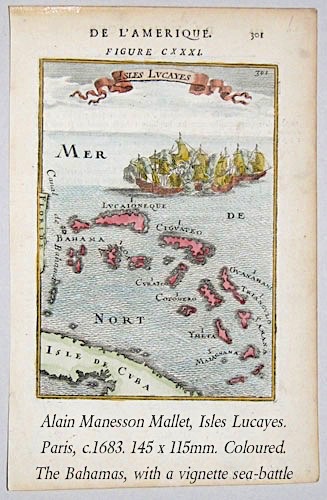
The post includes a map of the Bahama Islands (‘Isles Lucayes’) by the early French mapmaker Alain Manesson Mallet, published in Paris in 1683. The header shows a later hand-coloured version. The splendid original looks like this. Now that is a map (as Crocodile Dundee once said of a knife)

The recognisable shape of Abaco – I. Lucaioneque – lies weirdly on its side beneath the billowing sails of the vignette, with Grand Bahama (Bahama) between it and Floride. The confusingly named and sized I. Abacoa is Andros; I. Ciguateo is Eleuthera; and I. Curateo is Exuma. I. Guanahani was the landfall for Columbus, and was renamed by him San Salvador. New Providence may or may not be made from the two similar shapes shown west of Andros (at the time, the Lucayan name was Nema). And so on. There’s more to be said on the historic Lucayan names in the Bahamas – maybe one day I’ll get round to saying it…

For now, I want to move on to another map by Mallet that I have just come across. Published in c.1684 (sources vary), this map is of Florida (and beyond), titled rather strangely in German but otherwise in French. Here, the Isles Lucayes are very much a side-feature, reduced to the West End of Grand Bahama, and 4 unspecified small cays like the 4-dot on dice. There’s no embellishment besides the simple ‘draped’ title, the trees and mountains – no fleet of ships in full sail in the Gulf of Mexico. To be honest, though dated within a year or 2 of each, other the maps are so entirely different in style and even script that they could easily have been made by different people. In fact I had to double-check the authorship with various online sources.

Florida is named Tegesta, for the Native American tribe that lived in the region. The name still exists in the form Tequesta, in Palm Beach County Fl. You can read more about this fascinating tribe, their lives and cultural practices HERE. Just two settlements in Tegesta – St. Augustine and St. Mathieu – are shown. I’ve gone rather off-piste from my usual Bahamian territory, but this early map provides an enjoyably interesting cartographic overview of the known topography / geography of the day.

Approximate territory of the Tequesta in the 16th centuryFLMap-Tequesta-tribe2.PNG

If the earth had an uniform surface like a ping pong ball there would be nothing for a geographer to study. But it is not thusly uniform – the actual earth has numerous variations of every sort studied by geographers. Topography maps the physical surface, and geology explores the underground features. But the geography of the earth includes many other [factors] like economics, weather, climate, social distribution, trade, etc.  At the core of geography is cartography – which is the mapping of all these things. Rudolf G. Barton, BA in geography UCB (Commercial Pilot ret.)
Credits: the maps are open source – frequently passed around on the internet and impossible to locate the originator; Wiki for the diagram; Geography lesson, as shown above…
Unknown's avatar

LIZARDS OF ABACO: ANOLES (AND DEWLAPS)


Anoles of Abaco, Bahamas (Rhonda Pearce)

LIZARDS OF ABACO: ANOLES (AND DEWLAPS)

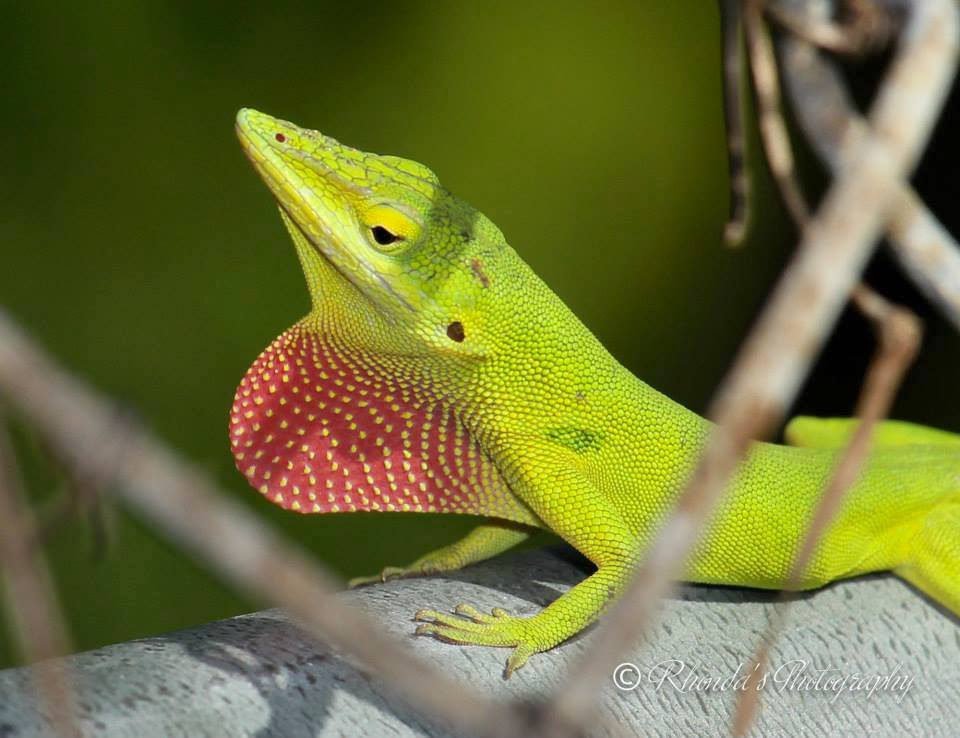
Everyone knows about CURLY TAIL LIZARDS. Everyone loves them and their little ways. The other lizards that may be found on Abaco – the anoles, green and brown – are easier to take for granted. Unless, maybe, you see one displaying its DEWLAP. These are essentially folds of neck skin that are seen in many creatures – even large ones like the moose – and which in some species are inflatable / retractable. 

Abaconian Rhonda Pearce has taken some excellent photos of anoles recently. By oversight I have never given anoles a day in the sun in this blog before, and it’s high time I did (see above re overlooking anoles in favour of curly tails…). First, here are some impressive dewlaps to admire.

Anoles of Abaco, Bahamas (Rhonda Pearce)Anoles of Abaco, Bahamas (Rhonda Pearce) Anoles of Abaco, Bahamas (Rhonda Pearce)

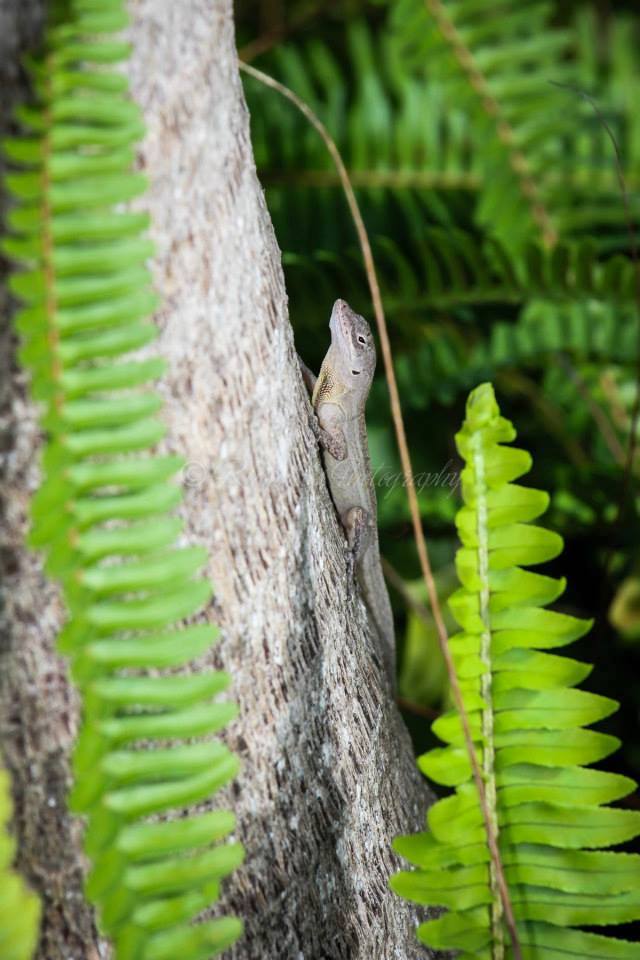
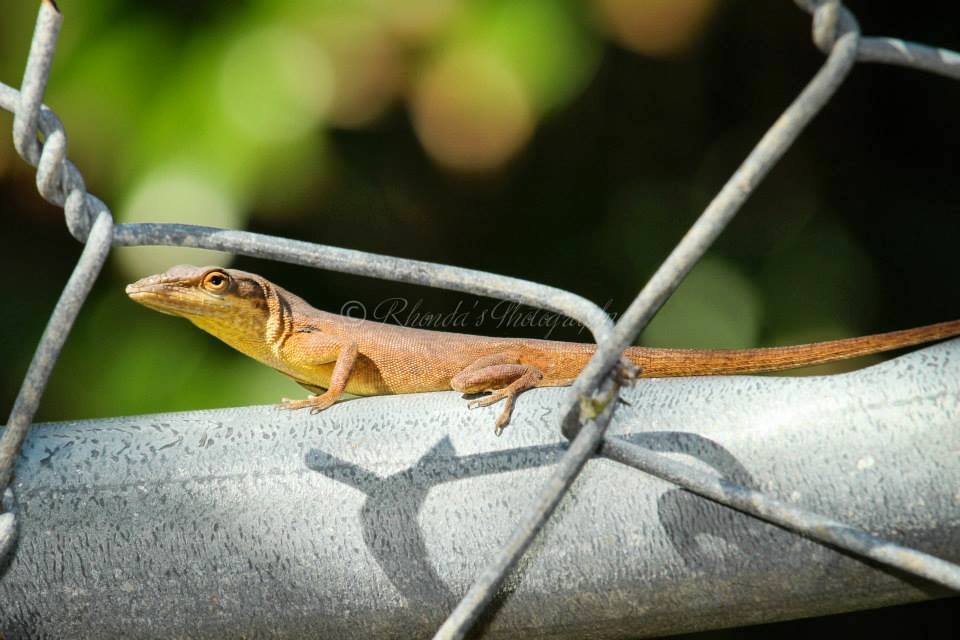
And here are a few green and brown anoles hanging out on trees and leaves in an anole-type way. In a couple of these images, you can see the dewlap in its non-display mode. They are all just… lizards. Non-scary, non-venomous, non-poisonous little guys that are probably a peripheral part of everyone’s experience, but which really deserve a closer look. 

Anoles of Abaco, Bahamas (Rhonda Pearce) Anoles of Abaco, Bahamas (Rhonda Pearce) Anoles of Abaco, Bahamas (Rhonda Pearce) Anoles of Abaco, Bahamas (Rhonda Pearce) Anoles of Abaco, Bahamas (Rhonda Pearce) Anoles of Abaco, Bahamas (Rhonda Pearce)

You can read more about anoles, including their sex lives, on the excellent Abaco Scientist’s site HERE

OPTIONAL MUSICAL DIGRESSION

The first time I heard the word ‘dewlap’ (misheard by the young me as ‘dewlat’) was in the mid-60s, in Georgie Fame’s excellent Ballad of Bonnie & Clyde. This song – and doubtless the film – was number 1 in the UK and maybe also the States. Famous too for such fine songs as ‘Yeh Yeh!’ and ‘Sitting in the Park’, Fame’s ‘Ballad’ is probably his best-loved song.

I assumed then that a ‘dewlat’ was some sort of valuable gold coin  – like a gold sovereign – that bank robbers put into a specially designed ‘dewlat bag’ to carry them away… Ah! The naivety of youth.

Bonnie and Clyde advanced their reputation

And made the graduation into the banking business

“Reach for the sky,” sweet-talking Clyde would holler

As Bonnie loaded dollars in the dewlap bag

Credits: all photos, Rhonda Pearce with thanks as ever; icecreammakesuhappy, youtube

Unknown's avatar

BAHAMA MOCKINGBIRDS ON ABACO: GOOD IMPRESSIONS


Bahama Mockingbird, Abaco - Tom Sheley

BAHAMA MOCKINGBIRDS ON ABACO: GOOD IMPRESSIONS

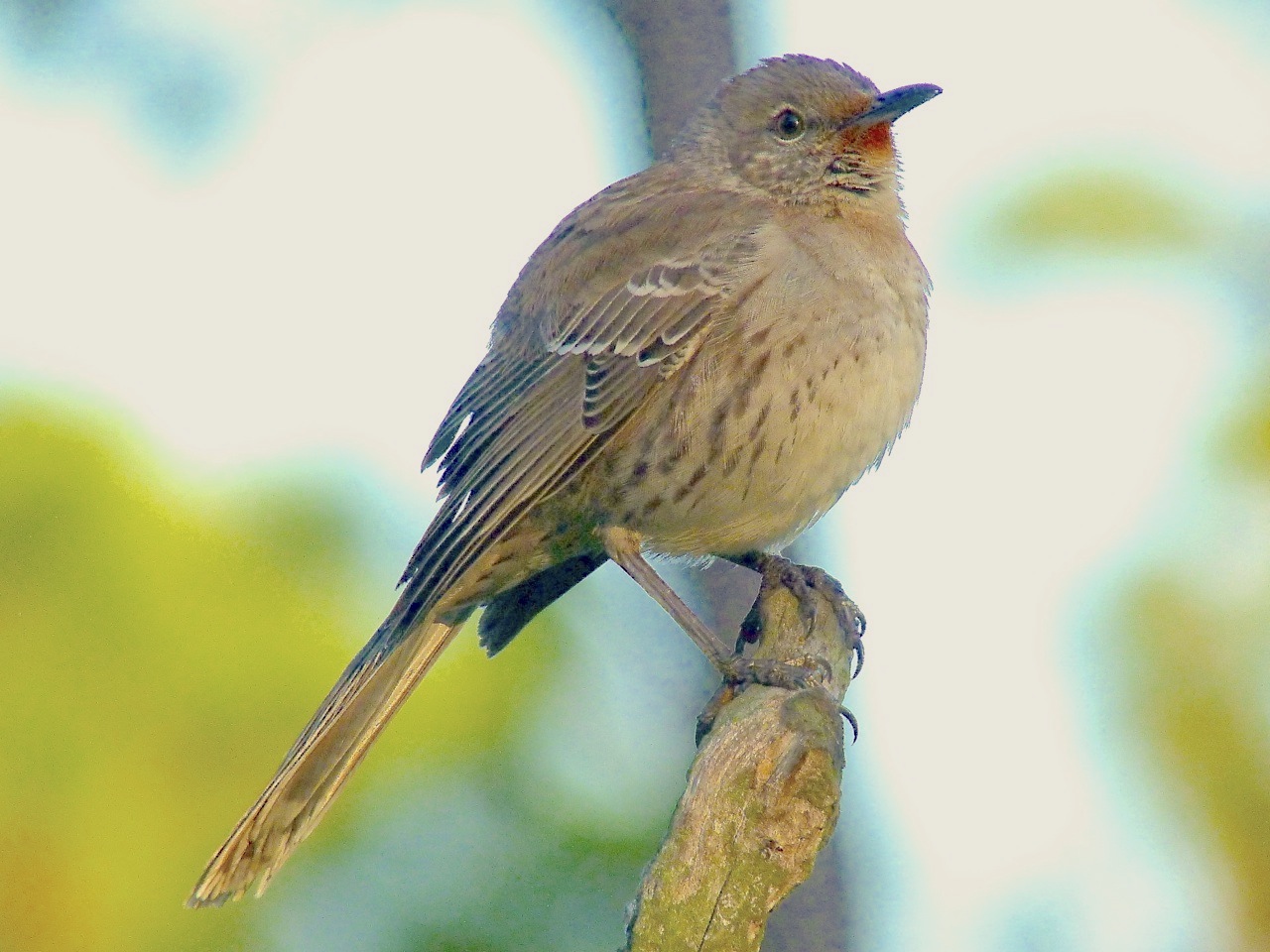
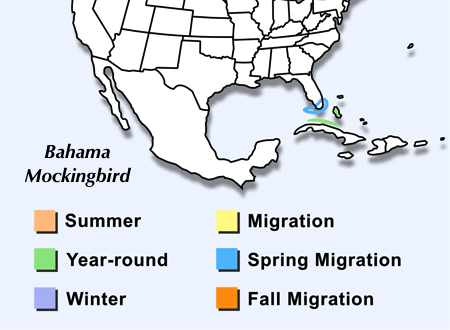
The Bahama Mockingbird Mimus gundlachii is similar to its slightly smaller cousin, the widespread Northern Mockingbird Mimus polyglottis. The range of Bahama Mockingbirds is not restricted to the Bahamas themselves, and includes areas of  Cuba, Jamaica and TCI, so despite the name they are not an endemic species to the Bahamas.  They are also occasional vagrants to the United States, especially – for reasons of proximity – southeastern Florida.

Bahama Mockingbird, Abaco - Peter Mantle

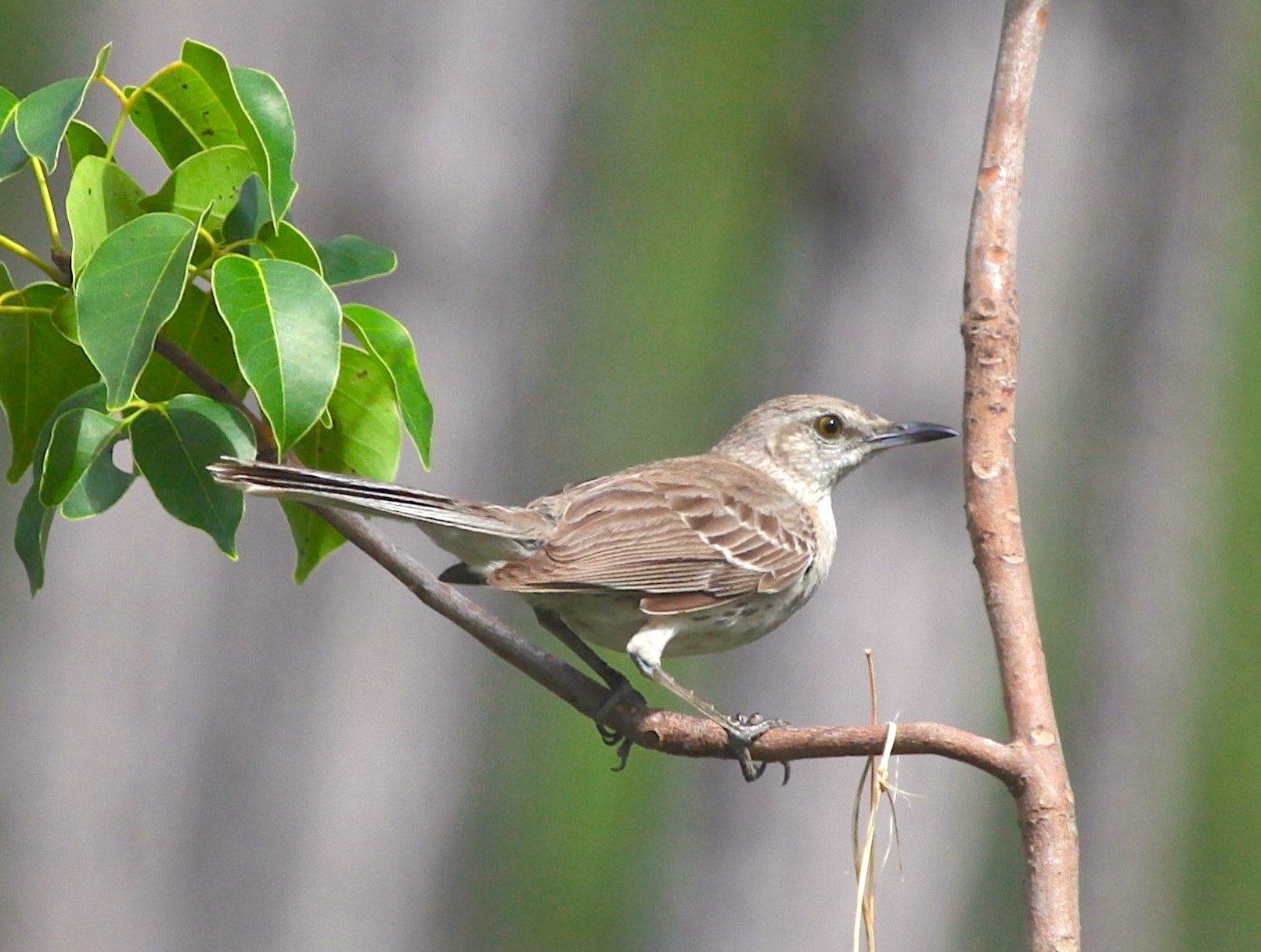
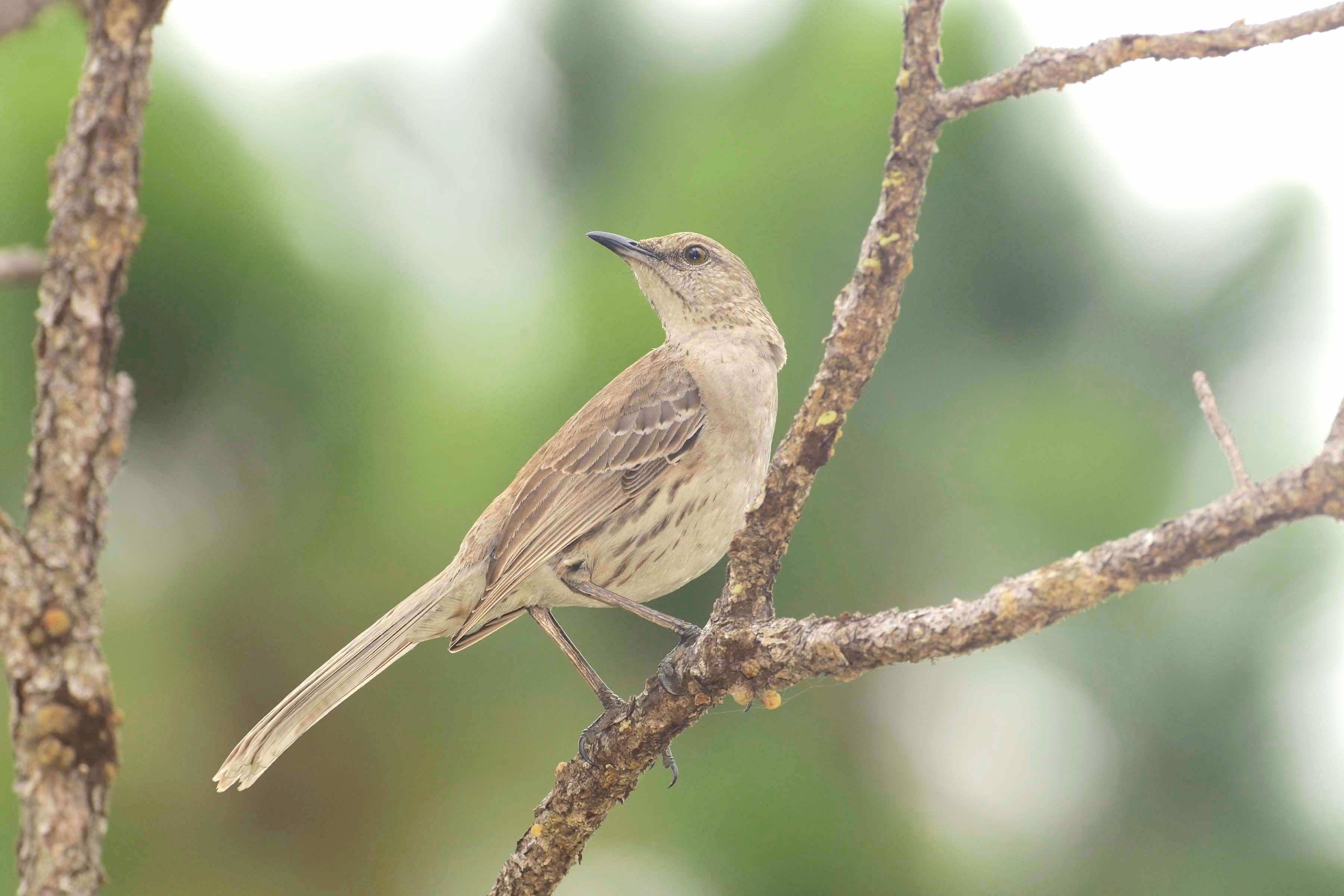
The Bahama Mockingbird is browner than the greyish Northern Mockingbird, and has distinctive streaking and spotting to its breast and undercarriage. This may extend to what you might describe as the bird’s ‘trouser legs’, though I’m sure there’s a more technically correct term.

Bahama Mockingbird, Abaco - Charlie Skinner

Both mockingbird species are found on Abaco. The NMs are ubiquitous in towns, settlements, gardens, coppice and pine forest, whereas BMs are shyer and tend to be found in the pine forest and well away from humans and their operations. When we were putting together The Birds of Abaco, I went on a birding trip with Abaco birding legend Woody Bracey and Ohio bird photographer Tom Sheley. We took a truck into the pine forest down a logging track south of Delphi, and they were quick to locate a bird, not least because one was sitting prettily on a branch singing lustily and unmistakably. It was well within range of Tom’s massive lens; more of a struggle for my modest camera (below). Caught the cobwebs, though…

Bahama Mockingbird, Abaco - Keith Salvesen

I was astounded by the beauty and variety of the song. It consisted of very varied notes and phrases, each repeated 3 or 4 times before moving on to the next sounds in the repertoire. Here is a short 18 second example I recorded, using my unpatented iPhone method, for which see HERE.

Bahama Mockingbird, Abaco - Alex Hughes

For those with interest in birdsong, here is a longer 1:13 minute song from the same bird, with largely different sounds from the first recording made minutes earlier. There’s even a decent stab at imitation of a 1960s Trimphone™. Had we not had to move on to Sandy Point for an appointment with some cattle egrets and American kestrels, I could have stayed listening for far longer.

Bahama Mockingbird, Abaco - Tom Sheley

THE ‘SUBSPECIES’ THAT WASN’T…

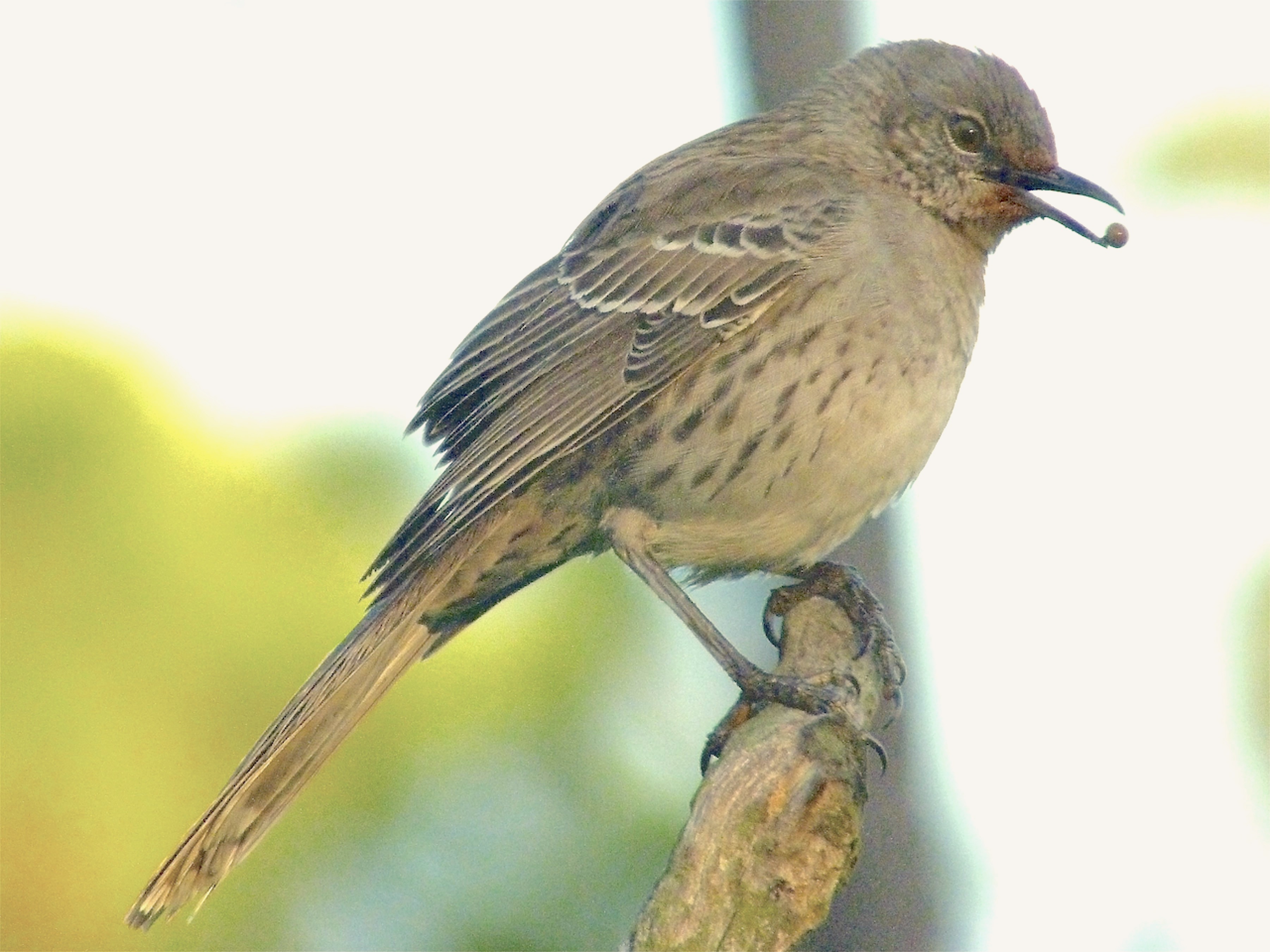
More recently, on a trip in backcountry to find Kirtland’s warblers – we saw 4 – the slow-moving truck jolted to halt in the middle of nowhere. This was because a Bahama Mockingbird was right by the track. I fired off some quick shots out of the window into a rather difficult light, to find that we appeared to have found a new subspecies, the scarlet-faced mockingbird.

Bahama Mockingbird, Abaco - Keith Salvesen

The reason was clear, however. The bird had been pigging out on some red berries, and had managed to collect plenty of the juice round the base of its beak. Bahama Mockingbird, Abaco - Keith Salvesen

SO WHAT DOES A NORTHERN MOCKINGBIRD LOOK LIKE, THEN?

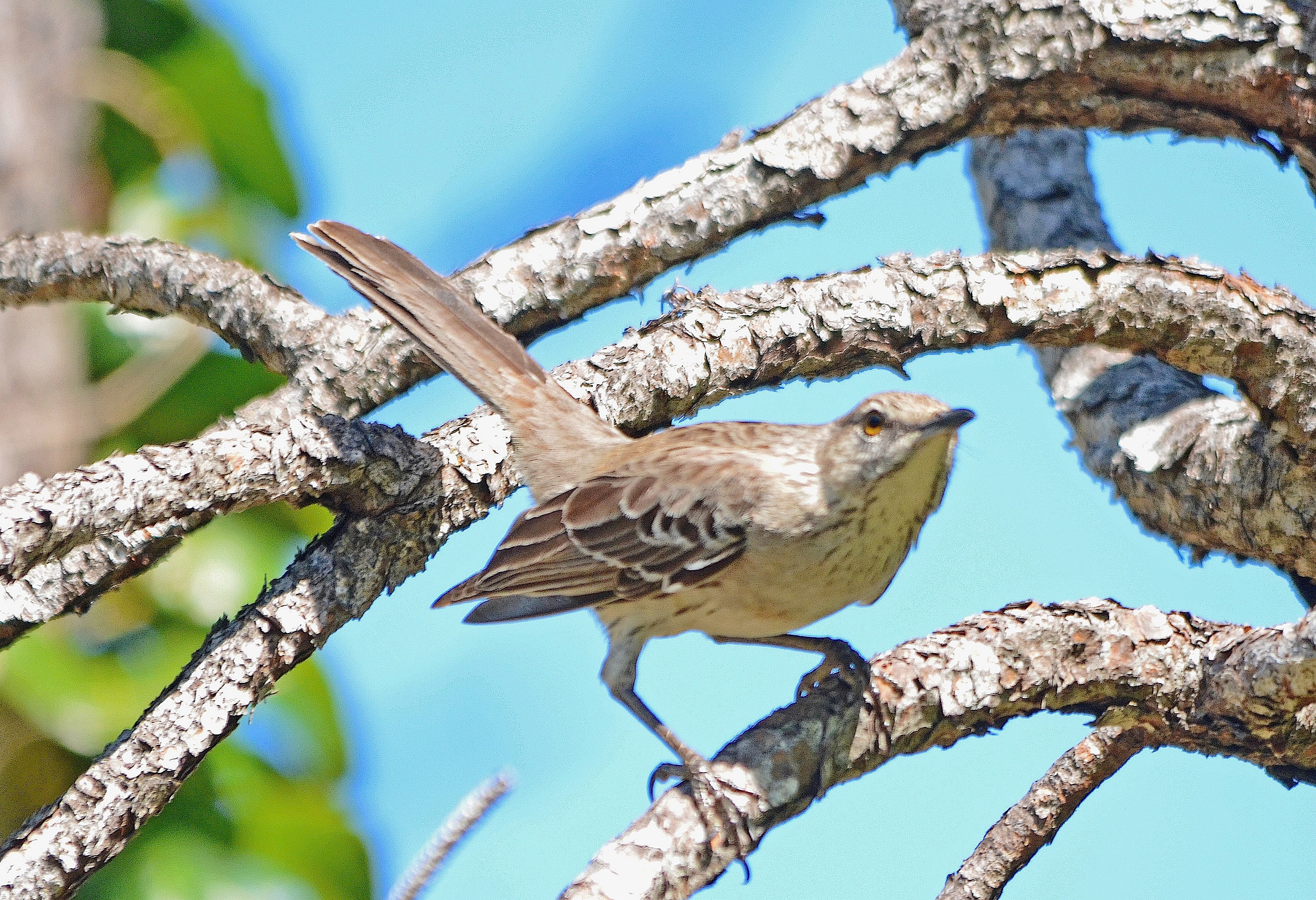
I photographed the Northern Mockingbird below in a garden at Casuarina. The species is far tamer than its cousin, and seen side-by-side they are clearly very different. The range maps show the stark contrast between the very limited range of the Bahama Mockingbird and the vast distribution of the Northern Mockingbird.

220px-Northern_Mockingbird-rangemap

Northern Mockingbird, Abaco 1

Photos Credits: Tom Sheley (1, 6); Peter Mantle (2); Charlie Skinner (3); Keith Salvesen (4, 7, 8, 9); Alex Hughes (5); Susan Daughtrey (10). Range maps eBird & wiki.

Bahama Mockingbird, Abaco - Susan Daughtry

Unknown's avatar

OCTOPUSES: WORTH LEARNING TO SCUBA FOR?


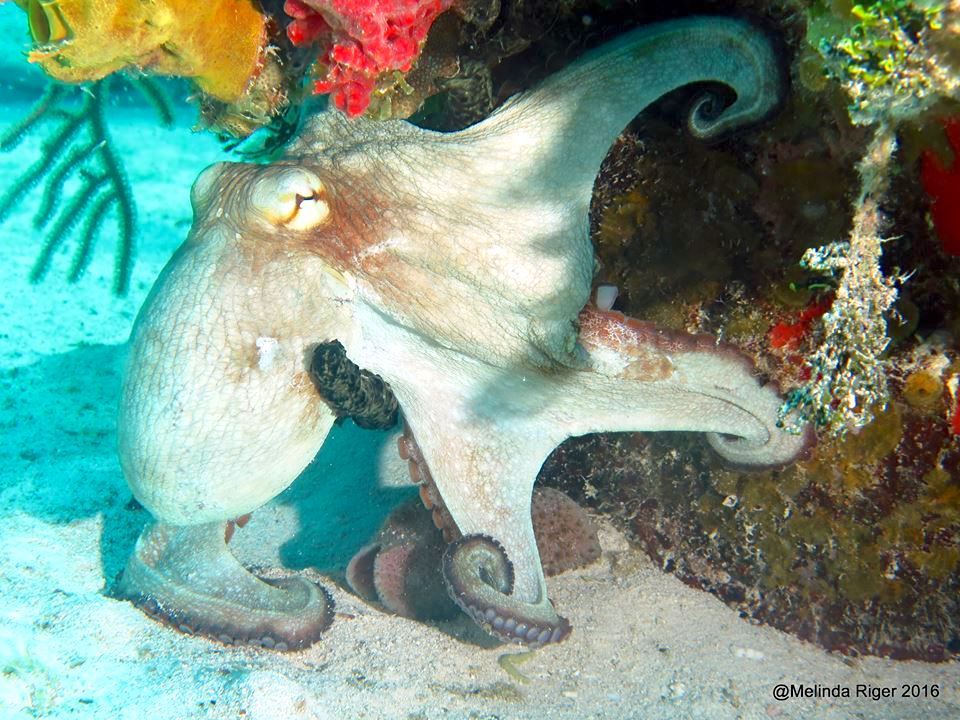
Octopus - Melinda Riger, Grand Bahama Scuba

OCTOPUSES: WORTH LEARNING TO SCUBA FOR?

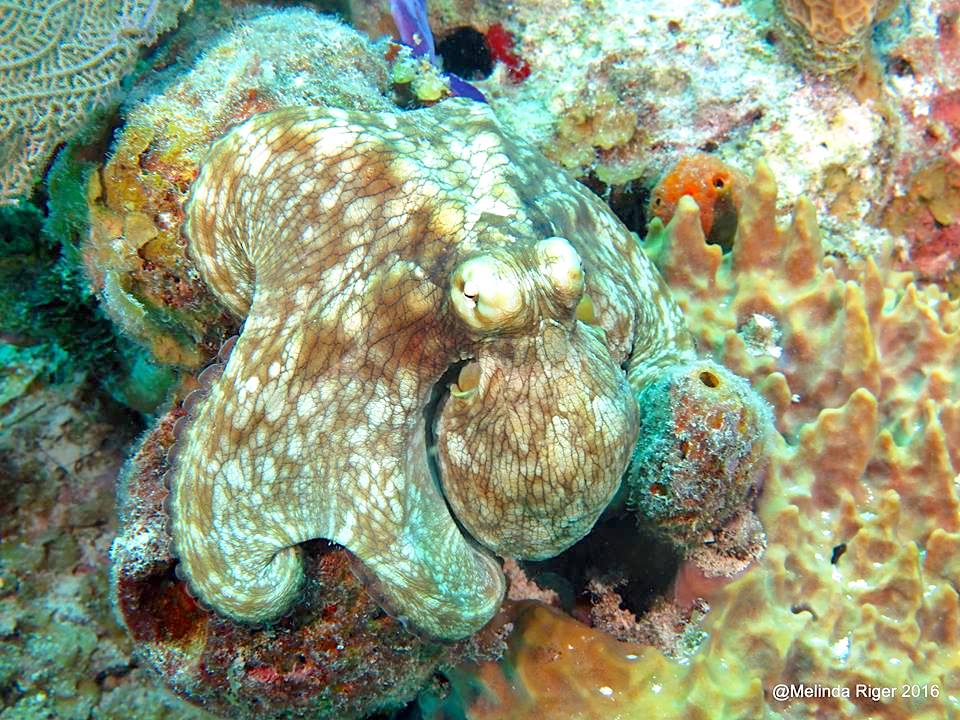
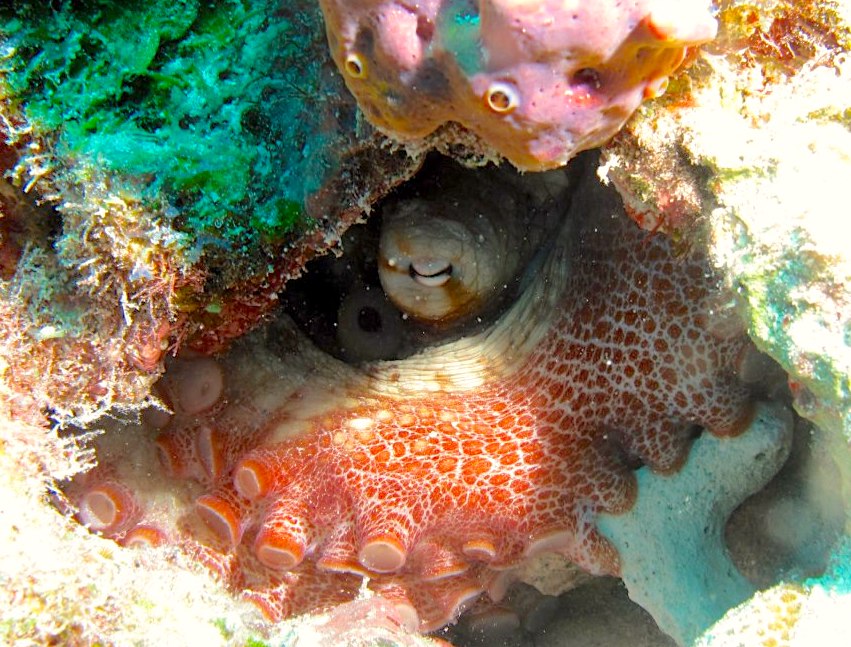
If I had to give a single reason for learning to scuba, watching an octopus would be very near the top of a long list. It’s never going to happen for me, of course – I have about 17 excuses lined up just in case anyone should ask me to try it. But still. One can dream…

Octopus - Melinda Riger, Grand Bahama Scuba

Meanwhile, I can luckily rely on an experienced professional to get the shots. Here are a few great octopus photos taken by Melinda Riger of Grand Bahama Scuba – perfect examples of an excellent reason for chucking aside the snorkel and doing something a bit more adventurous. Maybe…

Octopus - Melinda Riger, Grand Bahama Scuba

RELATED OCTOPUS POST

THE CORRECT PLURAL Learn 12 essential octopus facts plus the definitively correct plural of the word ‘octopus’ (out of 3 rival options). Please note that the possibilities do not include ‘octopodices’, which would be latin for ‘eight rumps’ (or ‘asses’, as you might say), if such weird creatures existed.

Octopus - Melinda Riger, Grand Bahama Scuba


REMEOctopus - Melinda Riger, Grand Bahama ScubaMBER – KEEP AN EYE OUT…


STARR-STUDDED MUSICAL DIGRESSION

Does Ringo still have it? Did he ever have it?

Unknown's avatar

BLUE TANG AS REEF FILM STAR


Blue Tang, Bahamas (Melinda Riger / Grand Bahama Scuba)

BLUE TANG AS REEF FILM STAR

Last summer, the big motion picture sensation for the bird world was, of course, Pixar’s ineffably adorable creation, Piper – the ultimate ‘Chick Flick’. This little ball of cartoon fluff was not, as some thought, based on a piping plover but on a sanderling – a type of sandpiper (clue in name). This 6 minute ‘short’ preceded the main event, the hugely popular Finding Dory. You can read all about the film Piper and the birding aspects of the film HERE

Blue Tang, Bahamas (Melinda Riger / Grand Bahama Scuba)

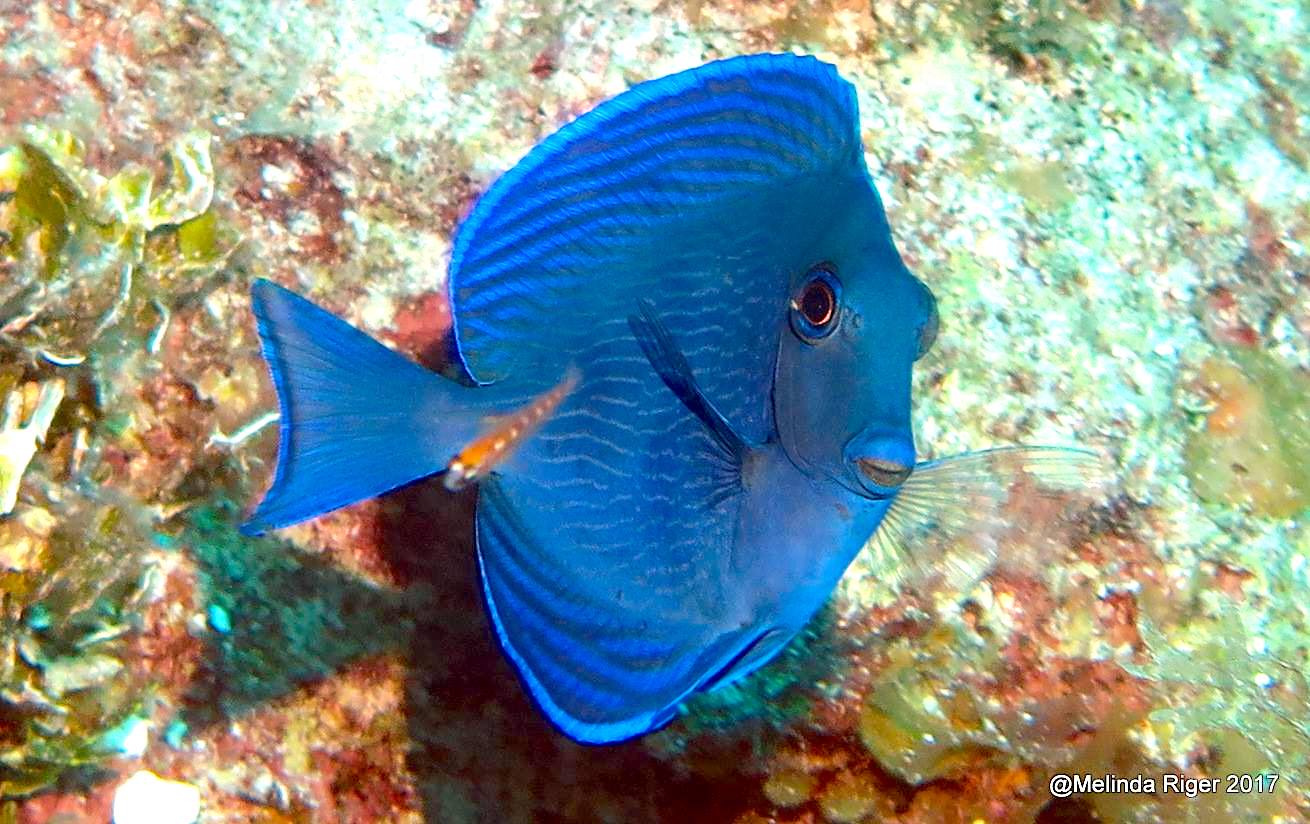
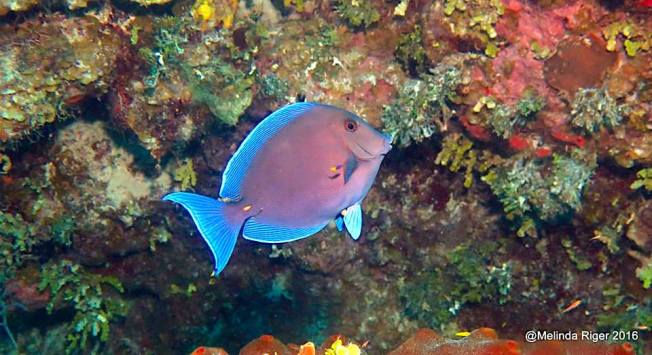
Finding Dory is not about a fish of the dory species, of course. Voiced by Ellen DeGeneres, Dory is in fact a species of surgeonfish Paracanthurus, the familiar blue tang found on the reefs of the Bahamas. To see these fish in Abaco waters, Fowl Cays National Park is always a good bet.

Blue Tang, Bahamas (Melinda Riger / Grand Bahama Scuba)

Dory can be identified as a maturing juvenile: blue, with a yellow tail. In due course – in time for the sequel film – she will become blue all over, with perhaps the odd flash of yellow (see photos above).

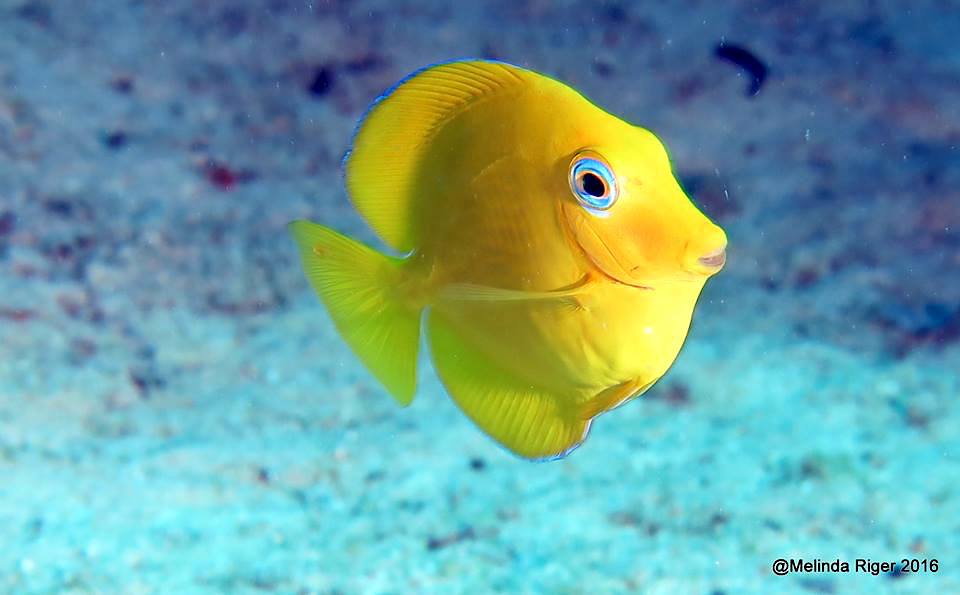
In real life, a baby blue tang is in fact entirely yellow, except for blue rings around the eyes. In Pixarland, however, Dory is just an adorbs miniature version of her youthful self.

Blue Tang juvenile, Bahamas (Melinda Riger / Grand Bahama Scuba)

Blue Tang are lovely to watch as they cruise round the reefs, sometimes in large groups. Their colouring ranges from pale to dark blue. However, these are fish that are best looked at and not touched – their caudal spines are very sharp. When the fish feels in threatened, the spine is raised and can cause deep cuts, with a risk of infection.  

Still from a crummy video taken at Fowl Cays some years back to illustrate a group of blue tangBlue Tangs, Fowl Cays Nature Park, Abaco Bahamas (KS)

Blue tangs are inedible, they apparently smell unpleasant, and they can cause ciguatera. However they are popular in the aquarium trade. This is a distinct downside of highly successful films such as Finding Nemo and Finding Dory. In defiance of the well-meant and broadly ecological message of both films, the trade in clown fish and to a lesser extent blue tang was boosted by their on-screen portrayal as adorbs creatures desirable for the entertainment of mankind… ‘Nuff said.

Blue Tang, Bahamas (Melinda Riger / Grand Bahama Scuba)

Credits: All excellent photos by Melinda Riger / Grand Bahama Scuba; one pathetically bad still from a low res video, me; cartoons purloined from an online aquarium somewhere or other

Unknown's avatar

THE ‘ABACO’ PARROTS OF NASSAU: FEEDING TIME


Abaco (Cuban) Parrots in Nassau - Melissa Maura

THE ‘ABACO’ PARROTS OF NASSAU: FEEDING TIME

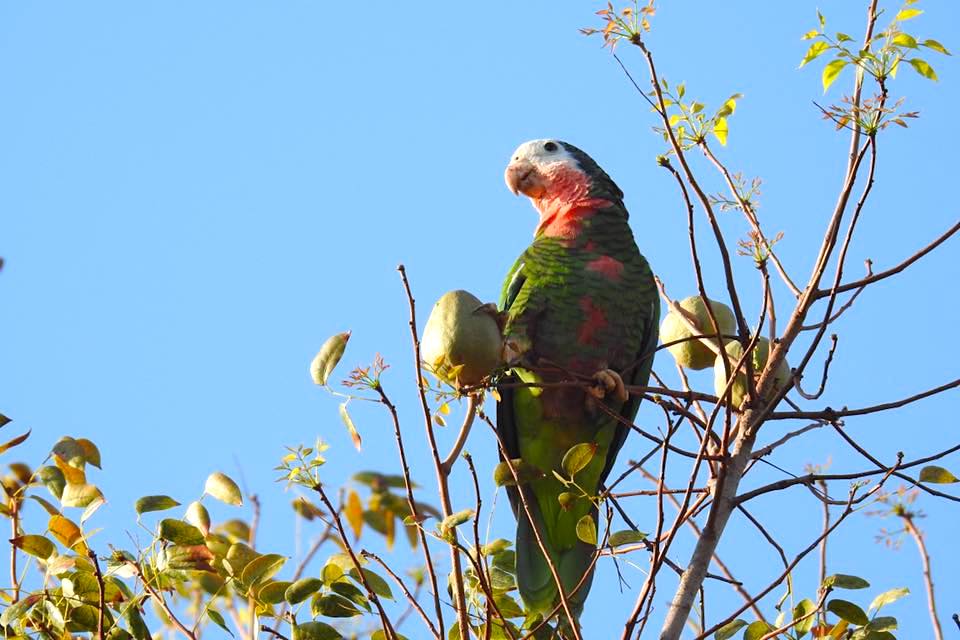
New Providence, Bahamas – specifically in Nassau itself – now has a small population (c.15) of Cuban parrots. Their origin is debated, since the only known Bahamas breeding populations of these birds are on Abaco (underground nesting in limestone caves) and Inagua (conventional nesting).  There’s more on the (probable) provenance of the New Providence birds HERE and HERE.

Abaco (Cuban) Parrots in Nassau - Melissa MauraAbaco (Cuban) Parrots in Nassau - Melissa Maura

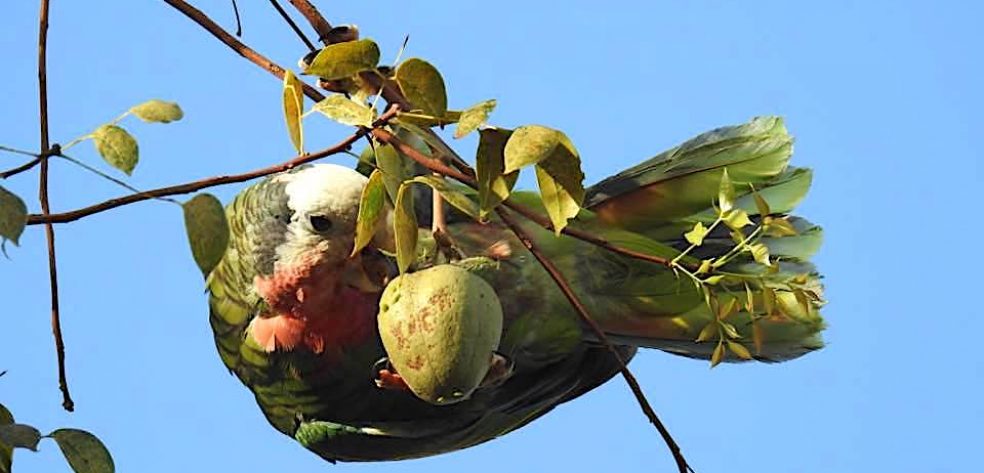
Whatever the location, the nesting arrangements or the precise origin, one fact is certain: these beautiful birds are prodigious eaters of fruit. Here are a couple of the Nassau parrots tucking in with relish on a sunny day. Soon they will fly off to other fruit trees nearby, emitting their loud excited squawks, to continue their day of feeding…

Note the wide businesslike spread of the clawsAbaco (Cuban) Parrots in Nassau - Melissa Maura

All photos: Melissa Maura, with thanks as always – and for a great new parrot header image…

Unknown's avatar

SAWFISH: UNIQUE LIVE BIRTH FOOTAGE ON ANDROS


sawfish-biminis-marine-pa-campaign-grant-johnson

SAWFISH: UNIQUE LIVE BIRTH FOOTAGE ON ANDROS

The word ‘awesome’ – a word of Biblical origin and medieval usage connoting an experience of wonderment with an element of dread* – lost its power once it became the common verbal currency for describing the offer of a beer, a photograph of a sulky cat, or a so-so pub band. Where to turn for something truly momentous? Oh, actually that might do nicely. Breathtaking, astounding, astonishing, awe-inspiring, staggering, extraordinary, stupendous, and spectacular are examples of synonyms that have retained at least some of their power. And perhaps ‘mind-blowing’, though it’s a bit substance-tinged. ‘Amazing’ has pretty much gone the way of awesome. Amazeballs and badass? Let’s not!

Sawfish Grand Bahama (BNT / Buzz Cox)

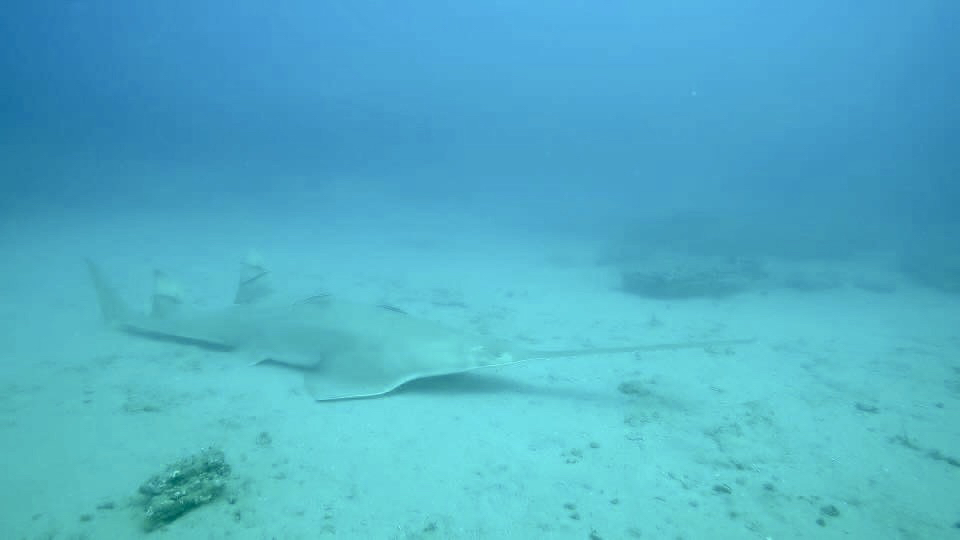
Ok. Having got that linguistic grump out of the way (index under ‘English Language, debasement of, modern usage in), here’s the real deal: a truly phenomenal short video of a smalltooth sawfish Pristis pectinata safely giving live birth in the wild to her 5 babies (which are called pups) on Andros during a FSU research trip. The pups emerge as small replicas of their parent, complete with their hedgetrimmer-style rostrums, ready to swim away. Fishes that carry their young and give birth to one or more developed juveniles in this way are called ovoviviparous.

Sawfish_1

The commentary is clear and informative, the research potential for this vulnerable species is considerable, and if you have a soul and a spare 3 minutes, you really should watch this!

This unique recorded event took place last December. The joint research trip to Andros by the FSU Coastal and Marine Lab and NOAA was led by Dr. Dean Grubbs. The purpose of the research was to discover evidence of any exchange between the sawfish population in the U.S. and Bahamas. You can find out more about the research and scientists at the FSUCML website. And if you want to get involved and take part in an expedition, click GET INTO THE FIELD

Sawfish_1

RELATED POSTS

RH SAWFISH PAGE – pics, facts and vids, including how the rostrum is used in feeding

GUITARFISH (WTF? 8)

* ‘Awful’ had the same meaning as awesome, historically – cf dreadful. It did not mean a bad film or a lousy restaurant.Sawfish_1This recent photograph by Adam Rees of Scuba Works was taken in Florida waters. It is one of an astonishing school of 8 smalltooth sawfish, the largest group Adam has ever encountered.sawfish-2-adam-rees-scuba-works-copy

Credits: Header, Grant Johnson @60poundbullet (Bimini), with many thanks; BNT / Buzz Cox (Grand Bahama); Adam Rees / Scuba Works

Unknown's avatar

“HARRY POTTER & THE MAGIC BAND” REVISITED: THE LEGEND LIVES ON


PIPL PINK22 Harry Potter π Stehanie Egger copy

“HARRY POTTER & THE MAGIC BAND” REVISITED

THE LEGEND LIVES ON

by ROWLING HARBOUR

It was a bright sunny morning and the sand on the beach was warm under Harry Potter’s bare feet. Although by now an experienced flyer, his recent adventures during his epic 1000-mile journey had left him very tired. All his friends that had undertaken the same long flight were tired too. Now they were enjoying a quiet, peaceful time away from all the dangers they had somehow survived during their scary expedition (see Harry Potter and the Migration of Fear). It would be a long time, Harry said to himself – maybe as long as 6 months – before he wanted to have another adventure like that. He wondered when Ron Peeplo and Hermione Plover would arrive… 

_Piping_Plover_on_the_Fly (USFWS Mountain-Prairie wiki)

But the little group on a remote shoreline on Abaco were not as safe as they thought. Unknown to the happy, sleepy plovers on the beach, they were already being stalked by two creatures. This determined pair had one sole aim – to find plovers, to catch them and to carry out scientific experiments on them. That’s three aims, in fact. The editor would surely fix that error later (No – ed.). Would Harry and his friends soon find themselves in mortal peril from these formidable adversaries, these beasts with huge brains, armed with the latest technology? What magical powers would be needed to combat the imminent danger creeping stealthily towards them? The male definitely had a spine-chilling look about him; the female appeared less daunting – but might therefore be all the more dangerous…

TOPO & STEG PIC JPG   piping-plover

Suddenly, Harry felt a terrible foreboding. Fear ruffled his neck feathers and his little left foot started drumming impatiently on the sand. He’d felt like this several times before, like that time a Dark Lord had driven a SUV straight at him on that nesting beach many miles away, the one where he cracked out (see Harry Potter and the Vehicle of Dread). And when the massive dog came and sniffed round the nest when he was a tiny chick (see Harry Potter and the Hound of Horror). Instinctively, he grabbed a magic meat-string from the damp sand, ate it, and took to the air… only to be caught up in some sort of fearsome spider’s web (a mist net – ed.). He was trapped. He struggled bravely, piping out his anger at this cruel trick. But it was no good – he was caught fast, and wriggling only seemed to make it even worse. The massive creatures were running towards him fast, shouting in triumph – they had got Harry exactly where they wanted him – at their mercy…

A Mist Net (if unsuccessful, A Missed Net)Mist Net jpg

Just as Harry had started to believe that his last moment had arrived, an amazing thing happened. Instead of dispatching him with a swift blow to head, as a Dark Lord might have done, he was gently removed from the net and softly held in the female’s hands. His instant fear that she might crush him to a horrible mangled pulp rapidly lessened. Why, she was even talking to him. And those voices. They sounded not so much fearsome as friendly. But were they lulling him into  false sense of security, only to wreak an evil vengeance upon him? (*Spoiler Alert* No – ed.).

Steph the Egger with captive Harry Potter, & wearing the cap of the mysterious ‘Delphi Club’PIPL PINK22 Harry Potter π Stehanie Egger copy

Then suddenly things got worse. Much worse. Harry was slowly wrapped in a large white blanket and laid on something that wasn’t sand. Something hard. What were they planning to do with him now. He heard the male – Harry had now concluded that he must be dealing with the Avian Overlord himself, the infamous Todd of Pover, first cousin of Severus Snipe – mutter an incantation: “54 grams. Pretty good. 54 grams. Have you got that”. Yes, they’d taken his dignity and his weight but there had been no pain. Yet. Harry began to relax a little.

PIPL PINK22 Harry Potter π Stehanie Egger copy

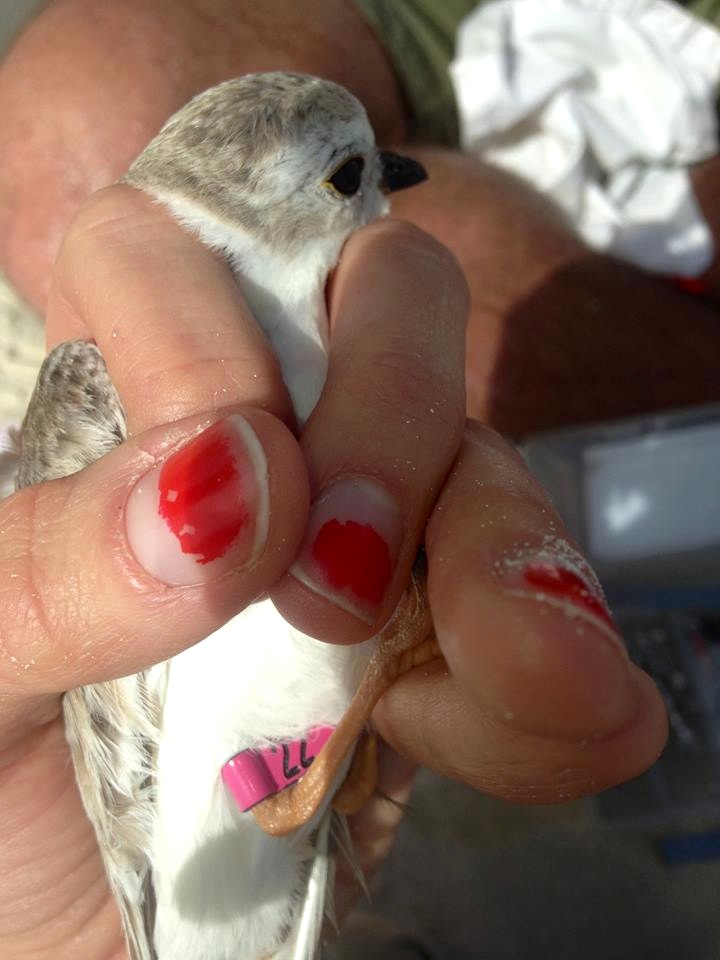
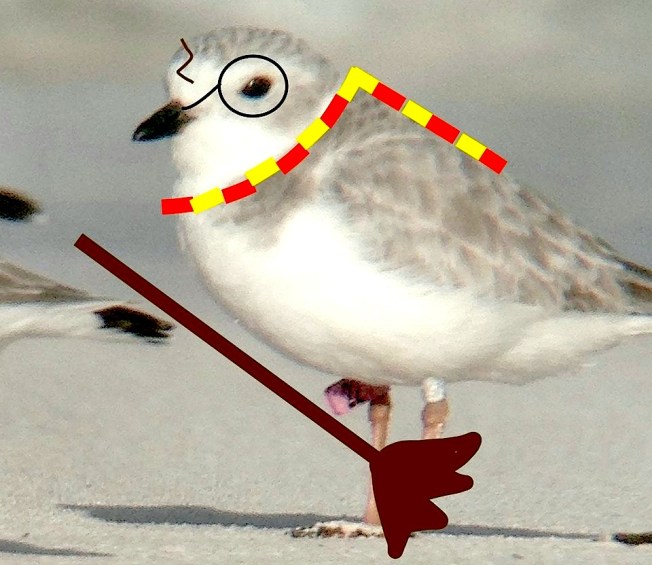
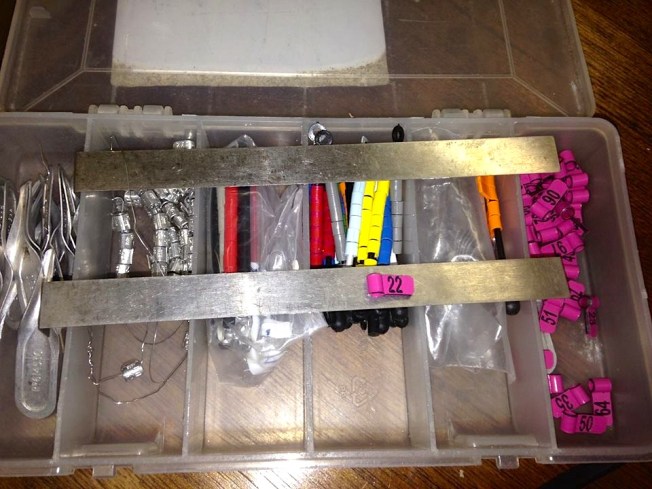
Meanwhile, Steph the Egger was making a strange rattling sound. As Harry was unwound from his shroud he suddenly saw a box filled to the brim with exotic jewels of the most opulent colours glistening in the sunlight. At once, he knew he had to have one of them. A beautiful pink one. One to wear on his leg. One that he could keep for ever. One that would always mean ‘Harry Potter’. That very one on the top. Just there. With the magic number 22 on it in black writing. And Harry started to breathe a special silent Piping Spell: ‘Please pick me up… in your hand… and fit the Magic Two-Two Band…’ 
PIPL PINK22 Harry Potter π Stehanie Egger copy

And, miraculously, the spell began to work. First, Harry was gently held as the Magic Band was put round his right leg. At the top, just where he wanted it. Harry shut one eye and repeated the spell.PIPL PINK22 Harry Potter π Stehanie Egger copy
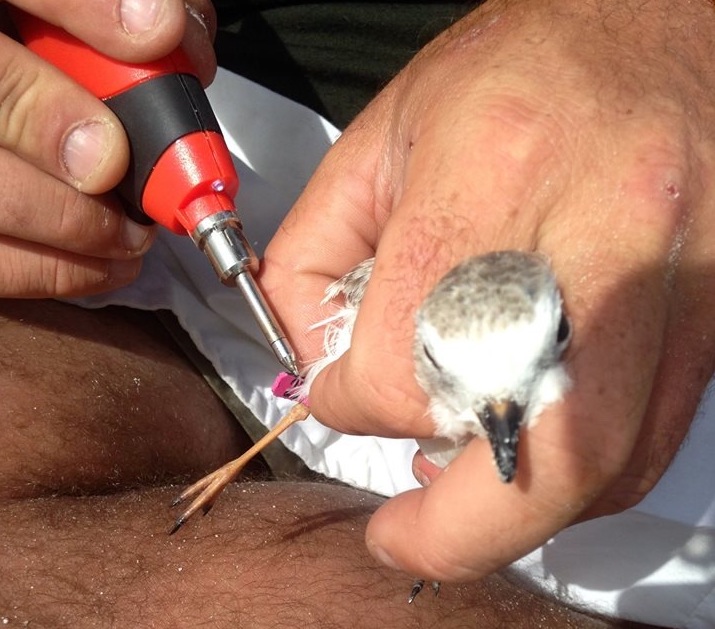
Then despite an awful wound from an earlier battle, the Todd of Pover made sure the band was secure and would never come off. It would be there forever – the Harry Potter ID band. By this time Harry didn’t even mind the indignity of being turned upside down.PIPL PINK22 Harry Potter π Stehanie Egger copy

Finally, it was done. Really, the jewel was more like a flag than a band. But Harry knew instinctively that it would take a massive effort for his story to be rewritten to make this clear from the start, so he decided to let it pass. Band. Flag. What did it matter. It was his prize, gloriously his. 

And then he was passed to Steph the Egger. Harry presumed she got her name for her ability to find nesting birds in that other place he had flown South from. And now, here she was, holding him tenderly, talking to him and telling him how cool he looked. Even her bright red claws did not seem so frightening now. Except… WHAT WOULD HAPPEN TO HIM NOW?

PIPL PINK22 Harry Potter π Stehanie Egger copy

Suddenly, Steph the Egger stood up and Harry found himself several feet above the safe warm sand. Steph held him out in front of her and then, in an instant, he was free… Free to fly away with his beautiful pink jewel band, his special number, and an intuition that wherever he might be, and whoever saw him, they would always know that he was Harry Potter for as long as he lived. Against all odds he had gained… THE MAGIC BAND.

PIPL PINK22 Harry Potter π Stehanie Egger copy

piping-plover

POSTSCRIPT & UPDATE FEB 2017

Harry returned to Abaco on his magic Quidditch stick (no he jolly didn’t, he just flew. OK? Do stop this Potter nonsense now please – ed.) for his 3rd winter on Long Beach Abaco. He was sighted as follows:

  • 23 Nov 16  Long Beach, with Pf #36 & Pf #50, also 3rd year returners, & several other banded returners. Keith Kemp
  • 06 Dec 16  Still in the same group, except Pf #50 absent. Todd Pover
  • 23 Jan 17  In the same group, Pf #50 still absent. Todd Pover

piping-plover

FURTHER UPDATE SPRING 2018

  • 20 Aug 17 Resighted for the 4th year on Long Beach (the same area) with Pf #36
  • 21 Sep 17 Still on the beach with Pf #36 & several other non-Bahamas banded birds
  • 18 Nov 17 Ditto
  • 02 Jan 18  Ditto, the last sighting of the watch period. Departure date unknown.
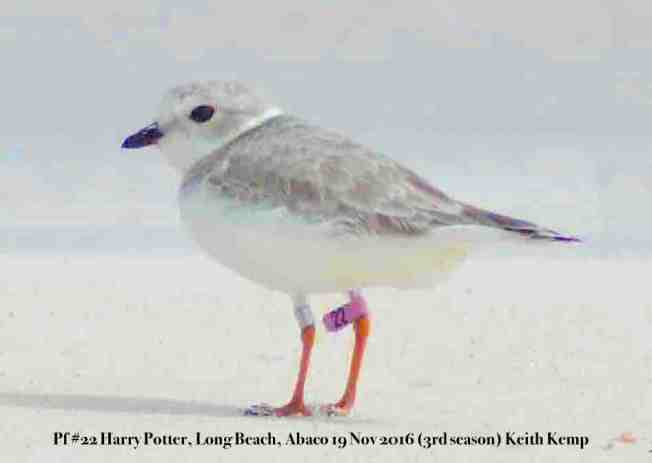
Harry-Potter-pf22-Long Beach, Abaco, Keith Kemp 19-11-16

PREVIOUS HISTORY

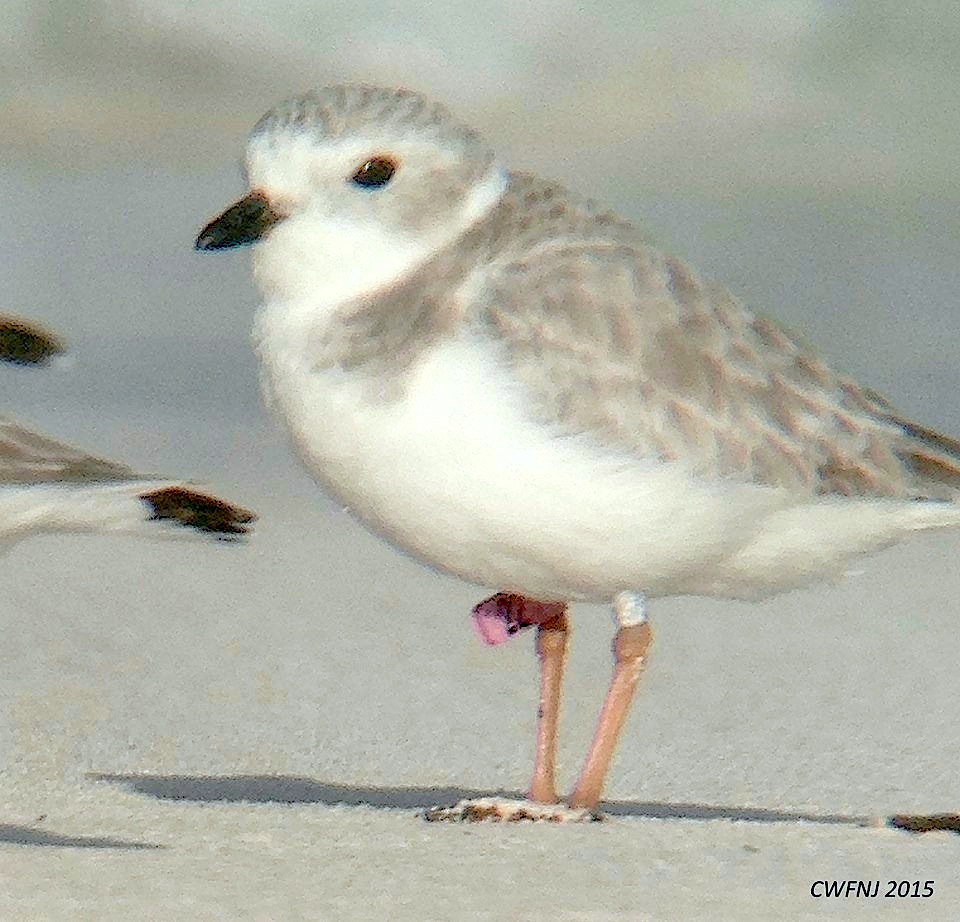
Harry was banded Pf #22 on February 7th 2015 at Long Beach, Abaco, towards the end of his 1st winter there. No one knows where he spent his has spent his summers. He has not been reported anywhere other than Abaco – i.e. along his migration route. All that can be said with certainty is that every 12 months he turns up on the same beach, Long Beach Abaco, in the same place (it is a very Long Beach). 5 other PIPL were originally pink-banded with Harry by a joint National Audubon, Virginia Tech, BNT, and CWFNJ team (pink being the colour used for Bahamas birds). Of those 6, 3 have returned to the same beach twice, and the other 2 once. Some of them have also been tracked to their breeding grounds and on their migrations. And somehow they have all found their way back to the same place on Abaco to overwinter together again for the 2016-17 season; and most again for the 2017 – 18 season.

GENDER NOTE

In fact it isn’t clear if HP is male or female (see below). He might be Harriet Potter. But I have played safe and stuck with the gender implied by his given name…

Harry Potter Pf #22 on Long Beach Abaco, 3 Dec 2015, a year after (s)he was banded there PIPL PINK22 Dec 3 2015 Long Beach Abaco 2 (Stephanie Egger) copy

STEPH THE EGGER EXPLAINS THE NAME, NUMBER & QUIDDITCH PIC

“I helped band this piping plover, and called him “Harry Potter.” I know 22 isn’t Harry’s quidditch number (07), but 22 is for my birthday when I mostly seem to be down in Abaco.”

DISCLAIMER RE HEADER IMAGE I don’t suggest making silly photos of all “named” birds as this is an endangered species that we should certainly take very seriously. That said, I do think that names help people connect to the species and it also aids the researchers in ID’ing (my personal opinion)”.

piping-plover

Credits: Stephanie the Egger, The Todd of Pover, Conserve Wildlife Foundation of New Jersey & co-banding teams, Keith Kemp, USFWS Mountain-Prairie (PIPL in flight), Birdorable, Rowling Harbour, and star of the show Harry Potter Pf 22 UR. Apologies to JKR for feeble pastiche.
Unknown's avatar

ABSORBING SPONGES ON THE BAHAMAS REEFS…


sponge-melinda-riger-gb-scuba

ABSORBING SPONGES ON THE BAHAMAS REEFS…

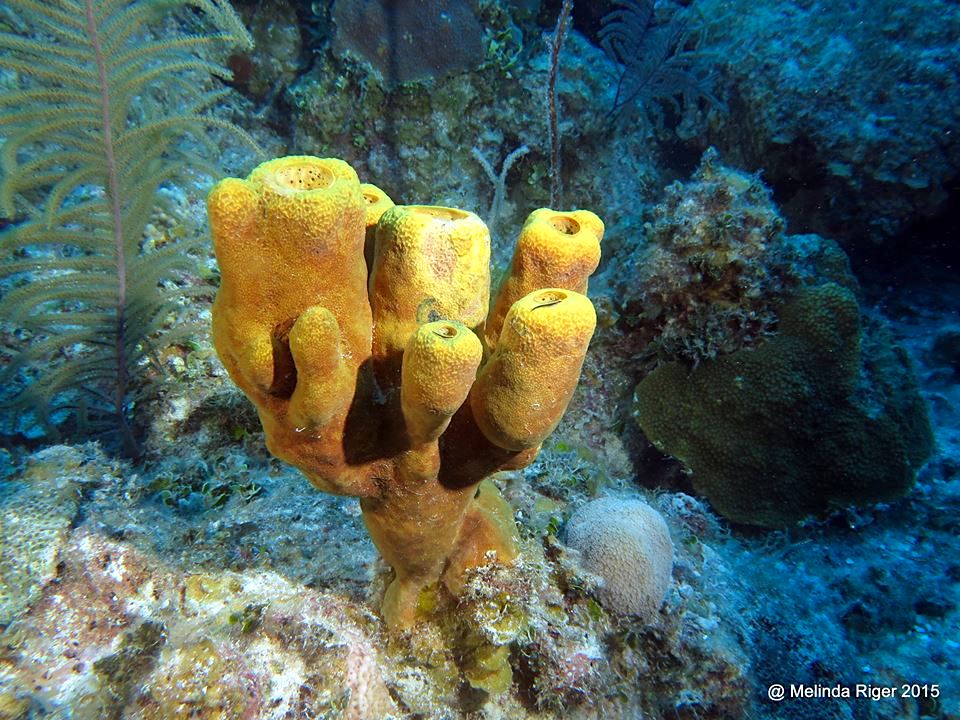
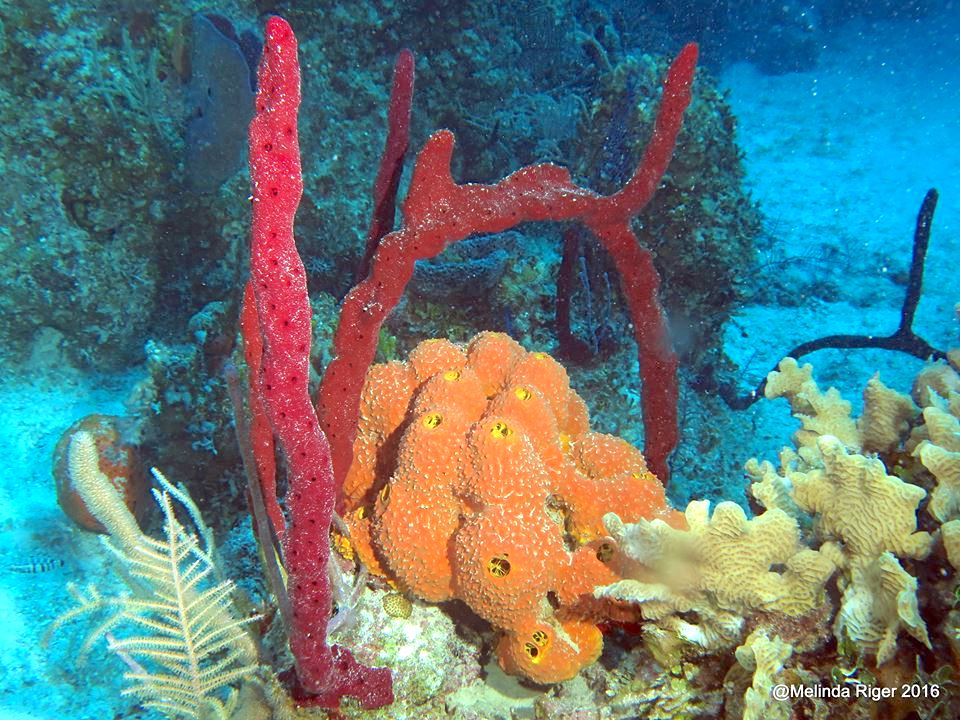
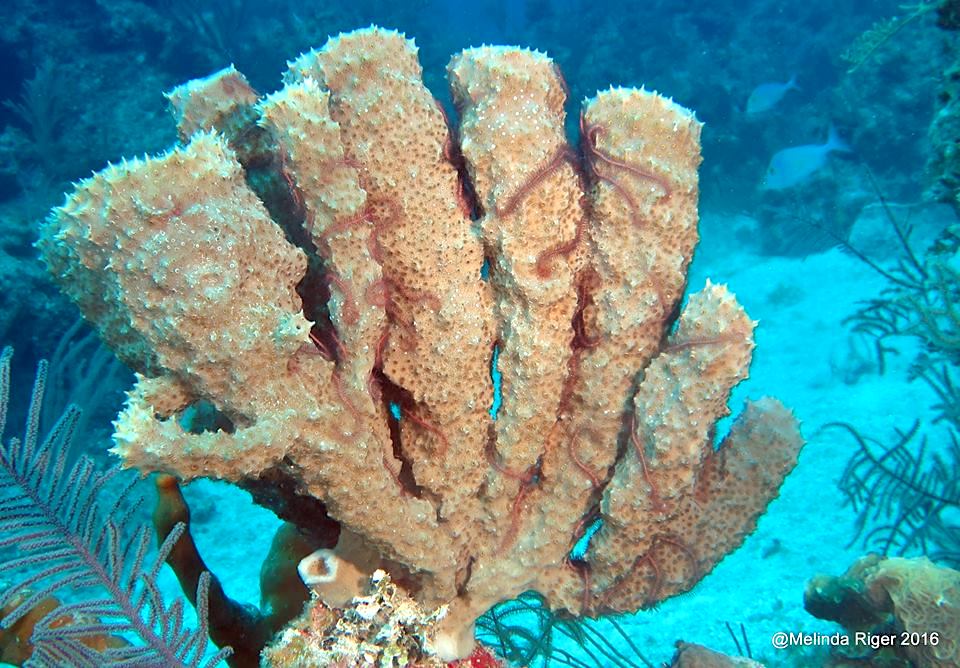
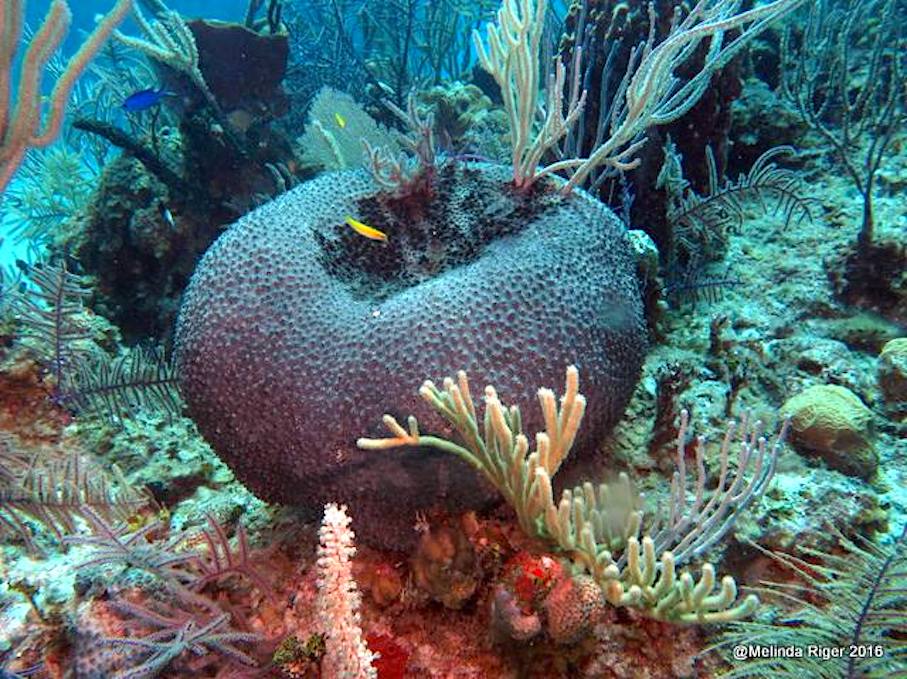
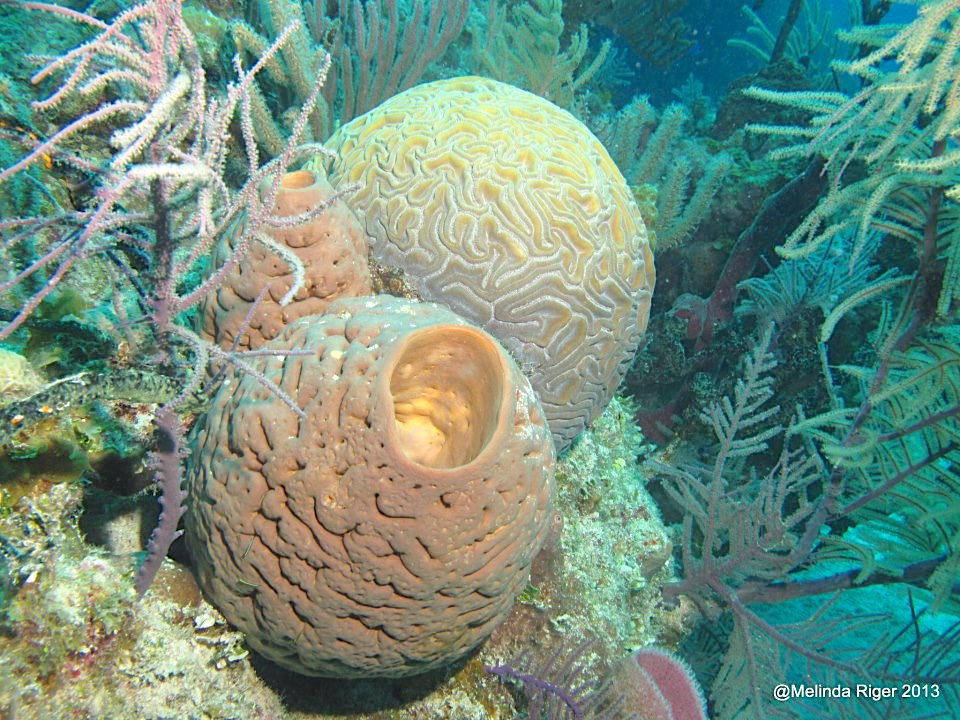
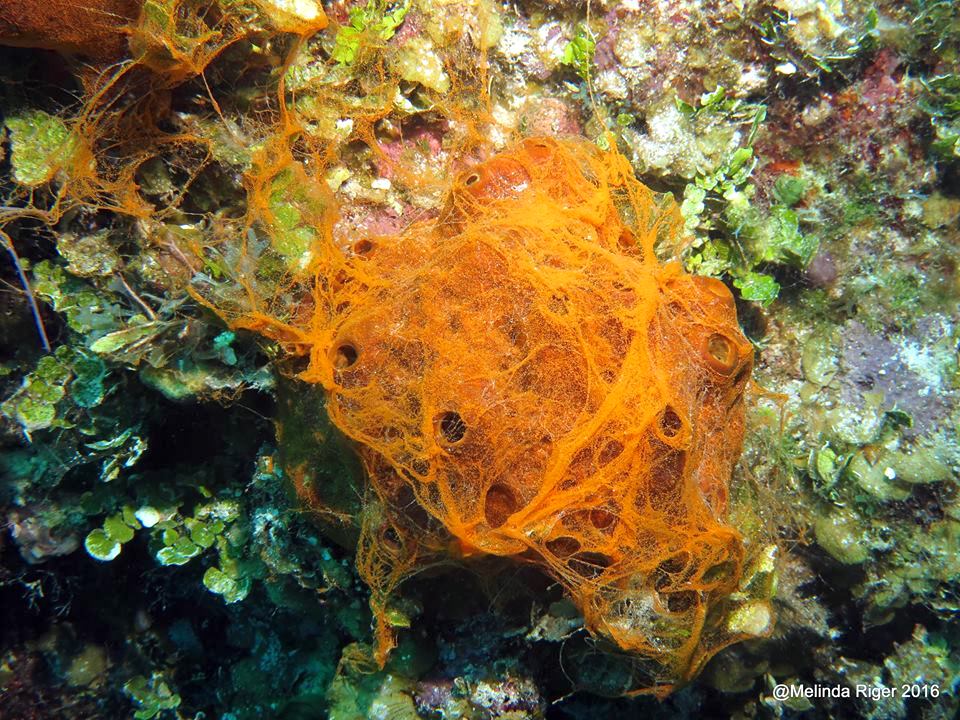
A while back I showed a collection of colourful sponges – one that you might come across with minimum equipment. Snorkel, mask, flippers. Oh, and a coral reef, if you happen to have one handy. I suspect that to quite a few people the word ‘sponge’ means soggy yellow thing, as found in the proximity of a bath. Or a scratchy nylon-based equivalent. Well, here are a few more sponges to enjoy. Some I can give you the names of, some I don’t know and am too idle busy to look up… Sorry.

sponges-melinda-riger-g-b-scuba

Candelabra Songe (with brittle stars attached)candelabra-sponge-melinda-riger-g-b-scubasponge-melinda-riger-g-b-scuba

Black Ball Spongesblack-ball-sponge-melinda-riger-g-b-scuba-copy

One for Valentine’s Dayheart-shaped-sponge-melinda-riger-gb-scuba

Vase Spongesvase-sponge- pink-melinda-riger-gb-scubavase-sponge-melinda-riger-g-b-scuba

sponges-and-coral-on-the-reef

Spawning Brown Encrusting Spongebrown-encrusting-sponge-spawning-melinda-riger-g-b-scuba

All photos: Melinda Riger, Grand Bahama Scuba

Unknown's avatar

АБАKО: SOVIET RUSSIAN MILITARY MAP OF ABACO


Soviet Russian Military Map of Abaco 1979

АБАKО: SOVIET RUSSIAN MILITARY MAP OF ABACO

I had been toying with a plan to write something fishy today. Lifting the lid on the secrets of the creole wrasse, maybe. Then something arrived in my inbox overnight that changed my course entirely. I was struck  by an idea  harder than a torrent of mixed metaphors speeding towards a bullseye in the motherlode. A map! A map of Abaco!! All in Russian!!! From the Soviet Russian Military Survey!!!! Irresistible. An occasion for multiple exclamation marks.509px-hammer_and_sickle_black_large_on_transparent-svg

‘Russian Soviet Military Topographic Maps’

Map sheet G-18-1 GREAT ABACO ISLAND ed. 1979 – scale 1:500 000, map size 66 cm x 55 cm

Soviet Russian Military Map of Abaco 1979

509px-hammer_and_sickle_black_large_on_transparent-svg

My blog is stuffed full of maps. They are scattered everywhere, like cartographical confetti. There’s even a page for some of them HERE. Want a map of Abaco’s HIGHEST POINT (134m, if you have the energy).  Need to see what Abaco looked like 300 years ago? Try HERE. Need a history of Hole-in-the-Wall in maps? Try THIS. And so on.
509px-hammer_and_sickle_black_large_on_transparent-svg

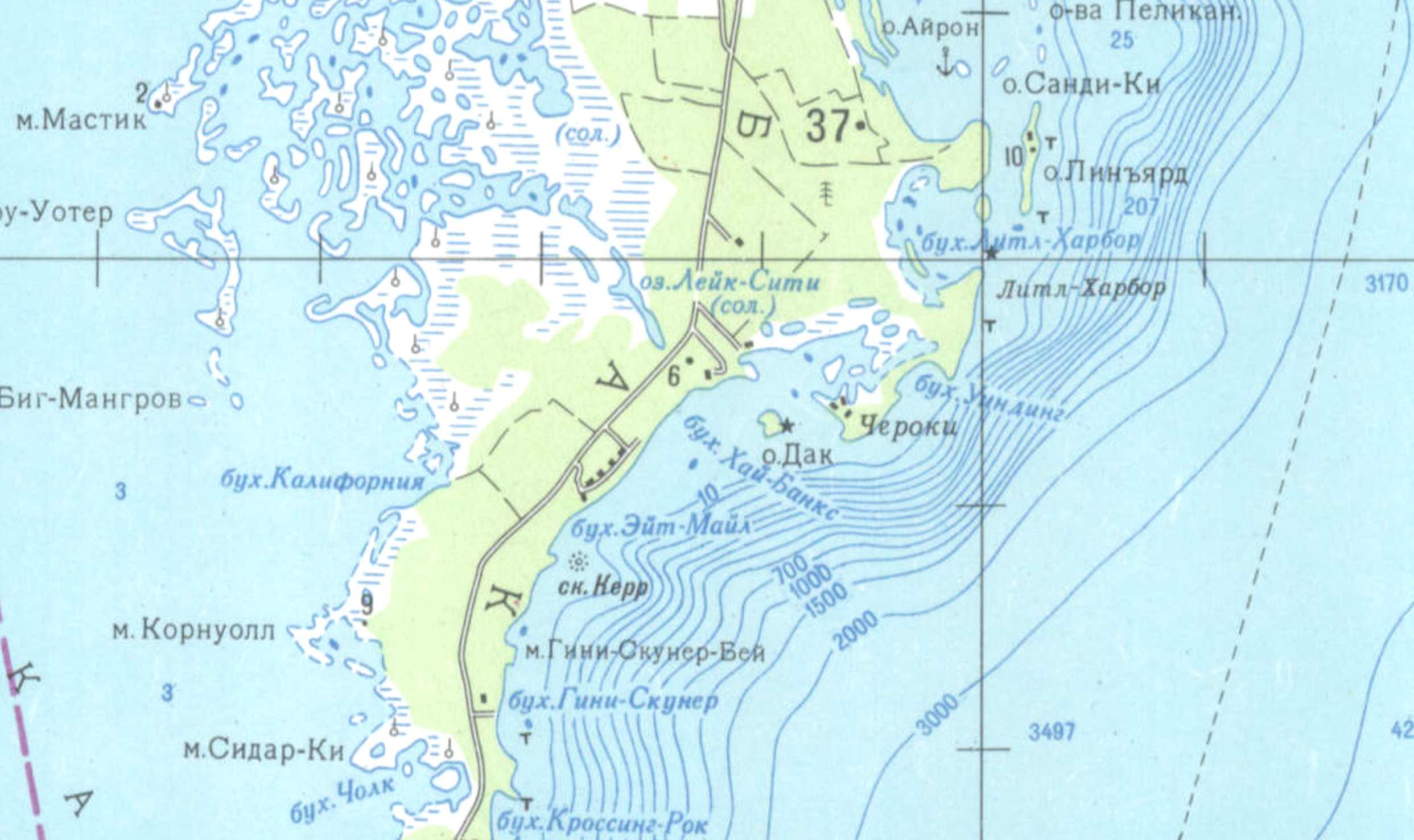
The header map is a merely the bottom-left corner of the much larger map immediately above. As a crop of the much larger area, it’s illegible. Which is next to useless, because the best thing about this map is that it is all in Russian. And I really wanted to see how they had mapped Marsh Harbour. Treasure Cay. Man-o-War. And the rest. I looked around online and reached this one. Even with some work on the image, you can only get a blurry glimpse – just a few tempting hints of Cyrillic. But it’s impossible to locate Марш Харьор, Трежер Ки, or Ман-оф-Уор Ки…

Soviet Russian Military Map of Abaco 1979

509px-hammer_and_sickle_black_large_on_transparent-svg

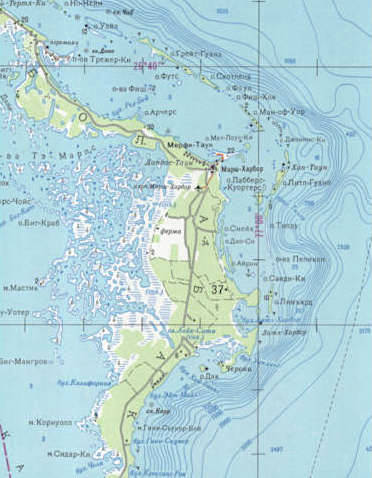
So, back to the interweb thing. And eventually, something usable turned up. Here, with props to Clicpic, is Abaco in the late Soviet era. Check out where you live – in Russian. Got friends on Грейт Гуапна Кй? Sadly, the northern end of Abaco and the whole southern end from Crossing Rocks down to Hole-in-the-Wall and right round to Sandy Point is absent. That area is of course the perfect place for missile silos**. Except now it’s a National Park, so that wouldn’t be possible… would it?

509px-hammer_and_sickle_black_large_on_transparent-svg

I’ve split the map into 3 sections to make it as big as possible. The maps overlap to keep the proportions equal on-screen. Double click to zoom in. Hope you enjoy travelling around it…

Soviet Russian Military Map of Abaco 1979 Detail 1 Soviet Russian Military Map of Abaco 1979 Detail 2 Soviet Russian Military Map of Abaco 1979 Detail 3

** Vladdy, mate, if you or your agents have picked up on this, (1) only joking, right? and (2) you’ve  anyway got better things to worry about these days…

Unknown's avatar

WATCHING NURSE SHARKS: BE PATIENT…


nurse-shark-8-16-melinda-riger-gb-scuba

WATCHING NURSE SHARKS: BE PATIENT…

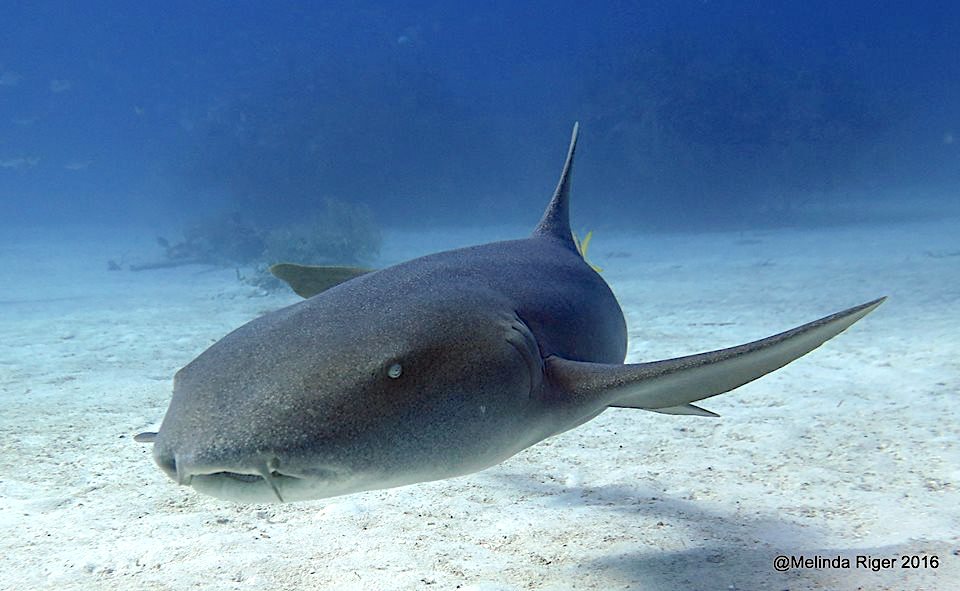
I last took a look at nurse sharks nearly 3 years ago HERE. Time to revisit these creatures. Indeed, time for a close-up look. If you want to know more about this fascinating species, just click the link above.

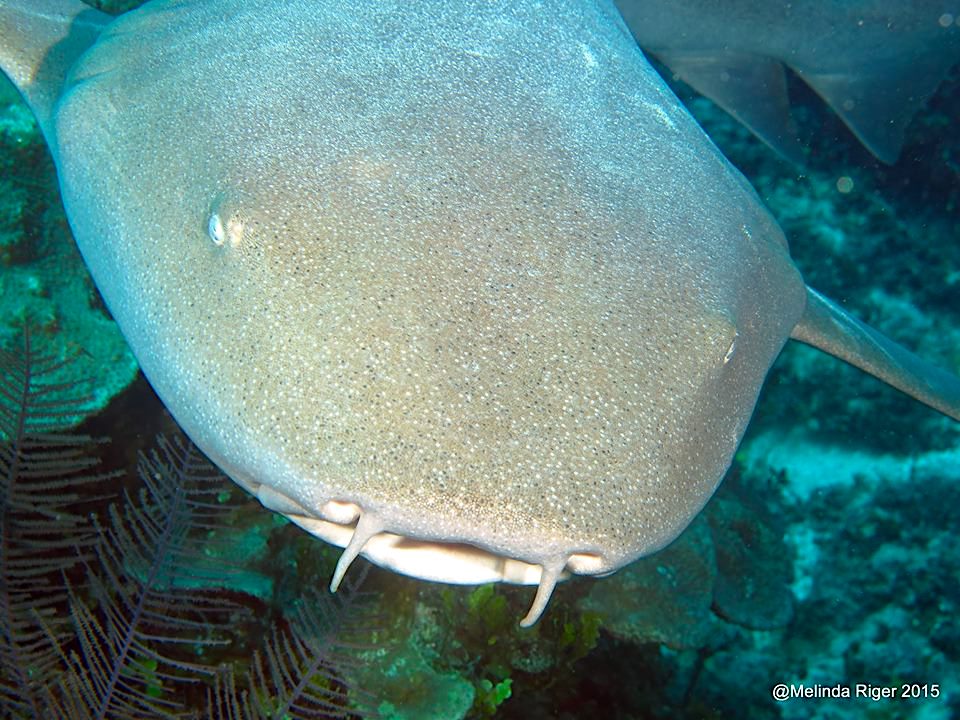
The two strange items hanging down from the upper lip are sensory barbels
nurse-shark-melinda-riger-g-b-scuba

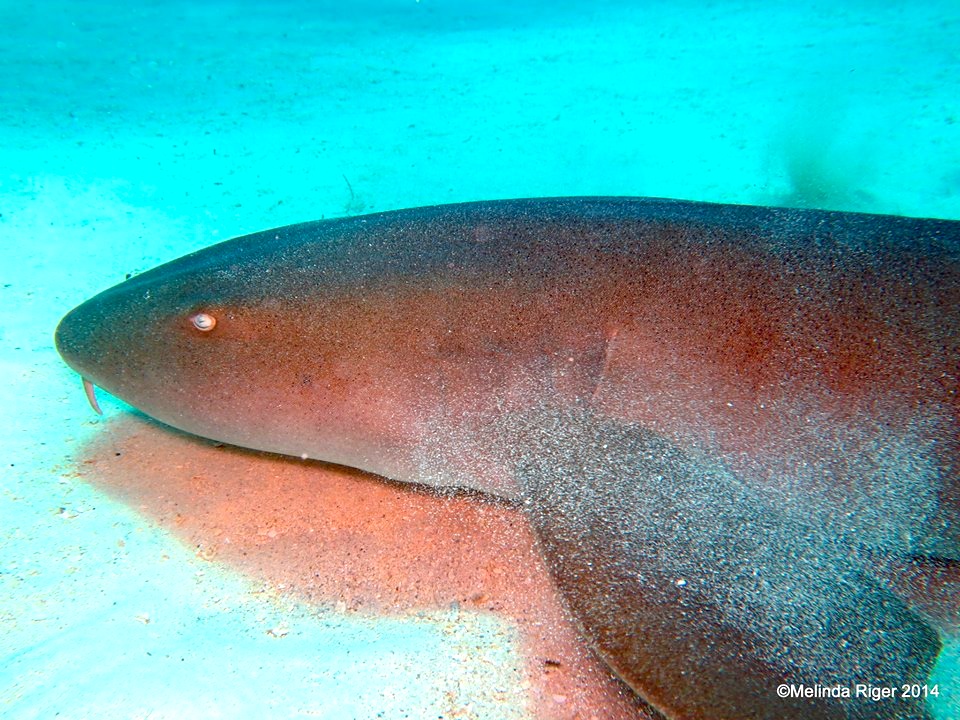
This side-view shows the shark’s relatively small mouth (for a shark anyway)nurse-shark-a-melinda-riger-gb-scuba

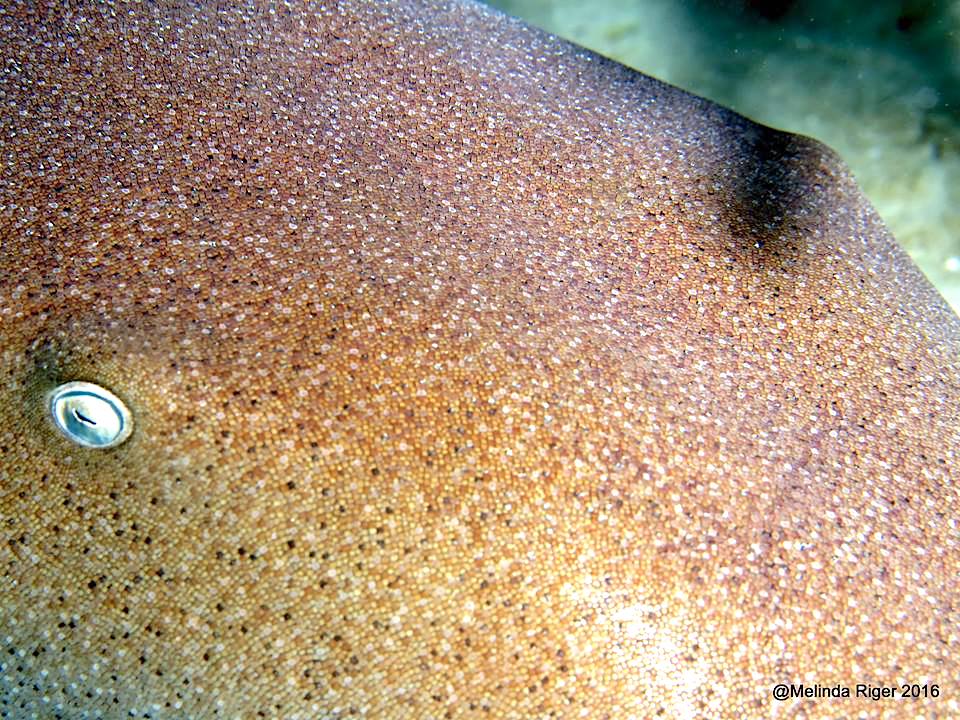
Admire the extraordinary texture of the the skin; and the tiny evil eye. Click or – better – double click on the image and you will see that the skin is in fact tessellated, made up of a mosaic of tiny squares and near-squares**nurse-shark-close-up-melinda-riger-g-b-scuba

This one is a baby nurse sharknurse-shark-baby-melinda-riger-gb-scuba

A juvenile nurse shark with a couple of grunts. Note the youngster’s paddle-like finnurse-shark-juv-melinda-riger-g-b-scuba

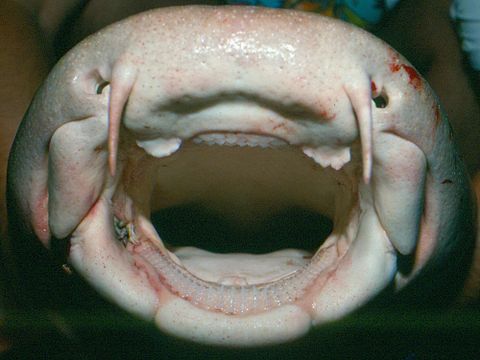
Head, mouth, jaws and teeth

 ginglymostoma_cirratum_head  

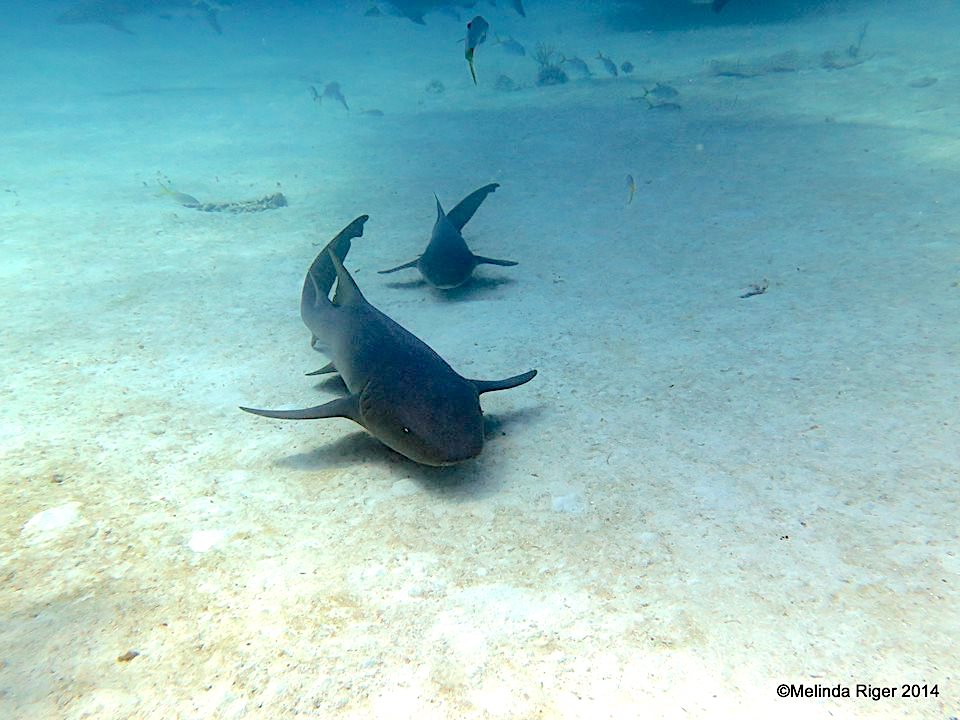
nurse-sharks-x2-plus-reef-sharks-melinda-riger-g-b-scuba

SO, THEY ARE SHARKS – ARE THESE GUYS DANGEROUS?

Not really, no. They aren’t looking to pick a fight; and they are not as territorially aggressive as the ‘bitey’ sharks are (or can be).  These slow-moving bottom-dwellers are generally harmless to humans. However, they can be huge—up to 4 metres —and have very strong jaws filled with thousands of tiny, serrated teeth. They will bite defensively if stepped on or bothered by divers who assume they’re docile. [As I said previously, “there are recorded instances of injuries caused to divers who have tried to pull nurse sharks by the tail. And serve them right, I say. Treat them with patience and respect!”] 

Nurse Shark ©Melinda Riger @ G B Scuba copy

**FUN FACT

M.C. ESCHER (the inspiration for Mr Hammer) was the master of tessellation in art. Click the link to explore the dedicated website. Maybe, sensationally, one day a shark will be found with skin like this… (Alert reader: “Actually, I think it most unlikely…”)

Escher fish

Credits: field photos by Melinda Riger, Grand Bahama Scuba; Wiki for the 4 mouth images & the Escher 

Nurse Shark ©Melinda Riger @ Grand Bahama Scuba

Unknown's avatar

BAHAMA NUTHATCH: TINY, RARE, A HOP AWAY FROM ABACO…


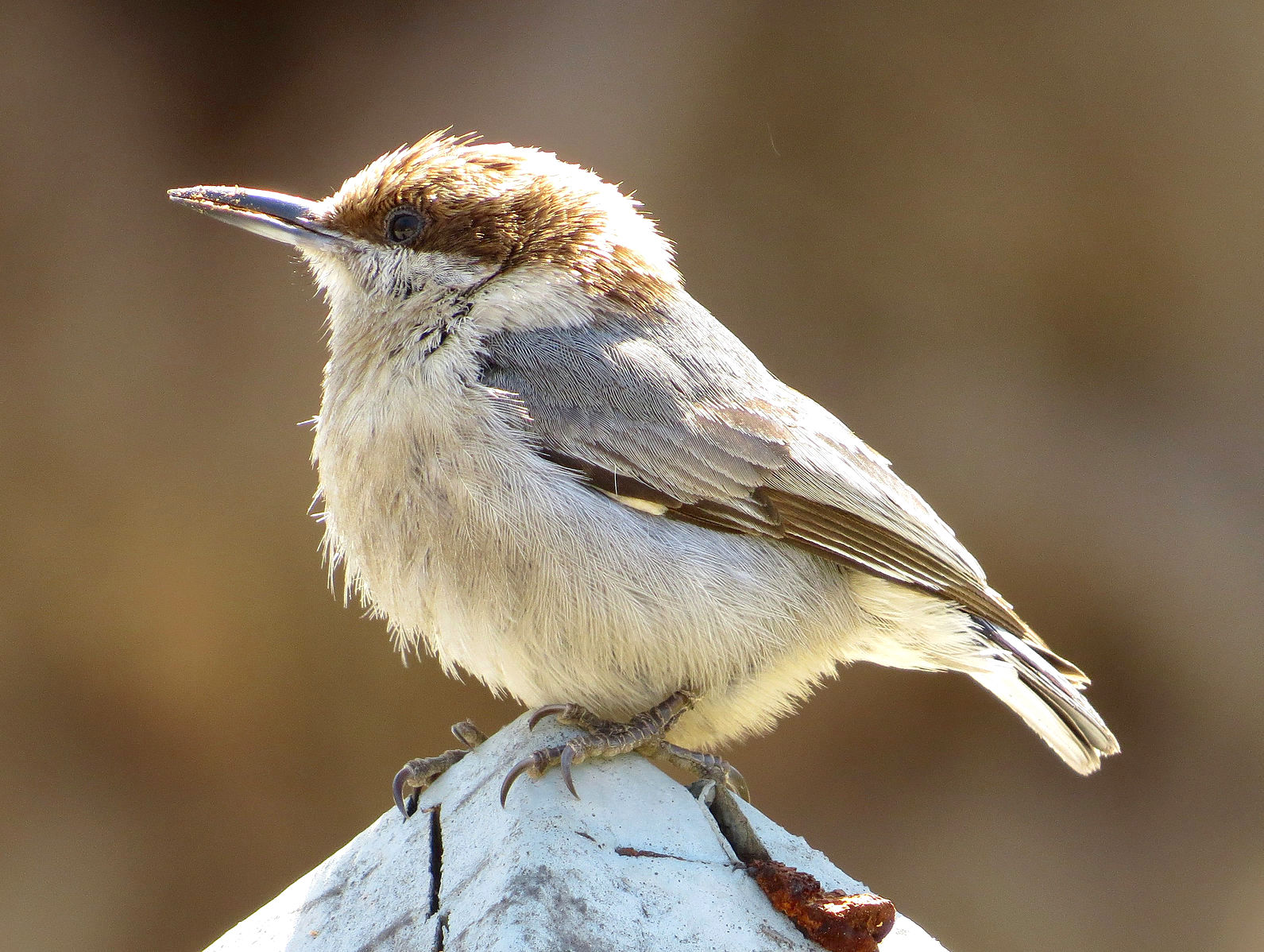
brown-headed_nuthatch-david-hill-sc

BAHAMA NUTHATCH: TINY, RARE, A HOP AWAY FROM ABACO…

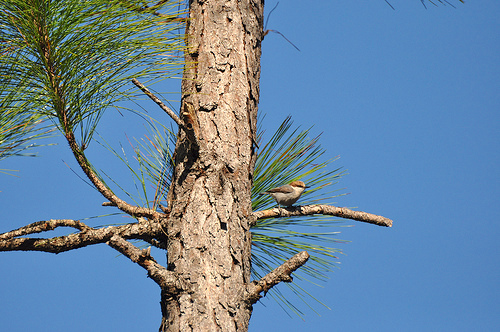
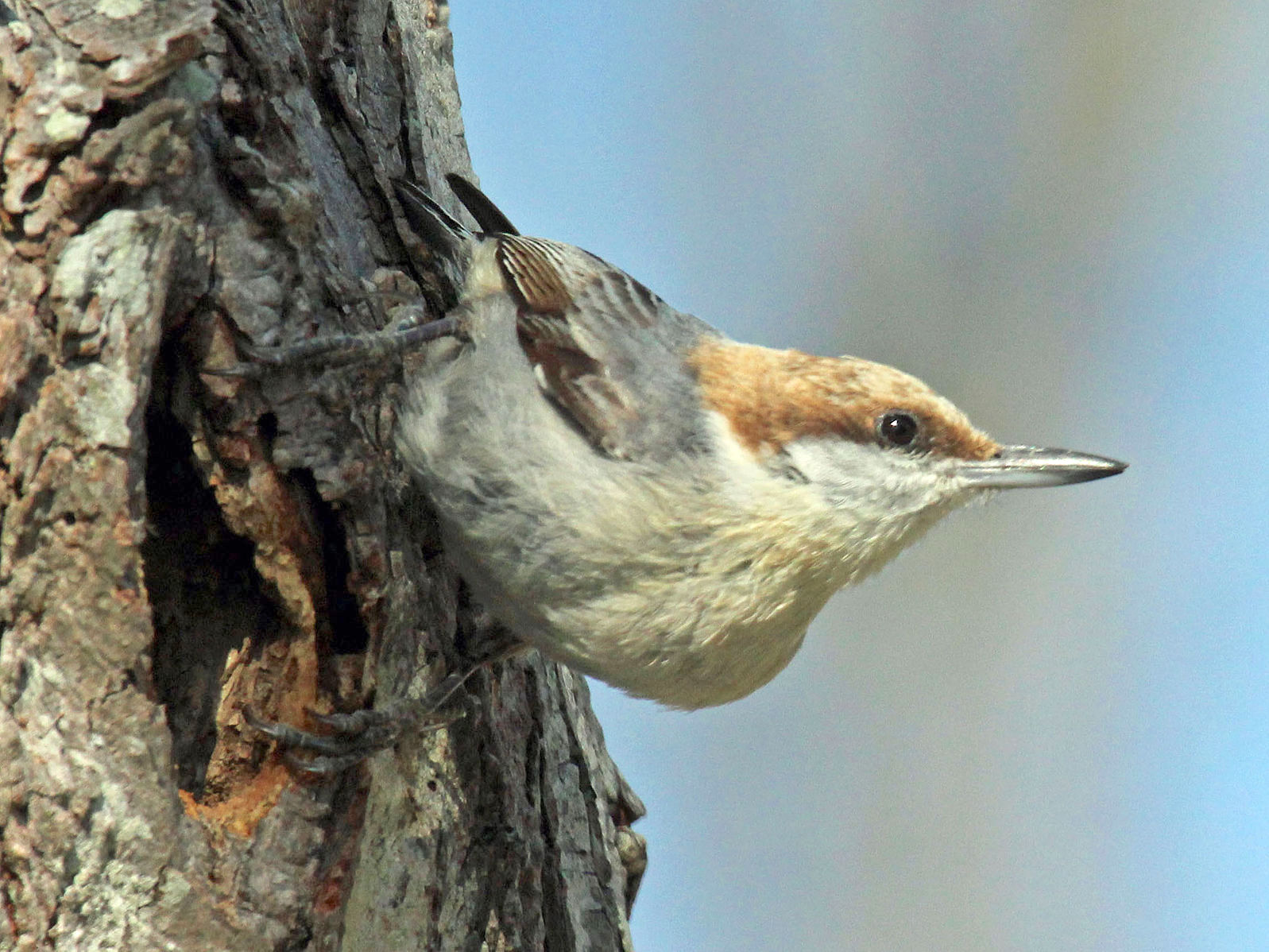
The Bahama Nuthatch (Sitta pusilla insularis) is one of the rarest birds in the Bahamas and – like the similarly rare BAHAMA ORIOLE on Andros – it is confined to one island only, Grand Bahama.  At best about 1000 – 1200 mature birds may inhabit the pine forests though current estimates vary, and that number may be optimistic. What is clear is that, for all the usual reasons (see below) the population is likely to be decreasing rather than growing.

bahamas_nuthatch-birdlife-org

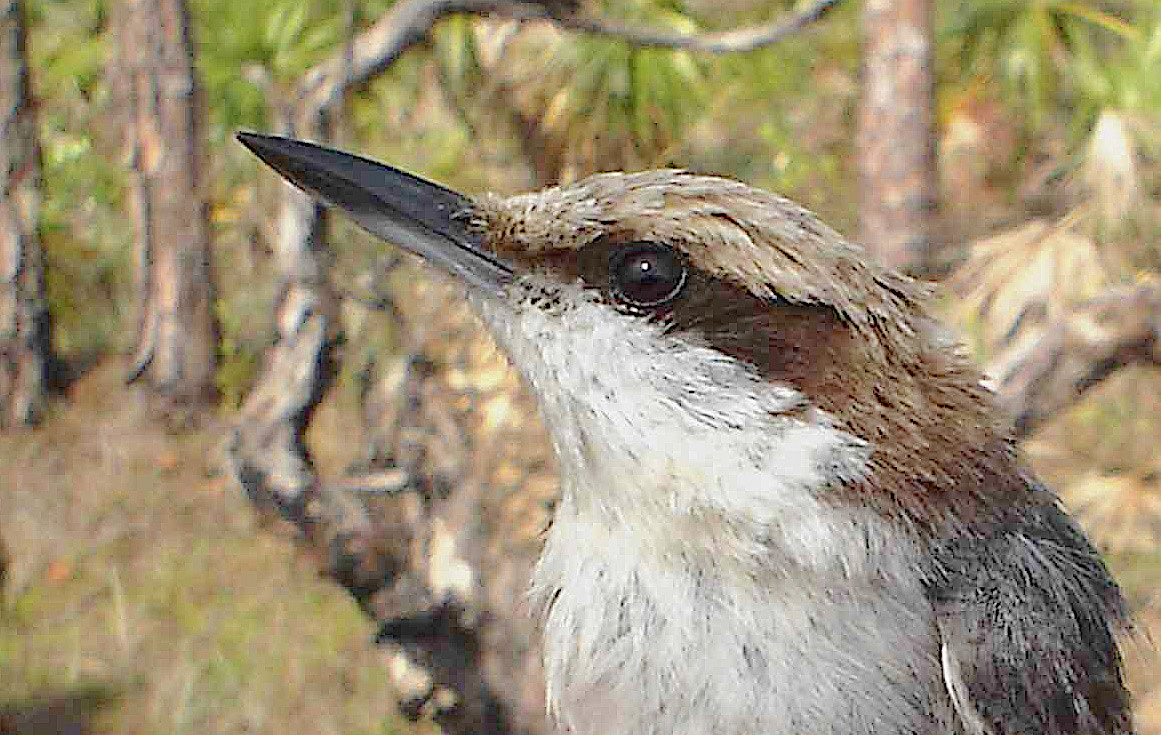
Despite its  scarcity and size – this little bird is one of the smallest in the nuthatch family – the BANU is subject to much scientific debate in bird circles. Until a dozen years ago, it was simply considered to be a brown-headed nuthatch, a familiar enough bird in south-eastern USA. Then a research paper was published, which led to the bird being awarded subspecies status as the Bahama nuthatch S. p. insularis. Some argue further, that it should be considered a fully separate species and split from its cousin (as, recently, with the Bahama and Inagua woodstars in 2015). Others write as though this has already happened but as far as I can make out, it has not – though it might possibly happen once further researches have been completed and submitted (polite correction on this point welcome…).

bahama-nuthatch-owl-hole-rd-grand-bahama-bruce-purdy

WHAT ARE THE DIFFERENCES TO JUSTIFY SEPARATE STATUS?

Close investigation of the Grand Bahama population showed a number of significant differences between the island and the US populations. Having read and digested all the relevant research (NOT! Abstracts, maybe…), I discovered that the main distinctions are:

  • A longer, heavier bill (compare the header image of a brown-headed nuthatch in South Carolina with the second one of a Bahama nuthatch).
  • Shorter wings
  • Whiter belly
  • Distinctively different vocalisations

bahama-nuthatch-grand-bahama-robert-norton

IUCN RED LIST STATUS

Whether the BANU is a sub-species of brown-headed nuthatch or a fully separate species, the bird is incredibly rare. The population may be unsustainable without intervention (as implemented to save the Abaco parrots) – and the threat of extinction looms even as the bird begins to attract international interest. In 2016 the IUCN listed the BANU as ENDANGERED, meaning essentially that it faces extinction. ‘Critically endangered’ is the only higher category. The main reasons given for the listing were the small population, found on only one island, and likely to continue declining as a result of habitat loss & invasive species

brown-headed-nuthatch-erika-gates-bahamas-weekly-article

 WHAT ARE THE MAIN THREATS TO THE SPECIES, I MEAN SUBSPECIES?

  • Habitat loss / degradation from development, logging, forest fires & hurricanes
  • Invasive / introduced / feral species such as corn snakes, raccoons & cats
  • Competition from other bird species in a limited area

brown-headed_nuthatch-matt-tillett-md_

HOW DO THESE BIRDS BEHAVE?

A few years back, Erika Gates, well-known Grand Bahama birder and guide, wrote an excellent article in her ‘Bird Talk’ column published in the Bahamas Weekly. It includes this description:

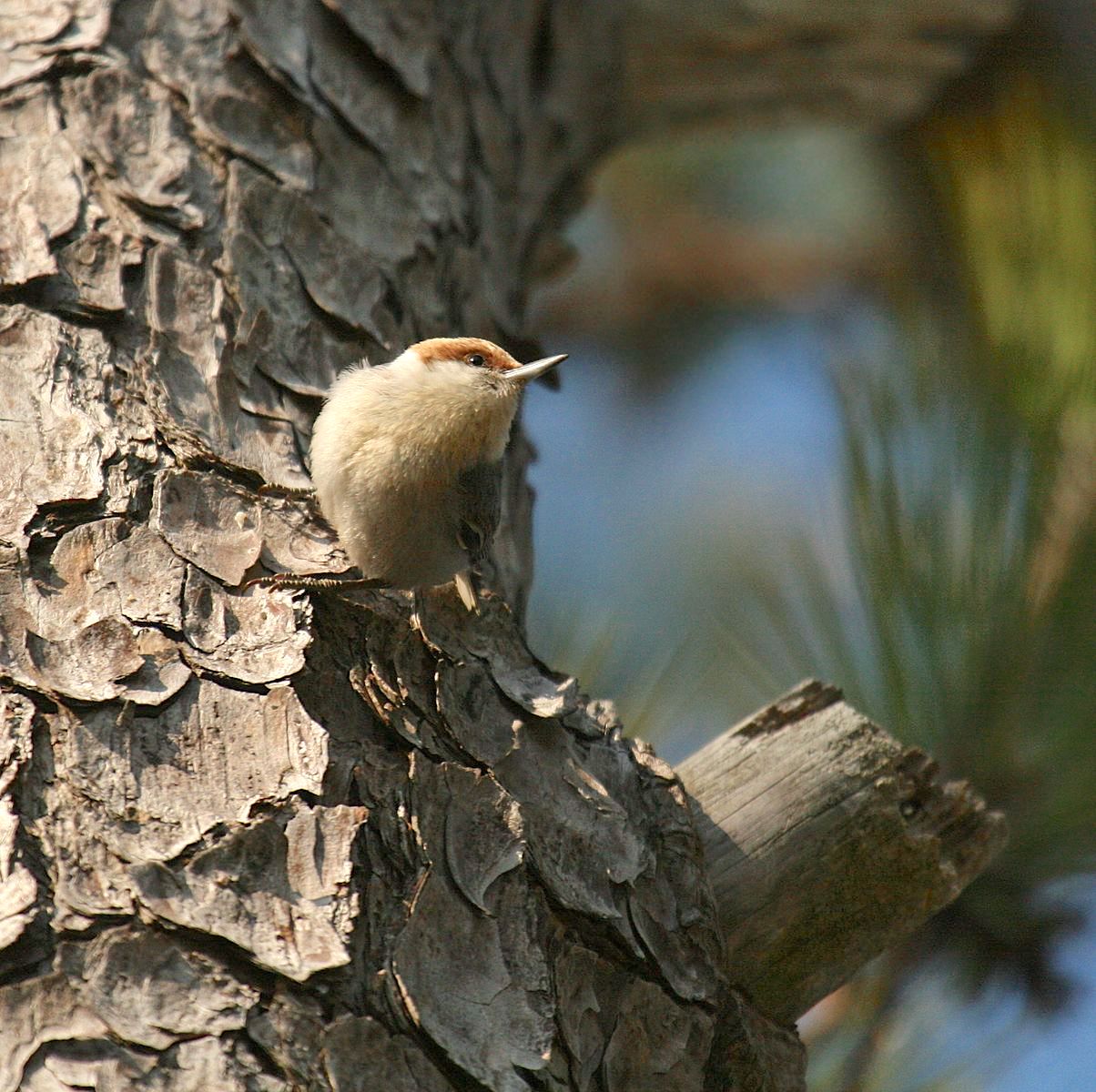
The Bahama Nuthatch exhibits several highly unusual and endearing behaviors. It is one of the very few bird species that conducts co-operative breeding, in which young males assist with nest construction, nest sanitation as well as feeding of the female sitting on the eggs, nestlings and fledglings. It is also one of the few birds known to utilize a tool. On occasion, it uses a bark chip, held in its bill, to pry off bark portions during foraging for insects and grub.

brown-headed_nuthatch-dick-daniels-nc-wiki

SO IF I’M IN THE PINE FOREST ON G B, WHAT DO I LISTEN OUT FOR?

Sadly, there are no available recordings of a BANU**. As their vocalisation is one of the factors that differentiates them from the brown-headed nuthatch, it’s clearly not very helpful to illustrate what the latter sound like. But I am going to anyway, because they can’t be that different. It’s probably just a Bahamian accent. I have read somewhere that it sounds a bit like a squeezed rubber duck toy.

Paul Marvin / Xeno-Canto

** Feb 2018 I have just been contacted by Jeff Gerbracht, who has very kindly sent me a recording he made on Grand Bahama in 2011 on a trip with Bruce Hallett (a familiar name to regular readers of this site) and uploaded to the indispensable Macaulay Library. I must have overlooked it when I wrote the post. The links below are to the recording and to the species checklist from that occasion, including a photo taken by Rudy Sawyer, the third member of the party.

And yes, comparison shows that the 2 nuthatches do indeed have “distinctively different vocalisations” (see above); and that the Bahama nuthatch does not sound anything like a squeezed rubber duck…

brown-headed_nuthatch-matt-tillett-md_5

WHY MIGHT THESE BIRDS TURN UP ON ABACO?

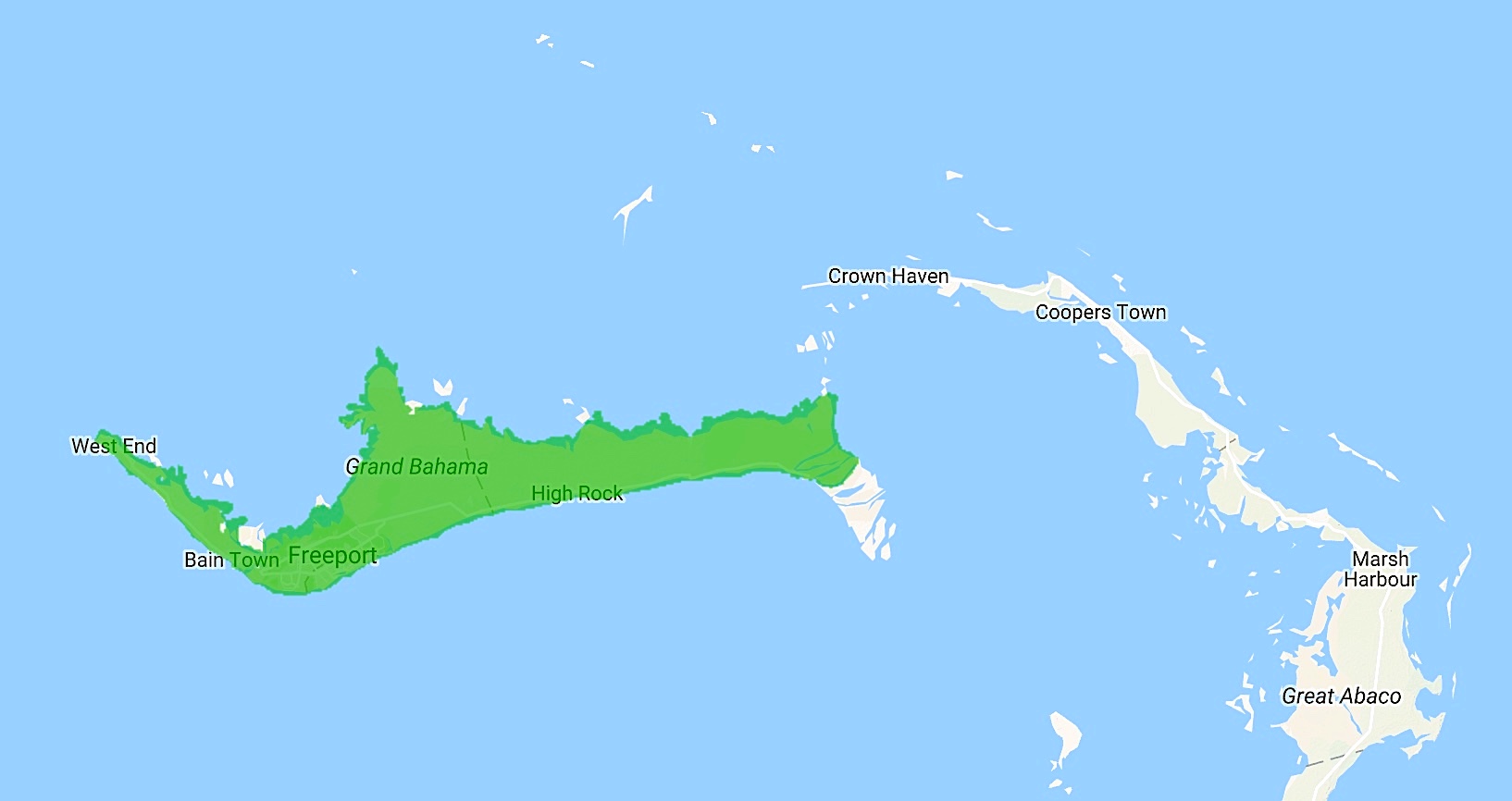
Well, I’m being a bit romantic and optimistic here. But let’s look at the official distribution map from Birdlife International. Not so very far for even a small bird to travel. There are even some small cays as stepping stones. And just think of the thousands of acres of pine forest on Abaco, much of it remote and completely undisturbed. Maybe… if a breeding pair could just… you catch my drift? 

bahama-nuthatch-distribution-birdlife-org

Here is another instructive map, this time from eBird. These are the only BANU sightings ever recorded, and all since 2010. These birds are tiny. There are very few of them, spread over a wide area. They live in pine trees, and are to an extent camouflaged against them. You’d be very very fortunate to find one at all, let alone get a decent photo of it… Let’s hope you can spot one while they are still around.

screenshot-2017-01-04-22-42-20

ANYTHING ELSE WE SHOULD KNOW?

I have written elsewhere (in fact, HERE) about the ornithologist James Bond and his connection with Ian Fleming’s hero. The very rare first edition** of Bond’s seminal Birds of the West Indies was published in 1936. In it, he described the BANU and suggested it was a subspecies of the brown-headed nuthatch. A man way ahead of his time. 

PLEASE STOP NOW. ANY LAST WORDS?

“The species may become extinct unless Bahamians are willing to take action to save it. As the rarest bird in the Bahamas, and one of the rarest birds in the world, the nuthatch will become a high-profile symbol of conservation efforts (or their failure) in the Bahamas”. RESEARCHGATE

Photo credits: David Hill (BHNU) 1; Birdlife.org (BANU) 2; Bruce Purdy (BANU) 3; Robert Norton (BANU) 4; Erika Gates / Bahamas Weekly (BANU) 5; Matt Tillett (BHNU) 6, 8; Dick Daniels (BHNU) 7

Sound: Paul Marvin / Xeno-Canto

Addendum Feb 2018: Jeff Gerbracht for a BANU sound recording and species checklist

Research credits: Birdlife International /Birdlife.org; Birding Community E-Bulletin, Nov 2008; Research Gate; IUCN; The Bahamas Weekly / Erika Gates; eBird; American Birding Association (and a bonus point for its brown-headed nuthatch behaviour article wittily entitled “Sex in the Sitta”)

**The edition of James Bond usually described as the first edition (indeed in the book itself) was published in 1947. You might pick one up for $100 or so (try Abe.com), as I did. Don’t get one without a dust-jacket. It’s a treasure, and an affordable slice of avian history. A 1936 edition will probably be well north of $2000… 

Unknown's avatar

WTF? (WHAT’S THAT FISH?) 12: THE TRUMPETFISH


trumpetfishmelinda-riger-gb-scuba

WTF? (WHAT’S THAT FISH?) 12: THE TRUMPETFISH

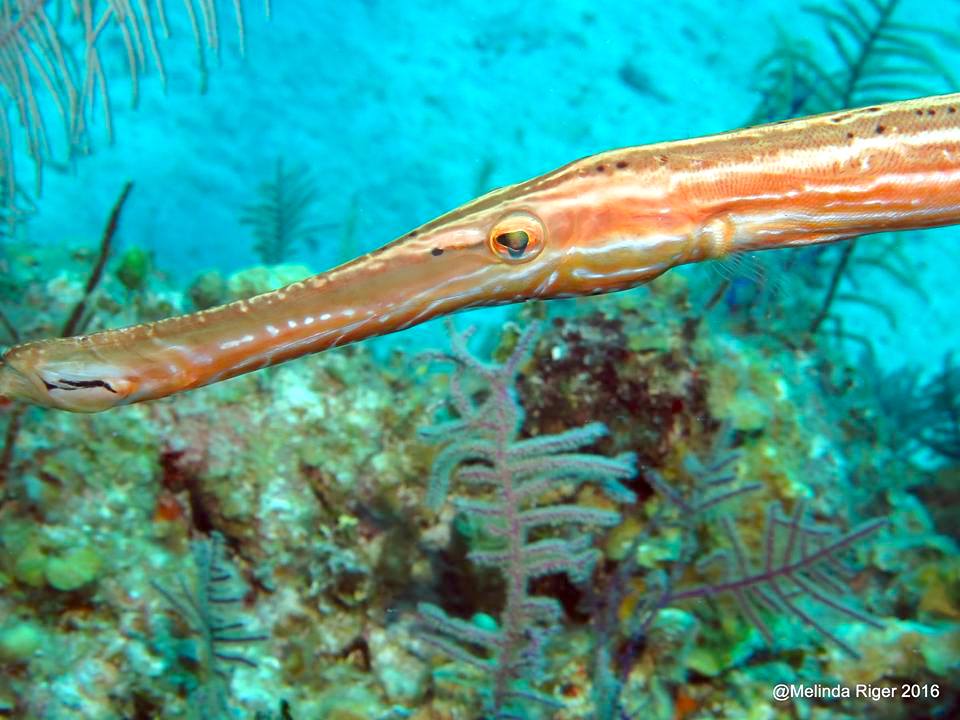
It’s been a while since the previous post in the WTF? series, dedicated to the unusual or downright weird marine creatures that, when you see them swim into in the frame of your mask, prompt the involuntary exclamation “WTF?” (What’s That Fish?). Now, in all its glory meet… The Trumpetfish. These long piscine pipes are in no way related to the President-Elect and his tank of pet fish, but perhaps more explicably to seahorses and seadragons.

trumpetfish-melinda-riger-g-b-scuba

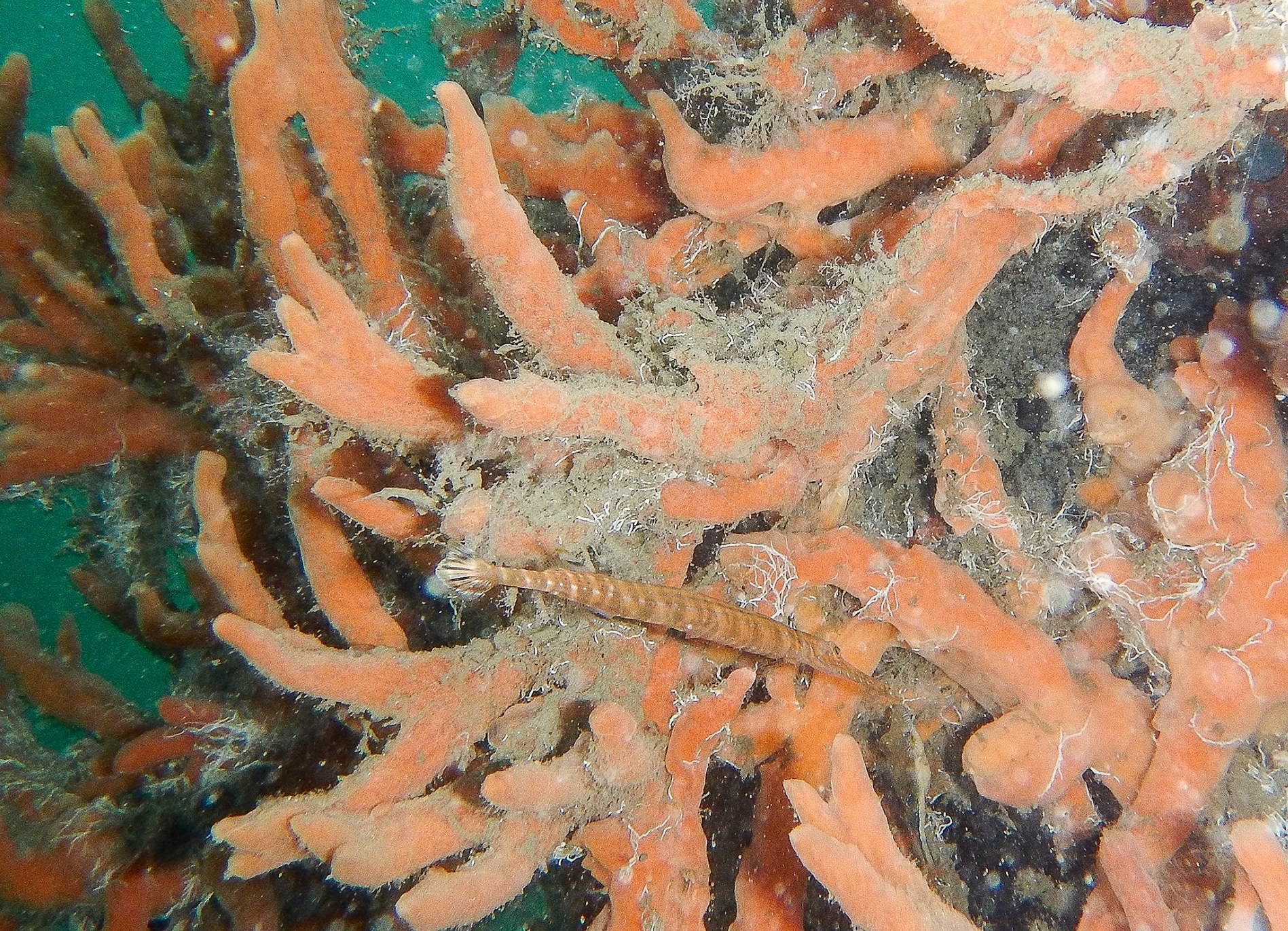
Trumpetfishes Aulostomus maculatus are as happy to swim upright as more conventionally, which helps them to blend in with vertical corals and sponges on the reefs in the tropical waters of the western Atlantic. Adults may grow to 3 foot long or more. These creatures come in a variety of colours – shades of red, orange, brown, green and yellow.

trumpetfish-adam-rees-scuba-works_

At the end of the fish’s long snout – see how far back the eyes are set – is a small mouth. Here’s how a trumpetfish goes about catching its prey (mostly small fishes):

  • Slowly swimming or drifting to a target from behind, and sucking it into its mouth
  • Staying suspended in the water, motionless, and waiting like a malevolent stick for a passing wrasse or similar to get too close
  • Swimming alongside larger fishes, which camouflages its presence and enables it to ambush small fish as they pass 
  • More generally, the trumpetfish has some ability to change its colour to blend with its surroundings – both a defensive as well as an attacking advantage

Trumpetfish (Adam Rees / Scuba Works)

The very excellent Peppermint Narwhal recently produced a series of posters in appreciation of particular species – and trumpetfishes and their kin in the Order syngnathidae were honoured. The PN’s cheerful website is well worth checking out for the sheer diversity of their ideas.

14991470_1159096584183417_5198894741175308852_o

MUSICAL NOTES

We are beginning to collect the makings of a decent orchestra here. The trumpetfish has a relative, the cornetfish, elsewhere in the world. The remarkable GUITARFISH has already featured in the WTF? series, as has a species of BASS, the Harlequin. And – hey! – what about the spotted DRUMFISH to lay down the beat? Maybe I need to compose a little jingle featuring these one day…

Credits: Melinda Riger (Grand Bahama Scuba); Adam Rees (Scuba Works)

Unknown's avatar

WHEN NEW PROVIDENCE WAS OLD: MAPPING BAHAMAS HISTORY


Map of New Providence / Nassau Bahamas (early c18)

WHEN NEW PROVIDENCE WAS OLD: MAPPING BAHAMAS HISTORY

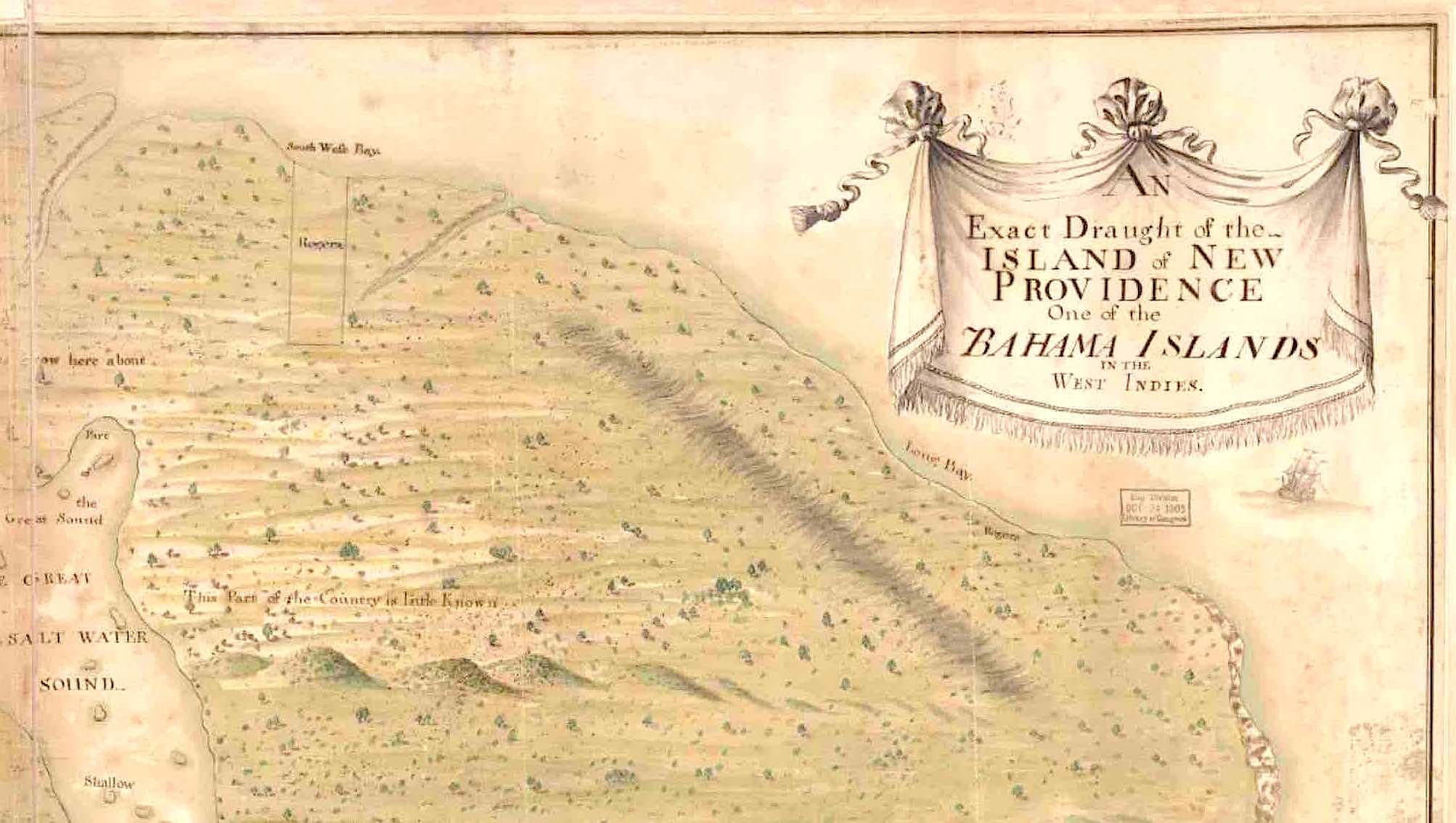
“Exact Draught of the Island of New Providence, One of the Bahama Islands in the West Indies”

Lateral thinking is one thing; topsy-turvy thinking is in another league. The map that graces the top of this page is of New Providence and Nassau in the the early c18. By today’s exacting mapping conventions, which historically were less rigorously observed, it is upside-down, with Nassau on what we would call the south-west corner. The map is undated of the face of it, and I have found attributed dates of both 1700 and 1750. It could be anywhere in-between. At the time this map was made, New Providence was sparsely populated except for Nassau itself; and little was known about the island’s interior. Contemporary accounts describe a haven for pirates operating around the coastline. Not for nothing was Nassau protected by a battery and a fort. I’ve divided to map into sections to make it easier to take a closer look at each area. You can click each to enlarge.

new-providence-c18-map-part-7-2

  1. TOP LEFT CORNER (the south-east of NP in actuality), with the compass pointing downwards to the north. A smattering of houses dot the ‘west’ coast. There is one significant property above Little Sound, standing in what looks like a cleared or even cultivated area. I’ll look at that in more detail below. Note the words above The Great Salt Water Sound: “Very High Pines Grow Here Aboue (sic)”, evidence that forests of tall pines familiar even today on Abaco were found on NP 300 years ago. The island is otherwise mostly marked as if the landscape was fairly open.

new-providence-c18-map-part-1

2. TOP RIGHT CORNER (south-west & west), with the confident title in a cartouche proclaiming exactness. This was not uncommon in historic map-making – the cartographical equivalent of today’s boastful product slogans – ‘simply the best’ and so on**. The caption next to the Great Sound, This Part of the Country is little Known, suggests an unexplored and perhaps hostile environment – possibly one of marshes and bogs. This sector of the island appears to have been uninhabited, or at least to having no population centres worth recording.

new-providence-c18-map-part-3-2

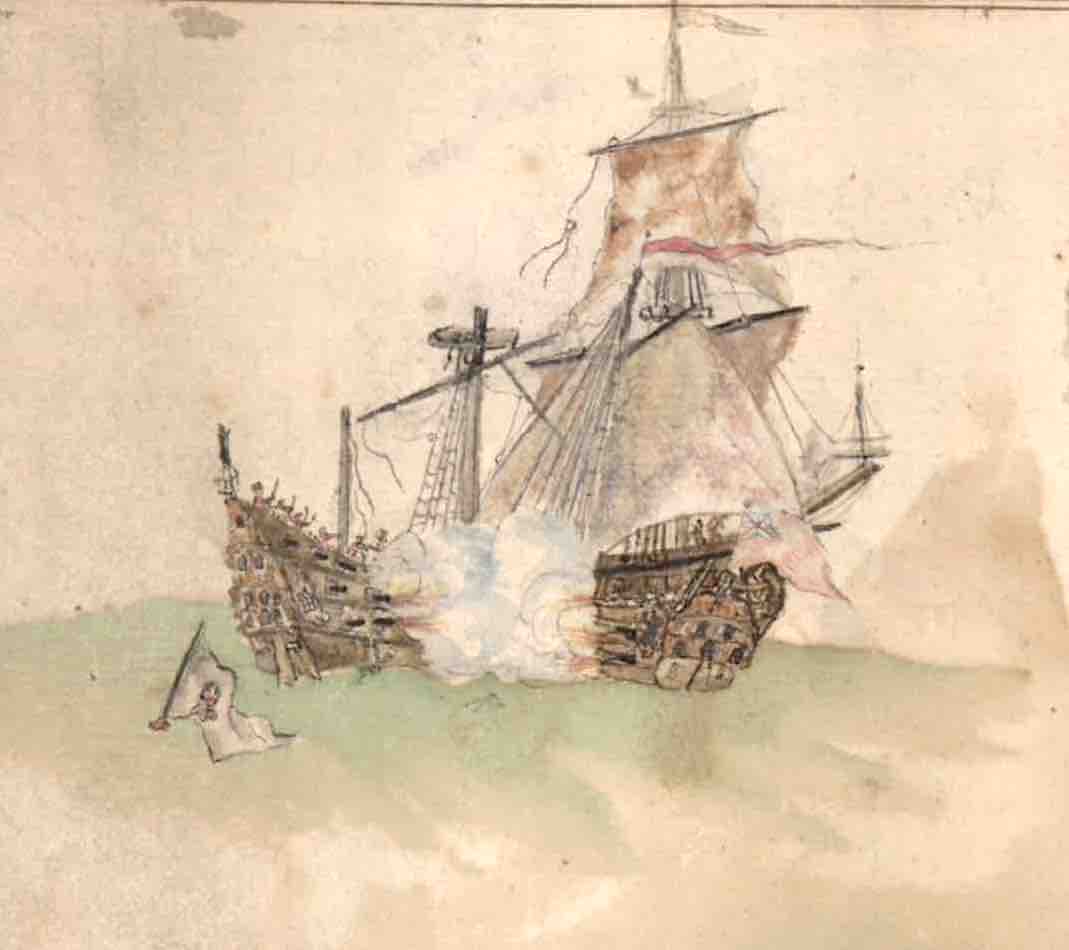
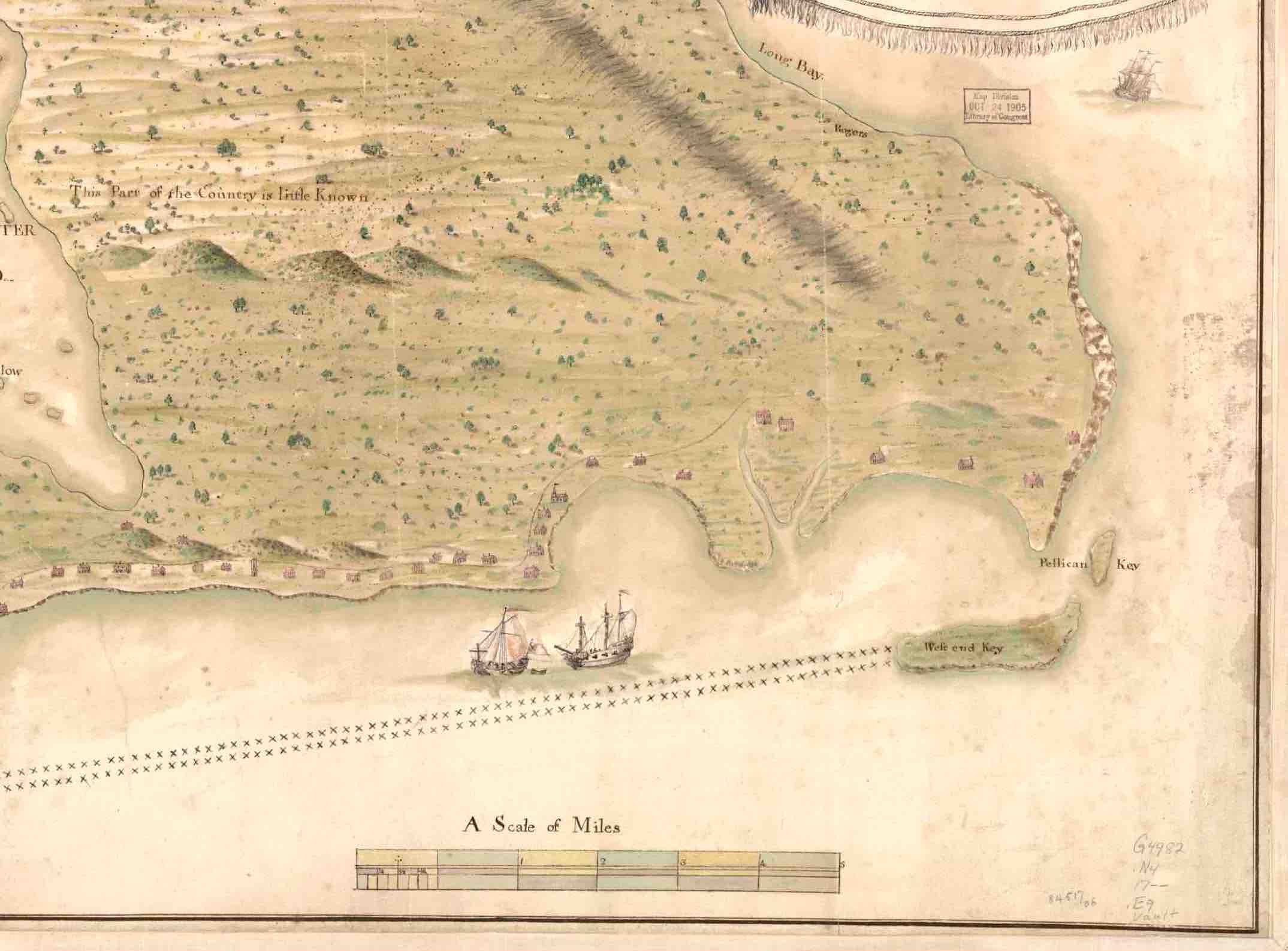
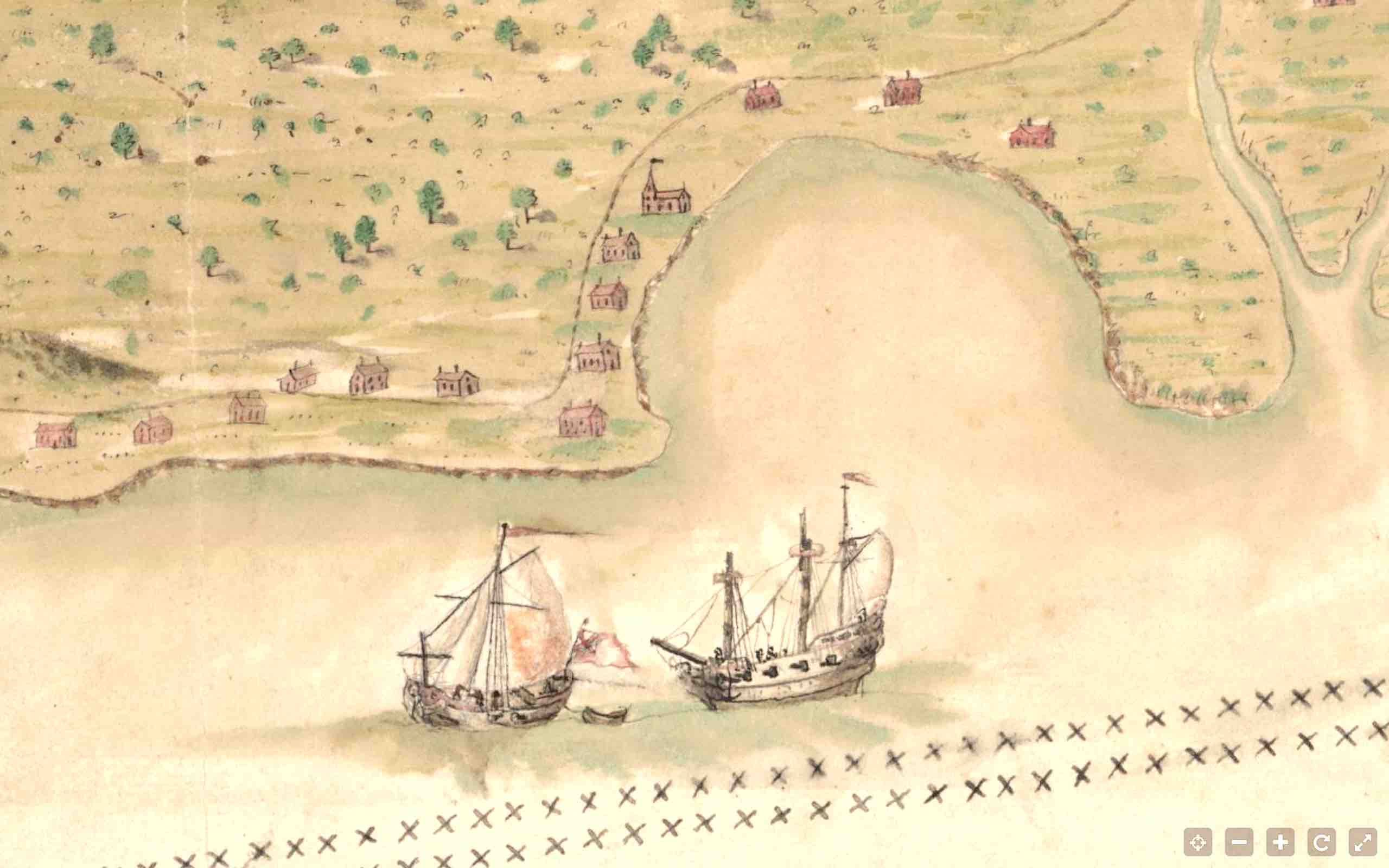
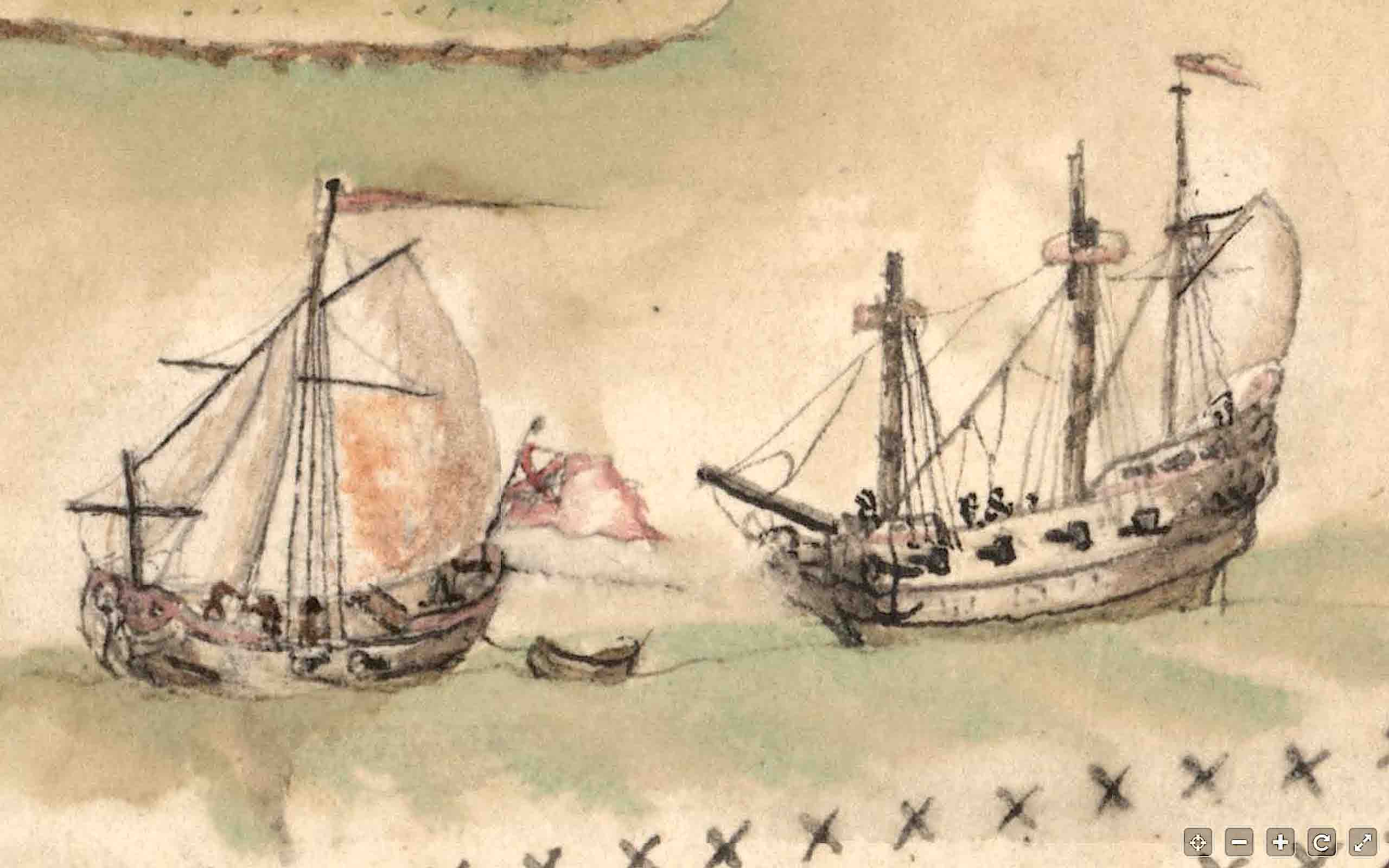
3. BOTTOM RIGHT CORNER (north-west). At last there is more evidence habitation, with a string of dwellings along the coastline. The 2 cays shown have names, West End and ‘Pellican’. And it looks as though the two ships have set out from port. On the left side of the bay above them, a church can be seen. I’m not sure what the double row of crosses indicates (maybe someone can help here), but I wondered if they might indicate the area close to the shoreline that might be safe – or at least safer – from pirate attack. The leading ship – as the detailed crop shows clearly – is a warship. No harm in romantically speculating that it is escorting a trading vessel…

new-providence-c18-map-part-4

new-providence-c18-map-part-5

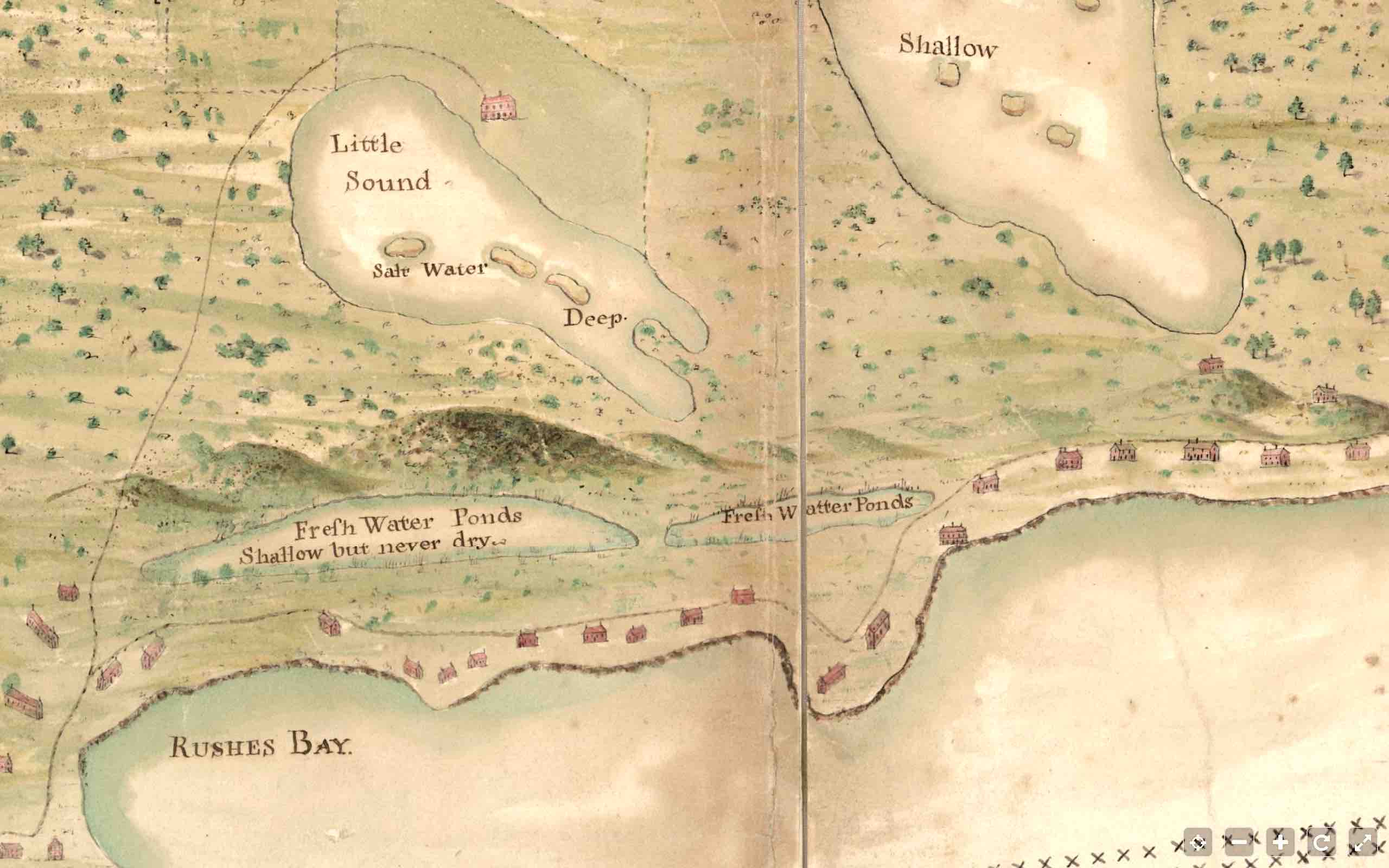
4. BOTTOM MIDDLE SECTION As we move towards the main – indeed only – town on the island, it is clear that the northern coast was the most desirable place to live. The scattering of houses along the coast continues; and the captions for the ponds show a possible reason why: fresh water, on an island where other areas of water are actually marked as ‘salt’ or which might have been unpleasantly brackish. And now we can see more of the posh establishment I referred to above. Not only did it lie in open (or perhaps cultivated) country, but it was plainly of some importance. It is notably larger that other buildings depicted, for a start; and it has its own very long track that forks off the coastal track.

new-providence-c18-map-part-10

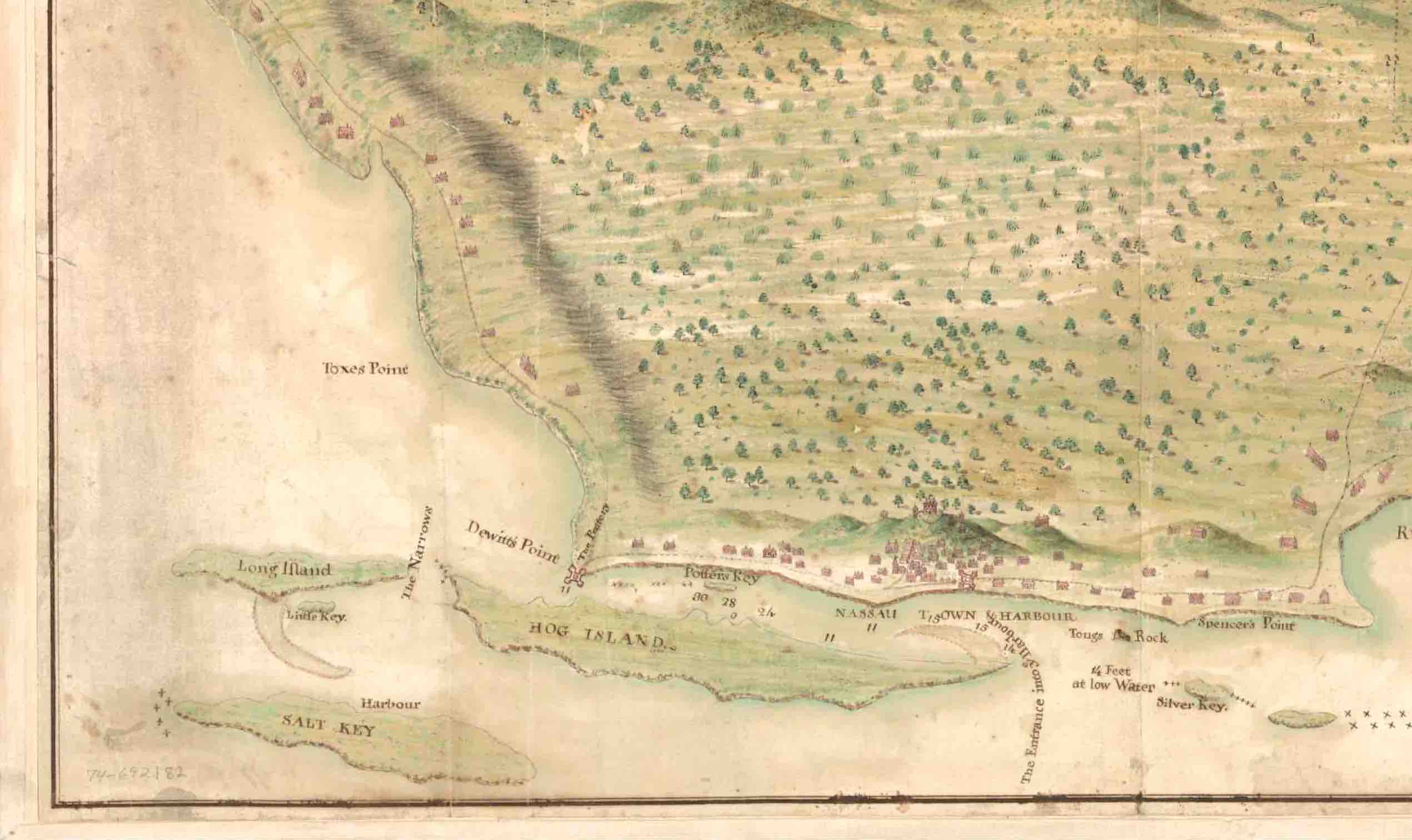
5. BOTTOM LEFT CORNER: NASSAU We have reached the big city, the centre of the population, and the port – with the harbour entrance handily marked. It bore the same name then as now; though the other names marked (as far as I can make out) have mostly if not all changed over 3 centuries. The Baha Mar development and its attendant travails seem light years away from this map. The double line of crosses ends here (bottom right at the first cay). If they marked a safe zone for vessels passing back and forth into Nassau harbour, they did not need to extend further because of the town fortifications (see detailed crop). There is a fort right on the shore; and at the far end of the harbour sound is a battery at Drewitt’s Point. The town is watched over by a substantial building – presumably a Governor’s residence – that is surrounded by a stockade . In the early c18 Nassau put on a show of strength to deter invaders and pirates.

new-providence-c18-map-part-2new-providence-c18-map-part-14

DO WE KNOW THE EXACT DRAUGHT’S EXACT DATE?

The map itself is undated. The Library of Congress, whose map I have chopped up for this post, simply dates it as 17– and notes: 

Manuscript, pen-and-ink and watercolor; Has watermark; Oriented with north to the bottom; Relief shown pictorially and by shading; Depths shown by soundings.

The excellent David Rumsey Historical Map Collection chooses the year 1750, the maker unknown. Another source puts the date at 1700.

Whichever, a clue to establish the map in the first half of the c18 is that the publisher is believed to be ‘William Innys [et al.]’, London. Innys and his brother John (the ‘et al’ presumably) were active at that time. In 1726, for example, they published an edition of Newton’s  Philosophiae naturalis principia mathematica (first published in 1687), indicating that they must already have been well-established.

new-providence-c18-map-part-7-2

WHAT ABOUT THE PIRATES?

The “Deposition of  Capt. Matthew Musson” made on  5 Jul 1717 in London, contains some excellent contemporary  pirate-based material. The middle passage in particular gives an indication how well organised and extremely well-armed the pirates were. And it is clear that piracy was actually driving inhabitants away from New Providence.

  • “On March last he was cast away on the Bahamas. At Harbour Island he found about 30 families, with severall pirates, which frequently are comeing and goeing to purchase provissons for the piratts vessells at Providence. There were there two ships of 90 tons which sold provissons to the said pirates, the sailors of which said they belong’d to Boston”.
  • “At Habakoe one of the Bahamas he found Capt. Thomas Walker and others who had left Providence by reason of the rudeness of the pirates and settled there. They advis’d him that five pirates made ye harbour of Providence their place of rendevous vizt. [Benjamin] Horngold, a sloop with 10 guns and about 80 men; [Henry] Jennings, a sloop with 10 guns and 100 men; [Josiah(s)] Burgiss, a sloop with 8 guns and about 80 men; [Henry?] White, in a small vessell with 30 men and small armes; [Edward] Thatch, a sloop 6 gunns and about 70 men. All took and destroyd ships of all nations except Jennings who took no English; they had taken a Spanish ship of 32 gunns, which they kept in the harbour for a guardship”.
  • “Ye greatest part of the inhabitants of Providence are. already gone into other adjacent islands to secure themselves from ye pirates, who frequently plunder them. Most of the ships and vessells taken by them they burn and destroy when brought into the harbour and oblidge the menn to take on with them. The inhabitants of those Isles are in a miserable condition at present, but were in great hopes that H.M. would be graciously pleas’d to take such measures, which would speedily enable them to return to Providence their former settlement, there are severall more pirates than he can now give an accot. of that are both to windward and to leward of Providence that may ere this be expected to rendevous there he being apprehensive that unless the Governmt. fortify this place the pirates will to protect themselves”. Signed, Mathew Musson. Endorsed, Read 5th July, 1717. 1½ pp. [C.O. 5, 1265. No. 73.]

new-providence-c18-map-part-11

CAN I BUY THIS MAP FOR MY WALL?

You certainly can. Well, not an original obviously. But you can find prints of it on eBay and elsewhere – just google the map title. You can get a modern copy for around $20 + shipping

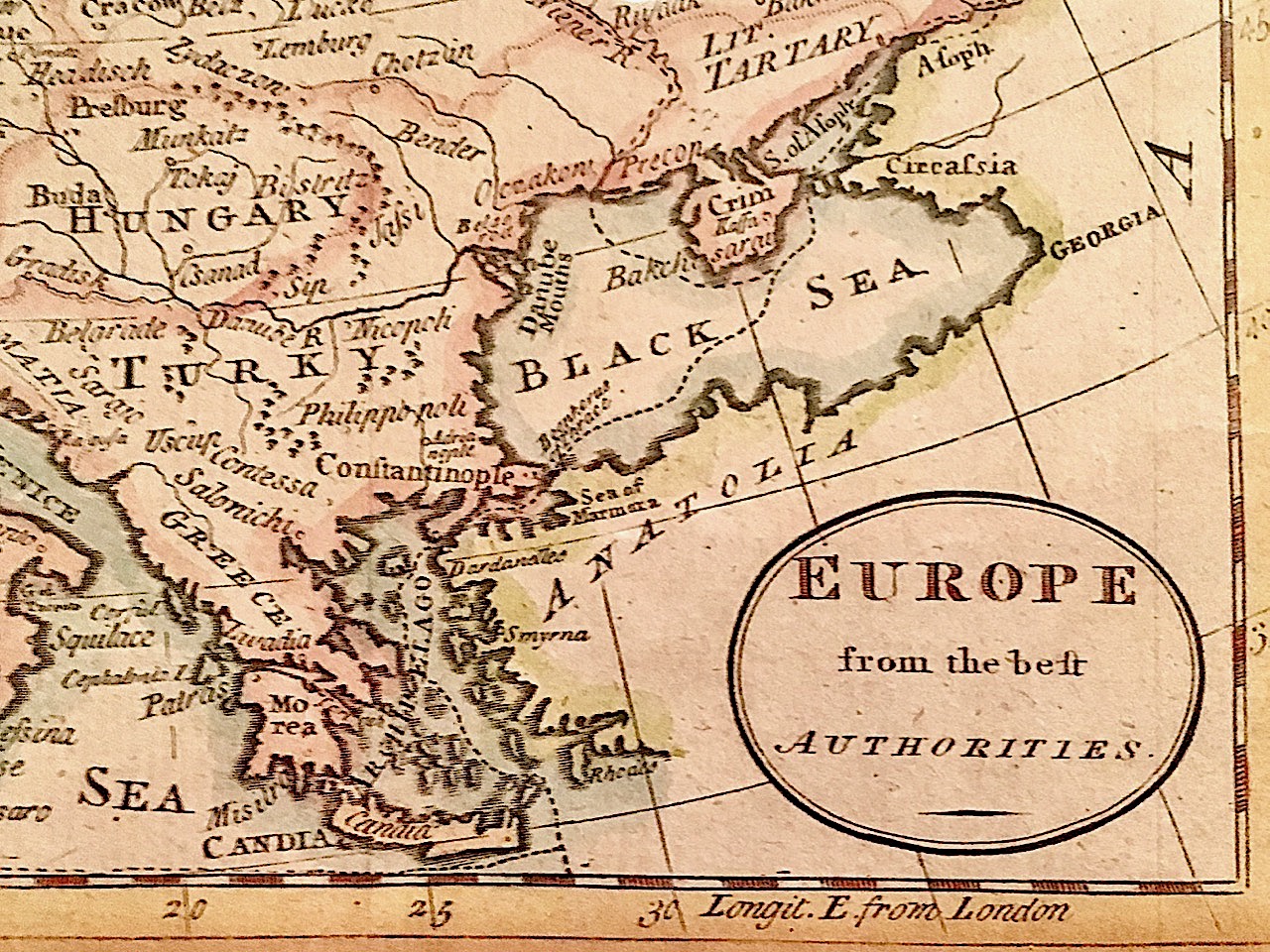
** I have an enjoyable example of this tendency on a William Guthrie map of Europe dated c1800. A map from “the beft authorities” could surely have no serious rival!img_4771

Credits: Library of Congress Online Catalog (Geography and Map Division); David Rumsey Historical Map Collection; Baylus C Brooks, Professional Research & Maritime Historian, Author, & Conservator / “America and West Indies: July 1717, 1-15,” in Calendar of State Papers Colonial, America and West Indies: Volume 29, 1716-1717, ed. Cecil Headlam (London: His Majesty’s Stationery Office, 1930), 336-344; Bonhams (Auctioneers)

Unknown's avatar

“THE DELPHI CLUB GUIDE TO THE BIRDS OF ABACO” (2016)


Delphi Club Guide to the Birds of Abaco (Jacket)

“THE DELPHI CLUB GUIDE TO THE BIRDS OF ABACO”

In a box in the corner over there – no, there – are my last 6 copies of ‘The Birds of Abaco’. Peter Mantle probably has a few over here in the UK too. And there are definitely some remaining at Delphi HQ in a cupboard  just a few lurches away from the surprisingly popular ‘honesty bar’. But there aren’t a great many left now, so forgive me for drawing attention to the fact that the Season of Goodwill is upon us. And… ahem… there are only 24 more ‘sleeps’ until Christmas. 

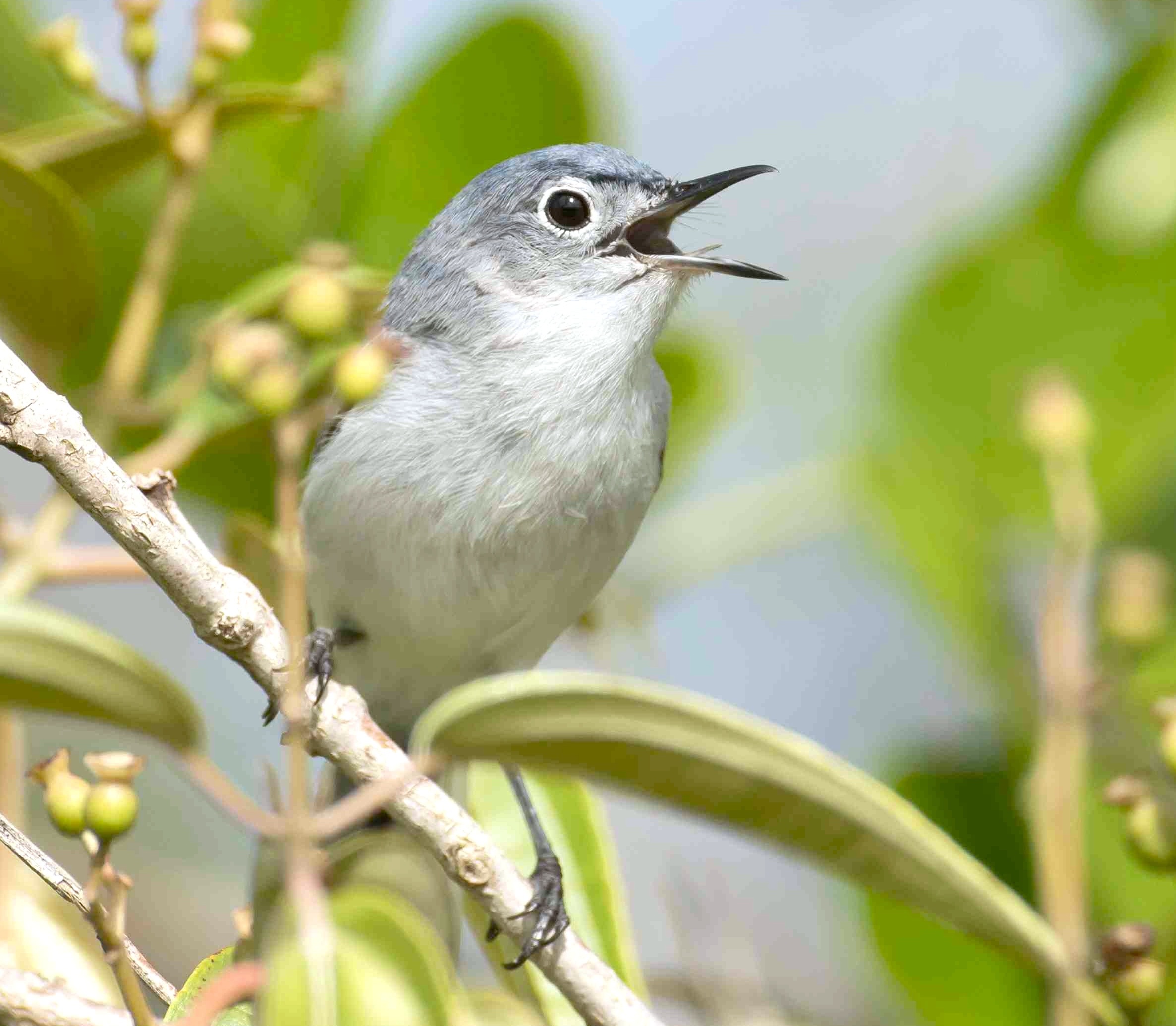
Blue-gray Gnatcatcher vocalizing.Abaco Bahamas.6.13.Tom Sheley aBlue-gray Gnatcatcher Tom Sheley

“The Delphi Club Guide to THE BIRDS OF ABACO” was published in March 2014. To say “I wrote it” would be a gross distortion of the truth: it was an entirely collaborative project. The originator of the idea – as with the entire Delphi Club project – was Peter Mantle, the publisher. The work of 30 photographers is included. There was huge input from the very experienced project manager and from Bahamas bird experts. So although my name is on the cover, it is as a participant representing the contributions, camera skills and brainpower of many people.

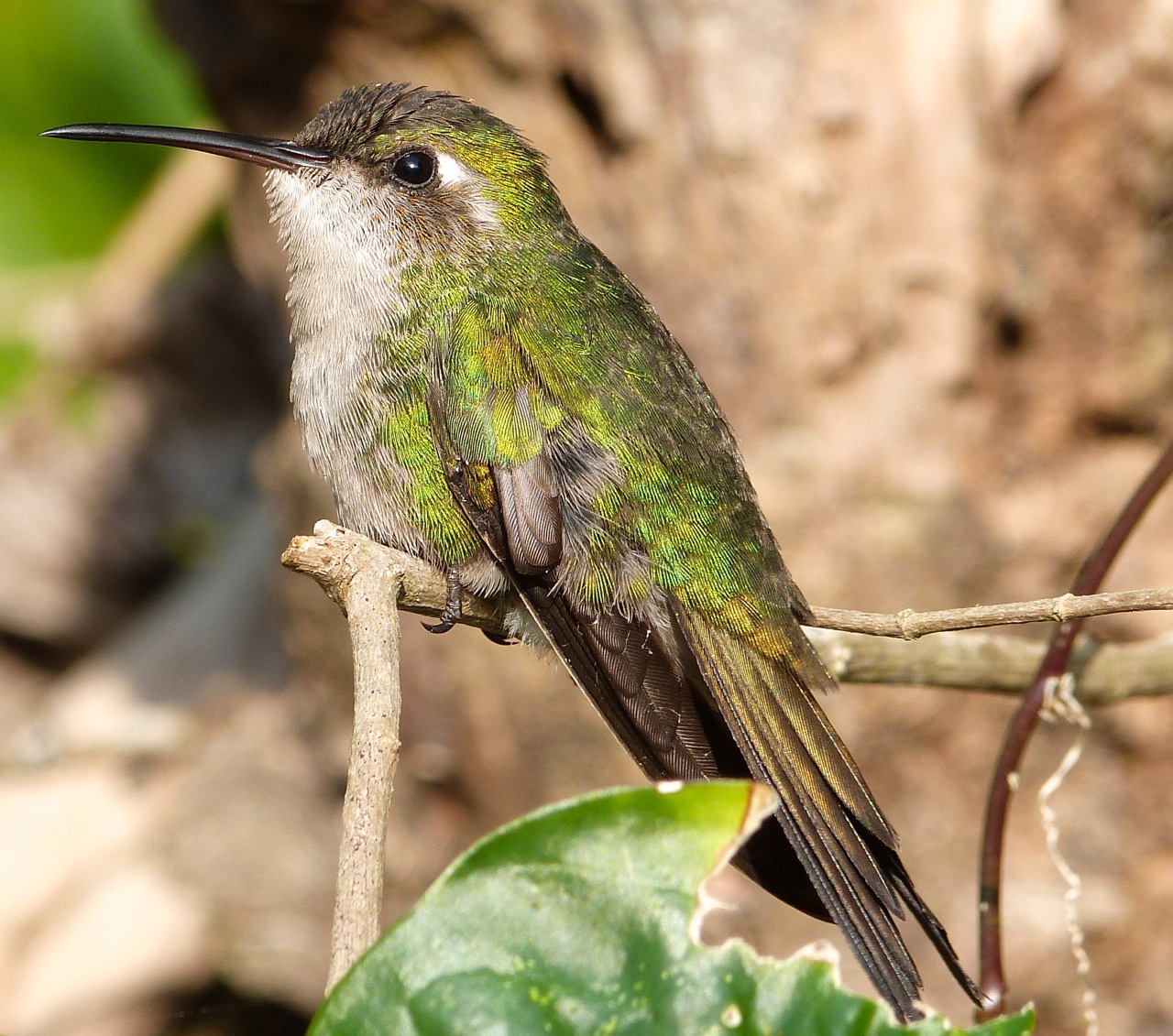
Cuban Emerald Hummingbird, Delphi, Abaco (Keith Salvesen)Cuban Emerald (f) Keith Salvesen

The book launched to generous enthusiasm and support both on Abaco and beyond, which has continued ever since. We have been astonished by the positive responses to this unique publication for the Bahamas. There is a wider purpose to the book than as a photographic showcase for Abaco birds. All Abaco schools, colleges, libraries and local wildlife organisations have been given free copies for educational purposes. And a percentage of the profits is set aside for local wildlife causes. 

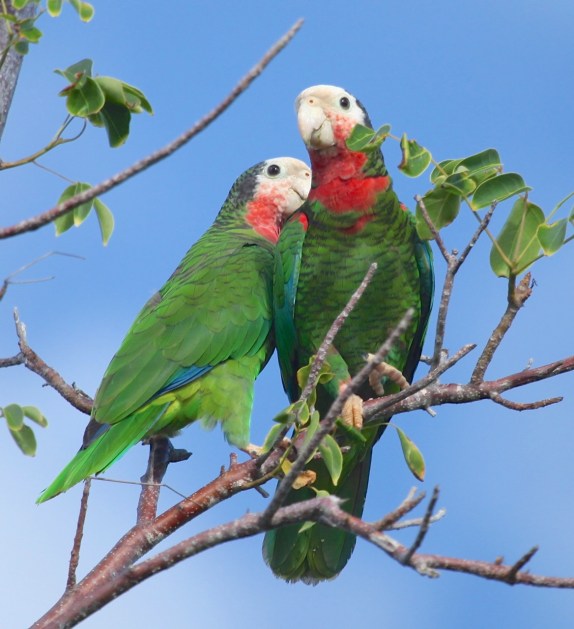
Abaco Parrot, Abaco Bahamas (Peter Mantle)Abaco (Cuban) Parrots Peter Mantle

Below are some facts and stats. Some people may well have seen these set out elsewhere, but a lot of new people have kindly tuned in to Rolling Harbour in the last 12 months or so, so I will repeat some of the details.

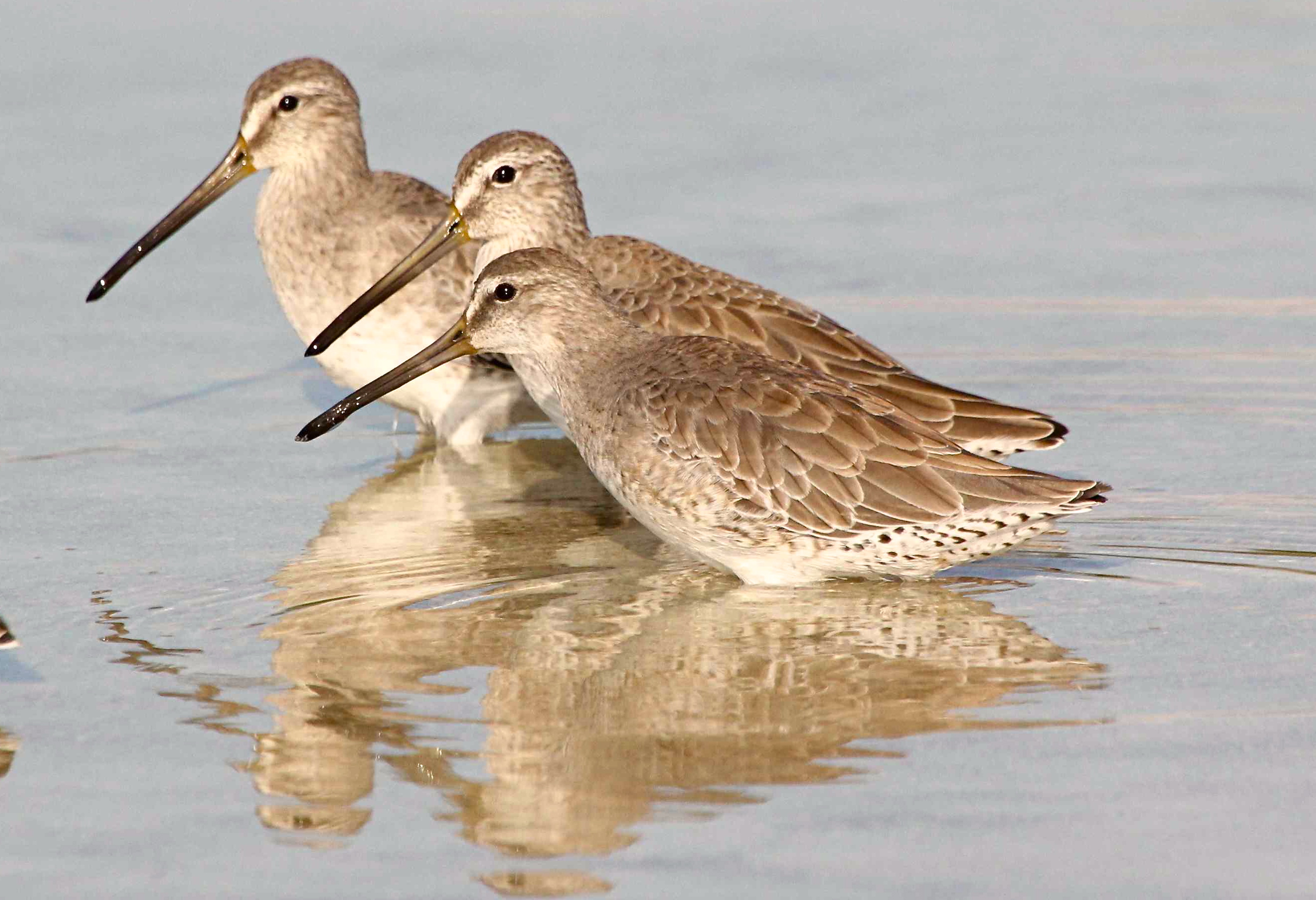
Short-billed Dowitcher, Abaco (Bruce Hallett)Short-billed dowitchers Bruce Hallett

The Guide showcases the rich and varied bird life of Abaco, Bahamas and features both resident and migratory species including endemics rarities and unusual sightings.

The main features are as follows:

  • 272 pages with more than 350 photographs
  • 163 species shown in vivid colour – nearly two-thirds of all the bird species ever recorded for Abaco
  • Every single photograph was taken on Abaco or in Abaco waters
  • All birds are shown in their natural surroundings – no feeders or trails of seed were used
  • Several birds featured are the first ones ever recorded for Abaco or even for the entire Bahamas

Clapper Rail Abaco Bahamas Tom SheleyClapper Rail Tom Sheley

  • A total of 30 photographers, both experienced and local amateurs, contributed to the project
  • The book had the generous support of many well-known names of Abaco and Bahamas birding
  • A complete checklist of every bird recorded for Abaco since 1950 up to the date of publication was compiled specially for the book (6 new species have been recorded since then…)
  • A code was devised to show at a glance when you may see a particular bird, and the likelihood of doing so. Birds found at Delphi are also marked
  • Specially commissioned cartographer’s Map of Abaco showing places named in the book

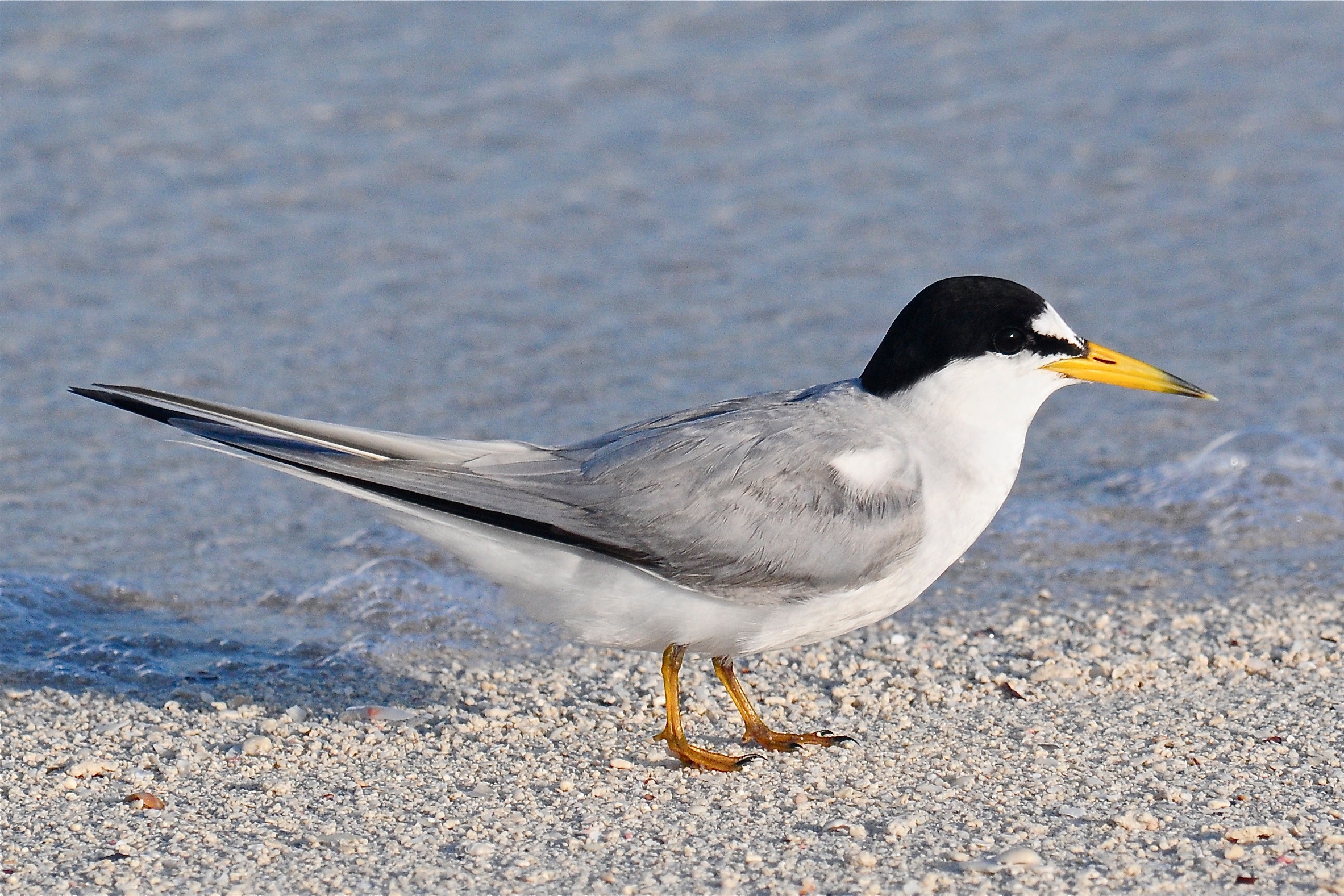
Least Tern, Abaco (Tony Hepburn)Least Tern Tony Hepburn

  • Informative captions intentionally depart from the standard field guide approach…
  • …as does the listing of the birds in alphabetical rather than scientific order
  • Say goodbye to ’37 warbler species on consecutive pages’ misery
  • Say hello to astonishing and unexpected juxtapositions of species

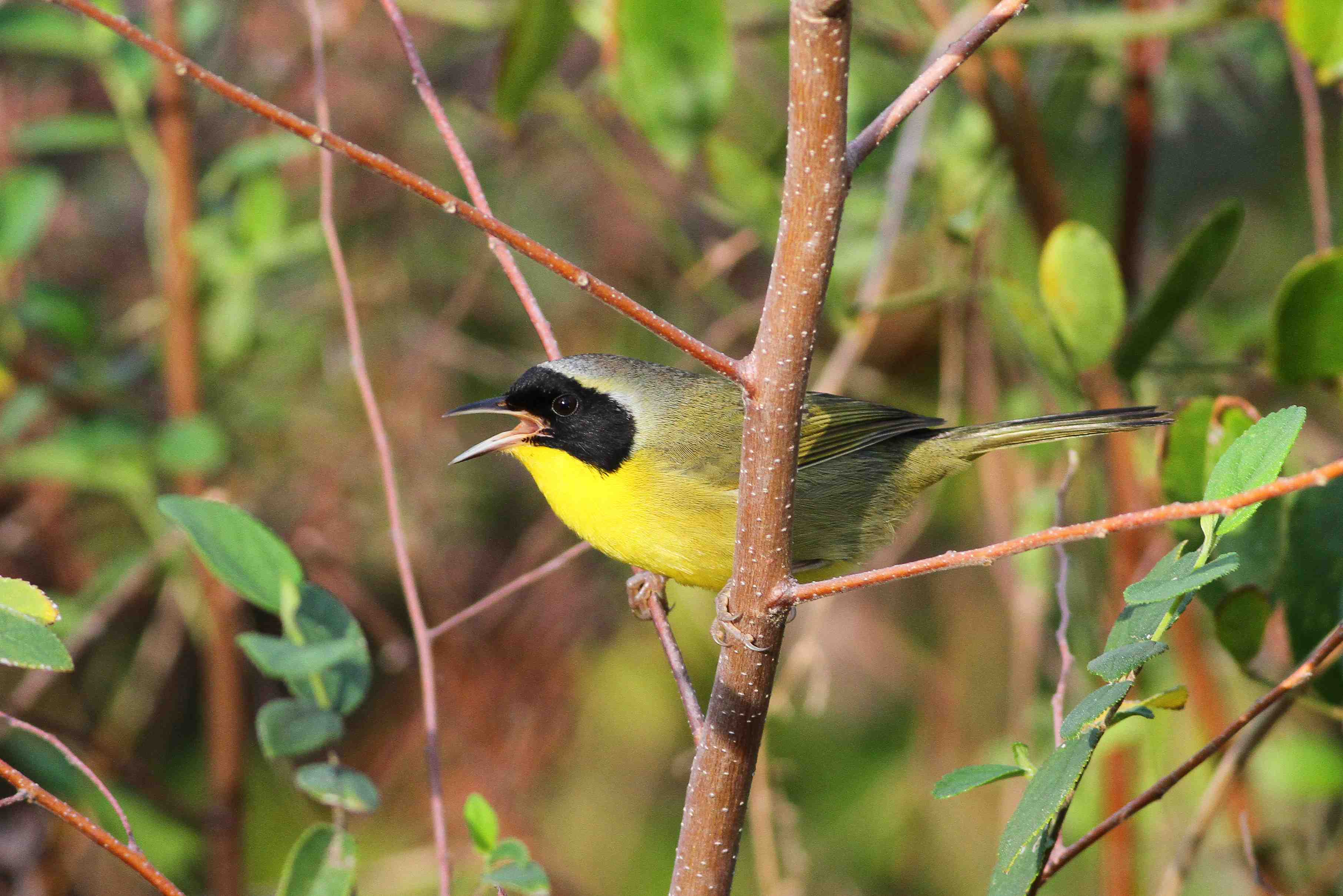
Abaco_Bahama Yellowthroat_Gerlinde Taurer copyBahama Yellowthroat Gerlinde Taurer

  • The book was printed in Florence, Italy by specialist printers on Grade-1 quality paper
  • Printing took pairs of printers working in 6 hour shifts 33 hours over 3 days to complete
  • The project manager and the author personally oversaw the printing 

Smooth-billed Ani pair, Abaco (Gerlinde Taurer)Smooth-billed Anis Gerlinde Taurer

  • The book is dedicated to the wildlife organisations of Abaco
  • A percentage of the profits is put by for the support of local wildlife organisations
  • A copy of the book has been presented to every school, college and library on Abaco

Piping Plover, Abaco - Bruce HallettPiping Plover Bruce Hallett

The book is published by the Delphi Club (contact details below). The project was managed by a publishing specialist in art books. The author is the wildlife blogger more widely known on Abaco and (possibly) beyond as ‘Rolling Harbour’. Oh! So that would in fact be Mrs Harbour and myself. Well well! What were the chances? 

Painted Bunting male.Abaco Bahamas.Tom SheleyPainted Bunting Tom Sheley

The Delphi Club at Rolling Harbour
PO Box AB-20006, Marsh Harbour, Abaco, Bahamas
Tel: +1-242-366-2222
General Manager – Max Woolnough: +1-242-577-1698
delphi.bahamas@gmail.com

Or email rollingharbour.delphi@gmail.com with any queries or comments

American Oystercatcher, Abaco - Tom SheleyAmerican Oystercatcher Tom Sheley

Photos: Tom Sheley,  Bruce Hallett, Gerlinde Taurer, Tony Hepburn, Peter Mantle, Keith Salvesen

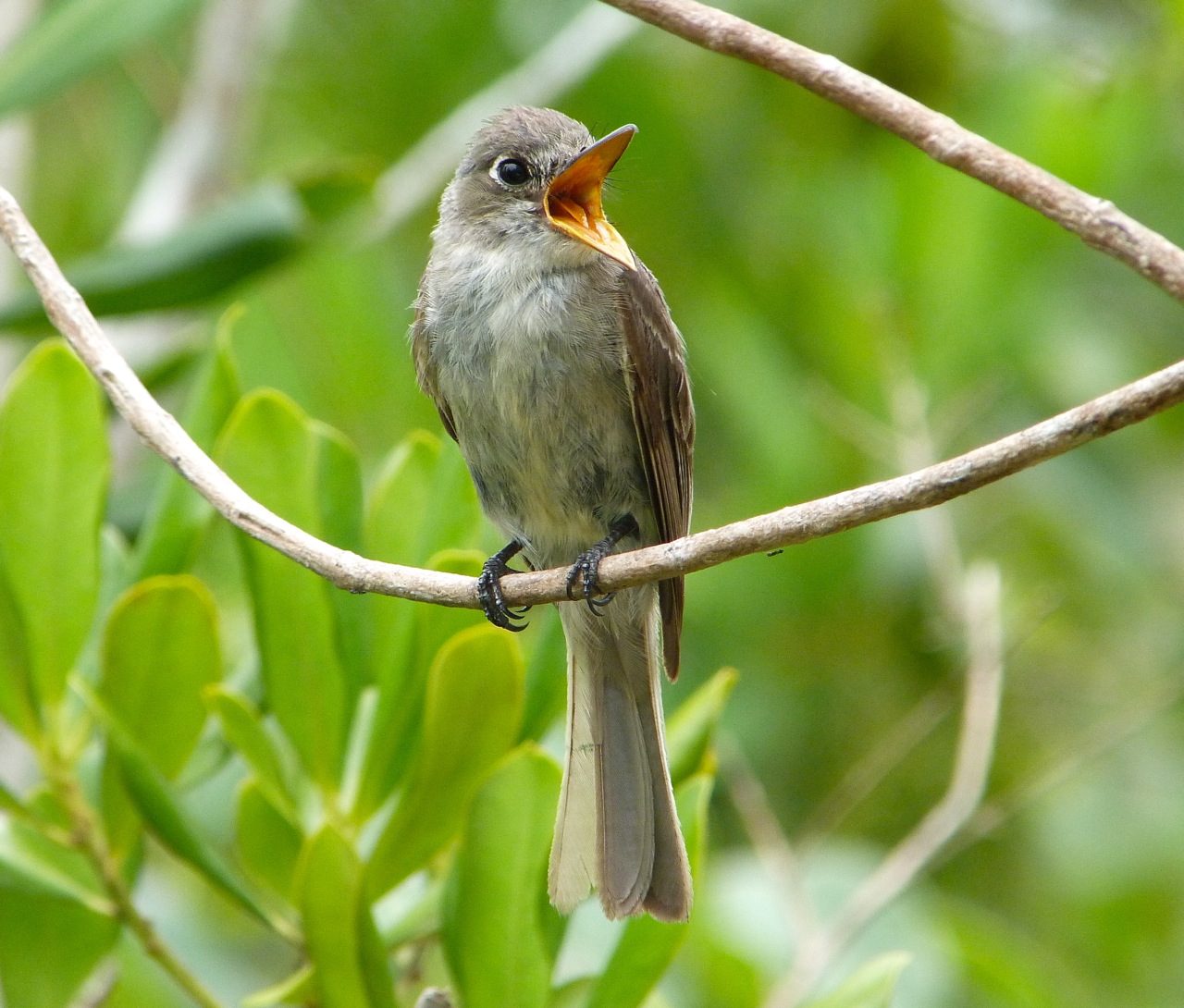
Cuban (Crescent-eyed) Pewee, Delphi, Abaco (Keith Salvesen)Cuban Pewee Keith Salvesen

USEFUL LINKS

DELPHI CLUB BAHAMAS

ABACO BIRDS. COM

ABACO PIPING PLOVER WATCH

The original flyer for the book"Birds of Abaco" flyer

Unknown's avatar

MANATEE AWARENESS MONTH (& BABY TALK)


Rita the Mantee & her new baby. Bahamas (BMMRO)

MANATEE AWARENESS MONTH (& BABY TALK)

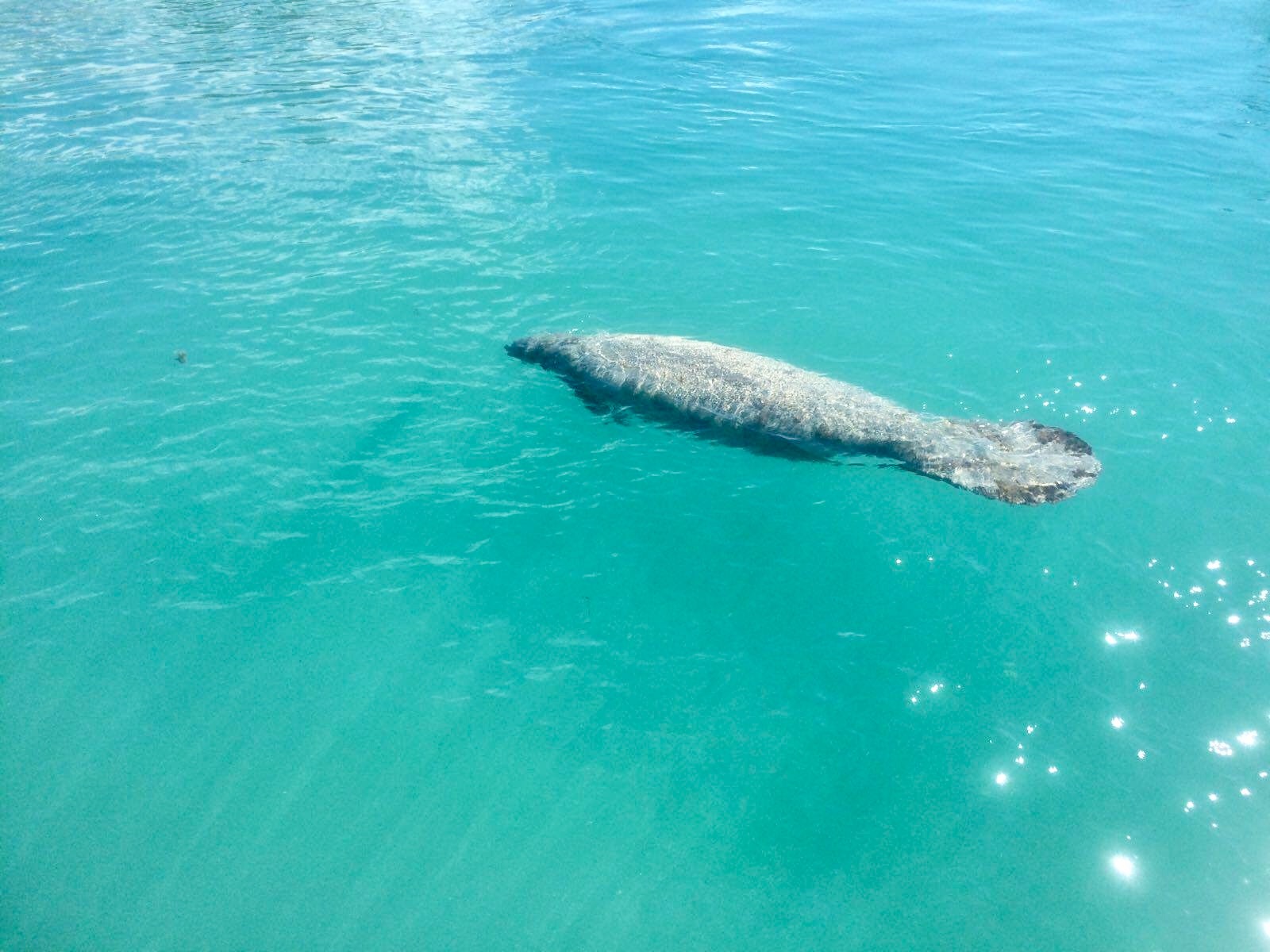
Are you aware of the Bahamas manatees? Just a few years ago your answer might well have been “Bahamas what? No, why? Where?” But suddenly they arrived. And their numbers are increasing. Alternatively, of course, they have always been there, mooching around peacefully and unnoticed in the seagrass. 

Manatee Awareness Graphic (Peppermint Narwhal)

Rita and her recently born daughter – Kamalame, AndrosRita the Mantee & her new baby. Bahamas (BMMRO)

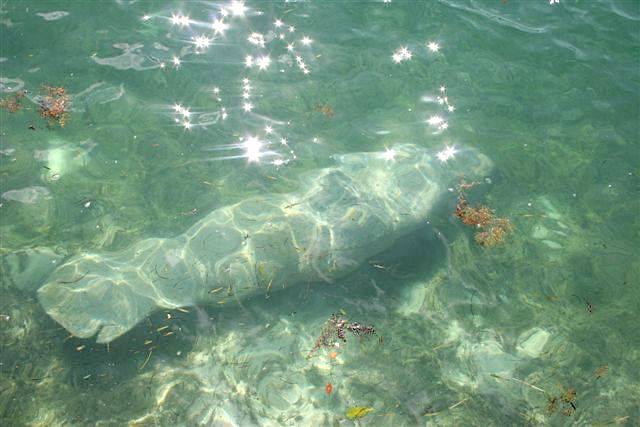
The Bahamas Marine Mammal Research Organisation BMMRO has been keeping tabs on occasional sightings of manatees in Bahamian waters for some years. But until around 2012 – when I first learned of them and wrote about them – they appeared to be few and far between. They seemed to be unrecorded for Abaco, or anyway unphotographed.** Then the sightings began. Names were given to individuals, identified primarily by distinctive marks or cuts on their ‘paddles’ (tails). Gina. Rita. Georgie. Randy. JJ. Sightings in Hope Town, Little Harbour, Cherokee and the Casuarina canal. Manatees had arrived and were being paid attention. The ease of digital photography and the rapidly increasing use of social media resulted in more reports, wider interest and – yes – greater awareness both on Abaco and elsewhere in the wider Bahamas

**so much for being factually assertive! Many thanks to Mary for her account of one on Green Turtle Cay ‘seen by everyone’; and Kelley for her 2008 one in Galleon Bay canal… of which she actually got a photo…

manatee-galleon-bay-canal-tc-abaco-feb-2007-kelley-niedoba

To give you an idea of the rapid spread of the West-Indian Manatee population, here is a great infographic made recently by Felice Leanne Knowles of the BMMRO, mapping 2016 sightings of both known and unidentified manatees in the Bahamas. An amazing 15 in all, in an area where the natural fresh water these creatures need for survival is in short supply.

Bahamas Manatee sightings infographic (BMMRO / Felice Knowles)

You’ll see that in July both Gina and Rita had nosed their way down to Andros. At this time, Gina was known to be heavily pregnant. She gave birth in Kamalame Cay, and the photos of her above with her new calf were taken there.

The baby manatee is known to be a female and there is currently a competition to name her. A spreadsheet-worth of names was submitted to the BMMRO, and they have been whittled down to 3 for a final poll-off between Andie (Andros), Kaman (Kam[alame] An[dros]) and Morgan (Arrrrrrrr in Piratese). 

Waiting for a name…Rita the Mantee & her new baby. Bahamas (BMMRO)

RELATED LINKS

BAHAMAS MANATEE CLUB (BMMRO)

BAHAMAS MANATEES: GINA’S GOOD NEWS

BAHAMAS MANATEES: A SHORT HISTORY 1904 – 2015

WEST INDIAN MANATEES (RH PAGE)

img_4120

Credits: BMMRO and individual photographers whom I will identify when my backup has finished churning away; Felice Leanne Knowles; ‘Kelly’ (header); @kamalamecay; Sarah Jayne Buchanan; Peppermint Narwhal for their (as usual) inspired illustrative graphics.

mantsw~1